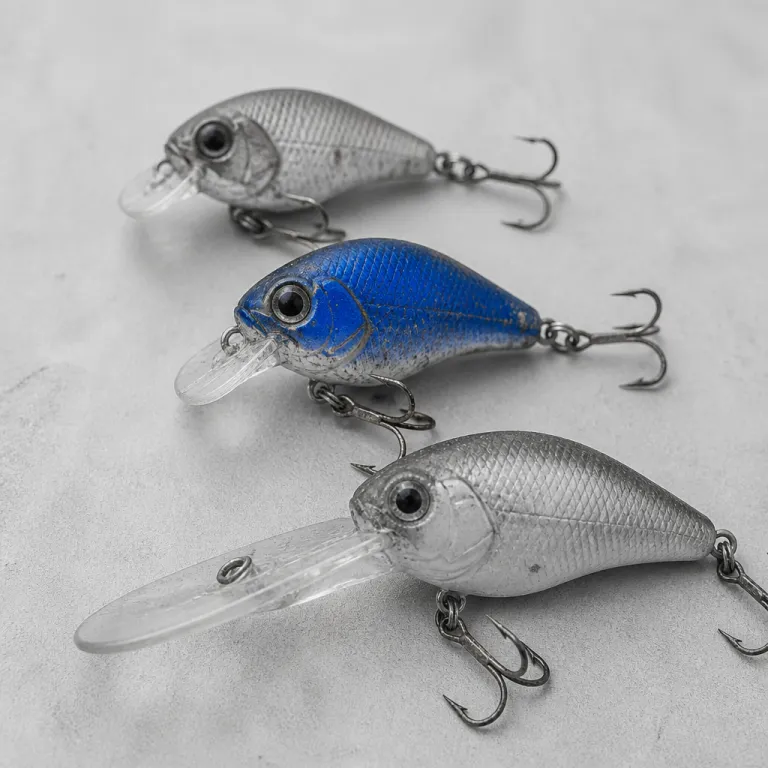
Why three crankbaits really are enough for summer bass fishing
Most recreational bass anglers carry far more crankbaits than they ever need. When you focus on the best crankbaits summer bass fishing actually requires, three diving ranges quietly cover almost every realistic situation on the water. A smart mix of a square bill crankbait, a medium diving plug, and a deep diving model will let you catch bass efficiently from shallow banks to extra deep offshore structure.
On lakes like Guntersville, Toledo Bend, and small gravel pits, I have watched weekend anglers rotate through boxes of baits while one simple square bill kept putting fish in the net. The crankbaits best suited to summer are the ones that match water temperature, water clarity, and the depth bass actually use, not the ones with the flashiest colors or packaging. When you treat each crankbait as a depth tool first and a baitfish imitation second, your crankbait fishing becomes more deliberate and far more productive.
Think of your crankbaits as a three lure system rather than a random pile of baits. The shallow diving square bill handles 0 to 3 metres, the medium diving crankbait owns the 1,5 to 2,5 metre band, and the deep diving plug reaches 3 to 4,5 metres where summer bass often suspend. With that framework, every crankbait you buy has a job, and every cast has a purpose in your bass fishing day.
The square bill: shallow crankbait for wood, rock, and bank grass
When bass slide shallow around dawn or when wind stacks bait against the bank, a square bill crankbait is usually the best tool you can throw. A good shallow diving square bill runs 0 to 1 metre over rock, wood, and sparse grass, and its blocky bill helps it deflect instead of snag when it hits cover. That deflection is what makes fish react, because the bait suddenly kicks, flashes a different color, and looks like a wounded shad trying to escape.
In stained water on the Lot River and in small French reservoirs, I lean on a Strike King KVD 1.5 square bill or a Bill Lewis SB-57, both in shad or chartreuse based colors. These crankbaits have tough bills that tolerate repeated collisions with riprap and laydowns, which matters when you are grinding through cover all morning. I have had days where every time the square bill bit into a rock and ricocheted, a bass would strike within one crank of the handle.
For most weekend anglers, a medium action 2,10 metre casting rod like the Venerate bait cast lure rod reviewed here as a versatile crankbait rod will handle square bill duty perfectly. Spool 0,30 millimetre monofilament if you want the crankbait to run slightly shallower over rock, or 0,28 millimetre fluorocarbon if you need the bait to dig a bit deeper into the strike zone. Either way, keep your retrieve steady with occasional rod twitches, because those small speed changes often trigger a following bass that has tracked the bait for several metres.
The medium diver: workhorse crankbait for the 5 to 8 foot zone
Once the sun climbs and water temperature stabilises, many bass slide off the bank and hold in 1,5 to 2,5 metres, which is where a medium diving crankbait shines. This is the depth where you can cover long stretches of points, channel swings, and outside weed edges with one consistent crankbait fishing approach. For most summer days, this is the crankbait that will catch bass more consistently than anything else in your box.
Models like the Strike King Series 3, the Bill Lewis MR-6, and similar medium diving crankbaits from brands you find at Tackle Warehouse all share one trait ; they reach their running depth quickly and stay there. I prefer shad patterns in clear water clarity, then switch to brighter colors best suited to stained water, such as chartreuse with a blue back or a firetiger style color. When bass are feeding on crayfish along rock, a crawdad color medium diver ticking bottom can outproduce even a perfectly matched shad bait.
Line choice quietly changes how deep these crankbaits run, often by 0,5 to 1 metre, which is enough to miss or hit the strike zone. A 0,30 millimetre fluorocarbon line helps a medium diver reach its rated depth, while a thicker 0,33 millimetre monofilament keeps the bait slightly higher when grass tops out near the surface. If you want more detail on how lure selection and retrieve style translate across species, the breakdown of lure strategies for cobia in Chesapeake Bay at this cobia lure strategy guide shows the same principle ; match depth and behaviour first, then fine tune color.
The deep crank: reaching thermocline bass without overcomplicating things
On many reservoirs once summer sets in, the best crankbaits summer bass fishing offers are the deep diving plugs that reach 3 to 4,5 metres where the thermocline forms. A true deep diving crankbait with a long bill and a heavy body will get down to that zone and stay there long enough to pass multiple fish on a single cast. When you line up on offshore humps, roadbeds, or long points, this is the bait that often finds the bigger class of bass.
Deep diving crankbaits like the Strike King 5XD, the 6XD, or the Bill Lewis MR-12 are designed to dig hard, and they need the right rod and line to perform. A 2,20 to 2,40 metre moderate action rod lets the crankbait load properly and keeps trebles pinned when a fish surges boatside, while 0,28 millimetre fluorocarbon helps the bait reach its extra deep potential. If you upsize to 0,33 millimetre line or switch to monofilament, expect to lose 0,5 to 1 metre of diving depth, which can pull the lure out of the strike zone when bass hug the bottom.
Color selection for deep crankbaits follows the same simple rules ; shad colors in clear water, chartreuse based colors in stained water, and crawdad tones when you are grinding rock. On clear lakes like Lac de Vassivière, a natural shad color deep crankbait will often get bit repeatedly when a brighter color spooks fish that are already wary from pressure. For more nuance on how subtle lure changes turn followers into committed bites, the snook lure breakdown at this snook lure strategy article shows how small profile and color tweaks can change the way predators track a bait.
Color, water clarity, and the stop and float retrieve
Many anglers obsess over crankbait colors, but in practice a simple system handles almost everything you will face. In clear water with good visibility, shad based colors with natural backs and subtle sides are usually best, while in stained water a chartreuse or chartreuse and blue color gives bass a stronger target. When you are grinding rock or hard bottom where crayfish live, a brown or red crawdad color often outperforms any baitfish pattern.
Water clarity and light level matter more than tiny color differences between similar baits. On overcast days with a chop on the water, a slightly brighter color can help fish track the crankbait from further away, especially when you are fishing crankbaits over deeper structure. On flat calm days with high sun, a muted shad color with a matte finish can get bit more often because it looks like a real baitfish instead of a flashing beacon.
The retrieve that many anglers skip is the stop and float cadence, which is deadly in summer when bass follow but hesitate to strike. Crank the bait down to depth, then pause for one or two seconds and let the crankbait float up slightly, before resuming the retrieve with a half turn burst of speed. That small rise and sudden restart often makes a following bass commit, because the bait looks like a wounded shad that has just run out of energy.
Line, limitations, and when crankbaits are not the best choice
Line diameter and material quietly control how your crankbaits behave, sometimes more than the bill shape or advertised diving depth. Thinner fluorocarbon sinks and lets a diving crankbait reach its rated depth or slightly deeper, while thicker monofilament floats and keeps the bait running higher in the water column. By changing from 0,28 to 0,33 millimetre line, you can shift a crankbait by 0,5 to 1 metre, which is often the difference between ticking bottom and never touching it.
There are days when even the best crankbaits summer bass fishing can offer are simply the wrong tools. In heavy grass where the bill constantly fouls, a lipless crankbait ripped free can outproduce billed diving crankbaits, and in extreme cold a slow moving jig or suspending jerkbait usually draws more strikes. On ultra pressured waters where every fish has seen a square bill and a deep diver, a subtle soft plastic or a finesse swimbait may be the only way to catch bass consistently.
Crankbaits still earn their place because they cover water quickly, trigger reaction bites, and teach you how bottom composition feels through the rod. When you learn how each crankbait in your three lure system behaves over rock, sand, and wood, you start reading the lake like a map instead of guessing. That is how you turn a small box of baits into a reliable summer pattern ; not the spec sheet, but the tenth cast in the rain.
Key figures that matter for crankbait success
- On many temperate reservoirs, the thermocline in summer often forms between 3 and 6 metres, which explains why deep diving crankbaits rated for 3 to 4,5 metres are so productive on offshore structure during the hottest months (reported by multiple regional fisheries agencies).
- Studies of bass diet in large reservoirs have shown that threadfin and gizzard shad can make up more than 50 % of adult bass prey items in open water, which supports prioritising shad based crankbait colors when you are targeting suspended fish in clear conditions (data from state fisheries diet surveys).
- Controlled tank experiments have demonstrated that small changes in lure speed and pause duration can increase strike rates by 20 to 40 % for predatory fish, which aligns with on water observations that a stop and float retrieve often outfishes a steady retrieve with the same crankbait (behavioural research published in fisheries science journals).
- Line diameter tests have shown that increasing fluorocarbon from 0,28 to 0,33 millimetre can reduce a crankbait’s maximum diving depth by roughly 0,5 to 1 metre, depending on lure size and casting distance, which is enough to pull the bait out of contact with bottom oriented bass (independent tackle testing by angling laboratories).
FAQ: three crankbaits for summer bass
Do I really only need three crankbaits for summer bass fishing ?
You can absolutely fish an entire summer with just a square bill, a medium diver, and a deep diving crankbait if you choose models that cover 0 to about 4,5 metres. Those three depth zones match where most bass position once water temperature stabilises and bait spreads out. Extra colors and sizes help, but the core system is built on depth coverage, not lure count.
What rod and line should I use for deep diving crankbaits ?
A 2,20 to 2,40 metre moderate action casting rod paired with a low stretch 0,28 millimetre fluorocarbon line is a reliable starting point for deep diving crankbaits. The longer rod helps you cast further and achieve maximum diving depth, while the moderate action cushions treble hooks during the fight. If you fish around heavy cover, you can step up line diameter slightly, but expect to lose some depth.
How do I choose crankbait colors when the water is stained ?
In stained water with reduced visibility, start with chartreuse based crankbait colors that give bass a strong silhouette, such as chartreuse and blue or chartreuse and black. When you are grinding rock or hard bottom, a darker crawdad color can also work well because it mimics crayfish that bass feed on heavily in summer. Rotate between one bright shad style color and one craw pattern until the fish show a clear preference.
When should I switch from crankbaits to other lures in summer ?
Crankbaits struggle in very heavy grass, in extremely cold fronts, or on ultra pressured fish that have seen the same diving profiles repeatedly. In those situations, lipless crankbaits ripped free from grass, slow rolled spinnerbaits, jigs, or finesse soft plastics often produce more consistent bites. Use crankbaits to cover water and locate active fish, then slow down with other lures when the reaction bite fades.
How does water clarity affect how deep my crankbait will run ?
Water clarity itself does not change the physical diving depth of a crankbait, but it strongly affects how far bass will move to strike the bait. In clear water, fish may rise several metres to hit a deep diver, while in muddy water they often need the lure almost in their face. That is why in dirty water you should prioritise getting the crankbait to tick bottom or cover, even if that means adjusting line diameter or lure size.