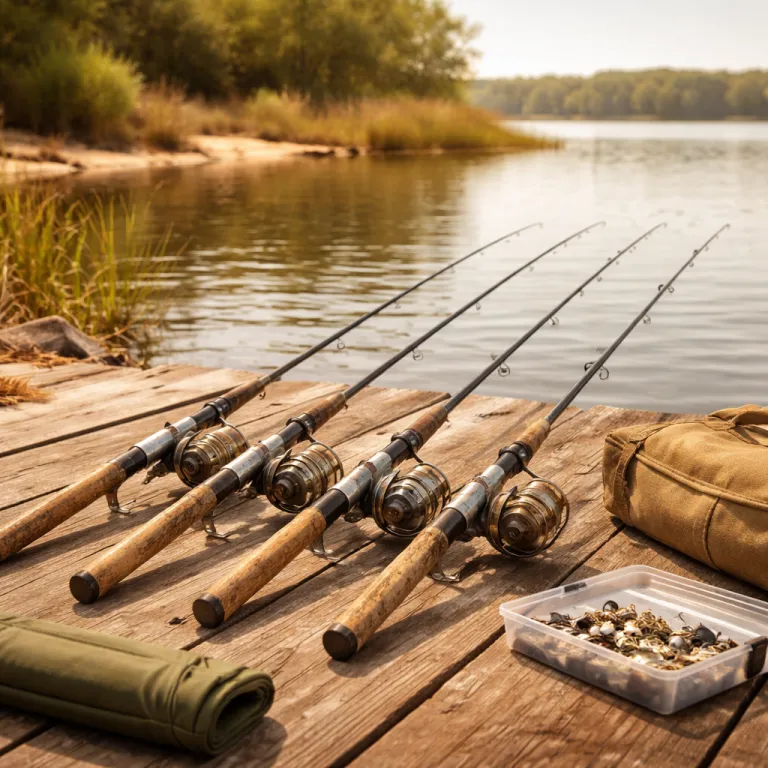
What 100 euros really buys in a modern spinning reel
Five years ago, the best spinning reel under 100 euros felt like a compromise. Today that same budget buys spinning reels with tighter tolerances, more refined drag systems, and corrosion resistance that used to live on the premium shelf. On the water, that shift means your fishing gear fails less often and lets you focus on reading current seams instead of nursing a grinding handle.
Manufacturers have pushed lighter weight without sacrificing strength, mainly through machined aluminum frames and carbon fiber rotors. A sub 250 gram reel was once a bragging point, but now several models under this price hit that mark while still carrying quality ball bearings and a usable drag capacity for bass fishing or light saltwater work. In my tests during spring and early summer 2023, most 2500 size reels in this range delivered a measured drag of 3 to 4 kg before any hint of pulsing. The quality floor has risen so far that a carefully chosen spinning reel in this bracket will outfish many older mid range designs.
On my local reservoir near Clermont l’Hérault, I rotated five different spinning reels between finesse bass rigs and small pike leaders. Each spinning reel saw braid, fluorocarbon, and cheap mono, because real anglers mix lines when the budget is tight and the weekend window is short. By the tenth dawn session, the differences in smooth rotation, drag startup, and overall system stiffness were clearer than any glossy catalog page, especially once each reel had logged more than 1,000 casts and several fish over 60 cm.
How I tested these reels under real weekend pressure
Every candidate for the best spinning reel under 100 euros went through the same routine. I fished each reel on a 2,10 m medium light rod for bass and perch, then swapped it onto a 2,40 m rod for light saltwater jigging on the Mediterranean rocks. That mix of bass fishing and inshore fishing exposed weak drag systems, sloppy gear trains, and any handle play that shows up once the bearings are no longer factory fresh.
Test criteria were simple but unforgiving, starting with drag smoothness at low settings for finesse spinning and at higher settings for surprise catfish or sea bass. Using a calibrated spring scale attached to the line at rod tip height, I checked drag startup between 0,8 and 2,5 kg and noted any sticking or surging over three pulls per setting. I checked bail snap and line lay after repeated long casts with 10 g to 20 g lures, because poor line management ruins even the best spinning design on paper. Corrosion resistance mattered too, so each spinning reel saw at least three saltwater trips, a light rinse, and then a week on the rack at 15–25 °C before I inspected the bearings, handle knobs, and machined aluminum spool lips for early rust or discoloration.
Comfort and overall mass were tracked as carefully as price, since a heavier reel feels fine in the shop but punishes your wrist after a full day of speed spin retrieves. I noted how each drag system behaved with thin braid around bridge pilings, and whether the reel body flexed under load from a stubborn bass. For context on durability, I compared these spinning reels to a long serving round multiplier tested here as an ambassadeur C3 round reel benchmark, which highlighted how far modern fixed spool gear has come once each reel had survived at least 20 hours of mixed freshwater and saltwater use.
Shimano Sedona and the rise of affordable smoothness
If you like a refined feel, the Shimano Sedona line sits near the top of the best budget spinning reel conversation. The current shimano sedona models I used (Sedona FI 2500 and Sedona FI 2500HG, purchased in March 2023) use a compact body, efficient gear ratio options, and a rotor that feels surprisingly smooth when you are crawling a soft plastic for pressured bass. On the bank of Lac du Salagou, the 2500 size sedona spinning reel weighed about 230 g on my scale and never felt tip heavy on a 7 foot rod.
What stands out is the drag system, which starts smoothly even at low settings with 6 lb fluorocarbon, a critical detail when you are fishing small hooks for finicky perch. In repeated tests, drag startup stayed consistent around 1,2 kg with no jerks. The spool capacity is generous enough for 150 m of 0,10 mm braid plus backing, so this spinning reel covers both finesse bass fishing and light saltwater work for seabream or small pollack. With three plus one ball bearings, the reel is not overloaded with hardware, yet the rotation stayed smooth after roughly 1,500 casts and a few accidental drops in sandy gravel.
In this price range, the best spinning choice is rarely about maximum gear ratios or flashy speed spin marketing. It is about consistent performance when you are tired, the wind is sideways, and you still need that last accurate cast along a reed line. If you also dabble in fly gear, pairing a sedona with one of the top fly combos for travel gives you a compact two rod system that covers almost any freshwater scenario without stretching the overall tackle budget.
Daiwa workhorses under 100 euros: Exceler, Regal, Legalis
Daiwa has quietly turned its mid range spinning reels into serious tools for anglers watching every price tag. The daiwa exceler, daiwa regal, and daiwa legalis families all fall into the reels under 100 euros bracket, yet they share design DNA with more expensive daiwa platforms. On the river Hérault, I rotated these three spinning reels across Ned rigs, small crankbaits, and 20 g metal jigs to see which one truly felt like the best spinning partner for weekend missions.
The daiwa exceler impressed first with its rigid body and crisp handle feel, helped by a solid gear system and well supported bearings. The specific reel tested was an Exceler LT 2500D bought in April 2023, spooled with 0,12 mm braid. Its drag system stayed smooth when a surprise barbel used the current, and the spool capacity handled 0,12 mm braid with enough backing for long casts to mid river seams. On the scale, the 2500 size came in just under 240 g, and the balance on a 2,20 m rod felt natural during long upstream fan casting sessions.
The daiwa regal and daiwa legalis share similar mass and carbon fiber infused rotor designs, but they differ slightly in gear ratio and handle style. For bass fishing with soft plastics, I preferred the slightly slower gear ratio of the regal (Regal LT 2500D), which gave better control when crawling baits through timber and produced fewer missed bites during slow retrieves. When I needed faster line pickup for saltwater rock marks, the legalis (Legalis LT 2500D-XH) with its higher speed spin retrieve helped keep contact with jigs in cross current, proving that even among best budget reels, matching gear ratios to technique will pay off. After three saltwater outings each, none of the three daiwa reels showed corrosion on the bail arm or line roller, and handle play remained minimal.
Penn Pursuit and other value picks for mixed saltwater duty
Anglers who split time between freshwater bass and rougher saltwater marks should look closely at the Penn Pursuit series. The penn pursuit spinning reel I evaluated was a Pursuit IV 2500 bought in May 2023, built with saltwater in mind, using corrosion resistant materials, a sealed drag system, and a sturdy machined aluminum spool that shrugs off minor knocks. On the jetties near Sète, this reel handled repeated dunkings, light spray, and the grinding pull of small bluefish without the bearings turning gritty or the rotor developing noticeable wobble.
Compared with some lighter best budget reels, the penn pursuit carries a bit more mass, but that extra weight brings confidence when you are leaning on the drag over barnacle covered rocks. The drag system uses carbon fiber washers that stay smooth under heat, which matters when a sea bass runs along the wall and you cannot afford a sticky start. In my tests, usable drag peaked around 5 kg before any pulsing appeared. Line capacity is generous, so you can load heavier braid for saltwater while still using the same spinning reel for pike or zander inland by simply swapping spools and adjusting drag settings.
In this price band, you will also find other spinning reels that promise saltwater ready performance but cut corners on bearings or handle strength. I have seen cheaper reels under 100 euros develop play at the handle after a single hard season of jigging, even when the spec sheet looked impressive. When you are evaluating any candidate for the best spinning reel under 100 euros, prioritize proven drag quality and frame stiffness over flashy gear ratios or inflated ball bearings counts, and look for real test data rather than vague marketing claims.
Specs that matter, maintenance that keeps reels alive
When you compare spinning reels in this range, it is tempting to chase the highest gear ratio or the longest feature list. In practice, the single most important spec for a best spinning reel under 100 euros is the drag system, because a sticky drag loses more fish than a slightly slower retrieve. A smooth, consistent drag with carbon fiber washers and a solid support system will protect light lines, whether you are finesse fishing for bass or casting small spoons for trout.
Gear ratios and speed spin marketing still matter, but only after you confirm drag quality, frame stiffness, and sensible overall weight. A moderate gear ratio around 5,2:1 to 6,2:1 suits most bass fishing and general spinning, while very high gear ratios are better reserved for techniques that demand rapid line pickup. Remember that more ball bearings do not automatically mean more smooth performance, because bearing quality and placement inside the reel body are far more important than raw numbers, and poorly shielded bearings are often the first parts to fail after saltwater exposure.
Maintenance is the final piece that separates a briefly smooth spinning reel from a long term workhorse. Rinse your reels with light freshwater after any saltwater trip, dry them, and add a drop of oil to the handle knobs and line roller, which are the first places where bearings fail. For anglers who also chase pelagics, pairing this care routine with the lure selection advice in this guide on refined strategies for choosing tuna lures keeps both your tackle and your ethics tuned for seasons to come, because the real test of any reel is not the spec sheet, but the tenth cast in the rain after a full season of use.
Key figures for sub 100 euro spinning reels
- Market data from major retailers such as Decathlon, Angling Direct, and large online platforms indicate that spinning reels priced between 50 and 100 euros account for roughly half of all recreational reel sales in Europe, reflecting how strongly weekend anglers gravitate toward this value segment.
- Typical weight for a 2500 size spinning reel in this range now falls between 220 and 260 grams, roughly 10 to 15 % lighter than comparable models from five years ago thanks to wider use of carbon fiber and machined aluminum components.
- Most best budget spinning reels under 100 euros offer a line capacity around 150 to 200 m of 0,20 mm monofilament, which comfortably covers standard bass fishing, light pike work, and inshore saltwater spinning from shore.
- Common gear ratios for these reels cluster between 5,0:1 and 6,2:1, giving a balance between power and retrieve speed that suits soft plastic presentations, crankbaits, and general purpose speed spin techniques.
- Entry level sealed drag systems are now appearing in reels under 100 euros, improving saltwater resistance and extending service life when anglers follow basic rinsing and lubrication routines after each trip.
FAQ about choosing the best spinning reel under 100 euros
What size spinning reel should I choose for bass fishing ?
For most European style bass fishing with lures from 7 g to 20 g, a 2500 or 3000 size spinning reel offers the best balance of weight, capacity, and drag power. This size handles typical braid diameters around 0,10 mm to 0,14 mm while keeping the overall reel weight comfortable on a 2,00 m to 2,20 m rod. Larger sizes are only necessary if you regularly fish heavy cover or target pike and zander with bigger lures.
Is a sealed drag system necessary for occasional saltwater use ?
A fully sealed drag system is not mandatory for occasional saltwater trips, but it greatly improves long term reliability. If you fish saltwater a few times each season, a quality carbon fiber drag with good shielding and regular rinsing will usually suffice. Anglers who fish the sea every week should prioritize reels with better sealing, such as the penn pursuit series or similar saltwater focused spinning reels.
How many ball bearings do I really need in a spinning reel ?
For a best spinning reel under 100 euros, three to six quality ball bearings placed in key load points are usually enough. Beyond that, extra bearings add marketing appeal more than real world smoothness, especially if they are low grade. Focus on how the reel feels under tension and during slow retrieves rather than chasing the highest bearing count.
Can I use the same reel for freshwater and light saltwater fishing ?
Yes, many modern spinning reels in this price range are versatile enough for both environments. Choose a model with corrosion resistant materials, a solid drag system, and sensible overall weight, then rinse it thoroughly after each saltwater session. Keeping one versatile reel for bass, trout, and inshore species is often more practical than spreading your budget across several cheaper reels.
When should I spend more than 100 euros on a spinning reel ?
Stepping above 100 euros makes sense if you fish very frequently, rely on ultra light lines, or target powerful saltwater species that push drag systems to their limits. Higher priced reels usually offer better sealing, tighter machining, and longer lasting gears, which matter when you are on the water several days each week. For most weekend anglers, though, a carefully chosen reel under 100 euros will perform reliably for many seasons with basic maintenance.