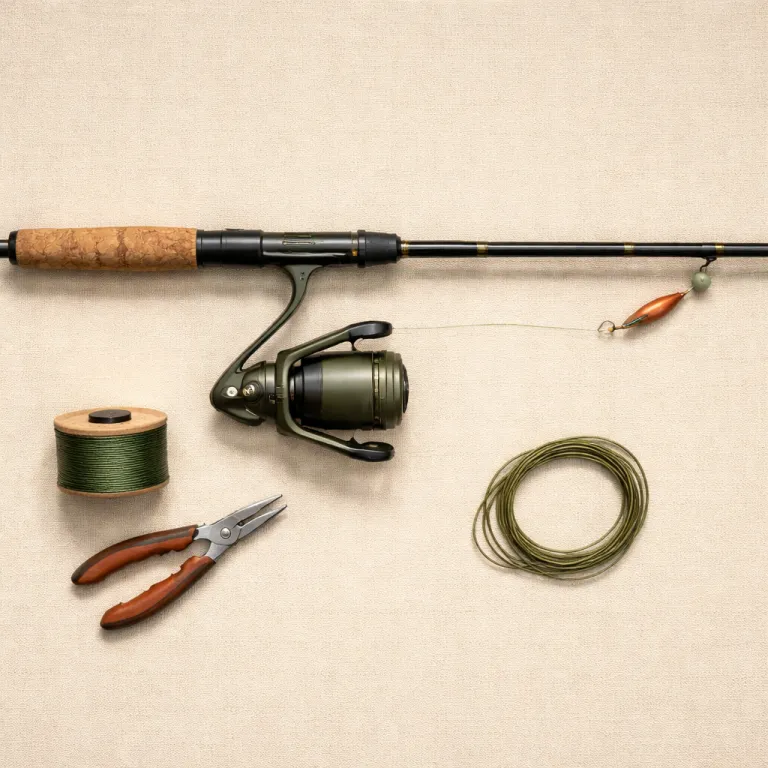
Why correct spinning setup prevents most tangles
Learning how to set up a spinning rod reel correctly saves frustration. When a spinning rod and spinning reel are matched and spooled with care, you prevent the wind knots and loops that ruin a first fishing adventure. Get this first step right and every time the lure and line hit water, you will focus on reading the bank instead of fighting your gear.
Most beginners overload the reel spool, use the wrong pound test, and crank the bail closed, which guarantees snarls on the first hard cast. I see it every spring on the public piers at Lake Constance and on small French reservoirs, where new spinning rods are paired with cheap rod reel combos and filled to the top spool edge with bargain monofilament or low grade fluorocarbon. The result is coils spilling off the spool arbor, loops around the first guide rod, and a long walk back to the car before the best fishing time even starts.
A modern spinning reel is forgiving, but it still demands a clean sequence. You must set the drag, attach spool and line, tie spool knots, and learn to open bail and close bail by hand in the right order. Each step sounds simple, yet skipping one step or rushing the knot will show up as a tangle just when a good fish finally eats. Think of the setup as part of your casting techniques, not a chore to rush through on the bank.
Choosing rod, reel, and line that actually work together
Before you worry about how to set up spinning rod reel details, you need a balanced trio of spinning rod, spinning reel, and line. For most weekend fishing on ponds and slow rivers, a 2.1 to 2.4 metre (7 to 8 foot) medium light guide rod rated for 5 to 20 gram lures pairs well with a 2500 size reel spool. That size gives enough capacity for 150 metres of 6 to 8 kilogram braided line or 120 metres of 0.25 millimetre monofilament or fluorocarbon without forcing line above the top spool lip.
Look at the markings on your rod reel combo and match the pound test range on the blank to the capacity numbers on the reel. If the spinning rods say 4 to 10 kilogram line and the reel lists 0.20 millimetre at 200 metres, then a 0.23 millimetre fluorocarbon or a 10 pound test braided main line with a lighter leader will sit nicely on the spool arbor. Anglers buying their first serious setup should read a detailed buying guide such as your first real rod without wasting money before filling a basket with random gear.
Line choice changes how each cast feels and how far you reach your target. Braided lines transmit every knock from a fish but punish sloppy knots, while straight monofilament or pure fluorocarbon is more forgiving when you tie spool connections with an overhand knot or arbor knot. Whatever you choose, remember that the line, not the catalogue description, decides whether your lure flies straight or explodes into loops the first time you really lean into a cast.
Spooling line: from arbor knot to perfect fill level
Once you have the right trio, the next step in how to set up spinning rod reel is attaching line to the reel spool properly. Start by opening the bail fully, then run the line through each guide rod from tip to reel, making sure it does not wrap around the blank. When you reach the spool arbor, you will tie spool to metal using a simple arbor knot, which grips tightly without creating a bulky lump.
To tie that arbor knot, first make an overhand knot around the standing line, then another overhand knot at the tag end, and pull both knots down snug against the spool arbor. Close bail by hand and hold the line between thumb and index finger ahead of the reel while a partner helps attach spool of line on a pencil so it can spin freely. This pencil trick keeps tension steady and prevents the line from twisting as it flows onto the top spool surface.
Watch the way the line comes off the filler spool and compare it to the way it goes onto the spinning reel. If loops start forming between your hand and the reel, flip the filler spool over and continue, because this change in direction often removes twist before it becomes a problem on the water. Anglers who want to understand how large arbor designs affect line lay can study detailed tests such as the Greys Tital large arbor reel review, which shows how a well designed reel spool can improve both control and casting distance.
Fill level, drag setting, and the quarter turn rule
Most wind knots start with a simple mistake, filling the spinning reel too high. Leave a 2 to 3 millimetre (about 1/16 to 1/8 inch) gap between the line and the top spool edge, because this small margin stops coils from springing off when the bail opens. If you ignore that gap and set the line flush with the lip, the first time the lure hits water hard, loose loops will jump off and wrap around the first guide.
Drag setting comes next, and it matters more than most beginners think during a fishing adventure. With monofilament or fluorocarbon main line, tighten the drag until you can just pull line with a firm tug, then back off about a quarter turn, which gives enough slip to protect both knot and rod under a sudden surge from a strong fish. This roughly matches the common guideline of setting drag to around one third of the line’s rated breaking strength used by many reel technicians. When using braided main line with a fluorocarbon leader, run the drag slightly lighter, because braid has almost no stretch and will punish any weak knot or sharp guide rod insert.
Test the drag several times before your first cast, pulling line straight off the reel spool while the bail is closed. The line should come off smoothly without jerks, and the rod should bend gradually rather than snap straight. If the drag sticks or surges, loosen it, pull some line, then tighten again until it feels correctly balanced for the pound test you are using.
First casts: bail control, line lay, and avoiding wind knots
Now the fun part of how to set up spinning rod reel begins, because you finally get to cast. Stand with feet shoulder width apart, hold the spinning rod at waist height, and pinch the line lightly against the cork with your index finger just ahead of the spinning reel stem. With the lure hanging 30 to 40 centimetres (12 to 16 inches) below the tip, swing the rod back, open bail in one smooth step, and then drive the rod forward while releasing the line as it passes your shoulder.
Watch the line peel off the reel spool as the lure flies, and be ready to stop it with your finger just before the lure and weight hit water. This small touch tightens the system, removes slack, and prevents loose coils from stacking on the top spool when you close bail. Always close bail by hand rather than cranking the handle, because this habit keeps the line running correctly onto the spool arbor and reduces twist over time.
After each cast, glance down at the reel and check the line lay. If you see a loop forming under the next wrap, flip the bail open, pull line out until the loop disappears, then close bail again by hand before the next cast. This pull through technique takes only a second, but it saves you from the kind of sudden bird nest that ends a good session just when the evening feeding time hit its peak.
When it tangles anyway: field fixes that save the session
No matter how carefully you learn how to set up spinning rod reel, tangles still happen. A gust of wind, a rushed cast, or a tired hand on the bail can throw a loop that buries deep in the reel spool. The key is reacting calmly, using simple techniques to clear the mess without cutting away half your line every time a knot appears.
Start with the pull through method whenever a loose loop forms near the top spool. Open bail, pull several metres (10 to 20 feet) of line off the spinning reel, then run the line between your fingers while you reel it back on under steady tension, which often straightens minor twists before they tighten into a hard knot. If a true wind knot forms in braided line, stop pulling, find the loop that crosses over itself, and gently work it back through the tangle rather than yanking, because force will only weld the fibres together.
Sometimes you must accept defeat and cut, especially when a knot has bitten into itself under pressure from a strong fish. In that case, trim the damaged section, retie your leader or lure with a clean knot, and check the remaining line on the spool arbor for abrasion before you cast again. When you feel frustration rising, remember that every angler has bad casts and messy spools, and what separates the steady ones is not the spec sheet, but the tenth cast in the rain.
Advanced line choices, leaders, and subtle casting gains
Once you trust your basic setup, you can use line choices to fine tune casting distance and lure control. Thin diameter braided main lines in the 8 to 12 pound test range cut through air and water better than thicker monofilament or fluorocarbon, which means lighter lures reach the same fish holding structure with less effort. Pair that braid with a 1 to 2 metre (3 to 6 foot) fluorocarbon leader tied with a reliable knot, and you gain both sensitivity and abrasion resistance around rocks or timber.
When you attach spool of leader material to the main line, avoid bulky overhand knots and instead learn compact joining knots that pass smoothly through each guide rod. The goal is to keep the connection outside the reel spool during the cast, so it does not slap against the top spool lip and steal distance. On short spinning rods used for tight bank fishing, even a small improvement in casting distance can open new angles on submerged cover where pressured fish still feel secure.
For anglers targeting sea bass or zander with refined rigs, a well tuned spinning setup becomes part of a larger system. Articles on specialised rigs, such as this piece on refined sea bass rigs for demanding coastal anglers, show how leader length, lure weight, and line diameter interact with your spinning reel and rod. Treat every change in line or leader as a new experiment, and over time you will feel exactly how a small tweak at the spool arbor translates into better control when the lure finally hits water.
Key figures every spinning angler should know
- Leaving 2 to 3 millimetres of space below the top spool lip can noticeably reduce spontaneous line loops compared with filling the reel completely, according to controlled casting tests reported by several European tackle magazines.
- Switching from 0.30 millimetre monofilament to 0.18 millimetre braided main line of similar breaking strain often increases average casting distance, especially with lures under 15 grams, as shown in comparative field trials on still waters.
- Drag systems on mid range spinning reels typically perform best when set to about one third of the line’s rated breaking strength, a rule of thumb used by many reel manufacturers and tackle testers.
- Surveys of angler behaviour on public lakes indicate that a clear majority of beginners overfill their reel spools on the first attempt, which strongly correlates with early frustration and shorter fishing sessions.
- Laboratory tests on common fishing knots show that poorly tied overhand knots on braided line can reduce breaking strength by more than 50 percent, while properly tied arbor knots and modern joining knots usually retain a much higher proportion of the line’s rated strength.
FAQ about setting up a spinning rod without tangles
How full should I fill my spinning reel spool with line ?
Stop filling when the line sits about 2 to 3 millimetres below the top spool edge. This gap prevents coils from jumping off when you open bail and cast hard. Overfilling is responsible for most early tangles on new spinning setups.
Is braided line or monofilament fluorocarbon better for beginners ?
Monofilament or fluorocarbon is more forgiving for a first spinning rod because it stretches and hides minor knot or drag mistakes. Braided line offers better sensitivity and casting distance but punishes sloppy knots and poor bail control. Many anglers start with mono, then switch to braid with a fluorocarbon leader once their technique improves.
Why should I close the bail by hand instead of turning the handle ?
Closing the bail by hand keeps the line tight and correctly aligned on the reel spool from the very first crank. When you snap the bail shut by turning the handle, you often trap a loose loop that later becomes a wind knot. The hand close habit adds only a second and dramatically reduces tangles over time.
What is the best knot for attaching line to the spool arbor ?
The arbor knot is the standard choice for tying line to the spool arbor on a spinning reel. It is simple, low profile, and grips the metal well without creating a bulky lump under the wraps. Avoid using a plain overhand knot alone, because it can slip on smooth spools under heavy pressure.
How can I quickly fix a wind knot without cutting all my line ?
First, open bail and gently pull line off the reel until you expose the knot. Find the loop that crosses over itself, then work it back through the tangle with your fingers instead of yanking, which usually tightens the knot. If the fibres look damaged or the knot will not move, cut just above the weak section and retie to protect your next fish from a sudden break off.
Sources
- Shimano technical documents on spinning reel design and line management, including internal guidance on spool geometry and line lay.
- Daiwa engineering notes on drag systems and spool design for spinning reels, summarising recommended drag settings relative to line strength.
- Field testing reports from European tackle magazines on casting distance and line performance, comparing different diameters and materials under controlled conditions.
Step-by-step setup checklist
- Match rod, reel size, and line diameter to the lure weights you plan to cast.
- Run the line through all guides from tip to reel, checking it does not wrap the blank.
- Tie an arbor knot to the spool arbor and trim the tag end neatly.
- Spool line under steady tension, leaving 2 to 3 millimetres below the top spool lip.
- Set the drag to roughly one third of the line’s rated breaking strain, then fine tune.
- Practice opening and closing the bail by hand while keeping light tension on the line.
- Make a few short test casts, checking line lay and clearing any loops before casting hard.
Image suggestions and alt text
- Image 1: Close-up of an angler tying an arbor knot on a spinning reel spool. Alt text: “Arbor knot being tied to the spool arbor of a spinning reel before spooling line.”
- Image 2: Side view of a correctly filled spinning reel showing the 2 to 3 millimetre gap below the spool lip. Alt text: “Spinning reel spool filled with fishing line leaving a small gap below the top edge.”
- Image 3: Angler closing the bail by hand after a cast, with the line under light tension. Alt text: “Angler closing the bail of a spinning reel by hand to keep line tight and prevent wind knots.”