Summary
Analysis score
Average of the criteria rated below
Value for money: why this tube is so popular in its category
Telescoping three-tier design: practical but with trade-offs
Carrying comfort: manageable weight and a molded handle, but it’s still a long tube
Hard polypropylene shell: solid protection with a plastic feel
Long-term toughness and how it holds up to travel abuse
Real-world protection and capacity according to anglers
What the Plano Airliner Telescoping Rod Case actually offers
Pros
- Hard polypropylene shell with telescoping three-tier design (47" to 88") for flexible rod lengths
- Holds up to eight 7-foot rods, allowing multiple setups in one case
- Strong user feedback (4.6/5 from 1,300+ ratings) and long time on the market suggest solid real-world reliability
Cons
- Interior is bare; users need to add their own padding and rod socks for best protection
- No wheels or shoulder strap, so carrying a long loaded tube can be awkward over distance
- Plastic locks and shell are durable for normal use but not immune to extreme airline abuse

Specifications
View full product page →| Brand | Plano |
A travel rod tube that actually fits multiple setups
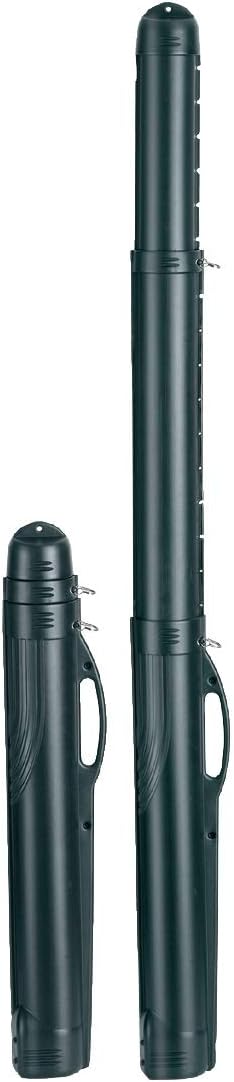
The Plano Airliner Telescoping Rod Case targets a simple but annoying problem for anglers: how to carry several rods, sometimes with guides and tips that are not exactly compact, without snapping anything on the way to the water. On paper, this tube goes straight at that need with a three-tier telescoping design that extends up to 88 inches and is supposed to hold up to eight 7-foot rods. That already puts it in the "serious travel" category, not just a small sleeve for one ultralight rod.
What also stands out is the mix of portability and protection. Collapsing down to about 47 inches, this case becomes much easier to move around, fit in a car, or store in a closet or boat compartment. The body is made from polypropylene, a common hard plastic used in rugged storage gear. The advertised 4.5-inch diameter and the multi-tier tube suggest a fairly compact profile considering the number of rods it can carry.
On the popularity side, this model is far from obscure. It sits around #12 in Fishing Rod Cases & Tubes on Amazon and shows a 4.6/5 average from more than 1,300 ratings. That level of feedback usually means the product has been through a lot of real-world situations: airline travel, long car trips, garage storage, and probably a few rough baggage handlers along the way. The comments give a good picture of what works well and where it compromises.
In my opinion, this rod case positions itself as a solid, no-frills travel solution for anglers who want to pack several rods in one hard tube instead of juggling multiple soft sleeves. It’s not a high-tech or feature-heavy product, but the core promise is clear: hard protection, telescoping length, and the capacity to carry a full set of rods in one go. The interesting question is whether the build details and user feedback match that promise strongly enough to justify choosing this over cheaper soft cases or bulkier DIY solutions like PVC pipes.
Value for money: why this tube is so popular in its category
In terms of value, the Plano Airliner sits in a sweet spot for many anglers. It’s not the cheapest way to move rods—simple fabric sleeves or homemade PVC tubes can cost less—but it offers a combination of adjustable length, hard-shell protection, and multi-rod capacity that is harder to replicate cleanly with DIY solutions. The strong sales rank (around #12 in Fishing Rod Cases & Tubes on Amazon) and the 4.6/5 rating suggest that a lot of buyers feel they’re getting fair return for the price.
Compared to soft cases, the main value add is impact protection. Many reviewers explicitly mention buying this tube after worrying about rods in soft bags during flights or long drives. The ability to carry several rods (up to eight 7-foot models, according to Plano) in one case means fewer separate bags or tubes. For anglers who travel with multiple setups—spinning, casting, maybe a backup or two—that consolidation can save both space and hassle. In my opinion, if someone regularly transports more than two rods, the per-rod cost of protection with this case becomes quite reasonable.
On the flip side, there are some compromises that affect perceived value. The interior is bare, so buyers often add their own padding materials. There are no wheels, shoulder straps, or fancy dividers. Some users might feel they are paying mostly for a sturdy plastic tube and a basic locking system. For occasional travelers with only one or two rods, a simpler and cheaper soft case could be enough. Also, anglers who enjoy building their own PVC tubes may see this as an unnecessary expense compared to hardware store parts.
Overall, I’d rate the value as good but not mind-blowing. The Plano Airliner makes the most sense for people who: 1) own several rods, 2) travel often enough that breakage is a real concern, and 3) prefer a ready-made, adjustable hard case instead of tinkering with DIY options. For that profile, the cost is justified by the convenience and the protection. For someone who rarely travels or only has one rod, the same money might be better spent on a simpler case and upgrading the rod or reel instead.
Telescoping three-tier design: practical but with trade-offs
The standout design element is clearly the three-tier telescoping tube. Instead of a fixed-length case that’s either too short for some rods or annoyingly long to store, this one adjusts from around 47 inches up to 88 inches. That range covers common two-piece and some one-piece rods up to 7 feet. On paper, this is a smart compromise: short enough when collapsed to fit across the back seat or in a trunk, long enough fully extended to protect the tips of travel rods and longer blanks.
The tube has a 4.5-inch diameter, which is relatively slim for something that claims to hold up to eight rods. Reviews often mention that internal space is adequate but not generous. This means the design is more about stacking rods carefully and possibly adding your own padding rather than tossing gear in loosely. The slimmer profile is a plus for storage and handling but demands a bit of organization from the user. Several buyers mention pairing it with rod socks or cloth wraps to keep guides from rubbing against each other.
The position locking device is another key design part. It’s there to keep the telescoping sections from sliding in or out once you’ve set the desired length. Some users are satisfied with how it holds, while a few comments mention adding extra straps or tape for airline travel just for peace of mind. In my opinion, that’s a typical move with any telescoping or multi-piece travel tube: people often over-secure things when handing them to baggage handlers. The handle is described as a comfort-molded grip, centrally placed to keep the weight balanced when the tube is reasonably loaded.
One practical detail: while the product listing mentions "rail mount" under mounting type, most buyers seem to use it as a standalone travel tube, not something permanently mounted on a boat rail. The black color and fairly plain exterior give it a low-profile look, which some anglers like because it doesn’t scream "expensive fishing gear" from a distance. Overall, the design is function-first. In my opinion, it favors durability and adjustability over clever extras. If someone is expecting built-in wheels, compartments, or fancy interior dividers, this will feel basic. If the priority is "one hard tube that adjusts to my rods and survives transport," the design direction makes sense.
Carrying comfort: manageable weight and a molded handle, but it’s still a long tube
Comfort with a rod case is less about softness and more about how easy it is to move around without swearing at it. The Plano Airliner weighs roughly 7.25 pounds empty, which is not featherlight but reasonable for a hard tube that can carry up to eight rods. Once loaded, it obviously gets heavier, but the key point is how the weight is distributed and how you actually carry it. Plano includes a comfort-molded handle, and several reviews mention that the handle is practical and reasonably shaped for hand-carrying through airports or from car to boat.
However, this is still an 88-inch tube when fully extended. Buyers often point out that the main "comfort" challenge is the length and bulk, not the handle itself. Walking through crowded spaces, navigating doors, or fitting it into smaller cars can be awkward simply because of the geometry. Some anglers mention that collapsing it down to the shortest possible setting whenever rods allow makes it much easier to handle and store. Others mention using shoulder straps or additional bungee cords (not included) to secure it to roof racks or carts, which can indirectly make it more comfortable to move over longer distances.
There are a few comments that note the handle placement feels balanced for typical loads, which suggests Plano thought through where the center of mass would be with several rods inside. Still, carrying a long rigid tube in one hand for long stretches is never going to feel like carrying a backpack. In my opinion, the case is comfortable "enough" for its category: the molded handle and moderate weight help, but if someone expects suitcase-level ergonomics with wheels or padded straps, this product does not offer that. It’s a basic, hand-carried tube.
From the perspective of vehicle and home storage comfort, the collapsible length down to about 47 inches is a clear plus. Users mention that in the shorter configuration, it tucks into trunks, closets, and boat compartments more easily. That doesn’t change how it feels in your hand, but it reduces the hassle of living with a long rod tube when you’re not actively walking around with it. Overall, the comfort story is simple: the handle is decent, the weight is acceptable for a hard case, and the main drawback is just the unavoidable reality of carrying a long cylinder loaded with fishing rods.
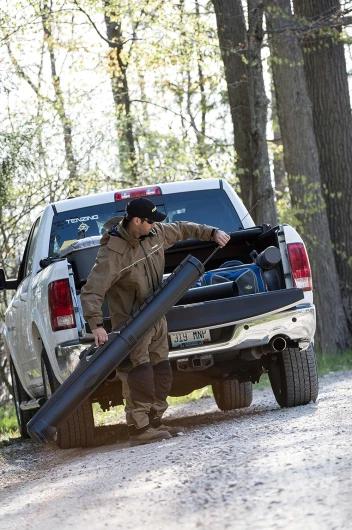
Hard polypropylene shell: solid protection with a plastic feel
The Plano Airliner uses polypropylene (PP) for its construction, which is a standard choice for rugged storage and outdoor gear. PP is known for being relatively light, resistant to many chemicals, and capable of taking some impact without shattering. For a rod case, that matters: the goal is to shield rod blanks and guides from knocks, bending, and incidental pressure during travel or storage. On paper, a full PP shell is well-suited to this job, especially compared to soft fabric sleeves or thin-walled tubes.
At an item weight of about 7.25 pounds, the material thickness seems substantial enough to inspire some confidence in terms of impact resistance. Many buyers in the reviews mention air travel, checked baggage, and car trips where this tube has apparently kept rods intact. People often contrast it with homemade PVC tubes: some say they prefer the Plano because it is more finished and easier to use, while still feeling robust. Others point out that a DIY PVC pipe can be heavier and sometimes even tougher, but lacks the telescoping convenience and molded handle.
The trade-off with polypropylene is that it is still plastic. A few reviews mention concerns about flex or potential cracking if the tube is severely abused, for example under very heavy luggage or if it is mishandled. There are isolated reports of stress marks or minor damage after especially rough travel, though these seem to be exceptions rather than the rule considering the volume of positive feedback. In my opinion, that’s expected: no plastic tube is invincible if an airline really mistreats it, but PP gives a decent balance of toughness and manageable weight.
Internally, there is no complex padding system advertised. The material focus is on the outer shell, not foam inserts or liners. Many buyers mention using their own padding: bubble wrap, towels, rod socks, or even pool noodles slit lengthwise to cradle rods. The shell provides the rigid barrier; the user supplies shock absorption. In my view, that’s a cost-saving choice by Plano that keeps the price and weight down while still leveraging the main advantage of polypropylene: a tough, molded tube that can take bumps and protect the fragile carbon or fiberglass inside. For anglers who already have protective sleeves, this is logical. For someone expecting a fully padded, ready-to-go interior, the bare PP shell might feel a bit spartan.
Long-term toughness and how it holds up to travel abuse
Durability is where the Plano Airliner’s hard plastic build really gets judged. The product has been on the market since 2008, and the current pool of more than 1,300 reviews with a 4.6/5 rating suggests it has seen a lot of real-world use. Many anglers report owning it for multiple trips or several seasons. They describe repeated flights, road trips, and storage cycles without structural failure, which implies that the polypropylene shell and telescoping mechanism hold up reasonably well over time when used sensibly.
That said, it’s still a plastic tube with moving parts. Among the reviews, there are some complaints about wear on the locking mechanism or concerns that the telescoping segments can loosen slightly after heavy use. A few users mention adding their own secondary restraints—like straps, tape, or zip ties—during rough travel, not because the case is falling apart, but because they don’t fully trust any single plastic lock under intense baggage handling. In my opinion, that kind of DIY reinforcement is common with travel gear in general, especially when expensive rods are inside.
There is also some discussion about the potential for cracking under extreme stress. Isolated comments mention damage when the case was subjected to what sounds like significant force, such as heavy items stacked on top of it or aggressive mishandling. These reports are not the majority, but they highlight the limits of polypropylene: it will flex and protect up to a point, and then it can crack if pushed beyond that. Compared to metal or very thick PVC, it’s lighter but not indestructible.
Overall, the durability picture is positive but not flawless. The long market history, high average rating, and repeated travel stories support the idea that this case can last for many trips if the user packs it carefully and doesn’t expect it to shrug off every possible abuse. In my view, anglers who want an ultra-bombproof solution for constant airline travel might still consider heavier DIY options, but for most users who fly occasionally or drive to fishing spots, the Plano Airliner offers a solid balance of toughness, weight, and convenience. The key is to treat it as a robust consumer product, not as an industrial-grade shipping container.

Real-world protection and capacity according to anglers
Performance for a rod case boils down to two things: does it protect rods and does it actually hold as many as claimed. On the first point, the Plano Airliner scores well in the eyes of most reviewers. Many anglers report that their rods arrived intact after flights or long drives, even when the exterior of the case picked up scuffs or minor dings. People mention using it for domestic and sometimes international travel, checking it as luggage, and being relieved to find guides and tips undamaged at the destination.
On capacity, the advertised "up to eight 7-foot rods" is technically accurate but a bit optimistic in a casual packing scenario. Buyers often say that fitting six to eight rods is possible if reels are removed and rods are carefully nested, sometimes alternating the direction of rod tips and butts. Several comments mention that they prefer to pack fewer rods and use the extra space for padding material, especially for air travel. In my opinion, that’s a reasonable approach: the spec sheet describes the upper limit, while comfortable real-world use often means slightly fewer rods plus protection.
One detailed anecdote that shows the protection level comes from a buyer who described checking the case on a flight where it clearly took some abuse. They noted visible marks on the outside and that airport staff hadn’t been particularly gentle with it. Despite that, the rods inside were reported to be unharmed, thanks partly to the hard shell and partly to the buyer’s own internal padding with towels and rod sleeves. That kind of story appears in different forms in the reviews and fits with the 4.6/5 average rating: most people see the case as effective at its main job when they pack it sensibly.
There are, of course, a few mixed or negative comments. Some mention that the telescoping sections can slide slightly if not locked firmly, so they add extra straps or tape for extra security during airline travel. Others point out that the tube can flex a bit under heavy pressure, which is expected for plastic. In my view, the performance is solid for typical use: car travel, reasonable airline handling, and storage. It’s not a steel pipe, and expecting indestructibility would be unrealistic, but for a consumer-grade fishing rod case, it delivers decent protection and functional capacity when used with a bit of care.
What the Plano Airliner Telescoping Rod Case actually offers
The Plano Airliner is marketed as a telescoping hard rod case aimed mainly at travel and storage. The three-tier design lets the tube extend from roughly 47 inches up to 88 inches, which aligns with its claim of holding rods up to 7 feet. Several reviews mention using it specifically for airline travel, road trips, or transporting multiple rods to vacation spots, which matches the "Guide Series" positioning: geared more toward anglers who move around rather than those who leave gear in one place.
Capacity is one of the strong selling points. Plano states that it can store up to eight 7-foot rods. Buyers often point out that how many rods actually fit depends on the type of rods (spinning vs baitcasting), how bulky the guides are, and whether reels are removed. Some comments suggest that packing it with eight full-size rods is doable but requires some care with positioning and padding. Others seem content using it for fewer rods with extra room for bubble wrap, socks, or rod sleeves to avoid scratching and rattling.
In terms of basic specs, the case is about 7.25 pounds, made from polypropylene, and has a 4.5-inch diameter. The case itself is black, with a comfort-molded handle and a position locking device to keep the telescoping segments set at a chosen length. The style name "Guide Series Airliner Telescoping" hints that it’s meant to be tough enough for checked luggage, though of course, how it holds up depends a lot on how it’s packed and how baggage handlers treat it.
From the overall description and comments, the Plano Airliner comes across as a straightforward piece of gear: a long, adjustable, hard plastic tube built to protect rod blanks and tips from direct impact and bending during transport. There’s no built-in reel storage, fancy padding system, or organizational insert. In my opinion, that fits anglers who already use rod socks or simple wraps and just need a sturdy outer shell, rather than someone looking for an all-in-one rod-and-reel luggage system with compartments and dividers.
Pros
- Hard polypropylene shell with telescoping three-tier design (47" to 88") for flexible rod lengths
- Holds up to eight 7-foot rods, allowing multiple setups in one case
- Strong user feedback (4.6/5 from 1,300+ ratings) and long time on the market suggest solid real-world reliability
Cons
- Interior is bare; users need to add their own padding and rod socks for best protection
- No wheels or shoulder strap, so carrying a long loaded tube can be awkward over distance
- Plastic locks and shell are durable for normal use but not immune to extreme airline abuse
Conclusion
Analysis score
The Plano Airliner Telescoping Rod Case is a straightforward solution for anglers who actually move their gear around and worry about broken tips and crushed guides. With its three-tier telescoping design (47 to 88 inches), hard polypropylene shell, and the ability to carry up to eight 7-foot rods, it covers the main needs of travel and storage without getting overly complicated. The 4.6/5 average rating from more than 1,300 reviews and a strong category rank show that it has earned the trust of a lot of users over many years.
It’s not perfect. The interior is bare and expects you to provide your own padding. The locking mechanism and plastic construction are solid for consumer use but not indestructible, especially under brutal airline handling. Carrying comfort is acceptable but basic: no wheels, no shoulder strap, just a molded handle on a long tube. In my opinion, it offers good value for anglers who travel with several rods and want a ready-made, adjustable hard case that “gets the job done” without DIY work. If you mostly fish close to home with one or two rods, or you want ultra-heavy-duty, bombproof protection, there are cheaper soft options and heavier DIY PVC builds that might suit you better.