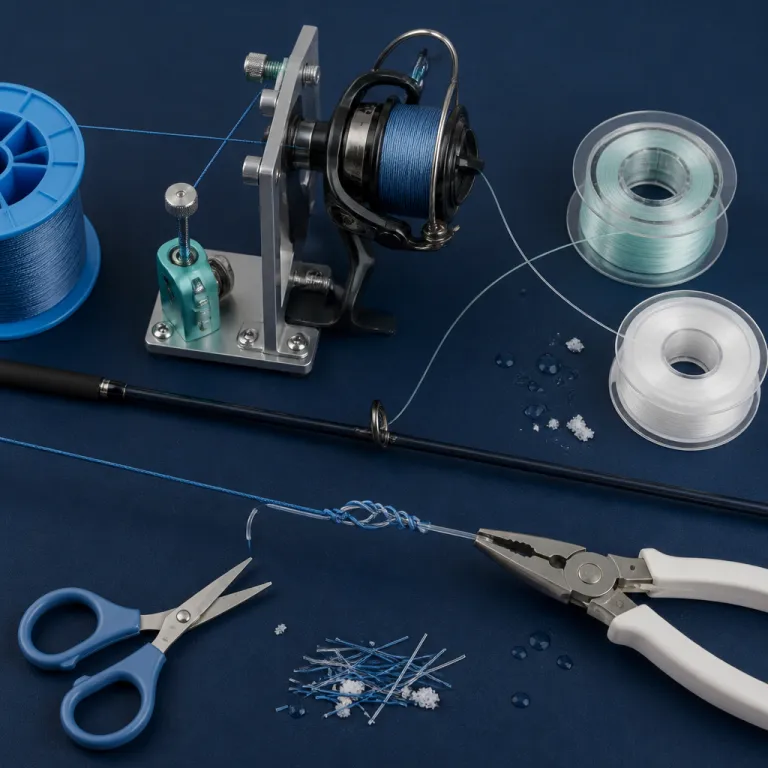
The three main line types explained in real fishing terms
Walk into any tackle shop and the wall of fishing line can freeze you in place. You see monofilament line, fluorocarbon line, and every color of braided line, while your buddy talks about comparing mono, fluoro, and braid like it is obvious. The truth is that these three main line families behave very differently once a fish eats and your rod loads.
Monofilament, usually called mono, is a single strand of nylon that floats and has noticeable stretch. That stretch and the natural memory make mono forgiving when a bass surges at the boat or when treble hooks on a crankbait barely skin hook a fish. On a medium power spinning rod around 7 feet, a 6 to 10 pound monofilament line is often the best safety net for beginners learning how much pressure to apply.
Fluorocarbon is a denser material that sinks, looks closer to water in refractive index, and feels stiffer in your hand. A straight fluorocarbon line in 8 to 12 pound test shines for clear water bass fishing with finesse plastics, but that same stiffness can amplify bad fishing knots if you rush them. Many anglers shorten the learning curve by running braid-to-fluorocarbon combinations, using a thin braided main line and a fluorocarbon leader for stealth near the lure.
Braid is made from woven fibers, giving you almost no stretch and a very thin diameter for a given pound rating. That lack of stretch turns light bites into clear taps on your spinning reels, yet it also means a mistake with drag or rod angle can rip hooks free. When you compare braid versus mono or fluoro in heavy cover, braid wins for cutting through weeds, but it loses invisibility battles in ultra clear lakes.
For a practical comparison between monofilament, fluorocarbon, and braided line, think in simple traits rather than marketing slogans. Mono stretches and forgives, fluorocarbon sinks and hides, while braid transmits and slices through cover. Once you frame the main types this way, matching lines to your local fish and favorite lures becomes a lot less mysterious.
When mono, fluoro, and braid each make more sense on the water
Line choice should start with how and where you fish, not with brand hype. On my local pond outside Raleigh, a basic monofilament line still handles most weekend bass fishing with topwaters, poppers, and shallow crankbaits. Because mono floats and has stretch, it keeps walking baits riding high and gives treble hooks time to dig in without tearing skin.
When I move to a clear highland reservoir like Smith Mountain Lake, a straight fluorocarbon line in 8 pound test on a spinning setup becomes my default for finesse. That sinking fluoro helps a weightless stickbait fall naturally, while the low visibility coaxes pressured fish that have seen every loud lure in the catalog. In this situation, a fluorocarbon leader tied to a braid main line with a double uni knot gives casting distance, sensitivity, and stealth in one system.
Braid really earns its keep around heavy cover, whether that is hydrilla mats in Florida or laydowns on the Tennessee River. A 30 to 50 pound braided line slices through vegetation and hauls bass out before they wrap you, something a lighter mono or comparable fluoro would struggle to manage. When you are flipping jigs with big hooks into gnarly wood, a heavier braid-plus-fluoro combination with a short fluoro leader lets you lean hard without fear.
For moving baits like spinnerbaits and chatterbaits around scattered cover, I still prefer mono or a softer fluorocarbon line. The built in stretch acts like a shock absorber when a fish eats at the boat, especially with fast action rods that already load quickly. If you insist on braid for everything, at least run a longer fluorocarbon leader so your treble hooks and single hooks have some cushion.
New anglers often ask which fishing knots to trust when mixing these main types, and the answer is simpler than it looks. Learn one strong connection knot such as the double uni for joining braid to a fluoro leader, then one reliable terminal knot for tying to hooks or lures. A focused approach like the one in this guide on the only three knots you need on any water will serve you better than chasing every fancy knot on social media.
How leaders and braid fluoro setups actually work for beginners
Many experienced anglers quietly run braid main line with a fluorocarbon leader or sometimes a mono leader, even when their reels look spooled with one color. The idea is simple; you use braid for strength, low stretch, and long life, then add a short section of fluoro leader or monofilament leader for invisibility and shock absorption. This braid fluorocarbon pairing gives you the best parts of each material when you tie it correctly.
On a 2500 size spinning reel, I often spool 15 pound braided line as the main line, then add a 1 to 2 meter fluorocarbon leader in 8 pound test. That setup has landed plenty of pressured bass on Lake Norman where clear water and boat traffic make fish line shy. The fluoro leader near the lure keeps the presentation natural, while the braid above it handles repeated casting, hooksets, and the occasional brush with dock posts.
For topwater bass fishing, I sometimes swap the fluorocarbon leader for a short mono leader to keep the nose of the bait riding high. Fluorocarbon sinks and can drag small walking baits down, whereas a monofilament line section floats and works better with treble hooks. This is one of those small adjustments that separates a frustrating morning from a steady pick of fish along a shaded bank.
Connection knots matter more than brand labels when you build these systems, especially with different line diameters. The double uni knot is easy to learn, passes through guides smoothly, and holds well when joining a thin braid to a thicker fluoro leader. If you want to push into heavier line for flipping, you can scale up to 30 pound braid with a 15 to 20 pound fluorocarbon leader and still rely on the same knot.
Budget plays into this braid fluoro strategy too, because braid costs more up front but lasts longer on the spool. I have run the same main braided line on a baitcaster for several seasons, only replacing the fluorocarbon leader as abrasion and time wear it down. For a deeper look at why a 30 pound braided fishing line can change how you fish heavy cover, this breakdown on why a 30 lb braided fishing line is a game changer is worth reading before your next tackle order.
Matching line, rod, and reel without getting lost in pound test
Too many beginners obsess over exact pound test numbers instead of matching line to their rod and reel. Your rod blank usually lists a recommended line range, and staying inside that window keeps casting and hooksets predictable. A medium light spinning rod rated for 4 to 10 pound line will not behave well with a 30 pound heavier line, no matter what a friend claims online.
On spinning reels, lighter lines behave better because the wide spool and line twist exaggerate any stiffness or memory. A 6 to 10 pound monofilament line or an 8 pound fluorocarbon line works smoothly for most finesse bass fishing, trout, and panfish. If you want the sensitivity of braid on spinning gear, choose a 10 to 15 pound braided line with a lighter fluorocarbon leader so the system still balances.
Baitcasting reels handle heavier line and braid more comfortably, especially for techniques around heavy cover. A 12 to 17 pound fluoro or mono main line pairs well with medium heavy rods for jigs, Texas rigs, and spinnerbaits. When you step up to flipping grass or wood, a 30 to 50 pound braid with a short fluoro leader lets you drive big hooks home without overpowering the blank.
Hook style also influences the right fishing line choice, because different hooks load the system differently. Treble hooks on crankbaits and jerkbaits benefit from mono or a softer fluorocarbon line, which adds stretch and keeps small points pinned during surges. Single hooks on jigs or Texas rigs pair better with braid or low stretch fluoro, giving you the power to punch through plastic and bone.
When in doubt, keep your first setups simple and focused on how you actually fish. One spinning combo with 8 pound mono or fluoro and one baitcaster with 30 pound braid and a fluorocarbon leader will cover most bass fishing situations. As you gain time on the water, you can fine tune pound test, line brands, and specific rods instead of chasing every new product from trade shows like those covered in this analysis of what actually matters for weekend anglers at ICAST.
Budget, maintenance, and common line mistakes new anglers make
Line is one of the cheapest parts of your fishing setup, yet it controls whether you actually land fish. A thoughtful comparison of mono, fluorocarbon, and braid should include cost over time, not just how a spool feels in your hand. Braid usually costs more per meter, but it can last three or four seasons if you check for frays and occasionally flip the line on the spool.
Monofilament and straight fluorocarbon lines are cheaper up front, but they degrade faster from UV light, stretch, and repeated stress. If you fish often, plan to replace mono at least once a season and fluoro a bit more often on your most used reels. Ignoring old line is one of the main types of beginner mistakes, right alongside using the wrong pound test for the species or cover.
Spinning setups in particular suffer when anglers overfill the spool or choose a stiff heavier line that jumps off in coils. Leave a couple of millimeters of lip showing on the spool, and avoid going above 10 pound mono or 8 pound fluoro on most 2500 size spinning reels. If you want more strength, step to a thin 10 or 15 pound braid with a lighter fluorocarbon leader instead of forcing thick mono.
Another common error is tying rushed or inappropriate fishing knots for the material, then blaming the line when it fails. Fluorocarbon line needs slow, lubricated cinching to avoid burning, while braid benefits from extra wraps or specific knots to prevent slipping. Take the time at home to practice a double uni for leaders and one or two terminal knots until you can tie them cleanly with your eyes closed.
Storage habits matter too, because heat and sunlight accelerate damage to mono and fluoro lines. Do not leave rods rigged in a hot car for days, and avoid resting line against sharp edges in the boat or on the bank. A little care extends the life of every spool, which means more money left for better hooks, fresh lures, and maybe a second rod that fills a gap in your lineup.
The simple starting plan: just pick one setup and go fish
When you are new, the perfect fishing line system matters less than actually getting time on the water. A clear, honest comparison of mono, fluorocarbon, and braid should end with a simple recommendation you can spool today. For most weekend anglers chasing bass and panfish from shore or a small boat, one spinning combo with 8 pound mono is still the best starting point.
That basic monofilament line gives you stretch, forgiveness, and easy knot tying while you learn how fish actually fight. You can throw small crankbaits with treble hooks, weightless worms, and even light topwaters without worrying about line sink rate or leader knots. As you gain confidence, add a second spool or reel with 10 to 15 pound braided line and a short 8 pound fluorocarbon leader for deeper or clearer water.
If you already know you will fish around heavy cover like lily pads, laydowns, or docks with sharp posts, start with braid on at least one rod. A 30 pound braided line on a medium heavy baitcaster, paired with a 12 to 15 pound fluoro leader, will handle most bass fishing chores in those snaggy zones. Keep your knots simple, your pound test within the rod rating, and your focus on smooth hooksets rather than raw power.
Over time, you will feel how mono stretch saves you on reaction baits, how fluoro sensitivity helps with subtle bites, and how braid cuts through grass when a big fish digs in. That lived experience will teach you more than any chart or marketing claim about the three main line families. In the end, the right choice is not the one with the fanciest label, but the one that still holds when a bass surges boatside on your tenth cast in the rain.
Key figures every angler should know about fishing lines
- According to manufacturer diameter charts from brands such as PowerPro and Sufix, braided line of 15 pound test typically has the same diameter as 4 to 6 pound monofilament, which explains why braid casts farther and cuts through current more efficiently. For example, PowerPro’s published specs list 15 pound braid at roughly 0.19 mm, similar to many 6 pound mono offerings.
- Independent abrasion tests published by tackle reviewers, including archived TackleTour line shootouts and controlled “rub tests” shared by experienced anglers, consistently show that many fluorocarbon lines withstand roughly 20 to 30 percent more abrasion cycles than comparable mono before failure, which supports their use around rocks and sparse cover.
- Field surveys of recreational anglers in the United States, including participation reports summarized by the American Sportfishing Association and follow-up questionnaires in bass fishing magazines, indicate that a majority of dedicated bass anglers now use some form of braid-to-fluorocarbon leader system, reflecting the shift toward hybrid setups rather than single material spools.
- Laboratory stretch measurements reported in line testing articles and manufacturer technical sheets indicate that common monofilament lines can stretch up to 20 to 25 percent under load, while many braided lines stretch less than 5 percent, dramatically changing how hooksets feel at the rod. TackleTour’s historical stretch tests and several manufacturer white papers both echo this gap.
- Cost comparisons across major brands in retailer catalogs show that braid can be two to three times more expensive per meter than mono, yet many anglers keep the same braided main line on a reel for three or more seasons, reducing long term cost per trip. Rotating the line on the spool and trimming worn sections further extends that usable life.
FAQ: practical questions about mono, fluoro, and braid
What is the best all around line for a first spinning combo ?
For a first spinning combo, an 8 pound monofilament line is usually the best all around choice because it casts easily, ties simple knots, and has enough stretch to forgive mistakes with drag and hooksets. It works for bass, panfish, and light trout fishing without needing a separate leader. Once you are comfortable, you can add a second spool with light braid and a fluorocarbon leader for clearer water.
When should I choose fluorocarbon instead of mono ?
Fluorocarbon makes more sense than mono when you fish clear water, deeper presentations, or bottom contact lures where sensitivity and low visibility matter. A straight fluorocarbon line in 8 to 12 pound test is ideal for finesse bass fishing with soft plastics, jigs, and small swimbaits. It is less forgiving than mono, so pay extra attention to knot quality and replace sections that show nicks or cloudiness.
How strong should my braid be for bass fishing in heavy cover ?
For bass fishing in heavy cover such as grass mats, laydowns, or docks, most anglers use 30 to 50 pound braided line on baitcasting gear. Thirty pound braid handles most mixed cover with jigs and Texas rigs, while 50 pound is common for punching thick vegetation. Pair it with a 12 to 20 pound fluorocarbon leader if you need some abrasion resistance and stealth near the lure.
Do I always need a leader when using braid ?
You do not always need a leader with braid, but a leader improves stealth and abrasion resistance in many situations. In stained or muddy water around wood, straight braid to the lure is often fine and simplifies your setup. In clear water or around rocks and shell beds, adding a 1 to 2 meter fluorocarbon or mono leader protects the braid and reduces the chance of line shy fish.
How often should I replace my fishing line ?
Monofilament and fluorocarbon lines used frequently should usually be replaced at least once per season, or sooner if you notice frays, discoloration, or memory coils. Braided line can last several seasons as a main line if you regularly check the first few meters for damage and cut back worn sections. Heavy use around rocks, docks, or saltwater environments may require more frequent changes regardless of material.