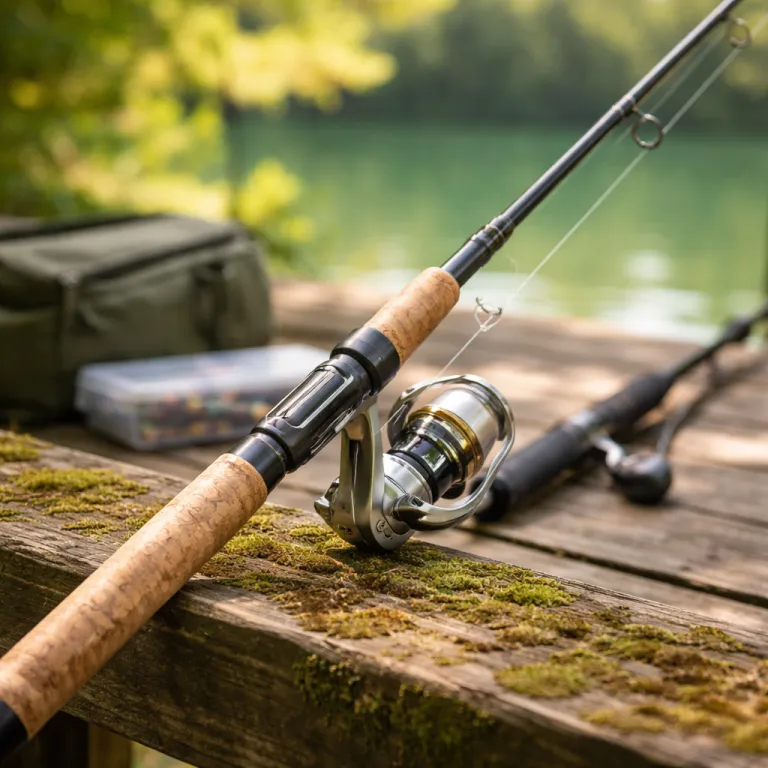

Why your first fishing rod matters more than the catalog
Your first fishing rod shapes how you feel about beginner fishing. If that rod feels heavy, clumsy, and throws tangles every second cast, you will assume fishing itself is frustrating rather than realising the wrong rod and reel setup is holding you back. A well balanced spinning rod with a forgiving action turns those first awkward hours into actual fun on the water.
When I take new anglers to small ponds for freshwater fishing, I always start them with a 6'6"–7'0" (about 1.98–2.13 m) spinning combo, never a random fishing pole from the bargain bin. That length gives enough casting distance to reach cruising fish while staying short enough that a beginner can control the rod tip without feeling like they are swinging a broom. The best beginner setups feel light in hand, load smoothly on the back cast, and recover quickly without wobble, which is where carbon fiber blanks really earn their keep.
Think of the rod as your transmission and the fishing reel as your engine, because both must match or the whole system grinds. A mismatched rod and reel pairing, such as an ultralight pole with a heavy 4000 size spinning reel, ruins balance and makes every cast feel like work. When you are choosing the best fishing rod for beginners, you are really choosing how your body, your line, and the fish will connect through that blank, the guides, and the reel seat on every single retrieve.
The only specs that matter on a beginner fishing rod
Rod marketing throws a wall of jargon at you, but three specs decide whether a fishing rod works for a new angler. Length, power, and action together tell you how far you can cast, how big a fish you can handle, and how forgiving the blank will be when your timing is off. Get those right and almost any decent carbon or composite build will feel like the best beginner tool for your local water.
Length is simple; for bank based freshwater fishing, a 6'6"–7'0" spinning rod hits the sweet spot. Shorter rods under 6'0" feel precise but limit casting distance, while longer rods over 7'6" start to feel unwieldy for someone still learning to control the tip. Power describes how much force it takes to bend the blank, so a medium or medium light power rod gives enough backbone for bass fishing without punishing mistakes on smaller fish.
Action describes where along the blank the bend happens when you load the cast or fight a fish. A moderate or moderate fast action spreads the load deeper into the rod, which protects light line and cheap stainless steel guides from shock when a carp or big perch surges near the bank. True fast action rods have their place for jigging and contact fishing, but for the best fishing rod for beginners I prefer a slightly slower action that masks timing errors and keeps treble hooks pinned more reliably.
Combo marketing often hides these key features behind flashy graphics and vague claims about elite performance. Ignore the hype and read the small print on the blank for length, power, and action before you look at price or brand. If you want to understand how rod design is evolving, recent public spec sheets from major brands such as Shimano and G Loomis show how much attention serious manufacturers now give to matching action and power to specific techniques.
Combo versus separate rod and reel for your first setup
For a first purchase, a matched rod and reel combo usually beats piecing gear together. A good spinning combo arrives balanced, with a reel seat that fits properly, guides aligned, and a fishing reel sized to the blank, which removes half the ways a beginner can accidentally sabotage their own casting. The cons are that you sacrifice some upgrade flexibility, but the gains in simplicity and fair price usually outweigh that for your first season.
When you buy a separate fishing rod and fishing reel, you can choose an elite blank, a smoother drag, and stainless steel bearings tailored to your style of fishing. That approach makes sense once you know whether you love bass fishing with soft plastics, long range casting for trout, or vertical jigging for zander. For a beginner fishing their local lake twice a month, though, a solid mid range spinning combo keeps the decision tree short and the learning curve gentle.
Look for reel combos that list clear key features such as carbon fiber construction, a sealed drag, and corrosion resistant stainless steel guides. Avoid kits that throw in random tackle, gift cards, or flashy packaging instead of investing in the blank and reel internals, because those extras rarely help you catch more fish. If you are curious about how multi purpose travel rods and compact spinning poles can work as a second setup later, independent field tests published by specialist fishing magazines show what a truly versatile combo can do when designed well.
Three field tested picks by budget for the best beginner rod
Under the equivalent of about 75 dollars, I like the Ugly Stik GX2 spinning combo in the 6'6" medium power version as a first fishing pole. The blank is not pure carbon fiber, but the composite construction shrugs off car doors, dropped tips, and clumsy high sticking that would snap more elite rods, which matters more than sensitivity when you are still learning. Its stainless steel guides and simple reel seat are not fancy, yet they hold up well to cheap monofilament and the occasional knock on a concrete pier.
In the mid range under roughly 150 dollars, the Okuma Tavares combo stands out as one of the best beginner options I have actually bought and fished. The carbon fiber blank feels crisp without being brittle, the sealed spinning reel body keeps grit out when you set the combo down on a muddy bank, and the drag stays smooth under steady pressure from a strong fish. For most new anglers targeting mixed species in freshwater fishing, that Okuma setup hits the right balance of price, durability, and on water performance.
If you are willing to stretch toward 250 dollars for a first serious setup, look at a 7'0" medium fast action spinning rod from a reputable brand paired with a 2500 size reel, bought separately rather than as a prebuilt combo. At that level you get lighter carbon construction, higher quality stainless steel guides, and a more refined drag that shines when bass fishing with light braid and fluorocarbon leaders. Just remember that a premium rod does not automatically make you a better angler; it simply rewards clean casting technique and good hook setting habits that you will build only by spending time on the water.
What to skip on your first purchase and how to upgrade later
New anglers often overspend on specialized rods and under invest in time spent actually fishing. Skip technique specific casting rods, ultra fast action jig sticks, and extra reels until you have logged at least a full season with one reliable spinning combo, because those tools only shine once your fundamentals are solid. A single medium power spinning rod will handle bobbers, small lures, and light bottom rigs well enough that you can focus on reading water and feeling bites.
Do not chase the absolute best or most elite label on the rack when you are still figuring out whether you prefer bass fishing, float fishing for roach, or light lure work for perch. Avoid premium braided line, boutique fluorocarbon, and expensive rod and reel covers on day one, since those upgrades add cost without fixing basic casting or hook setting errors. Instead, spend that money on a simple tackle selection and maybe a session with a more experienced angler who can watch your cast and correct your wrist angle.
Once you know what you enjoy, your second rod should fill a clear gap rather than duplicate your first fishing rod. If your starter combo was a spinning rod for general freshwater fishing, rod number two might be a dedicated casting rod for heavier lures or a longer float rod for river work, chosen with a specific fish and technique in mind. When you are ready to refine your rigging, a focused guide on choosing swimbait hooks that turn follows into solid hookups will help you match hooks, line, and rod action so that your gear works as a coherent system.
How and where to buy your first rod without getting burned
Buying your first fishing rod online is tempting because the price looks sharp and delivery is fast. The downside is that you cannot feel how the rod balances with a reel, whether the reel seat fits your hand, or how the blank recovers after a firm shake, which are all things that matter more than catalogue photos. For the best fishing rod for beginners, I strongly prefer that anglers handle at least a few rods in person before they commit.
At a local tackle shop, pick up several fishing rods in the 6'6"–7'0" range and mount a 2500 size spinning reel on each to check balance. The combo should balance roughly where your index finger grips the rod, not way out toward the guides or back at the butt, because good balance reduces fatigue and makes it easier to feel subtle taps from a cautious fish. Run your fingers along the stainless steel guides to check for rough spots, and flex the blank gently to feel how the action loads under moderate pressure.
When you are ready to pay, do not feel pressured into the highest price tag just because you are using a credit card rather than cash. Ask the shop staff to walk you through the key features of each candidate combo, including blank material, drag design on the fishing reel, and warranty terms, then weigh those against your actual fishing plans for the next year. If you still prefer online buying, use retailers that offer clear return policies, fair delivery options, and the ability to use gift cards so you can swap out a rod that does not feel right once you have it in hand.
Key figures on beginner rods and recreational fishing
- Search interest for the phrase best fishing rod for beginners reaches roughly 8,100 monthly queries worldwide according to widely used third party keyword tools such as Ahrefs and Semrush, which shows how many new anglers are trying to make a smart first purchase rather than guessing.
- Industry surveys from major tackle retailers, including annual reports from chains like Bass Pro Shops and Decathlon, indicate that more than half of first time rod buyers choose spinning combos, reflecting the relative ease of use compared with casting setups for casual freshwater fishing.
- Field tests of mid range carbon fiber rods published in mainstream fishing magazines consistently show weight reductions of around 15 to 25 percent compared with older fiberglass designs, based on side by side measurements of popular models, which directly reduces fatigue for beginner fishing sessions that last several hours.
- Warranty data summarised in public statements from large brands suggests that most beginner rod failures occur within the first ten outings, usually from high sticking or car door accidents, underscoring the value of durable blanks and forgiving actions on first rods.
FAQ about choosing the best fishing rod for beginners
What length rod should a beginner start with for freshwater fishing ?
Most beginners do well with a spinning rod between 6'6" and 7'0" in length. That range offers enough casting distance for ponds and small lakes while staying short enough to control easily. It also matches well with common 2500 size spinning reels and medium power ratings.
Is a spinning combo better than a casting combo for a first rod ?
For most new anglers, a spinning combo is the better choice because it tangles less and handles light lures more easily. Casting combos shine for heavier lures and precise bass fishing once your thumb control is developed. Starting with spinning lets you focus on reading bites and fighting fish rather than managing backlashes.
Do I need carbon fiber for my first fishing rod ?
You do not strictly need a full carbon fiber blank, but it helps. Carbon construction reduces weight and improves sensitivity compared with pure fiberglass, which makes learning to feel bites easier. Many of the best beginner rods use carbon or carbon composite blanks paired with durable stainless steel guides.
How much should I spend on my first rod and reel setup ?
A realistic budget for a first rod and reel combo is usually between 60 and 150 dollars or the equivalent in your local currency. Below that range, quality control on blanks, guides, and reels can be inconsistent, which leads to frustration. Above that range, you pay for refinements that matter more once your technique is already solid.
When should I upgrade from my first beginner combo ?
Upgrade once you have fished regularly for at least a season and can clearly describe what your current combo does not do well. Maybe you want a faster action for jigging, a longer rod for float fishing, or a dedicated casting setup for heavier lures. Let your actual fishing experience, not marketing claims, dictate what rod number two should be, because the real test is not the spec sheet, but the tenth cast in the rain.