
Summary
Editor's rating
Value for money: fair price if you need this power range
Design: simple, functional, no nonsense
Comfort: light, well-balanced, but not for tiny hands
Materials and build: mid-range carbon that feels reliable
Durability: solid so far, but not a tank
Performance on the water: strong for pike and trout, a bit stiff for perch
What this ORRA Predator actually is on paper
Pros
- Lightweight and well-balanced for a 2.44 m medium-heavy rod, comfortable for long sessions
- Decent sensitivity and backbone for pike and bigger trout with 12–35 g lures
- Clean build quality with stainless guides, EVA handle and a practical hook keeper at a fair mid-range price
Cons
- A bit too stiff and overpowered for finesse perch fishing and very light lures
- Sensitivity and overall feel are good but not on par with higher-end, more expensive rods

Specifications
View full product page →| Brand | Abu Garcia |
A mid-priced predator rod that actually feels decent in hand
I’ve been using the Abu Garcia ORRA Predator Spinning Rod in 2.44 m / 10–40 g for several sessions now, mainly on lakes and slow rivers for pike and bigger trout. I’m not sponsored, I paid for it, and I’ve fished it in typical mixed conditions: a few short evening sessions after work and two longer weekend days throwing lures almost non-stop. So this is not a showroom impression; it’s based on getting the rod wet and a bit abused.
The first thing that struck me when I picked it up was the weight. At 163 g for a 2.44 m rod, it really is on the light side for this power range. After a few hours of casting 20–30 g lures, my wrist and forearm were less tired than with my older 2.40 m budget pike rod, which is already a good sign. Abu Garcia markets it as a predator rod, and in practice it feels tuned more for pike and bigger trout than for finesse perch work.
Over several outings I’ve paired it mostly with a 3000/4000 size reel and braided line around 0.12–0.16 mm, fishing soft swimbaits, spinners and small jerk-style lures up to roughly 35 g. I’ve hooked into a few decent fish with it: a couple of small pike, one mid-70s pike, and some stronger brown trout in fast current. That gave me a good idea of how the blank bends, how the drag feels through the rod, and how forgiving it is when a fish shakes its head close to the bank.
Overall, my first impression is that it’s a pretty solid mid-range rod: light, fairly sensitive, with enough backbone for pike. It’s not perfect – especially if you mostly target perch or like ultra-soft tips – but for someone who wants one rod to cover a lot of predator situations without spending a fortune, it gets the job done. The rest of the review goes into details: build, comfort, performance on the water, and whether I think it’s worth the money compared to cheaper and more expensive options I’ve used.
Value for money: fair price if you need this power range
On the value side, the ORRA Predator sits in that mid-range zone: not cheap, not premium. You can definitely find spinning rods for less money that will still catch fish, but they’re often heavier, less sensitive, and not as nicely finished. With this Abu Garcia, you’re paying for a decent brand, a reasonably light 24T carbon blank, stainless guides, and a handle that’s actually comfortable for long sessions. For the price, I think the overall package is good but not mind-blowing.
Compared to some cheaper house-brand rods I’ve used in the same length and casting weight, the ORRA feels lighter, better balanced, and more responsive. Casting all day with it is simply easier on the body. The blank also feels more controlled when playing fish, with fewer random dead spots. So if you currently use a very basic rod and want an upgrade without jumping to high-end prices, this is a sensible step up. It’s not going to feel like a top-tier JDM rod, but it’s clearly a level above entry-level stuff.
Where the value is less clear is if you already own a decent medium-heavy spinning rod. In that case, this might not bring anything dramatically new. It’s a solid, reliable tool, not some huge upgrade in performance. Also, if your main target is perch with light lures, you’re basically paying for power you don’t need and you’d be better off with a lighter-rated rod. On the other hand, if you mainly throw 12–35 g lures for pike and bigger trout and want one rod to cover a lot of situations, the price starts to make more sense.
So my take: for someone who wants a light, comfortable pike/trout rod in the 10–40 g range, and doesn’t want to overspend, the value is good. There are cheaper options, but they usually compromise on weight and feel. There are better rods, but they cost quite a bit more. This sits in a sensible middle ground. Not a bargain of the century, but a fair deal for what you get.
Design: simple, functional, no nonsense
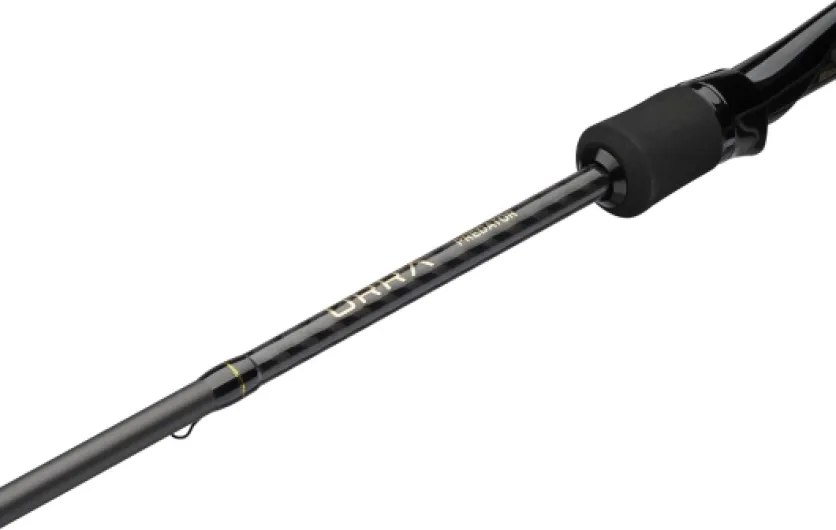
Design-wise, the ORRA Predator is fairly understated, which I like. The blank is matte to semi-matte black with some small graphics and model info, but nothing overly shiny. On the bank it just looks like a normal predator rod, not some neon toy. The logos and printing are clean and haven’t started rubbing off yet despite being in and out of rod sleeves and cars. The overall look is closer to practical than flashy, which matches how it fishes.
The guide layout is pretty standard for a 2.44 m spinning rod. The stainless steel anti-tangle guides are not the smallest micro guides on earth, but they’re not chunky either. They pass leader knots (braid to fluorocarbon) without too much noise, and I haven’t had any weird line wrap issues, even when throwing into the wind. The tip guide is aligned properly, and on my unit the guide spacing was straight – no obvious misalignments or cheap build mistakes. That sounds basic, but with some cheaper rods you still see crooked guides out of the box.
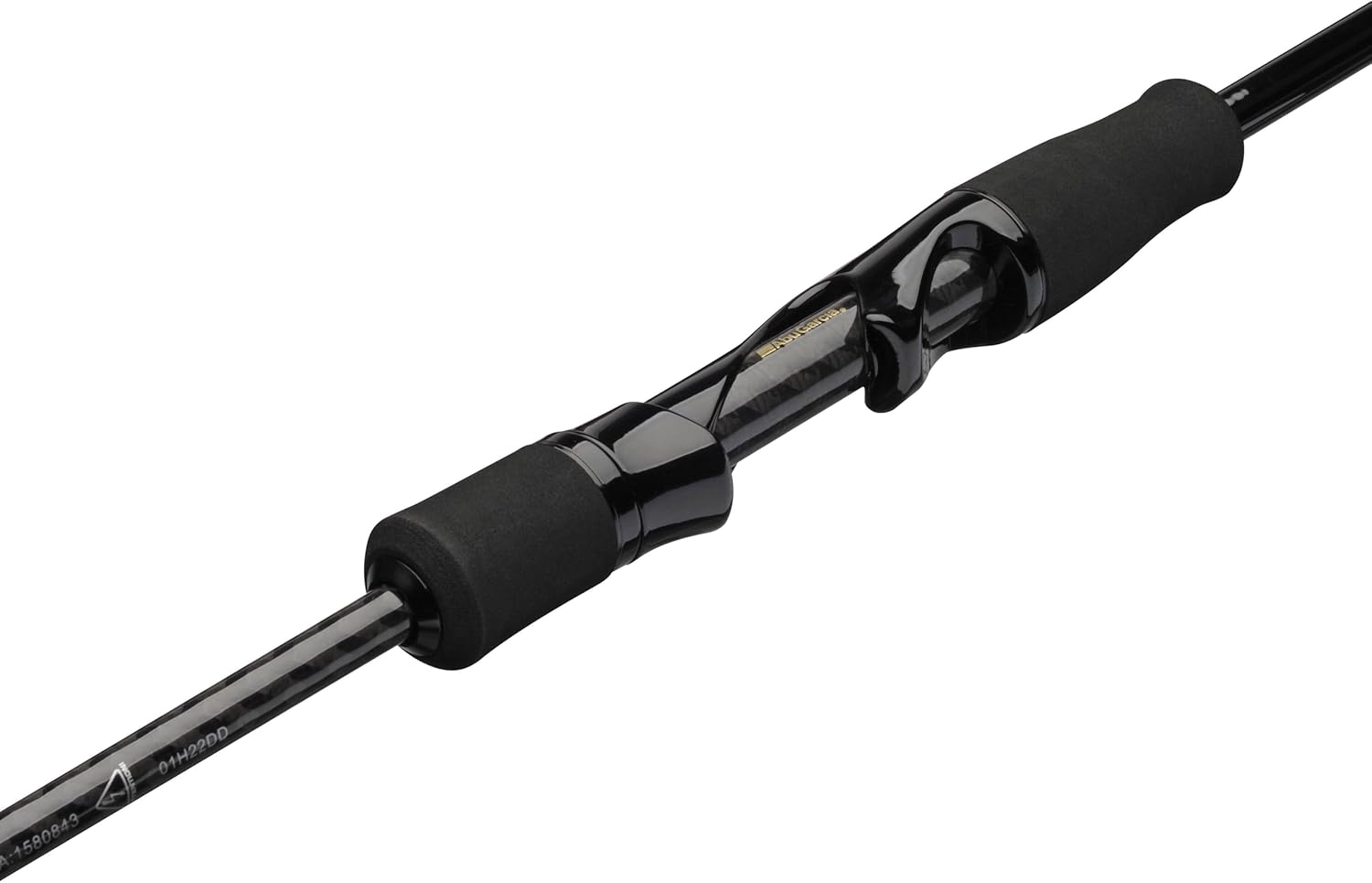
The hook keeper is placed in a sensible spot above the handle, so you can clip a lure without the hooks catching the reel seat or line. It’s big enough to take slightly larger trebles from pike lures, not just tiny jigheads. I used it a lot when walking between swims, and it kept the lure in place, which is all I ask. The butt section has a simple butt cap, again nothing fancy, but it protects the rod when you rest it on the ground or wedge it against something.
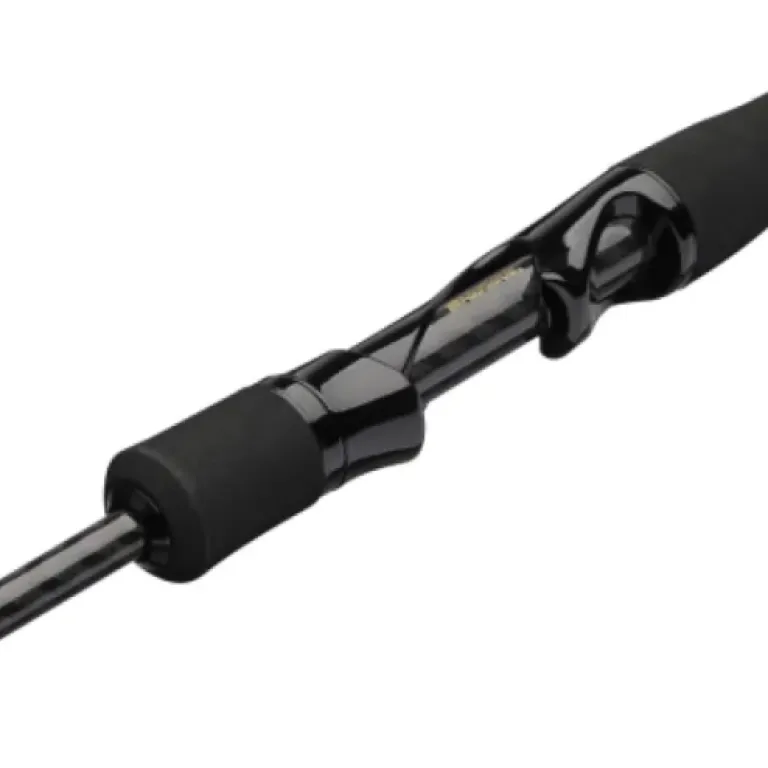
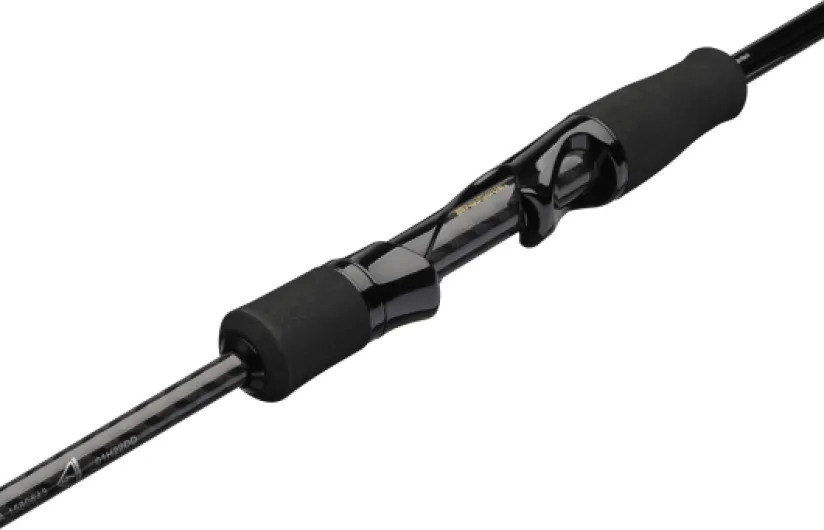
The reel seat design is one of the more noticeable parts: the WTS reel seat with blank touch has a cut-out that lets you rest a finger directly on the blank. In practice, it does help a bit with feeling knocks and vibrations, especially with braid. I wouldn’t say it turns you into a bite-detecting machine, but compared to a fully enclosed, chunky reel seat on cheaper rods, you do feel more of what’s going on. Overall, the design feels thought-through for actual fishing, not just for looking nice in photos. It’s simple, functional and, most importantly, nothing about it annoyed me while fishing, which is a good sign.
Comfort: light, well-balanced, but not for tiny hands
Comfort is probably the biggest plus of this rod for me. At 163 g for a 2.44 m medium-heavy stick, it’s genuinely light in hand. With a 3000-size reel it balances around the front of the reel seat, which feels natural when working lures. After a full day of casting 15–30 g soft baits and spoons, my arm was noticeably less tired than with my older, heavier 2.40 m rod. If you often do long bank sessions or cover a lot of water, that difference in fatigue is real.
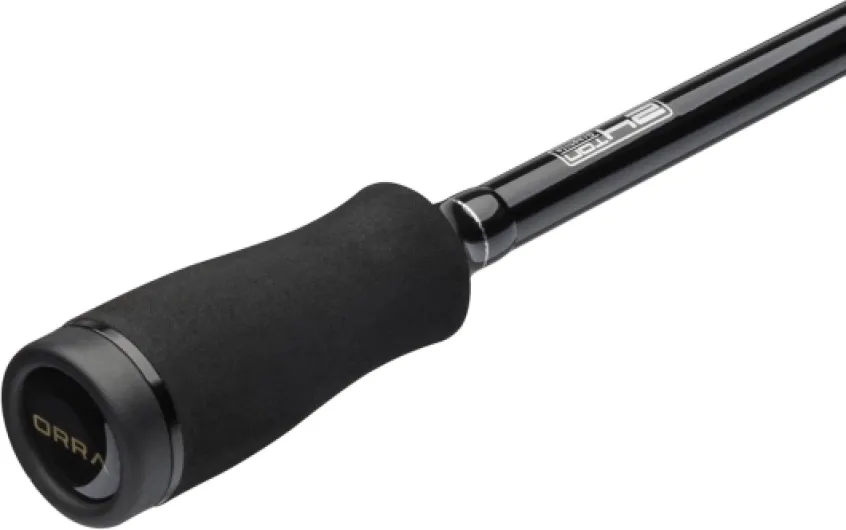
The EVA split grip is shaped in a fairly standard way: a rear grip you can tuck under your forearm for casting, and a shorter front grip. The texture is comfortable enough bare-handed and with thin gloves. I didn’t get hot spots or blisters, even after a lot of repetitive casting. The butt section length is reasonable for two-handed casts without being so long that it constantly catches on your jacket. For my average-sized hands, the diameter of the grips is fine; if you have very small hands, it might feel a bit chunky, but this is pretty typical for predator rods.
The WTS reel seat is slightly more sculpted than basic seats. I found it comfortable, but if you hate modern, cut-out style seats you might prefer something more traditional. The blank-touch cut-out lets you rest a finger on the blank; I ended up doing that a lot when slowly retrieving soft lures. It doesn’t dig into the hand or feel awkward. The whole handle section is long enough to give you leverage on bigger fish, which I appreciated when I had to steer a mid-size pike away from snags near the bank.
In practice, this rod is comfortable enough for long sessions. The light weight and decent balance make a clear difference. I wouldn’t call it ultra-ergonomic or anything fancy, but nothing about the comfort annoyed me. If I had to nit-pick, I’d say the grip and reel seat combo feels more suited to medium to large hands; if you’re used to more finesse-style, slim handles, this will feel a bit more bulky. For a predator rod used with 10–40 g lures though, the comfort level is more than acceptable.
Materials and build: mid-range carbon that feels reliable
The blank is made from 24T carbon, which is kind of the standard workhorse material for mid-priced rods. It’s not ultra-high modulus, but that’s not always a bad thing. Higher modulus often means lighter and more sensitive but potentially more fragile. Here, the rod feels like a decent compromise: light enough at 163 g, but with a bit of “meat” in the blank so you’re not constantly worried about snapping it on a bad cast or when freeing a snag. I’ve put some pressure on it when pulling lures out of weed and it flexed nicely without feeling sketchy.
The guides are stainless steel, marketed as anti-tangle. Stainless isn’t the absolute lightest material, but it’s durable and handles braid fine. I’ve run both thin braids and slightly thicker ones through them, no grooving or weird noises so far. The inserts look smooth, and line flows through them without too much friction. For a rod in this price bracket, I’m okay with these guides. You’re not getting top-tier ceramics, but you’re also not stuck with the really cheap stuff that grooves after a season.
The handle material is listed as EVA (Ethylene Vinyl Acetate), with a split grip design. The EVA on my rod feels of decent density: not too soft, not rock hard. It hasn’t started crumbling or shining up quickly like very cheap EVA sometimes does. The winding checks and transitions between EVA, reel seat, and blank are clean; no glue blobs or rough edges. Over several wet sessions, the handle didn’t absorb water or get slippery to a worrying level, which is what you want.
Overall build quality on my unit is pretty solid for the price. The ferrule connection between the two pieces is snug without being insanely tight, and there’s no noticeable flat spot in the action where the pieces join. The paint and wraps are tidy, and after carrying it around, knocking it a bit on rocks and railings, and shoving it in and out of the car, nothing has come loose. I wouldn’t treat it like a broom handle, but for normal predator fishing, the materials and build inspire enough confidence. It feels like a rod I can use regularly without babying it.
Durability: solid so far, but not a tank
In terms of durability, I obviously can’t simulate years of use in a short period, but I have tried to use it like I normally would, which includes some accidental abuse. The 24T carbon blank has handled some rough treatment: a few snag-pulls where I put a fair bit of bend into it, knocking it against railings and rocks while moving between spots, and general transport in the car without babying it. So far, there are no cracks, weird noises, or signs of the blank going soft. It still feels the same as when I unboxed it.
The guides have stayed straight and secure. No loose wrappings, no guide feet lifting, and the inserts are intact. I’ve checked them by running cotton through them after a few sessions to see if there were any nicks – nothing caught. With stainless guides, I’m not too worried about corrosion in freshwater. For occasional saltwater use, I’d definitely rinse the rod thoroughly after each trip, but structurally they look like they can handle normal use. The guide wraps and epoxy are neat and haven’t started cracking.
The EVA handle and reel seat also look good after several outings. The EVA hasn’t compressed weirdly or started peeling. The reel seat still tightens down firmly and doesn’t work loose during casting, which is something that annoys me on cheaper rods. I’ve switched reels a few times to test balance, and the threads haven’t stripped or become rough. The ferrule joint between the two sections hasn’t loosened up; I still check it occasionally during a session, but it hasn’t spun or misaligned on its own.
Overall, I’d say durability is pretty reassuring for a mid-priced rod. It doesn’t feel like a cheap, fragile stick, but of course it’s still carbon – if you high-stick it or slam it in a car door, it’ll break like any other rod. Abu Garcia offers a 2-year warranty and mentions spare parts availability, which is useful if something does happen. From what I’ve seen so far, used sensibly, this rod should last a good few seasons of regular predator fishing without drama.
Performance on the water: strong for pike and trout, a bit stiff for perch
On the water, the ORRA Predator 2.44 m / 10–40 g behaves like a true medium-heavy rod with a moderate-fast action. With lures in the 15–30 g range, casting feels easy and controlled. The blank loads nicely on the back cast and sends lures out with decent distance without needing to swing like a maniac. I was comfortably reaching the distances I wanted on lakes, even into a bit of wind. At the top end, around 35–40 g, it still handles fine, though it feels like you’re near the upper sweet spot. I wouldn’t personally throw heavy 40 g+ jerkbaits on it all day, but for occasional use it copes.
The sensitivity is decent for the price. With braid, you feel bottom contact and taps from fish quite well, especially when you keep a finger on the blank through the reel seat cut-out. It’s not as crisp or ultra-responsive as some higher-priced rods I’ve tried, but it’s enough to work soft plastics, spinners, and small hard baits with confidence. When fishing soft shads on jigheads around 12–20 g, I could clearly feel when I hit rocks, weed, or got a gentle pluck from a fish. For twitching lighter lures near the 10 g mark, the tip is okay but not super lively; it’s more comfortable once you’re above about 12–15 g.
In terms of fish-fighting, the moderate-fast action is a good middle ground. The tip and mid-section bend enough to absorb head shakes and sudden rushes, while the lower third has enough backbone to steer fish. On a mid-70s pike, the rod bent nicely without feeling overloaded, and I still had control to keep the fish away from snags. For bigger trout in fast current, that bit of cushion helps avoid hook pulls. Where it’s less ideal is for perch: the blank is just a bit stiff if you mostly throw tiny lures and want a very soft tip. You can still catch perch, obviously, but it’s not a finesse rod.
So in practice, I’d say its performance is strongest for pike and larger trout, and for medium-sized lures. If you mainly fish 5–10 g perch lures, or you like ultra-light presentations, this model is overkill and will feel too stiff, which matches one of the Amazon reviews saying it’s “bit too stiff for perch”. But if your usual lures are 12–35 g and you want one rod that can cover a lot of predator situations, it works well. It does what it says: decent casting, enough power, and a blank that gives you feedback without feeling fragile.
What this ORRA Predator actually is on paper
On paper, the Abu Garcia ORRA Predator Spinning Rod 2.44 m / 10–40 g is a two-piece, medium-heavy spinning rod meant for freshwater predators like perch, pike and trout. The blank is made from 24T carbon, which is a fairly standard mid-range carbon, not super high-end but usually tough enough for everyday fishing. It’s rated for lures from 10 to 40 g, with a moderate-fast action and medium-heavy power. Translation: it’s meant to cast mid-weight lures and still have a bit of flex in the top and mid section.
The rod is fitted with stainless steel anti-tangle guides, a split EVA handle, and an ergonomic WTS reel seat with “blank touch” – basically a cut-out that lets your finger rest directly on the blank for better feel. There’s also a simple hook keeper, which sounds like a small detail but is genuinely handy when you’re moving spots and don’t want your lure swinging around banging into the blank or the guides. The colour scheme is mostly black with some subtle graphics; nothing flashy, which I personally prefer.
This particular size (2.44 m) is a good all-round length for bank fishing and boat use. It’s long enough for decent casting distance but not so long that it becomes annoying in tight spots. I mainly used it from the bank on small to medium lakes and some rivers, and I didn’t feel limited by the length. It breaks down into two pieces, which makes transport easy; it fits fine in a small car boot or strapped to a backpack. Abu Garcia gives a 2-year manufacturer warranty and mentions spare parts availability in the EU for 2 years, which is reassuring if you tend to slam tips in car doors like I do.
On the marketing side, they push the idea of it being both lightweight and durable, ideal for both freshwater and saltwater. I’ve only used it in freshwater so far, but the stainless guides and overall finish look like they’d survive occasional light saltwater use if you rinse it properly afterwards. Still, if you’re fishing pure salt all the time, I’d personally look at rods that are clearly designed for that. As a general predator spinning rod though, the spec sheet makes sense, and nothing about it screams gimmick. It’s a straightforward, mid-range predator rod with sensible ratings and features.
Pros
- Lightweight and well-balanced for a 2.44 m medium-heavy rod, comfortable for long sessions
- Decent sensitivity and backbone for pike and bigger trout with 12–35 g lures
- Clean build quality with stainless guides, EVA handle and a practical hook keeper at a fair mid-range price
Cons
- A bit too stiff and overpowered for finesse perch fishing and very light lures
- Sensitivity and overall feel are good but not on par with higher-end, more expensive rods
Conclusion
Editor's rating
After several sessions with the Abu Garcia ORRA Predator 2.44 m / 10–40 g, my overall feeling is that it’s a solid mid-range predator rod that does its job without drama. It’s light, comfortable to fish all day, and has enough backbone for pike and stronger trout, while still being forgiving enough thanks to its moderate-fast action. Build quality is clean, the materials are decent, and nothing on my rod has given me a reason to worry about durability so far.
It’s not perfect, though. For perch and very light lures, it’s simply too stiff; you’ll catch fish, but it doesn’t feel like the right tool for finesse work. Sensitivity is good for the price but not on the same level as higher-end rods, and if you already own a decent medium-heavy spinning rod, this won’t suddenly change your life. It’s more of a sensible, reliable option than an exciting new toy.
I’d recommend this rod to anglers who mainly throw 12–35 g lures for pike and larger trout, want something light and comfortable, and don’t want to pay premium prices. It’s well-suited for bank and boat fishing in lakes and rivers, and as a single all-round predator rod it makes sense. If you mostly fish small perch lures or want ultra-high sensitivity, look for a lighter or more high-end model instead. For most casual to intermediate predator anglers, though, the ORRA Predator will simply get the job done and hold up well.