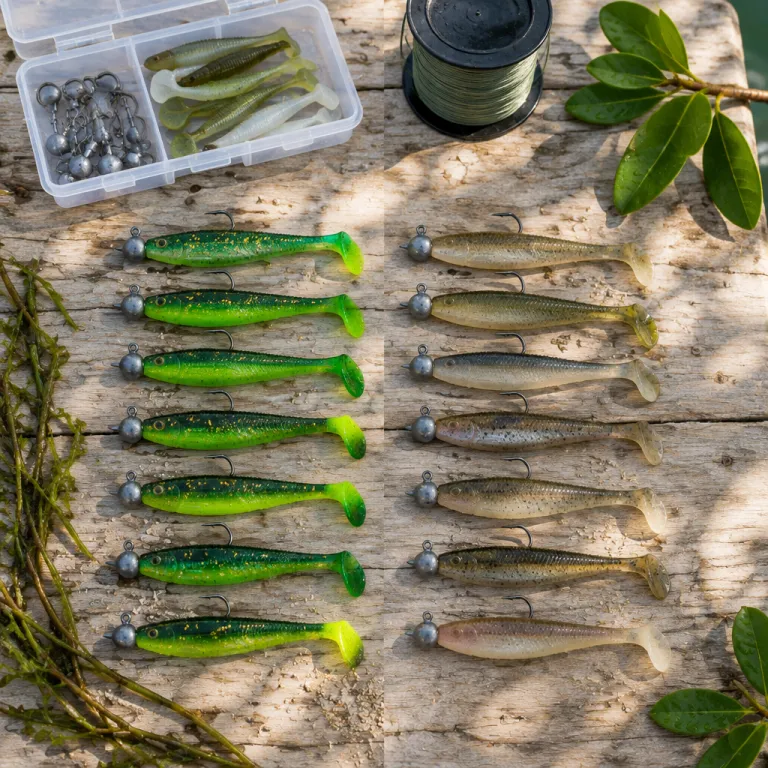
What makes an electric chicken lure different from natural colors
An electric chicken lure stands out because it blends sharp contrast with subtle flash in a way few natural patterns can match. The typical electric chicken soft plastic combines a pink or red “chicken” back with a chartreuse belly shot through with silver flake, often loaded heavily enough that the lure pulses in stained water. This color pairing creates a strong silhouette that works well when speckled trout, redfish and crappie track prey by vibration and outline rather than fine detail.
On a bright day in shallow water, that same high-visibility pattern behaves almost like a signal flag for predators. The chartreuse lower half reflects broken light while the darker back mimics a small shad or glass minnow profile moving just above the river or bay floor. Because the lure body is usually a soft plastic, it compresses naturally in a fish’s mouth, which encourages trout, redfish and even bass to hold on longer and gives anglers more time to set the hook.
Many recreational fishermen first try this color as a single soft bait in a mixed pack, then gradually shift more of their tackle box toward electric chicken patterns. They notice that the bright profile remains visible in dirty water when more subtle bait colors vanish, especially during windy October fronts in the South. Over time, the electric chicken soft plastic often becomes a confidence bait that comes out whenever the water turns off-color or the bite slows and fish need help finding the lure.
Choosing the right electric chicken soft plastic profile for your target species
Selecting the correct electric chicken lure profile starts with understanding how each species feeds. Speckled trout and redfish often key on long, slender baitfish, so a jerk minnow style electric chicken soft plastic in the 3.5 to 4.5 inch (9 to 11 centimetre) range is ideal. Crappie and small river trout prefer a more compact offering, so a 2 to 2.75 inch (5 to 7 centimetre) paddle tail or tiny sea shad profile usually works well when fish are focused on small shad.
For inshore trout–redfish combinations, many anglers rely on a Bass Assassin style paddle tail in electric chicken, rigged on a 1/4 to 1/2 ounce (7 to 14 gram) jig head. The wide paddle tail throws a strong thump that carries through shallow water, while the chartreuse belly and silver flakes flash with every lift of the rod tip. When speckled trout are suspended over shell or grass, a lighter 1/8 ounce jig head lets the lure glide more slowly, keeping the soft plastic in the strike zone longer without spooking fish.
Crappie specialists often carry several packs of small electric chicken lures, from micro paddle tails to tiny jerk minnow shapes. They rotate between these baits until they match the size of the shad or other forage in the water, especially on clear, calm days when fish scrutinize every detail. For anglers comparing different soft plastics, a detailed guide such as top soft plastics for serious inshore fishing helps narrow down which product families offer the most consistent electric chicken options.
Rigging techniques that make electric chicken lures come alive
Rigging an electric chicken lure correctly matters as much as choosing the right profile. In shallow water under 5 feet (about 1.5 metres), a light 1/16 to 1/8 ounce jig head or weightless hook lets the soft plastic glide naturally like an injured shad. When you twitch a jerk minnow style bait in this color with short rod pops, the lure darts and stalls, imitating a wounded baitfish that speckled trout and redfish cannot ignore.
For deeper river channels or passes where trout and redfish hold near the bottom, step up to a 3/8 or 1/2 ounce jig head while keeping the same electric chicken soft plastic. Lift the rod slowly to make the paddle tail kick, then let the lure fall on a semi-slack line so the silver flakes and chartreuse belly flash as it drops. This lift-and-fall rhythm works well on days when fish hug the bottom and refuse faster presentations, especially around channel edges and bridge pilings.
Saltwater anglers who focus on mixed redfish–speckled trout action should also match their hooks carefully to the size of each lure. A technical guide on how to choose saltwater fishing hooks that truly match your style can help ensure the hook gap fits both the soft plastic body and the target fish. As a rule of thumb, a 3/0 hook suits most 3.5 to 4 inch baits, while a 1/0 or 2/0 hook fits smaller profiles. When the hook size, lure length and electric chicken profile align, hookup ratios improve and fewer fish throw the bait during head shakes.
When and where electric chicken shines for trout, redfish and crappie
Electric chicken lures earn their reputation on marginal visibility days when other colors fade. After a strong south wind muddies the water in a bay or river mouth, the contrast between the dark back and chartreuse belly remains visible to feeding fish. Speckled trout often slide shallower in these conditions, hunting over grass flats or shell where a paddle tail or jerk minnow in this high-contrast pattern stands out clearly against the bottom.
In estuaries where redfish and trout mix, an electric chicken soft plastic fished along drains and small creeks can trigger both species on the same tide. Cast slightly up-current, let the lure sink, then retrieve just fast enough to keep the paddle tail thumping above the bottom. Mixed schools frequently track the vibration trail first, then close the final distance when the silver flakes flash in front of them, especially around the mouths of marsh cuts.
Freshwater anglers see similar benefits when targeting crappie and river trout around stained inflows or after autumn rains. A small electric chicken sea shad profile, fished under a float or slowly retrieved, mimics the tiny shad that stack along current breaks. One weekend angler on a mid-south reservoir, for example, reported catching a full limit of crappie by switching from a natural shad color to a 2 inch electric chicken paddle tail as the water clouded after a storm. Because these lures work well in both clear and dirty water, many fishermen keep a dedicated pack of this color ready for sudden changes in visibility.
Evaluating electric chicken as a product choice in your tackle strategy
Thinking of an electric chicken lure as a strategic product choice helps refine your tackle planning. Instead of treating it as a novelty color, position these high-visibility soft plastics as your primary option whenever the water carries a hint of stain or the sky turns overcast. Many experienced anglers report that this single adjustment lifts their overall fishing success across trout, redfish and crappie sessions without requiring a complete gear overhaul.
When building a tackle box, consider carrying multiple electric chicken profiles in a compact pack rather than one oversized model. Include at least one jerk minnow, one paddle tail and one smaller sea shad style lure to cover different bait sizes. This layered approach ensures you can match both small and larger prey in the same area, whether you fish a tidal river, open bay or sheltered marsh pond, and lets you adapt quickly as the size of the forage changes through the season.
Online tackle shops often make it easy to add several electric chicken options from brands such as Bass Assassin, which is well known for its paddle tail and sea shad shapes. Check that each lure lists its exact length and recommended hook size so you can pair them with appropriate jig heads and leaders. Over time, track which specific soft plastic in this color works well in your local waters—such as a 4 inch paddle tail over shell or a 3 inch shad body in creeks—and refine future product choices accordingly.
Practical buying tips, storage and rod pairing for electric chicken lures
Buying electric chicken lures with a plan saves money and space in your boat. Focus first on a versatile soft plastic such as a 3.5 inch (9 centimetre) paddle tail, then add a smaller 2.5 inch sea shad and a longer 4.5 inch jerk minnow profile. This three-lure core covers most trout, redfish and crappie situations from shallow flats to deeper river edges without overcomplicating your tackle selection.
When shopping online, look for detailed photos that show the contrast between the darker back and chartreuse belly, as well as the density of silver flakes in the plastic. Some electric chicken soft plastics lean more toward bright pink, while others use a deeper red tone that stands out better in muddy water or under heavy cloud cover. Group your lures by size and profile in small waterproof boxes so you can grab the right pack quickly during a changing bite and avoid wasting time digging through mixed bags.
Rod choice also influences how effectively an electric chicken lure moves through the water. A medium-light to medium casting rod with a fast action helps you impart crisp twitches to a jerk minnow while still cushioning head shakes from speckled trout and redfish. For anglers refining their casting setup, a technical guide on choosing a 2 piece casting rod for serious recreational fishing offers useful benchmarks for lure weight ratings and line classes that pair well with soft plastic electric chicken lures.
Key statistics and market insights on soft plastic lures
- According to market analyses summarized by the American Sportfishing Association (ASA), soft plastic lures account for roughly one third of all artificial lure sales in the United States, reflecting their versatility for species such as speckled trout, redfish and crappie. These figures are drawn from ASA participation and sales reports compiled over multiple survey years.
- Surveys of coastal anglers in the Gulf of Mexico region, reported in regional tackle-retail studies, show that high-visibility colors—including chartreuse-based patterns like electric chicken—are chosen in more than half of inshore trips when water clarity is rated as stained or muddy. Anglers consistently cite better visibility and confidence as the main reasons for this preference.
- Retail data from major tackle chains, summarized in public earnings calls and trade publications, indicate that multi-pack soft plastics outsell single-piece packs by a wide margin. This suggests that anglers prefer to test several sizes and profiles of a color such as electric chicken before standardizing their selection on a few proven shapes.
- Catch logs shared by inshore guides along the South Atlantic and Gulf coasts consistently highlight paddle tail and jerk minnow soft plastics as primary producers for mixed redfish–trout catches in water shallower than 2 metres, especially when fished around grass edges, oyster bars and current seams.
FAQ: electric chicken lures for recreational fishermen
When should I choose an electric chicken lure over natural colors ?
Electric chicken lures excel whenever the water is stained, slightly muddy or affected by low light such as early morning, late evening or overcast days. The contrast between the darker back and chartreuse belly helps fish locate the bait more easily than subtle natural tones. Many anglers start with natural colors in clear water, then switch to this brighter pattern as soon as visibility drops or wind stirs up the bottom.
What size electric chicken soft plastic works best for speckled trout ?
For speckled trout, a 3 to 4 inch (7 to 10 centimetre) electric chicken soft plastic usually offers the best balance between casting distance and natural action. Jerk minnow and paddle tail profiles in this size range imitate common baitfish such as shad and small mullet. Use lighter 1/8 ounce jig heads in shallow water and slightly heavier 1/4 ounce models over deeper shell or channel edges.
Can I use electric chicken lures for both redfish and trout on the same day ?
Yes, electric chicken lures are particularly effective for mixed redfish–trout situations where both species feed in the same area. A medium-sized 3.5 to 4 inch paddle tail or jerk minnow profile covers the preferred prey size for each fish, especially in shallow creeks and drains. Adjust only the jig head weight and retrieve speed to match the depth and current so the lure stays near the bottom without snagging.
Are electric chicken lures effective for freshwater species like crappie and river trout ?
Electric chicken soft plastics in smaller sizes work well for crappie and river trout, especially in stained or slightly coloured water. Compact sea shad or micro paddle tail profiles in the 1.5 to 2.5 inch range imitate small shad and minnows that these species frequently target. Rig them on light 1/32 to 1/16 ounce jig heads or under a float to maintain a slow, controlled presentation that stays in the strike zone.
How many electric chicken lures should I keep in my tackle box ?
A practical starting point is to carry at least three different electric chicken profiles in your tackle box. Include one small crappie-sized bait, one medium paddle tail and one longer jerk minnow to cover varied bait sizes and depths. As you gain confidence, you can expand to multiple lengths, duplicate your most productive shapes in extra packs and keep a backup set in a separate box for travel or backup boats.