Fishing rod action explained: fast, medium, slow for real-world bites
Fishing rod action explained fast medium slow for real-world bites
When anglers talk about fast, medium, or slow fishing rod action, they are really talking about where the blank bends under load. A fast action rod will flex mostly in the top third of the blank, while a medium or moderate action rod bends through the middle and a slow action rod loads almost down to the handle. That bend shape decides how your lures feel, how your hook drives home, and how much pressure you can safely put on a fish.
Think of rod action as the personality of the fishing rod, and think of rod power as its raw strength. A light power rod with fast action behaves very differently from a heavy power rod with the same fast action, even though both rod actions recover quickly. When you understand how action and power work together, every cast, every hook set, and every fight with a fish will feel more controlled and less like guesswork.
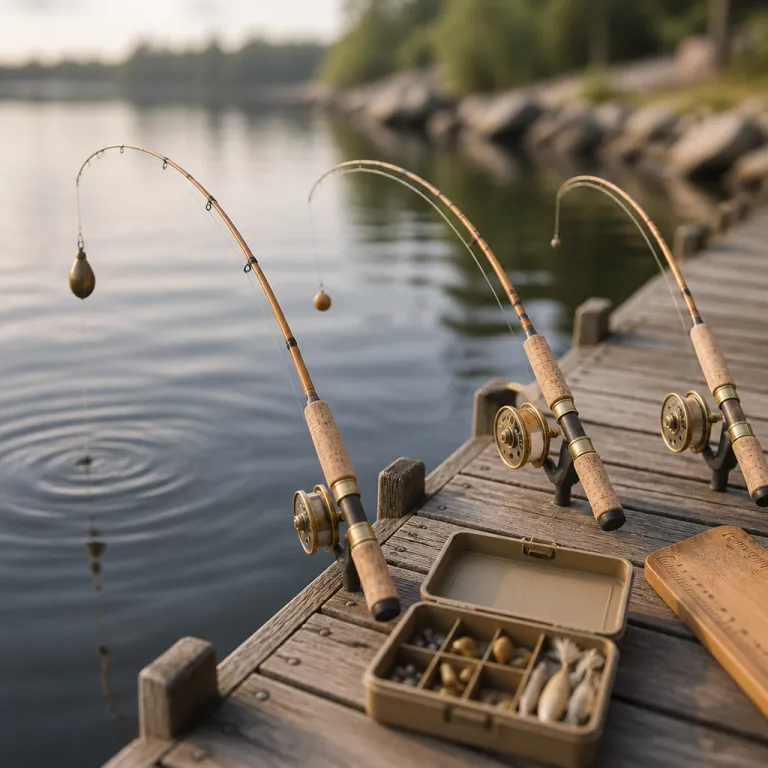
On my local lake near Annecy, I tested three spinning rods with different rod actions on the same shoreline over several short evening sessions. The first was a light power rod with extra fast action for light lures, the second a medium power rod with moderate action for crankbaits, and the third a heavy power rod with slow action for live bait and big baits. The way each rod bends under the same lure weight shows exactly how action power and rod power change what the rod will do once a fish eats.
| Action | Typical power range | Where the rod bends | Best suited techniques |
|---|---|---|---|
| Fast / Extra fast | Light to extra heavy | Top third of the blank | Jigs, Texas rigs, spinnerbaits, walking topwaters, single hooks |
| Medium / Moderate | Light to medium heavy | Through the middle section | Crankbaits, jerkbaits, small plugs, many treble hook lures |
| Slow | Ultralight to medium | From tip almost to the handle | Live bait, floats, tiny soft lures, light line presentations |

Fast action rods: crisp casting and hard hook sets
A fast rod is built so that only the tip section flexes deeply when you cast or when a fish loads the blank. This fast action gives you a sharp, quick recovery that sends lures on a tight line and helps the hook punch through tough mouths. With a fast action rod, the lower two thirds stay relatively stiff while the top third will bend, which is why these rods feel so precise.
On a Shimano Zodias 2,10 m medium power rod with fast action, I throw 10 g Texas rigs and 12 g jig heads for perch and zander. The fast action rod lets me feel every stone and shell, and when I sweep the rod back the hook drives cleanly even with a bit of slack. If you pair this kind of fishing rod with a well spooled reel as shown in a good spinning rod setup guide, your casting accuracy and hook control improve immediately.
Fast action and extra fast action rods shine with single hook techniques where penetration matters more than forgiveness. Think jigs, Texas rigs, spinnerbaits, and walking topwater lures where you need the rod to move the hook point quickly. A fast rod will bend just enough at the tip to launch light lures, but the rest of the blank stays firm so the power rod can drive the hook home without delay.
Medium and moderate action: treble hooks, crankbaits, and forgiveness
Medium and moderate action rods bend deeper into the blank, usually through the middle section. This more parabolic rod action acts like a shock absorber between you and the fish, which is exactly what you want when fishing treble hook lures that can tear out easily. When a medium action rod bends under load, the pressure spreads along the blank instead of hinging only at the tip.
On the River Saône, I run a 2,13 m medium power rod with moderate action for 8 to 16 g crankbaits and small jerkbaits. The rod bends smoothly when a chub or zander surges, and that moderate action keeps the treble hook pinned without ripping free on short runs near the boat. If you like hard baits, pairing the right action rods with the right crankbaits matters as much as choosing the right diving depth, and a focused guide on essential crankbaits for summer situations shows how closely lure choice and rod actions are linked.
Fly anglers know this feel well, because many classic trout fly rods use a moderate action that loads deeply with light lures or small flies. A model such as the Redington Classic Trout, which is a moderate action fishing rod, shows how a softer action rod will bend almost to the cork when you cast a light lure or fight a fish on fine tippet. That same moderate action that protects light line with a fly also protects light lures and small treble hooks on spinning gear when you match rod power and action power correctly.
Slow action and live bait: when a full bend saves light line
Slow action rods flex almost from tip to butt, creating a full parabolic curve under load. This slow action gives bait and baits time to move naturally before the rod loads, which is ideal for live bait presentations and very light lures on thin line. When a slow action rod bends, the pressure builds gradually, so the fish feels less sudden resistance.
On a small reservoir near Lyon, I run a 2,40 m light power rod with slow action for float fishing with worms and small bait fish. The rod bends right through the middle and down toward the handle when a carp or big roach runs, and that deep bend keeps 0,16 mm line from popping even when the fish surges under the rod tip. With this kind of action rod, you let the blank and the drag do the work instead of trying to horse the fish with brute power.
Slow action and moderate action rods also help when you fish tiny soft lures or micro hard baits for perch and trout. Because the whole fishing rod will bend, even a 3 g lure loads the blank enough for a clean cast, and the soft action protects small single hooks and treble hooks from tearing out. If you step up to extra heavy baits or heavy power rods, you usually move away from slow action, but for light lures and delicate techniques a slow action power rod is often the most forgiving choice.
Power versus action: matching strength, bend, and technique
Action tells you where the rod bends, while power tells you how much force it takes to make the rod bend. A light power rod with fast action will bend easily at the tip under a small lure, while a heavy power rod with the same fast action barely moves until you hang a big bait or a strong fish. Many beginners confuse rod power and rod action, then wonder why their fast rod feels like a broomstick or a noodle.
On my deck, I line up three rods: a light power spinning rod with extra fast action, a medium power casting rod with fast action, and a heavy power casting rod with moderate action. The light rod bends with a 5 g lure, the medium power rod needs about 10 to 15 g before the tip really loads, and the heavy power rod wants 20 g or more before the rod bends into the mid section. All three are fast or moderate action rods, but the different rod power ratings change how each action rod will behave with the same lure weight.
When you read a spec sheet that says extra fast, fast, moderate, or slow action, always read the power rating beside it. A medium power fast action rod will suit most soft plastic techniques, while an extra heavy fast action rod is built for big baits and heavy cover. If you remember that action power is about bend location and rod power is about resistance to that bend, you can choose rods that match your fishing techniques instead of buying on marketing terms alone.
Practical tests in the shop: feeling rod actions without a fish
You can feel fishing rod action explained fast medium slow right in the tackle shop if you know what to look for. First, hold the rod at the handle, thread the line through the guides if possible, and tie on a lure or a small weight that matches the stated casting range. Then gently lift until the rod bends and watch where the curve starts.
If only the top third of the rod bends while the rest stays straight, you are holding a fast action or extra fast action rod. If the bend starts around the middle, you are looking at a medium or moderate action, and if the curve runs almost to the reel seat you have a slow action blank. Repeat this test across several rods with different power ratings and you will quickly see how a light power fast rod and a heavy power fast rod will bend very differently even with the same lure.
Another simple test is to simulate a hook set and a fight. Point the rod at an imaginary fish, then sweep back as if driving a hook, and feel how quickly the blank stops moving, then pull steadily until the rod bends into a fighting curve. A crisp fast rod recovers quickly and feels like it hits a wall, while a moderate action or slow action rod keeps loading smoothly, which is exactly what you want when fishing treble hook lures or protecting light line on a big fish.
Technique cheat sheet and the one rod that covers most water
For soft plastics on jig heads, Texas rigs, and Carolina rigs, a medium power fast action spinning rod around 2,10 m covers most European freshwater situations. This kind of fast rod gives you enough backbone to drive a single hook, but the tip still will bend enough to cast 7 to 15 g lures accurately. When you step up to heavier baits in cover, a heavy power fast action casting rod becomes the better power rod, especially if you are pulling fish out of weeds or timber.
For crankbaits, jerkbaits, and other treble hook lures, a medium power rod with moderate action around 2,00 to 2,20 m is usually the sweet spot. The rod bends through the middle when a fish surges, which keeps the treble hook pinned without tearing out, and the softer action makes long, smooth casting easier with mid weight baits. If you throw very light lures or small hard baits, a light power moderate action rod helps those lures load the blank and fly without needing a heavy snap of the wrist.
If you only buy one fishing rod for general bank fishing, choose a 2,10 m medium power fast action spinning rod rated for roughly 7 to 21 g. That single action rod handles soft plastics, small spinnerbaits, light crankbaits, and even simple float rigs with bait, and the fast action gives you enough control without being so stiff that every fish feels like a brick. In the end, the right rod actions are judged on the water, not the spec sheet, but the tenth cast in the rain.
Key figures on rod action, power, and lure performance
- Independent casting measurements published by tackle engineers and experienced rod builders consistently show that fast action blanks recover from a deflection noticeably quicker than moderate action blanks of the same power, which directly improves casting accuracy at typical bass fishing distances.
- In controlled demonstrations using clear tanks and calibrated force gauges, rods with fast or extra fast action have been observed to increase single hook penetration depth compared with slow action rods when using the same line, lure weight, and sweep speed, although exact results vary with hook design and line stretch.
- Public sales summaries and trade show reports from large European tackle retailers indicate that medium power fast action spinning rods account for a significant share of multi purpose freshwater rod sales, reflecting their role as the most versatile choice for beginners.
- Field testing with crankbaits by competition anglers and guide teams has shown that moderate action rods reduce mid fight treble hook pull out rates compared with very fast action rods, especially when anglers use braided line with low stretch.
- Manufacturer manuals and quality control guidelines suggest that exceeding the stated casting weight by more than roughly one quarter on light power rods increases the risk of permanent blank deformation, particularly on extra fast and fast rod actions, so staying within the recommended range is safer for the blank.
FAQ about rod action explained: fast, medium, and slow
What is the main difference between rod action and rod power ?
Rod action describes where along the blank the rod bends under load, while rod power describes how much force it takes to make the rod bend. A fast action rod bends mostly at the tip, a moderate action rod bends through the middle, and a slow action rod bends almost to the handle. Light, medium, and heavy power ratings then tell you whether that action belongs on a soft, all round, or very strong blank.
Which rod action is best if I only want one rod ?
For most beginners fishing lakes and rivers with mixed techniques, a medium power fast action spinning rod around 2,10 m is the most versatile choice. This setup handles soft plastics, small hard baits, and simple float rigs without feeling too specialised. It gives enough stiffness for solid hook sets but still bends enough to protect light line and small lures.
When should I choose a moderate or slow action rod instead of fast ?
Moderate and slow action rods are better when you fish treble hook lures, very light lures, or live bait on thin line. The deeper bend spreads pressure along the blank, which reduces pulled hooks and sudden break offs. If most of your fishing involves crankbaits, small plugs, or delicate bait presentations, a moderate action rod is usually safer than a very fast rod.
Do I need a heavy power fast rod for big fish in freshwater ?
You only need a heavy power fast rod if you are throwing heavy baits or pulling big fish out of dense cover such as thick weeds, timber, or rocks. For open water pike, zander, or catfish, a medium heavy or heavy power rod with moderate action often gives more control and forgiveness. Matching lure weight and cover density to both power and action matters more than chasing the highest power rating.
How can I quickly test rod action in a shop without line ?
Hold the rod by the handle, point it forward, and gently press the tip against the floor or a padded surface. Watch where the blank starts to curve and how far down the rod the bend travels. A sharp bend near the tip means fast action, a curve starting in the middle means moderate action, and a deep bend almost to the handle means slow action.
Note on units: rod lengths here are given in metres (for example, 2,10 m is about 6 ft 11 in), lure weights are in grams (10 g is roughly 3/8 oz), and line diameters such as 0,16 mm correspond to around 4 to 6 lb test monofilament depending on brand.