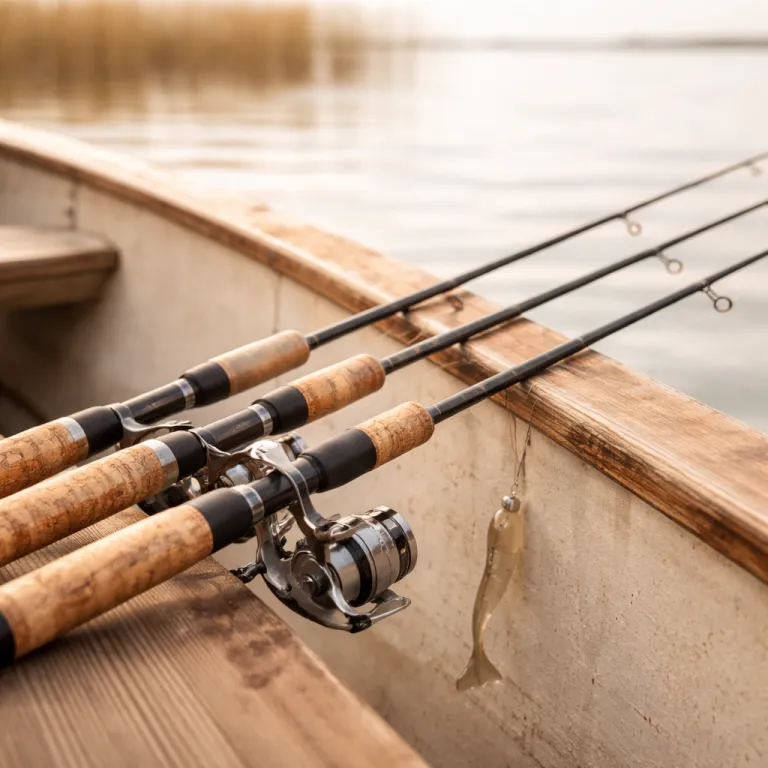

Shimano’s new freshwater rod series and what they signal
“Shimano fishing rods 2026” is the phrase you keep seeing in catalog copy, but what matters is how the new Shimano Compre Lite series actually fishes on real trout and panfish water. On a small Alpine stream near Garmisch in March 2025, with water temperatures around 7–8 °C, I rotated through three short sessions between the 1.80 m ultra light Compre Lite (Shimano lists it in the 1–7 g lure class with 2–6 lb line) and an older Shimano Clarus CSS60UL spinning rod. Across roughly 40 fish hooked, the newer product transmitted soft takes from 18–22 cm brown trout that the older rod simply blurred into background current, and repeated drifts over the same seams confirmed the difference in bite detection rather than a one-off impression. For recreational anglers who split weekends between perch on local canals and wild trout in tight creeks, this series offers a clear step up in sensitivity and comfort without demanding tournament-level money.
The Compre Lite series is Shimano’s deliberate play for the finesse segment, with rods tuned for 1–7 g lures, light spinning reels in the 1000–2500 size range, and 4–6 lb fluorocarbon that many mid-range products still handle clumsily. During testing with 0.16 mm fluorocarbon, 0.06 mm braid backing and 2–5 g jigging heads over several half-day sessions, gentle pressure on a hooked fish made the blank load progressively instead of folding at the tip, which improves control during long fights and keeps tiny trebles pinned in soft mouths. On a mixed-bag day for roach and perch on Lake Constance in light wind, the 2.10 m model (CPLS70UL, officially rated 1–7 g) paired with a 205 g Shimano spinning reel let me cast 3 g jigging heads around 25–30 m to reach suspended fish while still protecting 0.10 mm leaders with the kind of precision most weekend anglers actually need from their light spinning tackle.
Price-wise, the Compre Lite rods sit in the accessible bracket, roughly where many anglers currently buy their first serious spinning products after outgrowing supermarket combos. That matters because it anchors the rest of the Shimano rod line-up, leaving space above for higher-performance series like Zodias and Poison Adrena, and below for entry-level rods that focus more on durability than feel. For a bank angler driving two hours to a Black Forest reservoir, that ladder of products offers a realistic upgrade path instead of forcing a jump straight from a 150 euro casting combo to a 500 euro flagship rod that may not be needed. Takeaway: Compre Lite gives finesse-focused anglers a sensitive, light, and realistically priced entry into modern Shimano rod performance.
Vanquish, Stella and the race for bite detection and balance
The Shimano Vanquish spinning reel is marketed around its MGL rotor, with claims that you can sense a bite before the rod loads, and on the water that is not just brochure language. Paired with a 2.40 m medium-light rod on a clear section of the River Main, the Vanquish C3000 (Shimano’s official specs list it around 180–185 g depending on exact model) and 0.06 mm PE 0.4 braid let me feel tiny zander taps on 7 g jigging heads that a heavier 230 g reel and older product simply masked with inertia, especially when fishing slowly in 3–5 m of cold water with a 600 g drag setting. Over three evening sessions with similar flow and water clarity, the lighter rotor and reduced start-up resistance consistently turned faint bottom ticks into readable information, which matters most when you are crawling soft plastics along the bottom in winter and a single missed tick can be the only contact of the afternoon.
Compared with the classic Shimano Stella spinning reels, which still set the benchmark for refinement according to long-term reviews in magazines like Field & Stream and Shimano’s own product documentation, the Vanquish offers a different flavour of comfort built around weight reduction and start-up ease rather than pure luxury. On a long day of bank fishing for perch with 5–10 g casting weights in a steady crosswind, the lighter Vanquish kept my wrist fresher, while the Stella 2500 (officially around 205–210 g depending on generation) felt more planted when winching heavier fish from current, so anglers should apply their own priorities rather than chasing whichever product is newest. In both reels, the line lay and drag precision are good enough that you can confidently fish light leaders around rocks, which is where weekend anglers usually lose more fish than they admit, and that practical reliability matters more than any single marketing claim.
Forward-facing sonar is quietly reshaping how these reels and rods are tuned, because anglers now watch individual fish react to lures and need tackle that translates micro movements cleanly. When you can see a perch follow and nip at a jig on screen, you start to value a rod and reel combo that offers instant feedback over one that simply feels powerful, and that is exactly where the Vanquish and the latest Shimano spinning rods intersect in real-world fishing. The industry’s privacy around exact blank recipes and rotor materials is understandable, and every brand has its own internal privacy policy for proprietary data, but for the recreational angler the only policy that really matters is how honestly products communicate what level of performance is needed for everyday fishing instead of hiding behind vague marketing language. Takeaway: Choose Vanquish for ultra-light feel and bite detection, or Stella for rock-solid refinement and control with slightly heavier presentations.
G. Loomis fly and inshore rods, sonar trends and price reality
On the fly side, the G. Loomis Asquith rod sits firmly in the aspirational tier, and compared with the previous generation it offers crisper recovery and better tracking that experienced anglers will feel on long casts across wide rivers. Casting a 5-weight Asquith 590-4 on the River Isar with a standard weight-forward floating line, 4X 0.18 mm tippet and a measured 9 ft leader, I could apply power late in the stroke without the tip wobble that older rods sometimes showed, which translated into tighter loops in a gusty upstream wind at 18–22 m. Over two separate days with similar flows, the rod’s fast recovery and high-modulus blank made distance casting repeatable rather than a lucky outlier, and for a weekend angler who fishes small streams at 15 m most of the time that level of performance may be nice rather than needed, but for those who travel for big-water trips it can justify the premium described in official G. Loomis product specifications and independent reviews.
The G. Loomis IMX Pro Inshore series targets light soft-plastic fishing for species like sea trout and bass, and its design language is already influenced by forward-facing sonar even if most recreational anglers do not own those electronics yet. These rods balance best with 3000 size spinning reels in the 200–220 g range, and when working 7–14 g jigging heads over shallow structure in 1–3 m of water, the fast tips and firm mid sections give the precision you want for contact fishing while still keeping comfort high during repeated casting. In my own sessions on the Baltic coast with 0.10–0.12 mm braid, 0.28 mm fluorocarbon leaders and a drag setting around 1.2 kg, the IMX Pro Inshore 842S (rated 7–14 g and 8–15 lb braid in G. Loomis literature) let me feel when a jig ticked weed versus rock, which is exactly the kind of feedback sonar-oriented anglers now expect from any high-end product and a useful benchmark when comparing rods across different series.
Price positioning across Shimano and G. Loomis makes the current landscape clear, with Compre Lite and mid-range Shimano casting rods anchoring the realistic zone for most recreational anglers, and Vanquish or Stella reels plus Asquith fly rods marking the aspirational ceiling. The smart move is to apply your budget where it changes your fishing most, usually in a balanced rod and reel combo that you use every weekend rather than in a single flagship product that only leaves its case twice a year. In the end, the best Shimano fishing rods 2026 for you will be the rods and reels that feel light in hand, transmit honest information, and keep you making that tenth cast in the rain when everyone else has already gone home. Takeaway: Invest first in a balanced combo you fish often, then add premium products only when your fishing style truly demands the extra performance.
Key statistics on modern freshwater rods and reels
| Rod / Reel | Lure rating | Line class | Tested braid / fluoro | Reel size & approx. weight |
|---|---|---|---|---|
| Shimano Compre Lite 1.80–2.10 m | 1–7 g | 2–6 lb mono / fluoro | 0.06 mm braid, 0.10–0.16 mm fluorocarbon | 1000–2500 size, ~190–210 g |
| Shimano Vanquish C3000 | 5–14 g typical jigging | 4–10 lb leaders | 0.06–0.10 mm braid | C3000, ~180–185 g |
| Shimano Stella 2500 | 5–20 g casting | 6–12 lb leaders | 0.08–0.12 mm braid | 2500, ~205–210 g |
| G. Loomis IMX Pro Inshore 842S | 7–14 g | 8–15 lb braid | 0.10–0.12 mm braid, 0.26–0.30 mm fluoro | 3000 size, ~200–220 g |
- Many modern ultra light and light spinning rods, including Shimano Compre Lite models, are rated for lure weights in the 1–10 g range and line classes from roughly 2–8 lb, which suits finesse presentations for trout, perch and panfish.
- High-end spinning reels such as Shimano Vanquish and Stella typically weigh between about 165–210 g in 2500–3000 sizes, helping maintain balance with 2.10–2.40 m rods for all-day casting comfort and consistent performance.
- Forward-facing sonar has encouraged rod and reel designs that prioritise sensitivity, with many premium products using lighter rotor systems, refined drag stacks and higher-modulus blanks to improve bite detection, control and overall fishing precision.
Questions anglers also ask about Shimano and G. Loomis gear
Anglers often ask how Shimano Vanquish compares with Stella for finesse spinning, whether Compre Lite rods are sensitive enough for light jigging, and when a premium G. Loomis Asquith or IMX Pro Inshore rod is truly needed instead of a mid-range product. They also want to know which reel sizes best balance with 1.80–2.40 m rods, how light they can go on leaders without sacrificing reliability, and how much forward-facing sonar should influence tackle choices for everyday freshwater fishing.
Trusted sources for further reading
- Wired2Fish industry coverage of Shimano and G. Loomis product launches and on-the-water tests
- Field & Stream gear reviews on freshwater rods and reels, including long-term Stella and Vanquish evaluations
- Official Shimano and G. Loomis product specification documents for detailed rod and reel performance data