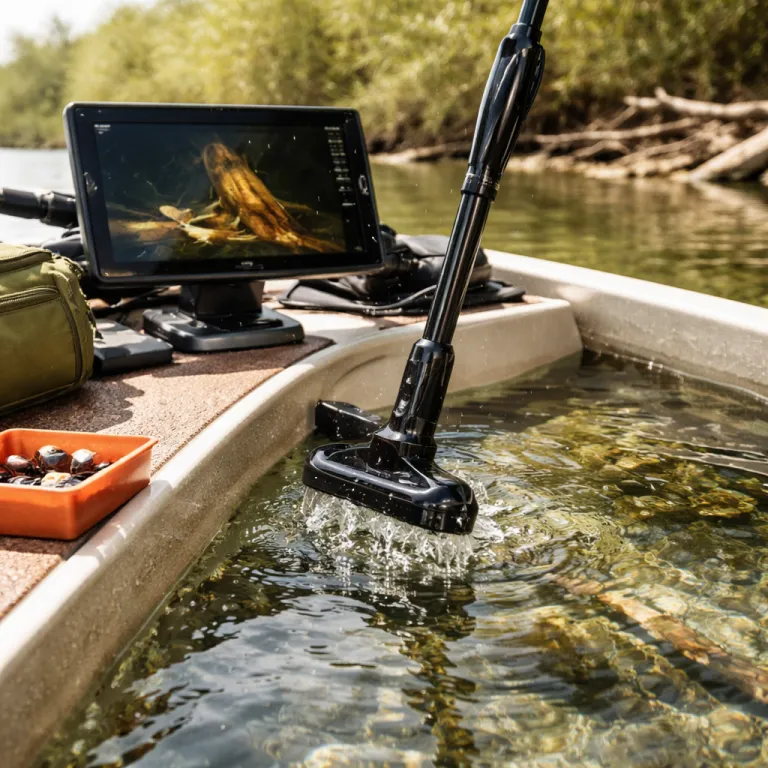

What forward facing sonar really shows on the screen
Forward facing sonar fishing turns the lake into a moving X ray. When you mount a high quality sonar unit with a forward facing transducer on the bow, you see individual fish and fish bait shapes in real time instead of vague arches under the boat. That live screen view changes how anglers read water, how they position the boat, and how they decide when to make the next cast.
On a Garmin LiveScope or similar sonar FFS system, the cone projects forward from the trolling motor and shows a slice of open water up to about 30–40 m ahead. You watch bass, walleye, or pelagic ffs fish move across the screen, track your bait, and sometimes turn away at the last second, which teaches you more about how fish react in ten minutes than a season of blind casting. This technology allows anglers to see structure, cover, and individual fish in deep water or mid depth zones that traditional down looking sonar never really explained.
The key is understanding what the sonar does not show as clearly as marketing suggests. Forward facing sonar fishing will not magically find fish on every bank, and it still struggles with very soft bottom transitions, ultra shallow water, or heavy vegetation where the transducer beam scatters. You still need to learn fish behavior, seasonal movements, and trolling methods to put the best bait in front of the right fish at the right time.
When you first run a forward facing sonar unit on a clear reservoir like Table Rock, the amount of life on the screen feels overwhelming. You see individual fish suspended over 20 m of water, pods of bait, and bass streaking through them, and you quickly realize how much dead water you used to cast at. That is the real power of this technology for bass anglers who already understand structure fishing and want to refine boat control and trolling motor positioning rather than just wander the shoreline.
Serious bass fishing specialists now pair specific rods and lines with their forward facing sonar systems. A 2,1 m medium light spinning rod with 10 lb braid and an 8 lb fluorocarbon leader lets you cast a 7 g jig head far enough that the bait appears clearly on the screen without spooking individual fish. Once you see how often fish react differently to the same lure at different retrieve speeds, you start to learn fish preferences for cadence, angle, and pause length instead of guessing from a few random bites.
Forward facing sonar fishing also exposes how many fish follow without eating. Watching a bass track a jerkbait for 10 m on the screen and then fade away teaches more about pressure and presentation than any magazine article, and it forces anglers to think about trolling methods that keep baits in the strike zone longer. Over time, this feedback loop will make you a better angler even when you leave the electronics at home and go back to simple bank fishing with a single rod and a pocket of lures.
From blind casting to electronic sight fishing while trolling
Traditional trolling methods rely on line length, boat speed, and gut feeling. With forward facing sonar fishing, you shift from dragging lures through likely water to steering baits at individual fish you can see ahead of the boat. That change in mindset is as big as the jump from paper maps to GPS, and it rewards anglers who pay attention to every movement on the screen.
When you run a trolling motor with a forward facing transducer on the bow, you can point the beam slightly off to one side and scan for individual fish while the boat moves slowly along a contour. As soon as you find active bass or other game fish on the screen, you adjust boat angle and speed so the trolling spread or a single cast bait tracks right through that cluster of targets. This approach allows anglers to waste less time over empty bottom and more time presenting fish bait at the exact depth and distance where fish react most often.
On lakes like Guntersville or Champlain, I use forward facing sonar fishing to refine long line trolling for suspended smallmouth bass. I watch the sonar unit screen for pods of bait and arcs above or below them, then adjust crankbait running depth or jig weight until the lure path intersects those marks consistently. Once the pattern clicks, the system will let you repeat the same trolling pass and catch fish after fish without guessing where the school moved.
Drift control matters more than ever when you are lining up a trolling pass on a specific group of ffs fish. A quality drift sock, like the ones discussed in this guide to enhancing your fishing experience with drift socks, helps keep the boat sideways to the wind while the trolling motor quietly nudges you along the contour. That stable platform makes the forward facing sonar image steadier, which in turn makes it easier to keep your bait in front of individual fish instead of swinging wildly above or below them.
Forward facing sonar fishing also changes how you run multi rod trolling systems. Instead of setting four lines at fixed depths and hoping one crosses a fish, you can use the screen to stagger depths so at least one bait always tracks just above the marks you see. Over a full day, that subtle adjustment often means the difference between a handful of bites and a steady pick of quality bass or walleye.
Some anglers worry that this level of precision turns fishing into a video game. The reality on pressured lakes is less dramatic, because even when you find fish and put the best bait in front of them, they still refuse more often than they eat, and you still need to learn fish moods across changing light, wind, and current. The screen gives you information, not guarantees, and the anglers who treat it as another trolling tool rather than a magic wand tend to catch fish more consistently without losing the satisfaction of figuring things out.
The tournament debate and the cost of forward facing sonar
Forward facing sonar fishing has split the bass tournament world right down the middle. On one side, competitive bass anglers argue that forward facing sonar and Garmin LiveScope are just the latest evolution after side imaging, GPS mapping, and high speed trolling motors. On the other side, traditionalists say that watching individual fish on a screen and dropping a bait on their nose crosses a line that makes the sport less about reading water and more about reading electronics.
The cost structure is impossible to ignore when you look at modern bass fishing events. A full forward facing sonar system with a quality sonar unit, a dedicated forward facing transducer, and a big screen at the bow can easily reach several thousand euros once you add mounting hardware and a lithium battery bank. That price tag creates a two tier field where some anglers can find fish and catch fish they see in real time, while others still rely on older sonar and years of local knowledge.
For trolling focused tournaments, the gap grows even wider. Anglers with forward facing sonar fishing setups can scan ahead of the boat, find active schools in open water, and adjust trolling passes before ever driving over the fish, which keeps those fish less spooked and more willing to bite. Without that technology, you are often stuck running historical waypoints and hoping the school has not slid 50 m to the side overnight.
Some circuits have started talking about electronics free events or limits on screen size, but the genie is not going back in the bottle. Manufacturers now design rods, reels, and lures specifically for sonar guided presentations, and you can see that trend in everything from ultra sensitive forward facing jig rods to heavy head minnows that show up clearly on the screen. If you want a deeper dive into how electronics shape trolling choices, this guide on choosing the right fishing flasher for smarter trolling success shows how similar debates played out in salmon and trout fisheries.
For recreational anglers, the real question is not whether forward facing sonar fishing is fair in tournaments. The question is whether this technology will make your limited time on the water feel richer or just more complicated, especially if you already juggle work, family, and a short season. If you enjoy tinkering with settings, learning how fish react on the screen, and dialing in trolling methods with surgical precision, a forward facing sonar unit can be the best investment you make after a reliable boat and motor.
If you prefer to keep things simple, a mid range traditional sonar and a good map chip might serve you better than a full sonar FFS package. Remember that the anglers winning without forward facing sonar on local lakes are usually the ones who know every rock, weed edge, and current seam by heart, and that knowledge does not vanish when new technology arrives. In the end, the most important upgrade is still between the ears, not bolted to the bow.
Gear choices, lure design, and the ethics of seeing every fish
Forward facing sonar fishing has already reshaped tackle walls in every serious shop. Rods labeled as "FFS" or "LiveScope" sticks promise the perfect blend of length, sensitivity, and backbone for presenting small baits you can track on the screen. Some of those claims are marketing fluff, but a few design changes genuinely help anglers who spend long days watching individual fish and adjusting presentations on the fly.
For example, a 2,2 m medium spinning rod with a soft tip and a crisp mid section lets you cast a 5–10 g jig far enough that the bait appears clearly on the forward facing sonar screen without overpowering the hook set. Paired with a smooth reel and thin braid, that setup transmits every tick when fish react and nip at the lure, which matters when you are targeting pressured bass in clear open water. BeatDown Outdoors and similar companies even build adjustable mounts that raise the sonar unit screen to eye level so anglers can stand farther back from the trolling motor and still see how fish bait moves relative to structure.
Lure makers now design heads and plastics that show up more clearly on forward facing sonar. Denser jig heads, compact swimbaits, and minnow profiles with minimal drag fall faster and straighter, which makes them easier to track as they drop past individual fish on the screen. Over time, this feedback helps you learn fish preferences for fall rate, profile, and color in a way that old school trolling methods never could.
There is an ethical side to all this clarity that every angler should think about. When forward facing sonar fishing lets you see every fish on a wintering hole and watch how many times they refuse, you start to understand how quickly pressure can stack up on a small population, especially in deep water where release mortality climbs. That knowledge should push us toward self imposed limits, seasonal closures on fragile spots, and a stronger focus on handling fish gently when we do choose to catch fish we can see on the screen.
For many of us, the best balance is to treat forward facing sonar as a teaching tool rather than a constant crutch. Use it to learn fish movements, refine trolling passes, and understand how fish react to different baits, then spend some days each season fishing without the screen and trusting what you have learned. If you are looking for thoughtful ways to invest in gear that respects both your time and the resource, this guide to thoughtful fly fishing gifts every angler will appreciate offers a similar philosophy from a different corner of the sport.
Forward facing sonar fishing is not going away, and neither is the debate around it. The anglers who come out ahead will be the ones who use the technology to learn fish behavior, protect vulnerable stocks, and refine their trolling methods without losing the patience and humility that drew them to fishing in the first place. In the end, what matters is not the brightness of your screen but how you fish on the tenth cast in the rain when nobody is watching.
Key figures shaping the rise of forward facing sonar
- Garmin LiveScope and Lowrance ActiveTarget now appear on a majority of top level bass tournament boats, reflecting how quickly forward facing sonar fishing has become standard at the competitive level (industry tournament surveys, North American circuits).
- A complete forward facing sonar system with a premium sonar unit, forward facing transducer, and dedicated power supply typically costs between 3 000 and 5 000 euros, which is comparable to or higher than the price of many used aluminium fishing boats (retail pricing data from major marine electronics dealers).
- Portable castable sonar devices such as the Deeper CHIRP+ 2 bring live style sonar capabilities to bank anglers for roughly 350 US dollars, lowering the entry barrier for recreational fishing electronics compared with boat mounted systems (manufacturer pricing and multi retailer listings).
- Surveys of bass anglers in major US reservoirs show that more than half of respondents believe forward facing sonar increases catch rates for suspended fish, especially in open water, while a significant minority express concern about long term pressure on heavily targeted populations (angler opinion polls reported by regional fisheries agencies).
- Biologists have documented that deep water release mortality for some species can exceed 30 percent when fish are brought up quickly from depths greater than 10–15 m, which raises ethical questions when forward facing sonar fishing encourages repeated targeting of the same deep schools (fisheries management reports from state and provincial agencies).