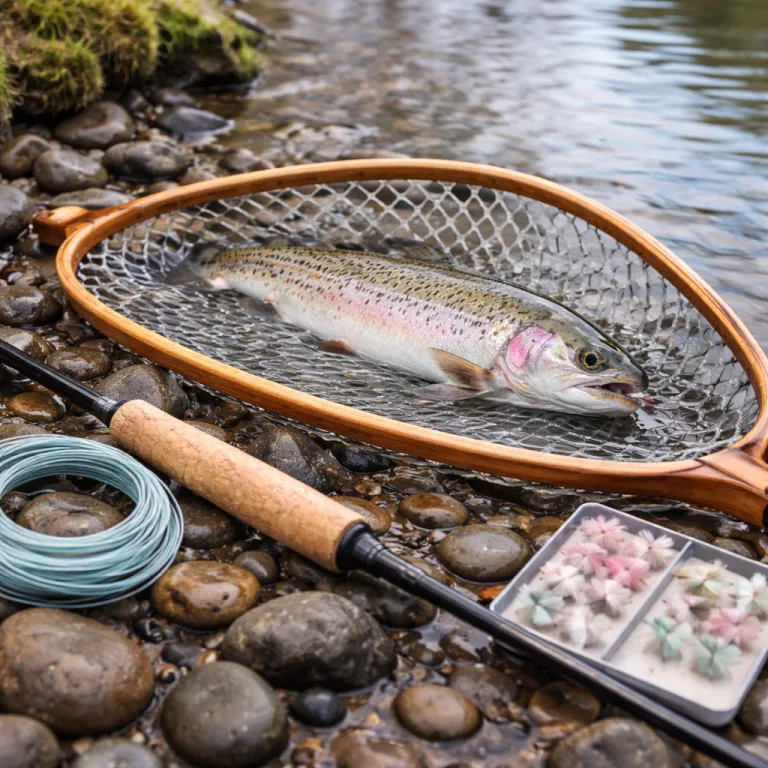

Why fly fishing for beginners feels confusing (and what you really need)
Walk into a fly shop as a new angler and the wall of fly rods, flies, and lines can feel like a foreign language. Most recreational fishing basics you know from spinning gear suddenly seem useless, yet fly fishing for beginners becomes far easier once you strip it back to a few essentials. Think of it as learning to cast fly line first, then letting every other piece of gear quietly support that cast.
For your first fly rod, a 5 weight rod around 2,70 m covers most trout fishing on small to medium rivers and stillwaters, and that same 5 weight fly rod can handle modest bass in ponds if you stay away from heavy cover. This weight fly choice balances enough backbone to turn a fish with a forgiving flex that lets beginners feel the casting basics without fighting a broomstick. Paired with a simple large arbor fly reel and a floating weight forward fly line, this setup will let you learn overhead casting on grass before you ever step into water.
Keep the rest of the gear minimal so your brain stays on movement, not metal. A nylon leader tapered down to about 0,18 mm, a small box with a few dry flies and a couple of wet fly patterns, and a basic pair of forceps will do more for your fishing than a crowded vest. If you want to carry a jacket, water, and a small fly tying kit later, a sling pack designed for fly fishing keeps weight off your chest and stays out of the way while you cast fly line, as explained in this detailed guide on choosing a fly fishing sling pack.
The only beginner setup you need under 200 euros
Fly fishing for beginners does not require a premium logo on the blank, only a balanced system that lets the rod load and unload cleanly. Aim for a combo where the fly rod, fly reel, and fly line are sold together, because the manufacturer has usually matched the weight fly rating to the line so the casting feels predictable. In the entry range, a 4 piece 5 weight rod with a medium fast action is the sweet spot for learning both dry fly and wet fly presentations.
Look for a reel with a simple disc drag that will not seize when a trout or small bass runs, but do not obsess over sealed drags until you start fishing saltwater flats or heavy steelhead. For most freshwater fly fishing basics, that reel will mainly store fly lines and keep the system balanced, so spend more of your budget on a decent line that floats high and turns over dry flies without slapping the water. A floating line in the same weight as your rod, a 9 foot leader, and a few metres of tippet give you everything needed to cast fly patterns accurately at typical trout fishing distances.
With roughly 200 euros, you can buy a starter kit that includes fly rods in common weights, a serviceable fly reel, and a handful of flies that cover the basics fly spectrum. Prioritise three patterns in both singular and plural forms in your box : a general dry fly like an Elk Hair Caddis, a simple wet fly such as a soft hackle, and a small streamer for prospecting deeper water. Add a cheap pair of polarised glasses and a hat chosen with real sun protection in mind, using advice from a specialised guide on selecting a fly fishing hat, and your gear list stays lean while your fishing tips focus on technique, not fashion.
Learning the overhead cast on dry land
Every style of fly fishing for beginners, from tiny streams to the Great Lakes, rests on one movement : the overhead cast. Before you ever try to cast fly line over moving water, take your fly rod, reel, and line to a football field or quiet park and remove the hook from any flies so you can practise safely. Grass gives you clear feedback on loop shape without current, wind, or fish distracting you.
Start with about 10 to 12 m of fly line outside the rod tip, then hold the rod with your thumb on top and your wrist straight. Lift smoothly until the line comes off the grass, then accelerate the rod back to about one o’clock and stop crisply so the fly lines straighten behind you in the air. When you feel the weight of the line tug the rod tip, drive the rod forward to about ten o’clock and stop again, letting the loop unroll and the line land gently like a dry fly touching calm water.
Think of it as drawing a straight line with the rod tip, not a big arc. If your loops open too wide, shorten the casting stroke and focus on firm stops so the weight rod loads and unloads like a spring. Ten minutes of focused casting basics on grass will teach you more about timing, power, and control than an hour of random thrashing on a river where you are also trying to read water, mend line, and watch for trout or bass rising.
Where to fish first and how to read beginner water
Once the overhead casting basics feel repeatable, fly fishing for beginners becomes a question of choosing forgiving water and realistic fish. Skip the technical spring creeks and start on a stocked trout pond, a slow river pool, or a small lake with visible bass structure where you can see your dry flies land and track them easily. Calm water lets you focus on line control, while cooperative fish reward even imperfect casts.
On a trout fishing lake, stand where the wind blows toward you so the fly lines land with less slack and the dry fly drifts naturally back toward your rod tip. Cast fly patterns like small dry flies along the edges of weed beds or near inlets where cooler water enters, because trout and sometimes steelhead smolts use these zones as feeding lanes. In warm ponds, shift to bass and panfish with slightly larger wet fly or small streamer patterns, working them along drop offs, submerged timber, or reed lines where predators wait to ambush prey.
If you live near the Great Lakes, beginner friendly piers and river mouths offer chances at migratory trout and steelhead, but treat these as advanced electives after you have landed a few smaller fish. For now, your rod will teach you more on modest water where you can see the take, feel the fight, and land fish without worrying about crowds or complex regulations. Success on those first outings is not measured in numbers but in how often your fly lands where you aimed and how calmly you handle the fish you do hook.
When a 5 weight is wrong and how to choose better
Most advice about fly fishing for beginners points to a 5 weight rod as the default, and for good reason on average trout water. That 5 weight fly rod handles typical dry fly and wet fly work with enough delicacy for small streams yet enough power for modest wind on lakes. Still, there are clear situations where a different weight rod will serve you better and make your casting and fish handling far more efficient.
If your home water is tight, overgrown creeks where trout rarely exceed 25 cm, a shorter 3 or 4 weight rod will load with less line out and protect light tippets on small dry flies. In contrast, if you mainly chase bass around heavy cover or plan on fishing saltwater flats for species like sea bass or small bonefish, an 8 weight rod will punch bigger flies into the wind and turn strong fish away from structure. For anglers eyeing steelhead on larger rivers or the Great Lakes tributaries, a 7 or 8 weight fly rod, sometimes in a longer switch configuration, gives you the backbone to cast fly patterns with sink tips and fight powerful fish humanely.
Think of rod weight as matching the average fly size, wind, and fish you expect, not your ego. A lighter weight fly outfit makes sense where subtle presentations and small fish dominate, while heavier fly rods and lines belong where big flies and strong currents rule. Your rod will feel right when you can make a relaxed casting stroke, turn over the flies you use, and land fish quickly enough that they swim away strong.
First outing expectations and mistakes that waste early sessions
The first real day of fly fishing for beginners should feel like a field test, not an exam. Expect your casting basics to fall apart when wind, current, and the sight of rising fish add pressure, and accept that your rod, reel, and line will tangle at the worst possible moment. Success on that first trip is landing one or two fish, or even just getting consistent takes on your dry fly or wet fly without panic.
The biggest mistake I see is anglers changing flies every five minutes instead of fixing their cast fly angle or drift, because they assume the pattern is wrong rather than the presentation. Another common error is false casting too much, which exhausts your arm, spooks trout and bass, and leaves more line in the air than on the water where fish actually live. Limit yourself to two or three proven flies, make fewer but better casts, and let the weight fly line work for you instead of muscling the rod.
Do not ignore comfort either, because cold hands or sunburned necks shorten sessions and kill focus, so learn from ice anglers who obsess over details like choosing mittens for long hours outside. Pack water, a snack, and a small notebook where you jot down fishing tips, what worked, what failed, and which guide or local angler gave you useful advice. Over time, that log will teach you more than any marketing copy, because fly fishing rewards the angler who pays attention to the tenth cast in the rain, not the spec sheet on the rack.
Key figures about fly fishing participation and gear trends
- Recreational fishing participation in the United States has exceeded 50 million anglers in recent surveys, with fly fishing representing a smaller but steadily growing segment as more adults seek technique driven outdoor activities.
- Industry reports show that 5 weight fly rods remain the top selling freshwater models worldwide, reflecting their role as the primary choice for trout fishing and general fly fishing for beginners on rivers and lakes.
- Modern graphite and composite materials have reduced average fly rod weight by roughly 30 to 40 percent compared with older fiberglass designs, which makes repeated overhead casting less tiring for new anglers learning proper technique.
- Surveys of new fly anglers indicate that budget starter outfits under 200 euros account for a significant share of first purchases, confirming that entry into the sport does not require premium priced gear to begin learning effectively.
Frequently asked questions about fly fishing for beginners
What is the best fly rod weight for a complete beginner ?
For most beginners targeting trout and modest bass on rivers and lakes, a 5 weight fly rod around 2,70 m offers the best balance of casting ease and fish fighting power. It handles common dry flies, wet fly patterns, and small streamers without feeling too stiff or too soft. Only move to lighter or heavier weights once you know your main species and waters.
Should I learn to cast on water or on grass first ?
Learning the overhead cast on a grass field is far more efficient than starting directly on water. Grass removes current, drag, and fish from the equation so you can focus on loop shape, timing, and feeling the line weight load the rod. Once you can consistently lay out 10 to 12 m of line on grass, transferring that casting motion to water becomes much easier.
How many flies do I really need when starting fly fishing ?
A beginner can start effectively with three basic patterns in a few sizes : one general dry fly, one simple wet fly, and one small streamer. Having multiples of each pattern matters more than owning dozens of different flies, because you will lose some to trees and rocks while learning. As your confidence grows, you can expand into more specialised patterns for specific hatches or local fish behaviour.
Can I use the same fly fishing setup for trout and bass ?
Yes, a 5 or 6 weight fly rod with a floating line can handle both trout and smaller bass in many situations. For trout, you will mostly fish dry flies and light nymphs, while for bass you may step up to slightly larger wet fly or streamer patterns. When bass live in heavy cover or you throw bulky flies, an 8 weight rod becomes a better and more ethical choice.
When should I think about fishing saltwater with a fly rod ?
Saltwater fly fishing demands stronger rods, corrosion resistant reels, and specific fly lines, so it is best approached after you are comfortable with casting basics on freshwater. Once you can double haul and manage line efficiently, stepping into fishing saltwater for species like sea bass or bonefish with an 8 weight outfit becomes realistic. Until then, focus on building skills on local trout, bass, or even steelhead rivers where mistakes are cheaper and learning is faster.