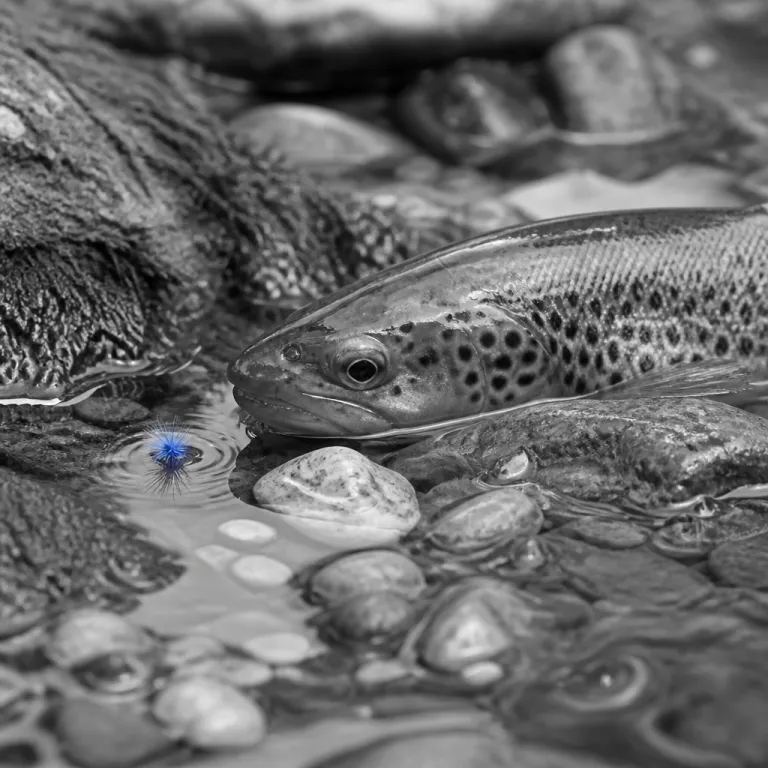
Early morning and late evening: timing trout fishing in August heat
When August shrinks the river, your best trout fishing window is brutally short. In this time of the year, the combination of low water, hot air and rising water temperatures means every trout and every bass feel the heat long before you park the truck. If you want to fish ethically and still catch trout, you must build your whole day around early morning and late evening light.
Set your alarm so you are stepping into the water at first grey, not when the sun clears the trees. During this early morning period, water temperature is at its lowest, dissolved oxygen is at its highest, and trout will slide out of deeper night lies to feed in skinny seams and along soft inside bends. That is when a careful angler can land fish quickly, keep them in the water, and release them before warm water and hot air push oxygen levels down again.
Carry a simple stream thermometer on a zinger and check the water temperature every hour, not just once. When you see water temperatures creeping toward 18–19 °C, you can assume oxygen levels are dropping and every extra second of fight time in hot water hurts brook trout, rainbow trout and brown trout more than you think. My rule is blunt ; if the water temperature hits 19 °C, I stop trout fishing and either switch to warm water bass in nearby reservoirs or go home and tie flies.
Those last thirty minutes before full dark can be just as productive as dawn, but they are shorter and riskier for stressed fish. In late evening, the surface may feel cooler, yet the river has stored a full day of heat and the deeper layers of warm water can still hold less dissolved oxygen than you expect. Use your thermometer again, and if the reading is marginal, fish will be safer if you shorten your leader, swing a single soft hackle, and plan to hook one or two trout, not a dozen.
Where trout hide when water drops and warms
Once the sun is up and the river is low, trout behave like different fish entirely. In hot summer low water, they abandon the obvious riffles and slide into any place where cooler water, shade and depth combine to protect their gills and conserve oxygen. If you want to practice trout fishing hot summer low water tactics that actually work, you must learn to read these micro sanctuaries the way a good bass angler reads docks and laydowns.
Start with shade lines, because light drives water temperatures and water temperatures drive oxygen levels. On small freestone streams, watch how a single alder or undercut bank throws a narrow ribbon of darker water across an otherwise bright run, and you will often find a brook trout or brown trout pinned right on that edge. In larger rivers, look for the deeper slots along outside bends, where the current has carved undercuts and the flow brings a steady trickle of cooler water and more dissolved oxygen into a tight lane.
Spring fed tributaries are your best friends at this time year, especially at higher elevations where the whole valley runs a few degrees cooler. Where a cold water trickle enters a main stem, you often see a faint color change or a subtle plume of slightly higher, faster current, and that seam can stack rainbow trout and brook trout like a winter tailwater. Treat those confluences gently ; land fish quickly, keep them in the water, and move on after a couple of hookups so you do not pound the same stressed pod all morning.
Low reservoirs and tailraces demand a different eye, because depth and flow are controlled by gates, not rain. In these systems, trout will often hold deeper than usual during the day, dropping into the first deep ledge where cooler water and higher oxygen levels slide along the bottom, while warm water and hot water collect near the surface. If you are crossing a mixed fishery that also holds striped bass or summer smallmouth bass, remember that those warm water species can stay active in higher temperatures, so do not assume every rise in a slick is a trout just because you are holding a fly rod.
When you are rigging for these tight lies, think about your fly fishing accessories as tools, not ornaments. A small net with a deep rubber bag lets you land fish fast in tight undercuts without scraping off slime, and a pair of long forceps makes barbless hook removal in deep mouths quick and clean. If you treat every shaded pocket and every plume of cooler water like a limited resource, the river will keep giving you chances long after other anglers have walked away.
Flies, leaders and presentations for skinny, hot water trout
August trout in low clear water have seen every bad cast and every noisy wader stomp since spring. When the river shrinks and the sun is high, trout fishing hot summer low water tactics become less about magic patterns and more about how gently you can put a fly in front of a nervous fish. That means dialing in your fly fishing gear, from the rod blank to the final knot, so you can fish light without breaking off every better trout you hook.
For most small and medium streams, a 9 foot 4 weight like the Orvis Clearwater or the Redington Classic Trout gives you enough backbone to steer a strong brown trout out of an undercut, yet still protects 6X and 7X tippet. If you are shopping for a dedicated low water stick, look at the moderate action models in any list of top fly rods, because a slightly softer tip cushions light tippet when a rainbow trout surges in shallow water. I run a 12 to 14 foot leader in these conditions, stepping down to 0,12 mm tippet when the sun is high and the fish will only eat in the thinnest seams.
Terrestrial flies are the workhorses of this time year, because real insects are falling off real banks all day long. A size 12 foam hopper, a size 16 ant and a size 14 beetle will cover most summer situations, and you can fish them as singles or in small dry dropper rigs over deeper slots. On pressured water, trim the legs short, grease only the first 30 cm of tippet, and land fish with a low side sweep so you do not spray warm water everywhere and spook the next trout in line.
When trout slide into deeper, cooler water in the middle of the day, a small unweighted nymph can outfish any dry. I like a size 18 pheasant tail or a size 18 perdigon on 6X, fished with just enough split shot to tick the tops of the rocks, because fish will not move far in hot water with low dissolved oxygen. If you feel your knot slip or see any abrasion after one hard fight, cut back and retie immediately ; in this heat, losing a trout to a failed knot means a longer fight and more stress on a fish that might not recover.
Do not forget that some mixed fisheries hold both trout and bass, and your fly choice can steer which fish will eat. A big foam hopper twitched hard along a grassy bank in warm water might bring up a smallmouth bass from deeper cover, while a dead drifted ant in slightly cooler water temperatures will usually tempt the pickier brook trout. Matching your flies and leaders to the exact slice of water temperature and depth you are fishing is the quiet difference between a skunked afternoon and a careful handful of healthy releases.
Ethical tactics, elevation plays and when to walk away
The hardest part of trout fishing hot summer low water tactics is knowing when not to fish. Low flows, hot water and low dissolved oxygen turn your favorite run into a treadmill for every trout that eats your fly, and no gear tweak can change basic biology. If you want these fish to be there for the next time year, you must treat every August trout like it is already halfway spent.
Start with your handling, because that is the one variable you fully control once a fish is hooked. Pinch your barbs flat before you ever step into the water, wet your hands before you touch a trout, and keep the fish in the water while you unhook it instead of lifting it for a grip and grin. In warm water with low oxygen levels, even ten seconds of air can be the difference between a brook trout kicking hard from your hand and one that rolls over in the shallows after you walk away.
Fight fish like you mean it, even on light tippet. Use the butt of the rod, keep a low angle, and steer trout quickly into a net so you are not burning their limited oxygen in long runs up and down the pool. If you feel a rainbow trout or brown trout start to roll instead of surge, that is a sign the heat and low water temperatures are catching up, and you should shorten the fight immediately and skip the next cast.
One of the smartest trout fishing hot summer low water tactics is simply changing altitude. Higher elevations mean cooler nights, cooler water and naturally higher oxygen levels, so a small headwater creek at 1 200 m can fish like a different time of the year compared with a valley river at 400 m. On these creeks, water temperature often stays in the safe 14–17 °C band all day, and fish will feed in shallow riffles instead of hiding in the deepest pockets.
When conditions are bad everywhere, shift species instead of forcing trout. Many reservoirs and rivers hold warm water fish like bass and striped bass that actually thrive in higher temperatures and deeper, slower water, and you can use the same careful reading of structure you learned from any detailed bass pre spawn playbook to stay effective. On those days, I leave the 4 weight in the car, grab a 6 weight, and work deeper ledges and points where cooler water from inflows meets the main lake, knowing that every cast at a bass is one less stressed trout in hot water.
There will be August afternoons when the thermometer reads 21 °C, the river is a trickle, and every ethical instinct says to walk away. That is not wasted time ; it is the quiet homework of scouting higher, cooler water, checking access, and planning how you will fish better when the heat finally breaks. In the long run, the anglers who keep that discipline are the ones who still have wild trout to fish for, because what saves a river is not the spec sheet, but the tenth cast in the rain.
FAQ
What water temperature is too warm to safely fish for trout ?
For most wild trout, I stop fishing when the water temperature reaches 19 °C, because dissolved oxygen drops quickly above that point. Brook trout are the least tolerant of hot water, rainbow trout sit in the middle, and brown trout handle slightly higher temperatures but still suffer in extended heat. A simple stream thermometer on your vest is the most important tool you carry in August.
Are early morning and late evening always the best times in summer ?
Early morning is almost always the safest and most productive time, because water has cooled overnight and oxygen levels have recovered. Late evening can fish well, but the river has stored a full day of heat, so you must check water temperatures again before you start. If the reading is already high, it is better to skip trout and target warm water bass instead.
How long should I fight a trout in warm, low water ?
In hot summer low water, aim to land fish in under a minute whenever possible. Use stronger tippet than you would in spring, keep a low rod angle, and apply steady side pressure to bring the trout quickly to the net. Long fights in warm water with low oxygen levels dramatically increase post release mortality, even if the fish swims away at first.
What fly patterns work best for trout in August low flows ?
Terrestrial flies like hoppers, ants and beetles are reliable because real insects are constantly falling from dry banks and grass in late summer. Small unweighted nymphs and soft hackles also work well in deeper, cooler slots where trout rest during the day. Focus less on exotic patterns and more on drag free drifts, long leaders and quiet wading.
Should I move to higher elevation streams during heat waves ?
Yes, shifting to higher elevations is one of the most effective trout fishing hot summer low water tactics. Mountain creeks often have cooler water, more shade and better oxygen levels, which keeps trout feeding longer into the day. Always check access rules and handle fish gently, because even these cooler refuges can be stressed during extended heat.