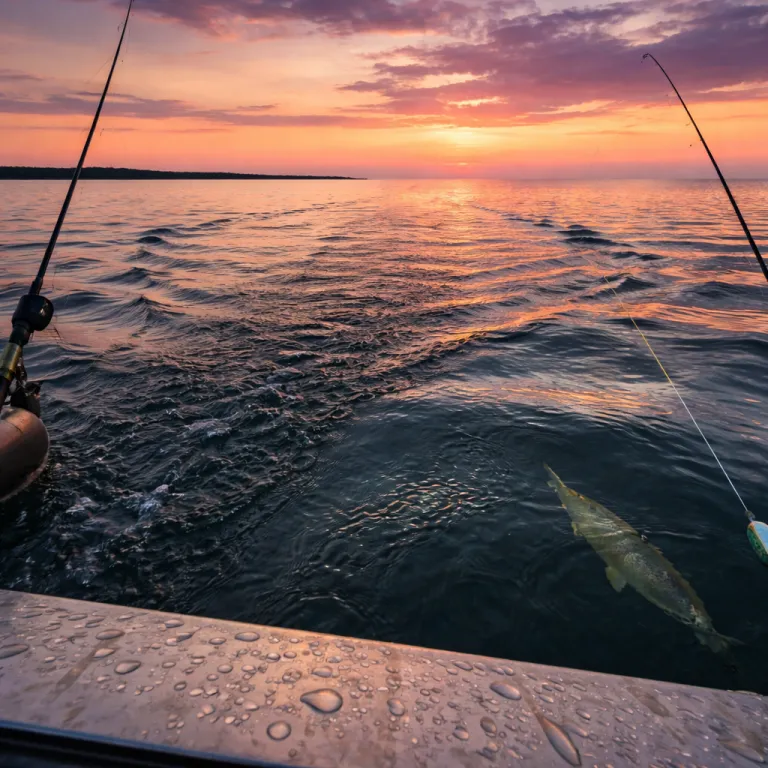
Why lake erie walleye summer fishing changes after memorial day
Lake Erie feels like a different fishing lake once the last Memorial Day boat trailer leaves the ramp. The same anglers who hammered spring walleyes on shallow reefs suddenly struggle, even though the water looks good and the weather feels stable for summer months. The pattern did not vanish, it simply slid off the structure and suspended over deeper waters where most weekend fishermen are not looking.
During late spring, many walleyes hold in 10 to 20 feet (3 to 6 meters) of water on rock piles, and that shallow bite convinces anglers that this walleye lake will fish the same way all year. As the thermocline forms, baitfish shift, and every Lake Erie walleye that wants an easy meal follows them into open water, often far off the obvious fishing spots. If you keep casting jigs on your favorite reef near Port Clinton while the fish slide out, you are fishing memories, not the actual Lake Erie conditions.
Serious walleye fishing on Lake Erie after Memorial Day means accepting that the fish now live in the middle of the water column, not glued to bottom. The best anglers treat this period as a new season, not an extension of spring or a preview of fall. That mindset shift is the first step toward making Lake Erie walleye summer fishing feel predictable instead of frustrating, especially when you pair it with up-to-date temperature profiles from NOAA and GLERL seasonal summaries.
Depth progression and suspended schools in the western basin
In the western basin, depth is not a guess after Memorial Day, it is a schedule. Early June often finds walleyes riding 15 to 20 feet (4.5 to 6 meters) down over 25 to 30 feet (7.5 to 9 meters) of water, especially on the edges of well known fish lake contours west of Port Clinton. By late June, those same walleyes may slide to 25 to 35 feet (7.5 to 10.5 meters) down over 40 to 50 feet (12 to 15 meters), tracking the tightest bands of baitfish rather than any specific hump.
Long term monitoring from NOAA and GLERL shows that Lake Erie’s summer thermocline commonly sets up in roughly that depth range, and the densest forage schools stack along that temperature break. Think of Lake Erie as layers instead of spots, because the fish care more about comfortable water than your GPS icons. Your sonar might show empty bottom at 35 feet (10 meters), but a thick band of marks at 20 feet (6 meters) tells you where the real Erie fishing happens during the heart of summer. When you match your trolling program to that band, the same waters that felt dead can suddenly produce a steady catch of quality fish.
Many anglers still hug the reefs like they did in spring, hoping for a bonus smallmouth bass or yellow perch while they drag crawler harnesses too deep. That approach wastes time during prime Lake Erie walleye summer fishing, especially when the best walleyes are suspended and feeding high. If you want more than random fish, you must treat depth in feet or meters as a controlled variable, not a rough guess.
When you read your electronics, separate bait from gamefish instead of lumping every mark together. A tight ball of bait with only a few arcs nearby usually means inactive walleyes, while scattered arcs above a looser bait cloud often signal feeding fish ready to hit stick baits. Learning to read those differences turns your screen from digital access wallpaper into a real time map of where to run your planer boards and how to set your trolling passes. For a visual example, include a sonar screenshot image with alt text such as “Lake Erie walleye suspended over baitfish at thermocline depth.”
Trolling speed, lure choice, and the weight mistake everyone makes
Speed is the quiet killer of good Lake Erie walleye summer fishing, because most anglers troll too fast once the water warms. When surface temperatures climb above about 68°F (20°C), a trolling speed around 1.0 to 1.4 knots (1.1 to 1.6 mph) often outfishes the 1.6 to 2.0 knots that worked in colder spring waters. Walleyes still chase, but they want an easy target that hangs in their face instead of a crankbait screaming past a meter below them.
The most common mistake on Lake Erie after Memorial Day is stacking too much weight on your lines and dragging lures under the fish. Anglers see marks at 20 feet (6 meters), clip on heavy snap weights, and suddenly their stick baits or crawler harnesses are running at 25 to 30 feet (8 to 9 meters), well below the active walleyes. You can troll all year at that depth and still think the bite is off, when the truth is that your program never passed through the feeding zone.
Use lighter weights and longer leads to keep your lures above the marks, because most walleyes feed upward in clear water. A simple rule on this walleye lake is to run your baits about 1.5 to 3.0 feet (0.5 to 1.0 meter) above the depth where you mark the bulk of the fish. When in doubt, go higher rather than lower, especially during bright summer months when fish suspend and track schools of baitfish.
Crawler harnesses shine when the bite is tentative and the lake carries a slight stain, while crankbaits and stick baits excel when the water clears and walleyes key on specific bait profiles. For a compact rigging checklist, think in terms of exact components: medium action 7 foot (2.1 meter) trolling rod, 10 to 12 pound monofilament main line, 4 to 6 foot (1.2 to 1.8 meter) fluorocarbon leader, and 1 to 2 ounce (28 to 56 gram) inline weight for harnesses; slightly stiffer rod, thin braid, 5 to 8 foot (1.5 to 2.4 meter) leader, and lighter clips for crankbaits. To put it all together for a single trolling pass, pick a depth band from your sonar, set two lines with harnesses and two with crankbaits 2 to 3 feet (0.5 to 1.0 meter) above that band, lock your speed at 1.2 knots, and make a straight mile long pull before you change anything.
Electronics, structure, and reading lake erie like a guide
Modern sonar and GPS give weekend anglers digital access to the same information full time guides use, but only if you read the screen correctly. On Lake Erie, the best walleye fishing often happens where bait, temperature, and subtle structure lines intersect, not on the obvious humps everyone already knows. Your job is to use electronics to find those intersections, then run clean trolling passes that keep lures in front of feeding fish instead of wandering aimlessly.
Start by setting your sonar sensitivity high enough to separate individual walleyes from the bait clouds, especially in the eastern basin where the water can be clearer and deeper. When you see long, solid arcs stacked at one depth, that usually signals larger walleyes, while fuzzy streaks often indicate smaller fish or mixed species like yellow perch. If you only mark bait with no clear arcs, keep moving until you find a section of water where predators and prey overlap in the same band.
Side imaging helps you slide off crowded fishing spots and locate quieter pods of fish along subtle breaks or current seams. I often use it to track how far a school extends away from a reef edge, then set planer boards to cover that full width without spooking the walleyes under the boat. That approach turns a single GPS waypoint into a productive grid, which matters when you only have limited time on a busy weekend. A simple diagram or photo of a side imaging screen, labeled with alt text like “Side imaging showing Lake Erie reef edge and walleye pods,” makes this layout easier to understand.
Understanding how predators position in current and around structure is not unique to Lake Erie walleye summer fishing. The same principles that help you read a spring trout stream also apply to how walleyes use subtle current lines in big lakes. Once you see Lake Erie as moving water with structure, not just a flat fish lake, your electronics start telling a much clearer story.
Access points, weather patterns, and planning weekend trips
For most readers, Lake Erie walleye summer fishing means a 1 to 3 hour drive, a limited window, and no appetite for wasted time. That reality makes launch choice and weather reading just as important as lure color or trolling speed. If you launch from Port Clinton when the best bite is miles east, you are already behind before the first rod hits the water.
On the western basin, ramps near Port Clinton and Catawba give fast access to classic walleye water, while launches farther east position you better for deeper summer schools and mixed bags that might include smallmouth bass or yellow perch. Always check the marine forecast and wind direction before you commit, because a stiff northeast wind can stack fish on one side of the basin and make the opposite shore feel empty. Stable weather over several days usually produces the most consistent trolling bite, while sharp fronts can scatter walleyes and push them deeper for a short time.
Every angler should carry a valid fishing license for the correct jurisdiction, whether you are focused on Ohio fishing regulations or crossing lines into neighboring waters. Current rules and creel limits are updated by agencies such as the Ohio Department of Natural Resources (ODNR), so verify details before each trip. Keep a log of your outings that notes water temperature, wind, depth in feet or meters, and lure details, because patterns repeat on this walleye lake from year to year. When you look back over several seasons, you will see that the same weather patterns often trigger similar movements of walleyes across the basin.
Planning meals around your catch also matters, especially when you bring home mixed coolers of walleyes, yellow perch, and other freshwater species. If you enjoy cooking what you catch, thinking through fillet care, storage, and preparation before you launch will help you get the most from every fish. In the end, the real measure of a good trip is not the spec sheet on your sonar, but the tenth cast in the rain when you know exactly why the rod finally loaded up.
FAQ
How deep should I troll for walleyes on lake Erie after Memorial Day ?
In early June, start by running lures about 15 to 20 feet (4.5 to 6 meters) down over 25 to 30 feet (7.5 to 9 meters) of water, then adjust based on your sonar. By late June, many walleyes slide deeper, so target 25 to 35 feet (7.5 to 10.5 meters) down over 40 to 50 feet (12 to 15 meters). Always keep your baits 1.5 to 3.0 feet (0.5 to 1.0 meter) above the marks rather than below them.
What trolling speed works best for lake erie walleye summer fishing ?
Once surface temperatures stabilize above roughly 68°F (20°C), a trolling speed around 1.0 to 1.4 knots (1.1 to 1.6 mph) usually produces more consistent bites than faster passes. Slower speeds keep crawler harnesses and crankbaits in the strike zone longer without overpowering the lure action. Use a GPS or trolling speed controller instead of guessing based on engine sound or wake size.
Should I use crawler harnesses or crankbaits for summer walleyes on lake Erie ?
Crawler harnesses excel when the water carries a light stain and walleyes are nipping short, because the blades and live bait encourage neutral fish to commit. Crankbaits and stick baits shine in clearer water or when walleyes are actively chasing suspended baitfish. Many successful anglers run a mixed spread to let the fish decide, then switch more lines to whichever style produces steady bites.
How important are planer boards for trolling walleyes on lake Erie ?
Planer boards are extremely useful on Lake Erie because they spread your lines away from the boat and cover a wider swath of water. That separation reduces spooking in clear conditions and lets you run multiple depths and lure styles at the same time. For weekend anglers with limited hours, planer boards often mean the difference between sampling the water and actually dialing in a productive pattern.
What weather patterns usually produce the best walleye bite in summer ?
Stable weather over several days typically creates the most reliable summer trolling bite on Lake Erie. Gentle northeast or east winds can stack bait and walleyes along specific shorelines or breaks, while harsh, fast moving fronts often push fish deeper and make them less aggressive for a short period. Watch both wind direction and barometric trends, then plan your launch and trolling routes around the most stable windows.
Quick reference: lake erie summer walleye cheat sheet
Depth bands: Early June 15–20 ft (4.5–6 m) over 25–30 ft (7.5–9 m); late June 25–35 ft (7.5–10.5 m) over 40–50 ft (12–15 m). Speed: 1.0–1.4 knots (1.1–1.6 mph) once surface temps exceed 68°F (20°C). Lures and rigs: Crawler harnesses in stained water or tough bites with 4–6 ft (1.2–1.8 m) leaders and 1–2 oz (28–56 g) weights; crankbaits and stick baits in clear water or when fish chase suspended bait, run on longer leaders with lighter clips. Positioning: Run baits 1.5–3.0 ft (0.5–1.0 m) above marked fish, use planer boards to spread lines, and follow the thermocline layer shown on your sonar or seasonal NOAA and GLERL temperature profiles.