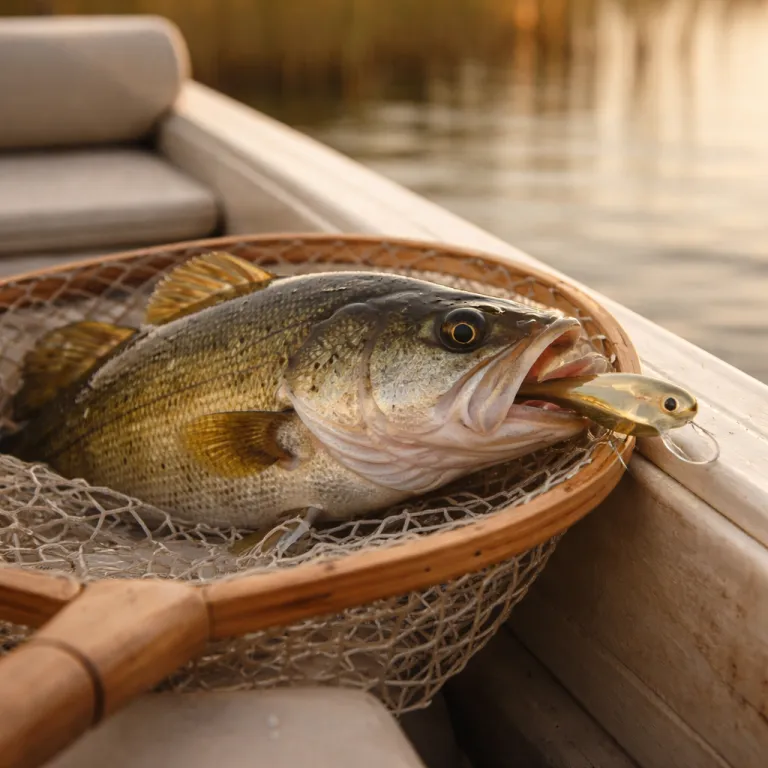
Why slow crankbait bass fishing beats the May burn
Most anglers speed up their crankbait once May bass start roaming. When water temperatures slide into the 18 to 22 °C (64 to 72 °F) range, many assume fast bass fishing with bright baits and a frantic retrieve will trigger reaction strikes everywhere. Slow crankbait bass fishing quietly punishes that assumption and turns those same pressured fish into steady, repeatable bites.
Post spawn bass are worn down, guarding fry or sulking off the first break in 3 to 5 m (10 to 16 ft) of water. On lakes like Guntersville in Alabama or Lac de Saint Cassien in France, sonar logs and guide reports show May largemouth and spotted bass holding on subtle shell beds, brush piles, and isolated stumps where a medium diving crankbait will tick the cover and hang in their face. In that zone, crankbaits work best when the retrieve is almost painfully slow, letting the bill hunt across the bottom and letting the wide wobble send a muted thump instead of a frantic buzz.
Think about what the fish actually see and feel, not what the catalog promises. A crankbait deep in the water column that creeps along with a tight or medium wobble looks like an easy bait for a recovering bass, while a burning retrieve screams effort and risk. Slow crankbait fishing is less about magic lures and more about reading water temperatures, understanding how far your chosen type of diving crankbait really reaches, and then forcing yourself to grind that bill through the strike zone for most of the cast.
Most weekend anglers own plenty of crankbaits but rarely fish them below half speed. They make a long cast, point the rod tip at the bait, and start cranking the reel handle like they are late for work, which pulls the lure above the key depth where bass are holding. When you slow down, angle the rod to change diving depth, and let the bill crankbait dig and pause against cover, the same crankbait will suddenly feel like a different tool entirely.
There is also a pressure factor that many ignore on busy reservoirs. By May, shallow banks have seen endless square bill baits, spinnerbaits, and lipless crankbaits buzzing past every laydown and dock post in less than 2 m (about 6 ft) of water. Sliding just a little deeper with a subtle diving crankbait and a slow retrieve will help you target less pressured fish that still relate to the same cover but sit one or two metres deeper.
Slow crankbait bass fishing does not mean you never speed up the reel. It means you treat retrieve speed as a deliberate choice, matching the crankbait type, bill shape, and depth range to the mood of the fish instead of copying the fastest angler on the next point. When you commit to that mindset, every cast becomes an experiment in how crankbaits work at different speeds, angles, and contact points with the bottom.

The dead slow crankbait system: gear, line and retrieve
Slow crankbait bass fishing starts with a rod and reel that let you feel everything. I lean on a 2.1 m (7 ft) medium power, moderate fast baitcasting rod like a Dobyns Fury 705CB paired with a 6.3:1 reel, because that combination gives enough backbone for deep diving crankbaits but enough forgiveness when a big bass surges at the boat. If your reel is too fast, you will unconsciously speed up the retrieve, so a mid range gear ratio quietly enforces discipline while the rod cushions treble hooks.
Line choice matters more than most weekend anglers admit. For medium diving crankbait fishing in 3 to 5 m (10 to 16 ft) of water, an 8 to 10 kg (17 to 22 lb) fluorocarbon test lets the crankbait deep dive to its rated depth, while still surviving contact with rock cover and scattered timber. When I need a long cast across a point or windblown flat, I sometimes run a thin braid main line to a fluorocarbon leader, which will help the bait reach maximum depth without sacrificing sensitivity to the wobble.
The retrieve itself is where slow crankbait bass fishing either shines or fails. I start with the rod tip at about 9 o’clock, make a long cast past the target, and crank just fast enough to feel the bill start digging and the wide wobble settle into a steady thump. Once the crankbait deep diving model reaches bottom or the top of the cover, I drop the rod slightly, ease off the reel, and let the bait almost stall so it hovers around the bass holding zone.
Contact is non negotiable when you want crankbaits to work slowly. Let the bill crankbait grind into rock, tick the top of brush, or glance off a stump, because every deflection changes the wobble and often triggers the strike from a neutral fish. If you feel the bait hang, do not rip it free instantly; instead, ease slack, shake the rod, and let the floating body back out, which keeps the crankbait in the strike zone longer than a fast retrieve ever could.
Square bill crankbaits are ideal for this style around shallow cover. A square bill model with a wide wobble can crawl through laydowns and riprap in less than 2 m (about 6 ft) of water, where bass hold tight to shade and ambush lanes, and the slow retrieve lets the bait ricochet instead of wedge. Lipless crankbait options also have a place, especially when you yo yo them along the bottom in slightly deeper water, but you must resist the urge to burn them like a reaction bait.
To keep the whole system simple, think in terms of a compact slow crankbait checklist: a 2.1 to 2.2 m (7 to 7 ft 3 in) moderate action crankbait rod, a mid speed 6.3:1 baitcasting reel, and 8 to 10 kg (17 to 22 lb) fluorocarbon as your default line, with braid to fluorocarbon leaders only when you need extra casting distance or sensitivity. The same attention to detail that keeps your baits organized and hooks sharp should guide your choices in crankbait type, bill design, and line diameter, because every small tweak in gear or retrieve speed shows up in how the lure tracks through the water.

Choosing the right crankbait for depth, wobble and mood
Not every crankbait belongs in a slow presentation, and that is where product choices matter. When bass are holding on the first break in 3 to 4 m (10 to 13 ft) of water, a medium diving crankbait that reaches that depth on 10 kg (22 lb) fluorocarbon is ideal, while a true deep diving plug that runs 6 m (20 ft) or more will simply grind uselessly below the fish. Matching crankbait deep range to actual water depth sounds basic, yet it is the main reason many anglers think crankbaits work poorly in their home lake.
Bill shape and wobble define how a crankbait behaves at slow speeds. A rounded bill crankbait with a tight wobble often excels in colder water temperatures or when bass are pressured, because it looks like a subtle baitfish rather than a fleeing target, and it stays in contact with the bottom without blowing out. By contrast, a square bill crankbait with a wide wobble shines around shallow cover, where its squared edges help it deflect off rock and wood without snagging, even when you crawl it slowly.
Lipless crankbaits deserve a special mention in slow crankbait bass fishing. Many anglers only think of a lipless crankbait as a high speed search bait, but a heavier lipless crankbait deep model can be yo yoed along the bottom on a semi slack line, letting it fall into bass holding depressions and rise slowly with each lift of the rod. That vertical style of crankbait fishing turns a supposedly fast lure into a slow, methodical tool for probing both shallow and deep flats.
Cold water is not the only time to slow down, but it is the most forgiving. When water temperatures sit below about 15 °C (59 °F), a tight wobble crankbait will help you tempt lethargic bass that ignore faster baits, and the slower retrieve keeps the lure in their limited strike window longer. In slightly warmer water, you can mix in a medium wobble and experiment with different crankbait types, but the principle stays the same: keep the bait near the bottom and let the bill do the work.
Safety and comfort also shape how well you can execute slow crankbait bass fishing. If you are shivering or distracted by poor gear, you will rush the retrieve and miss subtle changes in wobble that signal a weed, rock, or tentative bite, so investing in the right personal flotation device for kayak or bank sessions matters more than it seems. A good starting point is a guide to choosing a kayak fishing PFD that lets you cast freely, because a relaxed upper body makes it easier to maintain a consistent, slow retrieve all day.
When you dial in the right crankbait type for the depth and cover, you can start playing with colour and sound. Silent models often excel in clear water and on heavily pressured lakes, while rattling versions sometimes shine in stained water or wind, but both can be fished slowly if the bill and body are designed for stability. The key is to treat every crankbait as a specific tool with a defined depth, wobble, and cover niche, not as a generic plug that you simply tie on and burn.

From bank to point to laydown: a real May pattern
Picture a Saturday on a medium sized reservoir with 19 °C (66 °F) water temperatures. You launch at first light, idle to a main lake pocket, and see three boats already burning spinnerbaits and lipless crankbaits across the shallow flat, while another crew fan casts jerkbaits along the bank. Instead of joining the race, you slide off to the first point outside the pocket and set up a slow crankbait bass fishing rotation that targets bass holding just off the obvious cover.
First pass, you pick a medium diving crankbait rated for 3 to 4 m (10 to 13 ft) and make a long cast across the point, aiming to hit the upwind side where bait tends to stack. With the rod at 9 o’clock, you crank just fast enough to feel the bill dig, then slow the reel until the wobble feels like a steady heartbeat, letting the crankbait deep track along the contour and tick scattered rock. Every time the lure glances off a stone or stump, you pause a second, because that hesitation often triggers the fish that followed from behind.
After two or three passes, you slide shallower to a secondary point with visible laydowns. Here a square bill crankbait becomes the main tool, because its wide wobble and squared bill let it crawl through branches where bass sit in ambush, and a slow retrieve keeps it in the strike zone longer than a fast burn. You cast past each piece of cover, feel the bill crankbait start to dig, then guide it into the wood, pausing when it hangs and letting it float up just enough to clear before resuming the retrieve.
By mid morning, sun pushes more fish to shade, and that is when a lipless crankbait deep pattern can shine on nearby flats. Instead of ripping it, you make a long cast, let it sink to the bottom, then lift the rod slowly so the bait rises and falls with a subtle wobble, which will help you contact bass that roam between obvious pieces of cover. This style of crankbait lipless presentation keeps the lure near bottom depth for most of the retrieve, turning a traditional power bait into a slow, methodical search tool.
When you hook up, pay attention to exactly where and how the bite happens. If every fish eats the crankbait as it deflects off the deepest part of the laydown, you know bass are holding slightly deeper and you can adjust by choosing a diving crankbait that runs a little lower or by slowing the reel to keep the bait down. Over a full day, those small adjustments in crankbait fishing separate a random good fish from a consistent pattern that you can repeat on other lakes.
Gear choices support this whole approach, from rod length to line diameter. A 2.1 to 2.2 m (7 to 7 ft 3 in) crankbait rod helps you launch a long cast, while 8 to 10 kg (17 to 22 lb) fluorocarbon balances depth and abrasion resistance, and a mid speed reel keeps you honest when fatigue tempts you to speed up. If you want to refine your overall tackle strategy beyond crankbaits, resources on choosing the right big game rods show how matching rod power and action to lure type improves control, and the same logic applies directly to every bill crankbait you own.

Key statistics for slow crankbait bass fishing
- Biologists report that post spawn largemouth bass often reduce feeding activity for roughly one to two weeks after leaving beds, which makes slower baits more effective than fast moving lures during that recovery window (for example, see seasonal behaviour summaries from the Texas Parks and Wildlife Department, Florida Fish and Wildlife Conservation Commission, and Alabama Department of Conservation and Natural Resources).
- Controlled flume and tank studies on lure hydrodynamics have shown that crankbaits with a tighter wobble tend to produce more strikes in water below about 15 °C (59 °F), while wider wobble models perform better once temperatures rise above that mark, supporting the practice of matching wobble to seasonal water temperatures (summarized in peer reviewed work such as J. F. Liao’s reviews on fish flow sensing and tackle design notes from major crankbait manufacturers).
- Guide logbooks and on the water testing on reservoirs like Lake Guntersville, Kentucky Lake, and Table Rock Lake consistently show that medium diving crankbaits fished at slower retrieve speeds maintain contact with bottom structure for a much larger portion of the cast than faster retrieves, and that increased bottom contact correlates with higher strike rates on bottom oriented bass.
- Manufacturer dive curve charts from brands such as Strike King, Rapala, and Megabass, along with independent angler testing, indicate that line diameter can change effective crankbait depth by roughly 0.3 to 0.6 m (1 to 2 ft) for every 2 kg (about 4 lb) change in fluorocarbon test, meaning a shift from 12 kg (26 lb) to 8 kg (17 lb) line can add more than a metre (over 3 ft) of diving depth for the same crankbait model.
Slow crankbait checklist
- Use a mid speed reel (around 6.3:1) and a moderate action rod to avoid over retrieving.
- Match crankbait diving depth to actual water depth and bass position.
- Choose tight wobble plugs in colder water; medium to wide wobble as temperatures rise.
- Keep the lure in contact with rock, wood, or bottom for as much of the cast as possible.
- Adjust line diameter to fine tune running depth without changing lure size.
References
- FishingBooker – Recreational fishing techniques and tackle fundamentals.
- Bassmaster – Tournament reports and technical breakdowns of crankbait patterns.
- State and provincial fisheries agency publications – Data on bass behaviour, spawning, and seasonal movements, including reports from Texas Parks and Wildlife, Florida FWC, and Alabama DCNR.
- Peer reviewed fisheries science and hydrodynamics studies on lure action and predator response, such as work by J. F. Liao on fish flow sensing and swimming in turbulent currents.
- Professional bass guide logbooks and long term pattern records from major US reservoirs including Lake Guntersville, Kentucky Lake, and Table Rock Lake.
- Crankbait manufacturer dive curve charts and technical catalogs from brands like Strike King, Rapala, and Megabass documenting running depth versus line size.