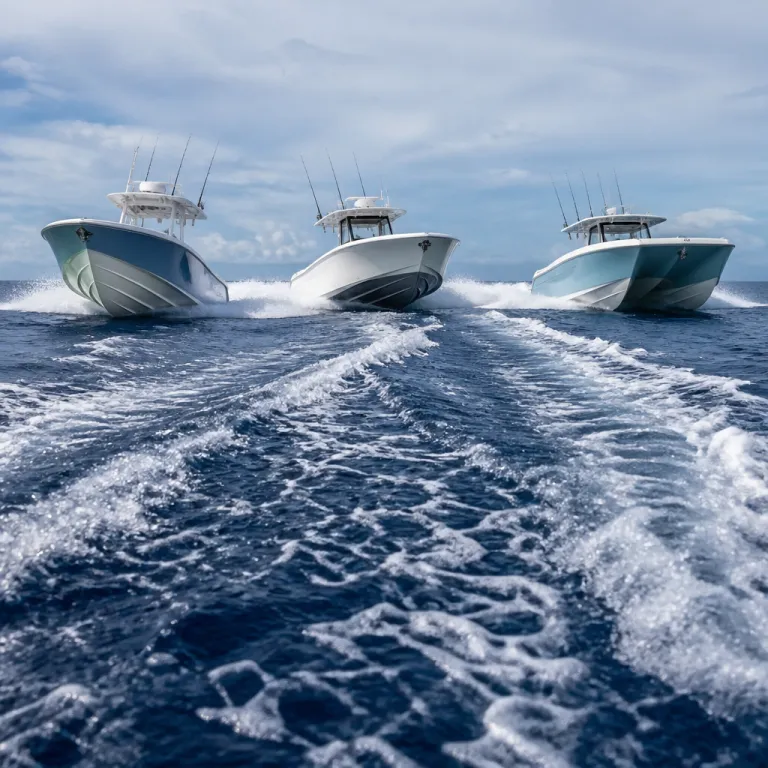

Why hull type matters when the sea turns rough
When you run a fishing boat offshore, hull type largely decides how safe and in control you feel. The real answer to what type of planing hull handles rough water the best depends on how the underwater shape manages impact, lift, and stability in confused seas. Every time you push into rough water at higher speeds, the hull design either shields your crew from shock loads or punishes them with hard landings and unpredictable motions.
For recreational fishermen, the choice between a displacement hull, a semi displacement form, and a true planing hull is more than theory. A pure displacement hull moves through the water at low speed, supported mainly by buoyancy, while planing hulls lift the boat hull onto the surface and allow much higher speeds in moderate sea states. Semi displacement hulls sit between these extremes and can offer a softer ride in rough water, but they rarely match the fuel efficient performance of a well shaped planing hull at planing speed.
Most modern offshore fishing boats use deep V planing hulls because they slice through chop and keep the ride relatively stable. These hulls carry a sharp bottom angle at the bow and maintain deadrise toward the stern, which helps the shaped hulls land softly when they leave the top water of a wave. When you compare hull shapes side by side, you quickly see why flat bottom hulls pound in rough water while deeper bottom hulls track straighter and feel safer.
Understanding what makes one hull shape the best for your sea conditions starts with draft and weight. A deeper draft planing hull generally tracks better in quartering seas, while a lighter, flatter hull type may skate and slam when the bottom meets steep chop. For anglers who run long distances to deep sea grounds, a carefully shaped hull with a balanced hull design is not a luxury; it is essential safety equipment backed by decades of naval architecture practice and comparative sea trials from builders such as Grady-White, Boston Whaler, and Viking Yachts.
Deep V planing hulls versus flat bottom and pontoon boats
When anglers ask what type of planing hull handles rough water the best, naval architects usually point to deep V designs. A deep V planing hull uses a narrow hull shape at the bow and a pronounced bottom angle to cut through steep waves, which reduces impact forces on the crew and gear. In contrast, a flat bottom hull tends to ride on top of the water and slap hard whenever the sea turns short and confused.
Flat bottom hulls and near flat bottom hull shapes can feel very stable at rest, which appeals to fishermen who anchor over reefs or drift for bottom species. However, that same flat geometry spreads impact loads across the entire bottom hulls area when the boat meets rough water at speed, so the ride becomes noisy, jarring, and sometimes unsafe. Deep V planing hulls trade a little initial stability for a much more controlled ride at higher speeds in offshore water conditions.
Pontoon boats illustrate this trade off clearly, because their twin or triple tubes act like narrow displacement hulls at modest speeds. On calm lakes, pontoon boats feel extremely stable and offer huge deck space, but their shaped hull tubes can dig into waves and throw spray when the sea builds. Even performance pontoon boats with reinforced hull design struggle to match the predictable ride of a single deep V planing hull once the wind pushes whitecaps across open water.
For anglers who mainly fish sheltered bays, a flat bottom boat or compact pontoon boats may still be the best compromise. These boats can run efficiently at moderate speeds, and their shallow draft lets you reach top water feeding zones tight to sandbars or marsh edges. Once you plan regular runs into open sea, though, the advantages of deeper bottom hulls and sharper shaped hulls become impossible to ignore, especially when you value both safety and speed.
Electronics now influence these choices as well, because tools such as forward facing sonar for pelagic hunting encourage anglers to roam farther offshore. When your fishing style pushes you into more exposed water conditions, the question of what hull type you run stops being academic. As one charter skipper in the Mid-Atlantic put it after switching from a flat bottom bay boat to a 24-foot deep V center console, “the new hull turned marginal days into fishable days.” A deep V planing hull with a refined hull design becomes part of your risk management strategy, not just a comfort feature.
Semi displacement and hybrid hulls for long offshore runs
Some recreational fishermen target deep sea species far beyond coastal shoals, where fuel efficient range and comfort matter as much as raw speed. For these missions, semi displacement hulls and hybrid hull shapes offer an alternative answer to what type of planing hull handles rough water the best. These hulls blend the soft entry of displacement hulls with the lift of planing hulls, giving a smoother ride at medium speeds in persistent swell.
A semi displacement hull usually carries more rounded sections forward and a fuller boat hull aft, which allows it to transition gradually from displacement to partial planing modes. This hull type rarely achieves the highest speeds of a pure planing hull, yet it maintains better fuel efficient performance than classic displacement hulls at the same speed. In rough water, that compromise can feel ideal, because the hull stays partly in the water and avoids the hard slamming that flat bottom hulls often produce.
Hybrid hull design has become common in offshore center consoles and walkaround boats that chase tuna, swordfish, and other big game species. Builders refine hull shapes with strakes, chines, and variable deadrise, creating shaped hulls that lift quickly yet land softly when they leave the top water of a swell. When you pair such a shaped hull with modern big game fishing rods and reels, you can run fast to distant sea mounts, then drift comfortably while fighting powerful fish.
Anglers planning multi day offshore trips should evaluate semi displacement options alongside deep V planing hulls. A slightly lower top speed may be acceptable if the ride stays more stable and predictable in confused water conditions over many hours. For detailed tackle planning that matches these long range hull choices, you can review guidance on selecting big game fishing rods for offshore work, then align rod length and action with the motion pattern of your chosen hull type.
Hull shape, speed, and fuel efficiency for deep sea fishing
Every recreational skipper eventually balances three competing goals; ride comfort, speed, and fuel efficient operation. The debate around what type of planing hull handles rough water the best always intersects with these trade offs, because hull design directly controls how much power you need to push through waves. A deep V planing hull may offer the softest ride in rough water, yet it often carries more draft and wetted surface, which can increase fuel burn at cruising speeds.
Flat bottom hulls and lightly shaped hulls plane quickly and require less power to reach higher speeds on calm water. However, once the sea stands up, these bottom hulls must slow dramatically to avoid pounding, which erases much of their speed advantage over more capable hull shapes. Displacement hulls and semi displacement hulls, by contrast, accept lower top speed but maintain consistent fuel efficient performance across a wide range of water conditions.
For deep sea anglers who run 40 to 80 nautical miles offshore, small differences in hull shape translate into large differences in fuel cost and safety margins. A well shaped hull with sharp forward sections and moderate deadrise aft can cruise at a steady speed through moderate rough water without constant throttle changes. That stable ride keeps your crew fresher, your electronics safer, and your fuel calculations more predictable when planning long returns in deteriorating sea states.
When evaluating boats at a dealership or boat show, ask for detailed hull design drawings and real fuel curves at different speeds. Compare how each hull type performs at the speed you actually use, not just the maximum speed printed in brochures. If your fishing style includes techniques such as precise bottom bouncing over structure, you will appreciate a hull that can hold slow, controlled speeds in rough water without excessive rolling or bow steering.
Practical hull choices for specific deep sea fishing scenarios
Deep sea recreational fishing rarely follows a single pattern, so the best hull type depends on your exact routine. When anglers ask what type of planing hull handles rough water the best, the honest answer links hull shapes to specific sea routes, target species, and loading habits. A boat that excels on a short, steep inlet bar may differ from one optimized for long, gentle ocean swells.
If you regularly cross shallow bars or reef passes, a moderate V planing hull with slightly reduced draft can be ideal. This hull shape still offers a softer ride than a flat bottom hull, yet it reduces the risk of grounding when the bottom shoals unexpectedly under breaking waves. Boats with such shaped hulls often carry wide chines that add stability at rest, which helps when you fish top water lures or live baits near structure.
For long offshore runs to canyons or seamounts, a deeper V planing hull or semi displacement hull usually serves better. These hulls maintain a more stable ride in quartering seas and following swells, which reduces fatigue during twelve hour days on the sea. When you load heavy ice, fuel, and tackle, the extra volume in these bottom hulls helps keep the boat hull riding at the correct trim angle for both speed and safety.
Anglers who split time between lakes, estuaries, and offshore grounds may consider multi purpose boats with variable deadrise hull design. Such planing hulls use a sharper entry forward and flatter sections aft, blending some of the efficiency of flat bottom hulls with the seakeeping of deeper shapes. While no single shaped hull can be perfect for every water condition, a carefully chosen compromise hull type can handle rough water well enough while still performing acceptably in calmer environments.
How to evaluate a hull in real rough water tests
Reading brochures will never answer what type of planing hull handles rough water the best for your style of fishing. You need to run boats in real sea states, feel how each hull shape responds, and judge whether the ride matches your tolerance and skill. A short sea trial on flat water tells you almost nothing about how a boat hull behaves when the wind rises and the bottom contour creates steep chop.
Start by testing several boats with different hull types on the same day, in similar water conditions, and at comparable speeds. Run each planing hull directly into the waves, then at 45 degrees, then with the sea on the beam and finally on the stern quarter, while noting how stable the ride feels. Pay attention to how the shaped hulls track, whether the bow throws spray clear of the cockpit, and how much throttle you need to maintain safe speed in rough water.
During these trials, watch how the boat responds when you move crew weight and fishing gear around the deck. A well balanced hull design should remain predictable even when you shift anglers to one side to fight a fish near the top water surface. If the boat heels excessively or the bottom hulls slam hard whenever you adjust course, that hull type may not be the best choice for frequent deep sea trips.
Finally, inspect the hull shapes out of the water, looking for structural details that support offshore work. Strong stringers, reinforced chines, and carefully shaped hull transitions all contribute to long term durability in rough water. When you combine these observations with honest feedback from other fishermen who run similar boats on your local sea routes, plus any available builder sea trial reports or independent magazine tests from sources such as Boating, Salt Water Sportsman, or trade association reviews, you gain a realistic picture of which planing hulls truly handle rough water well enough for your ambitions.
Key statistics for hull performance and offshore safety
- Deep V planing hulls with deadrise angles above 20 degrees typically reduce vertical acceleration in head seas by roughly 15 to 30 percent compared with flatter hulls, according to comparative sea trial data published by several major production builders and summarized in professional boating magazines and trade association reports.
- Fuel consumption for planing hulls often increases by about 10 to 25 percent when running in rough water versus calm conditions at the same indicated speed, based on field measurements reported by offshore charter fleets in the North Atlantic and Pacific and compiled in annual performance reviews.
- Accident investigations by national maritime safety agencies repeatedly show that small recreational boats operating beyond 5 nautical miles offshore are significantly safer when equipped with self bailing cockpits and deep V or semi displacement hulls rather than flat bottom designs, a pattern reflected in annual incident reviews, safety circulars, and summarized casualty statistics.
- Survey data from offshore anglers in Europe and North America, reported in trade association studies and fishing magazine readership polls, indicate that more than 70 percent of respondents prioritize hull shape and hull design over engine brand when choosing a new deep sea fishing boat.
FAQ about planing hulls and rough water for anglers
What type of planing hull is generally safest in rough offshore water
For most recreational fishermen, a deep V planing hull with at least 20 degrees of deadrise at the transom offers the safest and most comfortable ride in rough offshore water. This hull type cuts into waves rather than slapping on top, which reduces impact loads on crew and structure. Semi displacement variants can be equally safe at lower speeds, but they rarely match the speed range of a true deep V planing hull.
Are flat bottom boats ever a good choice for deep sea fishing
Flat bottom boats are usually not ideal for deep sea fishing, because they pound heavily and lose control more easily in steep chop or ocean swell. They can work in very sheltered coastal areas or for short runs on calm days, where their shallow draft and efficient planing characteristics are useful. For regular offshore trips, most anglers prefer deeper bottom hulls that handle rough water more predictably.
How do pontoon boats perform in open sea conditions
Pontoon boats are designed primarily for lakes and protected bays, where their multiple tubes provide excellent stability at rest and slow speeds. In open sea conditions, those narrow displacement style tubes can dig into waves, throw spray, and create uncomfortable motions at higher speeds. Even reinforced performance pontoon boats generally cannot match the seakeeping of a well designed deep V planing hull offshore.
Is a semi displacement hull a good compromise for long offshore runs
A semi displacement hull can be an excellent compromise for anglers who value comfort and fuel efficient cruising over maximum speed. These hulls operate partly in displacement mode and partly in planing mode, which softens the ride in rough water while still allowing respectable cruising speeds. They are especially attractive for multi day trips where consistent motion and predictable fuel burn matter more than arriving a few minutes earlier.
How should I sea trial a boat to judge its rough water performance
To judge rough water performance, test the boat in real waves, not just on flat water, and run it at several headings relative to the sea. Note how the hull shape behaves when meeting head seas, beam seas, and following seas, and whether you can maintain a safe, comfortable speed without constant throttle changes. Bring experienced crew if possible, and compare several hull types on the same day to feel the differences clearly.