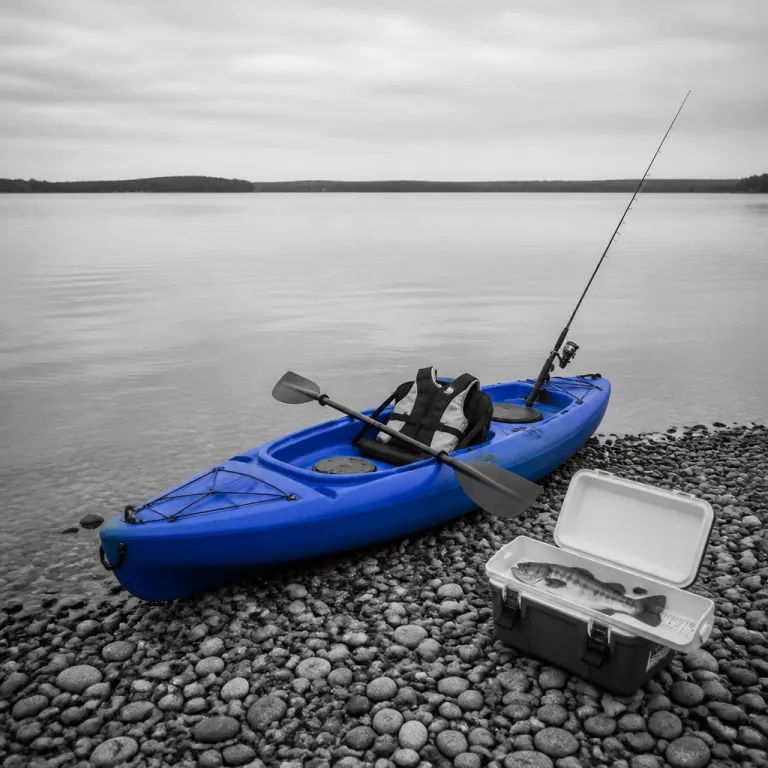
Section 1 – Why a simple setup beats a loaded fishing kayak
A first fishing kayak should feel like a stable platform, not a floating tackle catalog. When you keep your kayak fishing beginner guide gear list short, you spend more time casting and less time untangling straps, crates, and electronics. A stripped down kayak will also teach you how the hull behaves on real kayak water and how your body interacts with that small boat.
For a new kayak angler, the minimum viable setup is a sit top fishing kayak between 2.7 and 3.3 m, a decent paddle, a properly fitted PFD, one or two rod holders, and a basic anchor system. That compact set of gear will help you learn how the boat reacts to wind and current, how your body weight shifts the hull, and how to control the kayak with quiet strokes while you fish. Every extra piece of gear on beginner kayaks adds snag points, extra weight, and more decisions when you should be watching the water and the fish.
Think of the kayak as a small boat that lets you reach bodies of water bank anglers cannot touch, not as a floating garage. A good sit top fishing kayak with a clean deck gives you room to swing a rod, manage a landing net, and keep a dry bag accessible without tripping over crates. On my local lake in the Loire valley, the anglers who consistently catch more bass fishing from kayaks are usually the ones with less visible gear and more time on the water, because they know exactly where everything sits and how their kayak will respond when a fish runs under the hull.
Section 2 – Choosing the right kayak, hull, and drive system
Before buying gear, decide what kind of kayak will actually match your fishing. Sit top models dominate modern fishing kayaks because they are easier to reenter if you fall in, they drain water through scuppers, and they give you space to move your legs while you fight a fish. Sit inside kayaks can work for cold water, but for a first fishing kayak they usually feel cramped once you add rods, a small anchor, and a dry bag.
Look closely at the hull shape when you compare kayaks in the shop, because the hull is what decides how the boat handles wind, current, and chop. A wider, flatter hull feels very stable for a beginner kayak angler, but it will be slower to paddle across open water and harder to hold on line when you fish a windy point. A slightly narrower hull with soft chines will help you track straighter, which means less wasted paddle energy and more time with your rod in the water.
Many new anglers get distracted by the idea of a pedal drive fishing kayak, but a simple paddle powered boat is usually the best fishing platform for your first seasons. Pedal drive systems are great when you already know how to position a fish kayak in current, yet they add weight, cost, and maintenance that do not help you learn the basics. Talk with staff at a real tackle shop, because your local tackle shop knows things that online reviews never will, like which kayaks actually handle your nearby bodies of water and which hulls blow around too much when the afternoon breeze hits.
Section 3 – The minimum kayak fishing beginner guide gear you actually need
For a first season of kayak fishing, your gear list should fit in one hand and one small crate. Start with a stable sit top fishing kayak, a fiberglass or carbon blend paddle around 220–240 cm, a certified PFD you will actually wear, and one medium spinning rod between 2.1 and 2.4 m. That simple combination turns any quiet pond into a serious fish kayak platform without drowning you in choices.
Add only a few supporting pieces of gear and keep them organized so your kayak will stay uncluttered and safe. A basic anchor with 15–20 m of rope, a paddle leash, one or two flush mount rod holders, and a compact dry bag for phone, keys, and license are enough for most beginner trips on calm water. If you fish colder bodies of water, a properly fitted dry suit or at least thermal layers under a splash jacket will help you survive an unexpected swim when the hull suddenly feels less stable than it did at the ramp.
Resist the urge to bolt on every accessory you see on social media, because too much gear turns a nimble fishing kayak into a barge. Skip the fish finder, trolling motor, outriggers, and giant crate systems until you have at least a season of time on the water and you know what actually limits your fishing. When you feel tempted by another accessory, read a guide that reminds you to master the gear you already own, then go back to the lake and learn how your current boat and rod behave in wind, current, and tight spaces.
Section 4 – What not to buy yet and why patience will help you
Most new kayak anglers overspend on gear that solves problems they do not yet have. A high end pedal drive boat, a seven inch sonar, and a stack of tackle trays look great on social media, but they add a lot of weight and complexity to a hull you still barely know. The best fishing setups for beginners are usually the ones that feel a little too simple, because they force you to learn how to read water and fish behavior instead of screens.
For your first seasons, treat the following as a “not yet” checklist: no pedal drive unless long distances truly limit you, no fish finder or forward facing sonar, no trolling motor, no outriggers, no huge crate systems, and no heavy anchor trolleys. Skip these until you can already catch fish consistently, manage wind and current, and climb back on your kayak in shallow water without help. At that point, every upgrade will answer a real problem you met on your last trip, not a problem a catalog invented for you.
Skip the fish finder on your first fishing kayak and learn to use shoreline clues, wind, current, and water color to decide where to cast. When you can already catch fish consistently by reading banks, points, and weed lines, electronics become a tool instead of a crutch, especially in bass fishing where shallow cover and shade lines often matter more than depth numbers. If you are curious about how advanced electronics change the sport, read balanced coverage such as analysis of forward facing sonar in bass tournaments before you decide whether that technology belongs on a small fish kayak.
Section 5 – Your first three trips: a step by step guide kayak plan
Think of your first three outings as a structured guide kayak program, not random paddles. Trip one should be on a small, protected lake with almost no wind, where you can stay close to shore and feel how the hull responds. Bring one rod, a handful of lures, your PFD, a paddle, a small anchor, and a dry bag, then focus more on boat control than on how many fish you catch.
On that first day, practice edging the kayak gently, backing up with sweep strokes, and turning the boat without putting the paddle down across your lap. Learn how far you can lean before the hull feels twitchy, and test how the kayak will react when you stand up in knee deep water next to a sandy bank. Before launching, run a quick checklist: PFD on and zipped, paddle leash clipped, phone and keys sealed in the dry bag, anchor rope neatly coiled, and a simple plan for where you will paddle and when you will return.
Trip two should move to a calm river with slow current, where you can practice anchoring, drifting, and reading seams in the water. Use a light anchor and short rope, and always drop it from the bow or stern, never sideways across the hull, so the kayak will ride safely with the flow. For this second outing, confirm you have your PFD, whistle, spare clothing in a dry bag, a knife or line cutter, and a clear idea of put in, take out, and expected time on the water before you push off.
Trip three can step up to slightly more open water with a gentle breeze, where you learn how wind and current push your fishing kayak, when whitecaps mean it is time to head in, and how much gear you can manage while still casting cleanly and landing a kayak fish without chaos. Before that third launch, check the forecast, tighten all loose straps, secure rods in holders, review how to reenter the kayak in shallow water, and decide in advance what wind strength or wave height will make you turn back.
Section 6 – Safety, comfort, and leaving the water better than you found it
Safety on a fishing kayak is not optional, especially when cold water and surprise wind meet a beginner hull. Wear your PFD every single time water touches the boat, keep a whistle clipped to the shoulder strap, and use a paddle leash so you do not lose your only way home. Tell someone your launch point, route, and return time, then stick to that plan unless changing conditions force you to shorten the trip.
Comfort matters more than most beginners expect, and a quality seat is usually the first upgrade that truly earns its place on a fish kayak. After three hours of bass fishing on a stock plastic seat, your lower back will remind you why a breathable, padded seat with adjustable support is worth more than another rod or extra tackle. A comfortable seat also keeps you more stable, because you shift less and keep your weight centered over the hull while you cast, fight fish, and reach for gear in your dry bag.
Respect the bodies of water that give you these days on the kayak, because good fishing depends on healthy ecosystems and thoughtful anglers. Pack out every scrap of line and plastic, pinch barbs if local rules allow, and release pressured fish quickly so they swim away strong. In the long run, the best fishing memories come from quiet mornings when your simple boat, your trusted gear, and your growing skills all work together on a living lake, not from the spec sheet of the fanciest kayak in the parking lot.
Key statistics for beginner kayak anglers
- Recreational kayak sales in Europe and North America grew by more than 50 % over the last decade, with fishing kayaks representing one of the fastest growing segments according to industry trade reports such as the annual Outdoor Foundation participation summaries (for example, Outdoor Foundation, “Special Report on Paddlesports & Safety,” 2019).
- Cold water immersion research from the United States Coast Guard and allied safety agencies shows that water below 15 °C can cause loss of meaningful movement in less than 10 minutes, which makes wearing a PFD and, when appropriate, a dry suit critical for kayak anglers (see, for instance, Giesbrecht, “Cold Water Immersion: Sudden Disappearance of Hand Function in 10°C Water,” Aviation, Space, and Environmental Medicine, 2000).
- Accident data from national boating safety agencies, including the U.S. Coast Guard Recreational Boating Statistics, consistently indicate that more than 80 % of fatal small boat incidents involve victims who were not wearing a life jacket, a pattern that applies directly to kayak fishing on lakes and rivers (U.S. Coast Guard, “Recreational Boating Statistics,” annual series).
- Surveys of recreational anglers by regional fisheries agencies often find that bank and small boat anglers, including kayak users, account for the majority of fishing pressure on small lakes under 200 hectares, which increases the importance of careful catch and release practices (for example, regional creel surveys in North American and European freshwater fisheries management reports).
- Studies on aquatic litter in freshwater bodies report that lost fishing line and soft plastics can persist for years, with some surveys finding angling related debris in more than 25 % of sampled shoreline sites on popular urban lakes, according to peer reviewed freshwater ecology research (such as urban lake shoreline litter assessments published in journals of environmental management).
Quick launch & gear checklist for first kayak fishing trips
- PFD on, zipped, and comfortable enough to wear all day
- Paddle, paddle leash, and basic anchor with rope neatly coiled
- One medium spinning rod, small tackle box, and landing net if needed
- Dry bag with phone, keys, ID, fishing license, and spare clothing
- Whistle, knife or line cutter, and simple first aid essentials
- Weather and water forecast checked, route and return time shared
- Kayak hull plugs, seat, and rod holders secured before launch
Example starter setups for kayak fishing beginners
For a first sit top fishing kayak, look for stable models in the 2.7–3.3 m range with an open deck and molded in rod holders, such as entry level recreational fishing kayaks from major brands that emphasize stability over speed. Pair the boat with a mid range fiberglass or carbon blend paddle around 220–240 cm that feels light in the hands, and add a certified, high back fishing PFD with roomy pockets so it stays comfortable while you cast and reach for gear.
FAQ
What size kayak is best for a beginner who wants to fish small lakes ?
For most adult beginners, a sit top fishing kayak between 2.7 and 3.3 m offers a good balance of stability and maneuverability on small lakes. Shorter kayaks turn easily and feel stable, while longer hulls track better but can be harder to handle off the water. Aim for a width of at least 75 cm and test sit the boat before buying if possible.
Do I really need a pedal drive for effective kayak fishing ?
A pedal drive is not necessary for effective kayak fishing, especially in your first seasons. A paddle powered kayak is lighter, cheaper, and easier to maintain, and it forces you to learn core skills like boat positioning and reading wind and current. Many experienced anglers still prefer simple paddle kayaks on small bodies of water where stealth and portability matter more than speed.
How many rods should a beginner bring on a fishing kayak ?
One or two rods are enough for a beginner on a fishing kayak. Bringing more rods adds clutter and increases the chances of tangles, broken tips, or hooks in clothing when you turn the boat. Start with one medium spinning rod for general fishing and add a second only when you feel fully comfortable managing the kayak and your first setup.
What safety gear is mandatory for a first kayak fishing trip ?
The essential safety gear for a first kayak fishing trip includes a properly fitted PFD worn at all times, a whistle, a paddle leash, and a simple dry bag for phone and identification. In colder water, thermal clothing or a dry suit is strongly recommended, and some regions also require a light or reflective elements if you launch near low light periods. Always check local regulations, because some areas specify additional small boat safety equipment.
When should I upgrade from a basic fishing kayak to a more advanced model ?
Upgrade from a basic fishing kayak only after you have spent enough time on the water to know what truly limits your fishing. If you consistently feel held back by speed on long paddles, lack of storage, or seat comfort, those are clear signs that a different hull or better outfitted boat might help. Avoid upgrading just because a newer model looks impressive, and instead match the next kayak to specific needs you have identified on your home waters.