Reading tide, current, and water like a saltwater local
Freshwater habits fail fast when an inshore saltwater kayak fishing beginner paddles into a moving tide. On a lake you can point the kayak, start to paddle, and assume the water will mostly stay put, but in a shallow bay the current behaves like a river that changes direction every six hours and it drags both bait and fish with it. If you treat that shifting water like a calm reservoir you will spend the whole session fighting the paddle instead of learning how inshore fishing really works.
The tide is your clock and your map when you start kayak fishing in saltwater. Plan around the two to three hours of strongest current on either side of the peak movement, because that is when bait and inshore species like redfish, snook, and speckled trout stack on edges and ambush points. A good inshore saltwater kayak fishing beginner will mark how the water level drops off oyster bars, grass flats, and channel edges during an outgoing tide, then return on an incoming tide to see where redfish and trout snook slide back up to feed.
On the flats of Tampa Bay in Florida, I watch how mullet schools push nervous wakes across knee deep water. When the tide starts to move, those wakes funnel along subtle depressions in the flats and every snook redfish mix that wants an easy meal lines up on the first drop or pothole. If you are a freshwater angler used to still coves, you must learn to read these moving highways of water because that is where you will consistently catch fish from a fishing kayak.
Current also dictates where you can safely launch and where you should not point the bow of your kayak. A narrow pass that looks like open water from shore can run like a fast river once the tide turns, and a pedal drive or strong paddle stroke might not be enough to get a loaded fishing kayak back up current. Before the first trip, study tide charts for your area, match them to satellite images of the bay and flats, and then cross check what you see with local reports from a reputable fishing guide who works that same stretch of coast.
Choosing the right kayak, drive system, and safety plan
Many freshwater paddlers arrive at the coast with a narrow sit inside kayak and assume it will handle saltwater fishing just fine. That hull might feel efficient on a calm lake, but once wind stacks a short chop across shallow flats the lack of stability turns every cast into a balancing act and every boat wake into a small crisis. For an inshore saltwater kayak fishing beginner, a wide sit on top fishing kayak with solid primary stability is simply the best platform for learning to stand, cast, and fight inshore species safely.
Pedal drive systems change the game in current because they let you hold position and work a shoreline while your hands stay on the rod and tackle. On grass flats in Florida, I can ease a pedal drive kayak along a mangrove edge, bumping in and out of gear with my feet while I pitch live shrimp or soft plastics into pockets where snook and redfish wait. A paddle only kayak can still work, but you will need an anchor trolley and a simple stakeout pole to pin the boat quietly upwind or up current of the fish.
Safety planning also looks different once you leave the protected pond and head into a tidal bay. Wind and current can push a kayak toward open water faster than a tired angler can paddle back, especially when the boat is loaded with gear, a full tackle box, and maybe a stringer of fish. A VHF radio or at least a waterproof phone in a dry bag is not overkill for inshore fishing ; it is basic risk management for anyone who wants to keep fishing live bait and lures for decades instead of burning out after one bad scare.
Freshwater waders who are used to gentle rivers often underestimate how tricky tidal current can be when they step out of the kayak. Before you ever slide off onto a flat, study detailed guidance on reading current and footing such as the wading safety and current reading advice available in specialized resources, which explain how to react if you slip in moving water. Tell someone your launch point, planned route across the bay, and expected return time, then carry a headlamp, whistle, and spare paddle because saltwater fishing punishes complacency faster than any inland lake.
Target species, structure, and how saltwater fish actually feed
Freshwater anglers often assume that inshore species behave like bass that hug a single log all day. In reality, redfish, snook, and speckled trout move with the tide, the bait, and the light, so an inshore saltwater kayak fishing beginner must think in terms of routes and windows instead of isolated spots. If you paddle to one mangrove point and sit there for hours, you will miss the short feeding flurries that make saltwater fishing so addictive.
On a rising tide over grass flats, trout snook and school size redfish slide up from deeper troughs to hunt shrimp and small baitfish that ride the current. I like to set up my fishing kayak just off the edge of the flat, casting up current with jig heads tipped with soft plastics or live shrimp, letting the offering sweep naturally across the grass line where fish expect to see food. When the water spills off the flat on the outgoing tide, those same inshore species drop back to the first channel edge, oyster bars, or sand holes, and that is where a patient kayak fishing angler will catch fish in quick bursts.
Structure looks different in a bay than on a reservoir, and you must recalibrate your eyes. Oyster bars, mangrove points, and subtle depressions in the flats act like brush piles and rock piles do for freshwater fish, concentrating snook redfish mixes and flounder whenever the current pushes bait across them. In many Florida estuaries, a single shell bar that breaks the flow of water can hold redfish snook schools on one tide and then speckled trout on the next, so mark these spots carefully on your GPS or phone.
Night patterns also change once you leave the lake and start prowling dock lights from a kayak. While catfish rigs and cut bait might dominate your freshwater after dark sessions, inshore fishing around lit docks often calls for small jig heads, shrimp imitations, or live bait like finger mullet to tempt snook and trout that sit just outside the light cone. If you have read detailed night fishing breakdowns for other species, you already know that darkness compresses fish into predictable lanes, and the same principle applies when you slide a quiet kayak into a canal lined with lights and moving water.
Saltwater tackle, corrosion, and the gear mistakes that cost fish
Bringing a freshwater spinning combo to the coast works for one or two trips, then the salt starts to win. An inshore saltwater kayak fishing beginner who fishes with non sealed reels, light wire hooks, and thin leaders will quickly learn how corrosion, teeth, and barnacle covered structure punish the wrong gear. If you want to catch fish consistently without replacing everything each season, you must upgrade tackle with saltwater in mind.
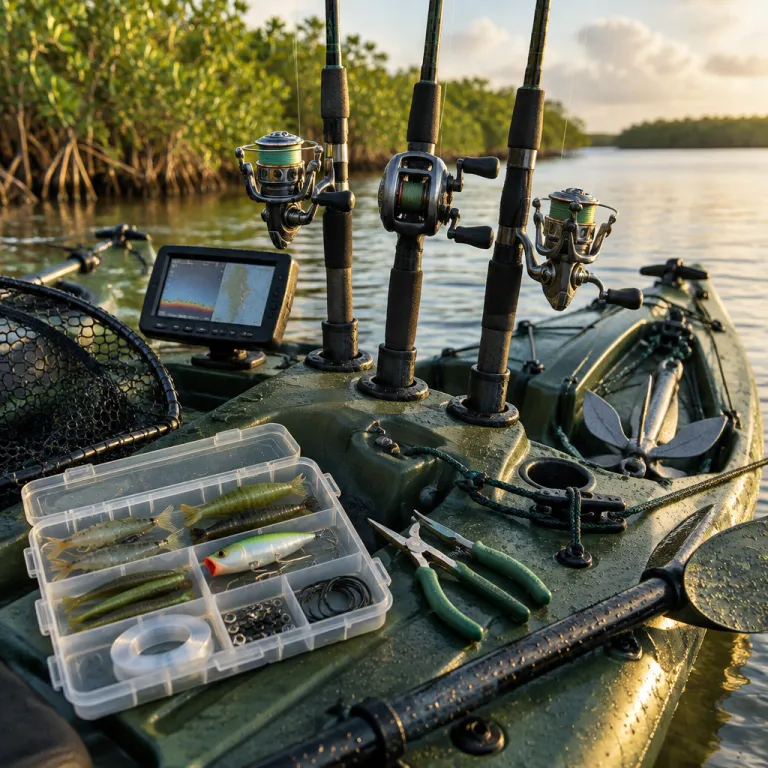
For general inshore fishing, I rely on a 2,1 to 2,4 metre medium power rod matched to a 3000 or 4000 size spinning reel with a sealed drag and corrosion resistant bearings. Spool it with 10 to 15 kilogram braided line and add a 20 to 30 pound fluorocarbon leader, which shrugs off the gill plates of snook, the abrasive mouths of redfish, and the sharp edges around oyster bars. Keep a compact tackle box in the kayak with jig heads from 7 to 14 grams, a few weedless hooks for grass flats, and a mix of soft plastics and spoons that imitate the local bait.
Live bait still matters in saltwater, especially when the water is cold or clear. A simple rig with live shrimp under a popping cork will outfish many fancy lures when trout snook and school size redfish are picky, and a kayak lets you slip quietly into shallow area pockets where powerboats cannot reach. When you fish live offerings from a kayak, rig your bait so it swims naturally with the current, not spinning or dragging sideways, because inshore species are used to seeing prey move with the flow of water.
Corrosion is the silent trip killer that most freshwater anglers underestimate. After every day of saltwater fishing, rinse rods, reels, pliers, and every metal fitting on the kayak with low pressure fresh water, then let them dry before a light oil on moving parts. Skip that routine once and you will feel the first grind in the reel handle on the next trip, a reminder that in this game the best gear is not the most expensive reel but the one you cared for after every tide.
Boat handling, stealth, and positioning on flats and in open water
Handling a kayak on a calm lake teaches basic strokes, but it does not prepare you for wind against tide on a shallow bay. When an inshore saltwater kayak fishing beginner points the bow across a windy flat without a plan, the boat will slide sideways, the line will drag at odd angles, and every cast will feel off target. Learning to work with the wind and current instead of against them is as important as choosing the right lure.
On grass flats, I like to set up long drifts that carry the kayak quietly across likely water while I fan cast ahead and to the sides. Use a drift sock or a simple bucket on a short line to slow the boat if the wind pushes too fast, and adjust your casts so the lure or live bait lands up current and has time to sink before it reaches the strike zone. When you want to pick apart a specific piece of structure like oyster bars or a mangrove point, drop a stakeout pole through an anchor trolley to pin the kayak at the perfect angle.
Pedal drive kayaks shine when you need to hold a precise position in current while working a shoreline. With your feet keeping the bow pointed into the flow, you can make repeated casts to a narrow cut where snook redfish mixes wait for bait to wash through, something that is nearly impossible if you must juggle a paddle and rod at the same time. In open water near channel edges, use the pedal drive to ease up current of the fish, then drift back through them with jig heads or soft plastics ticking the bottom.
Stealth matters more in 0,5 metre of clear water than it does in a stained reservoir. Avoid banging the paddle on the hull, keep deck clutter to a minimum so loose gear does not slide around, and make your first cast from a distance before you ever think about standing. A quiet approach lets you catch fish that powerboats push off the flats, and over time you will learn that the best kayak fishing days come when you move slowly, think ahead, and let the water bring the fish to you.
Planning your first three inshore trips: routes, launches, and local knowledge
The smartest inshore saltwater kayak fishing beginner treats the first three trips as scouting missions, not hero hunts. Instead of charging straight to the nearest inlet or jetty, start with protected bays, backwater creeks, and leeward grass flats where wind and swell stay manageable. Those early sessions should focus on learning how tide, current, and structure interact while you still have plenty of margin for error.
Pick a launch that offers quick access to sheltered water and multiple options for short routes. A small public ramp at the back of a bay or a sandy beach near a creek mouth lets you fish grass flats, mangrove shorelines, and small channels without crossing big stretches of open water. Mark safe bailout points on your map where you can get off the water quickly if the wind shifts or storms build faster than forecast.
Local knowledge compresses the learning curve in ways that no online map can match. Talk to a nearby fishing guide about seasonal patterns for redfish, snook, and trout, and ask which tides concentrate bait on specific flats or oyster bars in your area. Many guides are happy to share basic fishing tips with kayak anglers who respect the resource, handle fish carefully, and release overslot inshore species so the stock stays healthy.
Saltwater fishing also connects you to a longer human story that runs deeper than any one bay or flat. When you read about the cultural significance of traditional tools and rituals around shared smoke and reflection, you see how time on the water fits into a broader pattern of respect and restraint. Carry that mindset into every launch, and your kayak fishing will feel less like a gear hobby and more like a long conversation with the coast you visit each weekend.
Ethics, handling fish, and leaving the flats better than you found them
Freshwater anglers who shift to inshore fishing often underestimate how fragile shallow habitats can be. A single careless drag of a kayak across exposed grass flats or a hard stomp over live oyster bars can scar bottom that took years to grow, and those scars reduce the very structure that holds bait and inshore species. An inshore saltwater kayak fishing beginner who learns to respect these areas early will enjoy better fishing and a cleaner conscience for a long time.
Launch and land the kayak in sand or bare mud whenever possible, avoiding thick seagrass beds that sit just under the water at low tide. When you must cross shallow flats on foot, step lightly, lift your feet instead of shuffling, and give wide berth to visible oyster bars that slice bare skin and kayak hulls with equal ease. Treat every grass edge and mangrove root as future shelter for redfish snook mixes and juvenile trout snook, not as a convenient place to drag gear or dump bait.
Fish handling also changes when you start catching larger, more powerful species from a low seated position. Use a rubber coated net, keep fish in the water while you unhook them, and support the belly of heavier snook or redfish with a wet hand instead of hanging them vertically from a lip grip. If you plan to keep a few fish for the table, know the local slot limits and seasons, bleed them quickly, and store them on ice in a small cooler so the meat stays firm and clean.
Kayak fishing culture tends to reward quiet competence more than loud bragging. Share honest reports, admit when the bite was slow, and pass along small but critical details like which side of a bay the bait pushed on a certain tide. Over time you will find that the best part of this style of saltwater fishing is not the spec sheet, but the tenth cast in the rain.
Key figures for inshore kayak saltwater fishing
- According to the American Sportfishing Association, more than 4 million anglers in the United States participate in saltwater fishing each year, and a growing share of that group now uses kayaks for inshore trips.
- Recreational fishing surveys from Florida Fish and Wildlife Conservation Commission report that redfish, spotted seatrout, and snook account for a significant portion of inshore catches in Florida estuaries, underscoring why tackle and tactics often focus on these three species.
- U.S. Coast Guard data show that human powered craft, including kayaks, represent a notable percentage of recreational boating incidents, which highlights the importance of wearing a life jacket and carrying communication devices on every inshore outing.
- Studies on seagrass habitats in Gulf Coast bays indicate that prop scars and physical damage can take several years to recover, reinforcing the need for kayak anglers to avoid dragging hulls across exposed grass flats at low tide.
- Market analyses of the kayak fishing segment have documented steady growth in pedal drive kayak sales, reflecting how many anglers value hands free boat control when fishing in current and wind.
Frequently asked questions about inshore saltwater kayak fishing for freshwater anglers
What is the safest type of kayak for a first inshore saltwater trip ?
For a first inshore saltwater trip, a wide sit on top fishing kayak with good primary stability is safer than a narrow sit inside model. The open deck makes re entry easier if you fall out, and the stable hull handles chop and boat wakes better on a bay. Look for a kayak with secure rod storage, a comfortable seat, and enough capacity to carry tackle, safety gear, and a small cooler.
How should I rig my tackle when targeting redfish and trout from a kayak ?
A versatile inshore setup is a medium power spinning rod around 2,1 to 2,4 metres, paired with a 3000 or 4000 size reel spooled with braided line and a 20 to 30 pound fluorocarbon leader. Carry a small tackle box with jig heads, soft plastics, and a few topwater lures, plus hooks and floats for live shrimp or other live bait. This combination lets you cover grass flats, oyster bars, and channel edges effectively on most tides.
Do I really need a pedal drive for inshore kayak fishing ?
A pedal drive is not mandatory, but it offers a clear advantage when fishing in current or wind. Being able to move and steer the kayak with your feet keeps your hands free for casting and fighting fish, which is especially helpful around tight structure like mangroves and docks. If your budget allows, a pedal drive kayak can make inshore fishing more efficient, but a paddle kayak with an anchor trolley and stakeout pole still works well.
How do I protect my gear from saltwater corrosion ?
Rinse rods, reels, pliers, and any metal parts of the kayak with low pressure fresh water after every saltwater trip, then let them dry before applying a light oil to moving parts. Use reels with sealed drags and corrosion resistant components, and avoid leaving wet gear in closed compartments where salt can crystallize. Regular maintenance after each outing prevents the gradual damage that leads to sticky drags, rough bearings, and weakened hooks.
Where should a freshwater angler make their first inshore kayak trips ?
Start with protected bays, backwater creeks, and leeward grass flats that offer shelter from strong wind and swell. Choose launch sites that provide quick access to fishable water without long crossings of open water, and plan short routes that keep you close to shore. These calmer environments let you learn how tide and current affect fish movement while maintaining a wide safety margin.