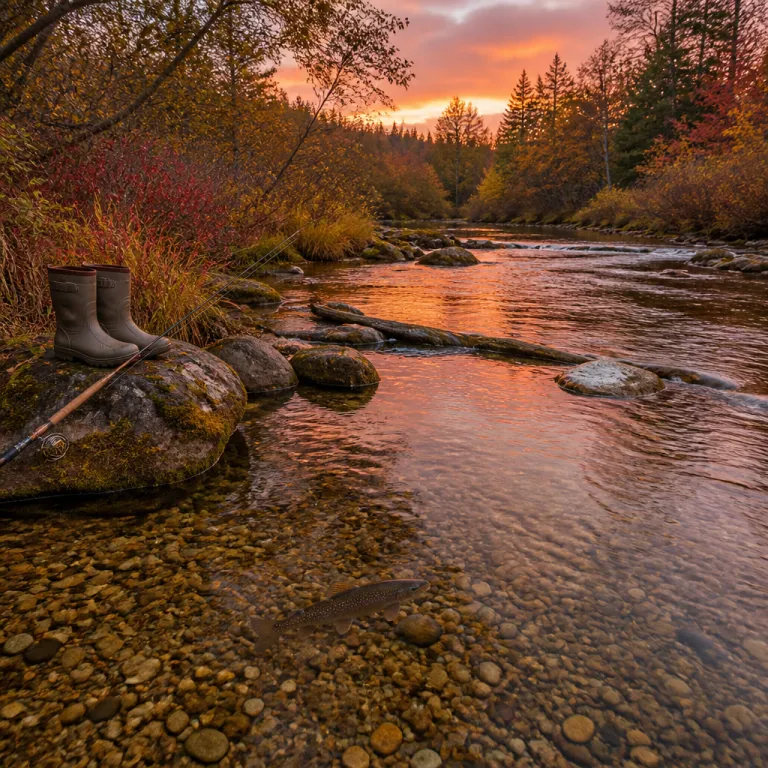
Why small river wading in September changes your fishing
Small river wading fishing in fall September gives beginners forgiving water and active fish. As summer heat fades, cooling water temperatures push trout and smallmouth bass out of deep refuges and into riffles where every cast suddenly matters. That shift opens a long, gentle fall fishing curve that rewards anglers who walk instead of launch.
On most freestone streams, late September brings stable flows and clearer water that make reading current seams far easier from foot level. You stand mid river, feel the push on your shins, and see how each rock deflects water and creates a soft pocket where a river trout or smallmouth bass can hold with minimal effort. Once you notice how each small change in depth or color signals a lie, you will find that your fly fishing or light spin approach becomes more deliberate and less random.
For new anglers used to crowded lakes, a wadeable river opens window after window of quiet water within a short drive of town. You do not need a big boat, a large tow vehicle, or a ramp schedule ; you only need breathable waders or old sneakers, a medium light rod, and a small box of lures or flies. That simplicity means your fishing opportunities expand from rare full day trips to quick evening sessions whenever september evenings turn cool and the fish will slide into ankle deep riffles to feed.
Species diversity is another quiet advantage of small river wading fishing in fall September. In Appalachian and Ozark creeks, you can move from a pool with brown trout to a run stacked with smallmouth bass, then finish in a tailout where panfish nip at dry flies. In some western systems, the same walk can bring encounters with bull trout, river trout that are actually migratory steelhead, or even the occasional atlantic salmon in specific regulated reaches, though those require careful reading of local rules and ethics.
Finding wadeable public water and reading it from your boots
Locating the right small river for wading in fall fishing starts at your desk, not the bank. State stocking maps, public access atlases, and USGS stream gauge pages let you filter for rivers that hold trout or bass, offer legal access, and run at safe depths for september wading. When a gauge shows late season flows under roughly 0,5 to 0,7 cubic metres per second on a narrow creek, most adult anglers can cross mid thigh runs safely if they move slowly and respect the push of the water.
Satellite tools such as Google Earth help you trace river bends, identify gravel bars, and spot parking pullouts where a short walk opens window after window of untouched water. Look for long, even riffles above dark bends ; those transitions often hold brown trout early and smallmouth bass later in the day as water temperatures swing. A detailed online fishing report, such as an insights from the Blue River style report, can then confirm whether trout, bass, or mixed species dominate your chosen reach and how the fish will respond to changing flows.
Once you step in, reading water from foot level becomes your main skill, not your cast length. Stand still for a minute and watch how bubbles trace seams where fast and slow currents meet, because those seams are conveyor belts that bring food to waiting fish with minimal effort. In small river wading fishing in fall September, every visible rock, log, or depth change is a potential lie where a brown trout, a pod of river trout, or a cruising smallmouth bass will hold just off the main push.
Think in lanes rather than spots when you plan each drift or retrieve. A dry fly should ride the soft inside seam, while a weighted nymph or small jig can tick along the deeper outside lane where big fish will rest between feeding bursts. When you approach a pool from downstream, keep your profile low, use the broken surface of riffles as cover, and you will find that even heavily pressured trout and bass tolerate your presence much longer.
Species you will meet on foot and how they behave in early fall
On most American small rivers, three families dominate your wading days in september. Trout rule the colder headwaters and tailwaters, smallmouth bass own the warmer middle reaches, and mixed panfish or the occasional carp fill the slow backwaters and side channels. Each group reacts differently as water temperatures slide from summer peaks into the comfortable band that defines small river wading fishing in fall September.
River trout such as brown trout and rainbow trout feed more confidently in daylight once the water cools into the low teens Celsius, especially in late September. You will find them shifting from deep midday refuges into knee deep riffles where a dry fly or small nymph can tempt fish that ignored you in August, and that change creates some of the best fall fishing of the year for beginners. In certain western systems, bull trout and even migratory steelhead move through the same corridors, so always check regulations before assuming every spotted fish will be legal to target or keep.
Warmwater reaches tell a different story, but one that still favors the wading angler. Smallmouth bass slide shallower as baitfish schools push into riffles, and the fish will often stack below the first obvious drop or ledge where current concentrates food. On rivers like the Potomac and Susquehanna, a careful wader can work through large boulder fields and share the same water that jet boats run in summer, yet now the best fishing opportunities sit within a long cast of shore.
Some northern and coastal rivers add a migratory twist to small river wading fishing in fall September. Atlantic salmon and sea run brown trout return to natal systems, and while many of those fisheries are tightly controlled, they prove how a modest river opens window after window for fish that once seemed strictly offshore. If you want a deeper sense of how varied river species can be, a detailed piece on exploring fishing opportunities in Ontario’s English River system shows how trout, bass, and migratory fish will overlap in surprisingly small corridors.
Flies, lures, and patterns that match September’s late season menu
When water cools and daylight shortens, the menu in small rivers shifts in ways that favor simple, proven patterns. For trout, the classic trio of blue winged olive mayflies, winged olive variants, and october caddis adults anchors most late season hatches on freestone streams. If you carry only a small box, stock it with a few dry flies, a handful of nymphs, and two or three streamers that imitate the larger prey items fish will chase when light fades.
On overcast afternoons, a size 16 or 18 blue winged olive dry fly drifted through gentle riffles can bring river trout up even when rises seem sparse. As evening approaches, october caddis adults skittering across tailouts draw savage takes from brown trout that ignored smaller flies all day, and those same fish will crush a soft hackle swung just under the surface. Late September often brings mixed hatches, so pairing a small winged olive dry with a slightly larger nymph dropper lets you cover both selective trout and opportunistic feeders in one drift.
Warmwater stretches call for a different box, but the logic stays simple. Smallmouth bass in clear rivers respond well to minnow imitations, compact crawfish jigs, and surface patterns that push water without looking cartoonish, and those lures also tempt incidental bass and panfish. In small river wading fishing in fall September, a medium light spinning rod with 4 to 6 kilogram braid and a fluorocarbon leader handles both trout sized plugs and slightly larger smallmouth bass offerings without feeling clumsy.
Do not overlook the power of dry flies and terrestrials even in mixed species water. Grasshoppers, beetles, and small foam attractors bring up both trout and bass in skinny riffles where a subsurface fly would snag constantly, and those patterns shine when you want to cover water quickly. A well planned blog post or field journal where you note which flies, lures, and patterns worked on specific rivers will pay off far more than chasing every new catalog trend.
Minimal gear, safety, and leaving small rivers healthier than you found them
One of the quiet strengths of small river wading fishing in fall September is how little gear you truly need. A single 2,1 to 2,4 metre medium light spinning rod or a 9 foot 5 weight fly fishing outfit covers almost every trout and smallmouth bass scenario you will meet on foot. Add a waist pack with a compact box of flies or lures, a spool of tippet or leader material, and you are equipped for serious fishing without feeling like a pack mule.
Footwear and safety matter more than fancy tackle when you step into moving water. Felt soles grip algae slick rocks but can spread invasive species if you do not clean and dry them thoroughly, while modern rubber soles with studs offer a strong compromise for anglers who fish multiple rivers in a season. A simple wading staff, even a cut branch, stabilises each step so the fish will never see you flail, and a firm rule to avoid crossing water above your knees in strong current keeps minor slips from turning into real emergencies.
Tell someone where you are going and when you plan to return, even for a quick evening session. That basic float plan habit, borrowed from boaters, turns solo small river wading fishing in fall September into a calculated risk rather than a blind gamble, especially when late season storms can raise flows overnight. If you want to broaden your understanding of how different river systems behave under changing conditions, a long form piece on exploring the diverse species of fish in Alaska for recreational anglers shows how hydrology, temperature, and migration shape fish behavior far beyond your home creek.
Ethical choices on small rivers pay off quickly because these systems are intimate and easily pressured. Pinch barbs when you can, keep trout and bass in the water during photos, and share prime lies by moving after a few fish rather than camping on one pool all evening. In the end, the best measure of your september wading is not the spec sheet, but the tenth cast in the rain.
FAQ
How do I know if a small river is safe to wade in September ?
Check recent flow data from USGS or state agencies and look for stable, moderate levels rather than sharp spikes. On narrow streams, most beginners should avoid crossing when fast water reaches above the knee, especially on slick rock. When in doubt, stay near the bank, use a wading staff, and back out if each step feels unstable.
What is the best rod setup for small river wading in early fall ?
A 2,1 to 2,4 metre medium light spinning rod with 4 to 6 kilogram line handles trout, smallmouth bass, and panfish on most small rivers. For fly fishing, a 9 foot 5 weight rod with a floating line is the most versatile choice for dry flies, nymphs, and small streamers. Choose simple, durable gear rather than chasing ultra specialised rods until you know your local rivers well.
Which flies work best for trout on small rivers in late September ?
Blue winged olive patterns in sizes 16 to 18, october caddis adults in larger sizes, and generic nymphs such as Pheasant Tails or Hare’s Ears cover most late season hatches. Carry a mix of dry flies, emergers, and a few small streamers to match changing light and water temperatures. Focus more on good drifts and stealthy wading than on owning every pattern in the catalog.
Can I target both trout and smallmouth bass on the same wading trip ?
Many rivers have cold headwaters that hold trout and warmer lower reaches where smallmouth bass dominate, so a single day can cover both. Start higher in the system during the cooler morning for trout, then move downstream as the day warms to find active bass. Pack a flexible selection of flies or lures that imitate insects, minnows, and crayfish so you can adjust quickly.
Do I need waders for small river fishing in September, or can I wet wade ?
In early september, water temperatures in many regions remain comfortable enough for wet wading in quick drying trousers and sturdy shoes. As nights cool and late season fronts move through, breathable chest waders with proper boots extend your fishing opportunities and keep you safer from cold stress. Choose based on your local climate, but always prioritise traction, warmth, and the ability to move confidently over rocks.