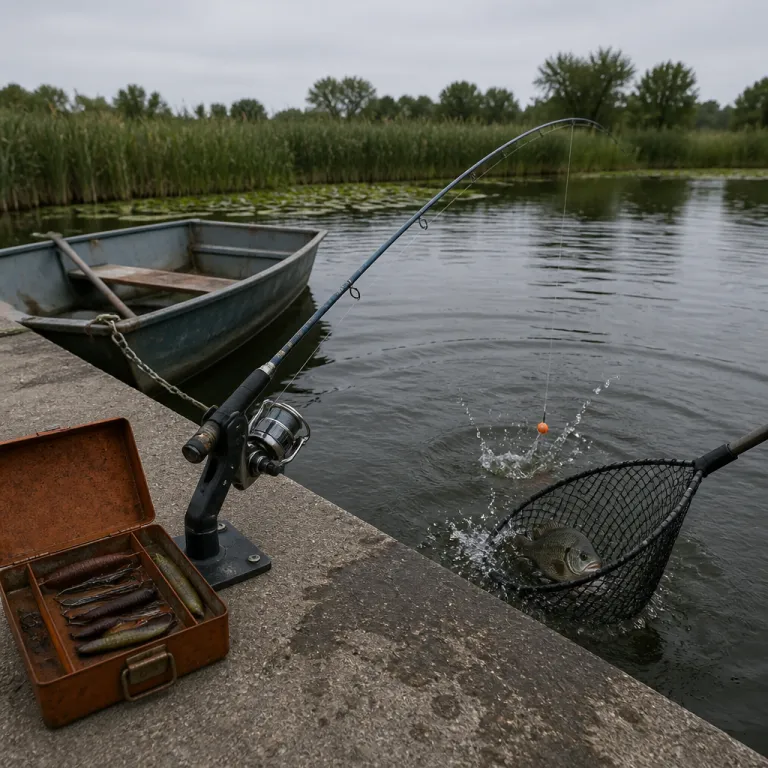
Section 1 – Why summer pond fishing suits new anglers
Summer pond fishing tips for bass and bluegill start with access. A small neighborhood pond or farm fishing pond puts you close to fish-rich water without needing a boat or big-game gear, and that matters when you are learning how fish behave in tight bodies of water. When you treat these ponds as serious outdoor classrooms rather than backup spots, your fishing improves faster than it would on sprawling reservoirs where every mistake is hidden by distance.
A pond fishes differently from a large lake because the water warms quickly and every cast lands near some kind of structure. Summer pond conditions push bass and bluegill shallow at dawn and dusk, then send them sliding toward deeper shade lines when the sun climbs, so your pond fishing plan must follow those daily movements instead of randomly fan casting. Think of each summer pond as its own small game ecosystem where shade, wind, and even one trickle of inflow decide where the best fish feed.
For a beginner, the best pond is usually the one you can visit often. Regular bank fishing sessions let you watch how bass swirl on dragonflies, how bluegill cruise the shallows, and how baitfish flicker when predators push them, and that repeated observation builds instincts no article can replace. When you stop treating ponds as second-tier water and start seeing them as compact big-game arenas, your bass fishing and panfish game hunting mindset sharpens with every trip.
Quick-start checklist for your first summer pond trip
- Basic gear: 1.8 metre / ~6 foot medium-light spinning rod, 2500 size reel, 0.20 millimetre / ~6 pound monofilament, a few size 2 inline spinners, small soft plastic worms, hooks from size 6 to 1/0, slip bobbers, split shot, forceps, line clipper, and a cheap headlamp.
- Three-step first-cast plan: (1) Walk the bank for five minutes and mark shade lines, inflow, and visible cover. (2) Start casting parallel to the bank along that cover during low light, using a small topwater lure or spinner. (3) If action slows, switch to a worm-and-hook rig with a split shot and work the first drop-off or weed edge instead of bombing casts to the middle.
- Safety and rules snapshot: Check local fishing regulations for license requirements, daily limits, and hook or bait restrictions, wear footwear with good grip to handle slick mud or sudden drop-offs, and avoid wading beyond knee depth in unfamiliar ponds.
Section 2 – The minimal setup that actually works
You do not need a truck full of fishing tackle to fish well. A 1.8 metre / ~6 foot medium-light spinning rod with a 2500 size reel, spooled with 0.20 millimetre / ~6 pound test monofilament, will handle both pond bass and hand-sized bluegill in most summer pond situations. That single rod covers bank fishing, light boat use on small ponds, and even basic fly-fishing-style presentations when you cast tiny lures or a weighted fishing fly under a float.
Carry three core lures and you are covered for most fishing ponds. First, a size 2 inline spinner or small soft plastic swimbait handles active fish that are hunting near the bank, then a simple worm and hook rig with a split shot lets you present natural baits or wacky-rigged soft plastic worms to neutral bass, and finally a compact topwater lure draws explosive strikes when the water is calm at dawn. With those three baits in both singular and plural options, you can adjust to changing water clarity and fish mood without overthinking lure choice.
Pack a small box with hooks from size 6 for bluegill up to size 1/0 for bass, a few slip bobbers, and some extra soft plastic worms, and you have a portable game kit that fits in one pocket. Add a pair of forceps, a line clipper, and a cheap headlamp, and your outdoor setup is ready for early or late sessions when summer heat eases and fish slide shallow again. Learn safe footing and how to move along the bank by reading a wading safety guide such as a detailed resource on reading current and footing, because even quiet pond banks can hide slick mud and sudden drop-offs.
Section 3 – Reading a new pond in five focused minutes
Before your first cast, stop and actually read the pond. Walk a short stretch of bank and look for shade lines from trees, any inflow where fresh water enters after rain, and man-made structure such as docks, culverts, or riprap, because those spots concentrate both bait and predator fish. In summer, a pond that has even a trickle of moving water will usually outfish a stagnant bowl, so prioritize those areas when you choose where to start your pond fishing instead of randomly fan casting.
Use satellite images from tools like Google Earth to scout ponds before you drive. On the screen, you can see narrow coves, shallow flats, and darker holes that hint at depth changes, and that helps you pick the best pond for your limited fishing time. Once you arrive, compare what you saw on Google Earth with real shoreline clues such as algae lines, wind direction, and visible bluegill beds, then adjust your bank fishing plan so you are not wasting casts in lifeless water.
When you travel or plan a first trip to bigger water, the same observation skills carry over. A detailed freshwater angler guide to a first saltwater trip, such as a step-by-step resource on reading tides and structure, shows how reading new bodies of water always starts with structure, current, and bait, not with lure colour. Whether you are chasing pond bass, coastal small game species, or even thinking about future ice fishing adventures on frozen lakes, the habit of pausing to study the water before casting will save you time and lost tackle.
Section 4 – Where and when to cast for summer bass and bluegill
In a summer pond, timing beats fancy gear almost every time. Mornings and evenings matter more here than on big reservoirs because shallow water heats and cools quickly, pushing bass and bluegill into narrow feeding windows near the bank. When the light is low and the air feels cooler on your skin, fish slide into ankle-deep water to hunt, and that is when your simple lures shine.
Start by casting parallel to the bank along shade lines from trees or reeds. Bluegill often stack under overhanging branches where insects fall, while bass lurk just outside that cover waiting to ambush, so a small topwater lure or inline spinner worked along those edges will draw both species. After rain, focus on any inflow where muddy water enters the pond, because that fresh water carries food and creates a colour change line that acts like a highway for fish.
Avoid the common beginner mistake of bombing casts straight to the middle of the pond. Most of the life in these compact bodies of water clings to the first drop-off, weed edge, or dock piling, and your bait should spend more time near those targets than in open nothing. Think of each cast as a controlled form of game hunting where you are picking apart small zones rather than spraying lures across the whole pond.
Section 5 – Bluegill as the gateway fish and pond bass as the upgrade
Bluegill are the perfect gateway fish for new anglers. They live in almost every pond, they bite willingly in summer, and they teach you how to watch a float, set a hook, and handle fish gently without the pressure of big-game expectations. A simple slip bobber set at 60 to 90 centimetres / roughly 2 to 3 feet with a size 8 hook and a small piece of worm or wax worm bait will keep your rod bending and your confidence growing.
Once you can regularly catch bluegill, pond bass become the natural next step. Many ponds hold bass that see less pressure than lake fish, so they respond well to straightforward presentations such as a wacky-rigged soft plastic worm skipped under docks or a small topwater lure walked along weed edges at first light. When a bass surges from under a mat to crush your bait in knee-deep water, you feel the same rush as any big-game angler, just scaled to a more accessible arena.
Keep your tackle simple while you learn. One box with a few soft plastic worms, some small jig heads, a couple of inline spinners, and a compact popper covers most pond bass and bluegill situations without overwhelming you with choices. As your skills grow, you can explore fly fishing for bluegill with a basic fishing fly or even try vertical presentations for deeper fish, using techniques similar to those described in a guide to refining vertical jigging for lake trout in clear water, scaled down for your local fishing pond.
Section 6 – Etiquette, access, and leaving ponds better than you found them
Good pond fishing starts with good manners. Many of the best ponds sit on private land, so always ask permission before you fish, respect any rules the owner sets, and say thank you when you leave, because that simple courtesy keeps access open for every angler who comes after you. When you treat each pond as borrowed water rather than a personal playground, you build trust with landowners and neighbours.
On public fishing ponds, etiquette means sharing bank space, keeping noise down, and packing out every scrap of trash you bring in. Broken line, soft plastic baits, and old lures left on the ground can harm wildlife and pets, so carry a small bag in your tackle kit and make a habit of picking up extra litter whenever you walk the bank. Think of it as a form of quiet game hunting for rubbish, where the prize is a cleaner outdoor space for everyone.
Rotating between several local ponds, sometimes called pond hopping, spreads out your fishing pressure and gives each small body of water time to rest. Use tools like Google Earth to map a circuit of nearby ponds, then fish each one lightly rather than pounding a single best pond until the bass turn nocturnal and wary. The anglers who treat ponds as shared resources, not just convenient places to catch fish, are the ones who still have healthy water to bring their kids back to later.
Key figures for summer pond fishing
- Recreational anglers in the United States take an estimated 187 million freshwater fishing trips each year, and a large share of those outings target small ponds and lakes close to home, according to data from the American Sportfishing Association’s 2019 Special Report on Fishing (American Sportfishing Association, 2019, Special Report on Fishing).
- Studies of suburban ponds have found that bluegill often reach catchable sizes of 15 centimetres within two to three growing seasons, which makes them a reliable gateway species for new anglers learning basic techniques (for example, research summarized by state agencies such as the Illinois Department of Natural Resources in 2018, Illinois Department of Natural Resources, 2018, bluegill management summary).
- Research on largemouth bass in small impoundments shows that dawn and dusk periods can account for more than half of daily feeding activity during hot summer months, highlighting the importance of timing your pond fishing around low light windows (see, for instance, feeding-activity studies reported in the North American Journal of Fisheries Management in the early 2000s, such as papers on diel feeding patterns of largemouth bass in small reservoirs).
- Angler surveys indicate that bank fishing accounts for roughly 70 percent of trips on ponds under 5 hectares, reinforcing how effective simple shore-based setups can be for both bass and bluegill, according to regional creel surveys summarized by several state fisheries agencies between 2015 and 2020 (for example, state-level creel reports on small impoundments and community ponds).
FAQ
What is the simplest setup for summer pond bass and bluegill ?
A 1.8 metre / ~6 foot medium-light spinning rod with 0.20 millimetre / ~6 pound test monofilament, a few inline spinners, soft plastic worms, and small hooks for live bait will cover most summer pond situations for both bass and bluegill. This compact kit works from the bank or a small boat and keeps your focus on reading the water instead of swapping lures constantly. For beginners, that simplicity leads to more time with the bait in productive water and more fish landed.
Where should I cast first when I reach a new pond ?
Start with shade lines, overhanging trees, dock edges, and any visible inflow where fresh water enters the pond. These areas concentrate bait and create ambush points for both bluegill and pond bass, especially during low light periods in summer. Avoid casting straight to the middle at first, because most active fish hold along the first drop-off or cover near the bank.
Why are mornings and evenings better for summer pond fishing ?
Shallow ponds heat up quickly under direct sun, which can push bass and bluegill into sluggish midday moods. During mornings and evenings, cooler water and lower light levels make fish more comfortable and willing to move shallow to hunt, so your lures or bait intersect more active fish. Planning your trips around these windows usually produces more consistent bites than fishing through the hottest hours.
How can I tell if a pond holds bass and bluegill before I fish it ?
Look for signs such as small fish dimpling the surface, circular bluegill beds in the shallows, and occasional swirls near cover that suggest predator activity. Talking with local anglers or landowners can confirm whether bass fishing is worthwhile in that pond, and satellite images from tools like Google Earth can reveal depth changes and structure. A quick five-minute walk along the bank often tells you more than an hour of blind casting.
What etiquette should I follow when fishing small ponds ?
Always ask permission on private land, respect posted rules, and leave every spot cleaner than you found it by packing out trash and discarded line. On public ponds, give other anglers space, keep noise down, and avoid crowding productive spots when families or children are fishing nearby. Treating each pond as shared water rather than a personal hunting ground helps keep access open and maintains good relationships with both landowners and fellow anglers.