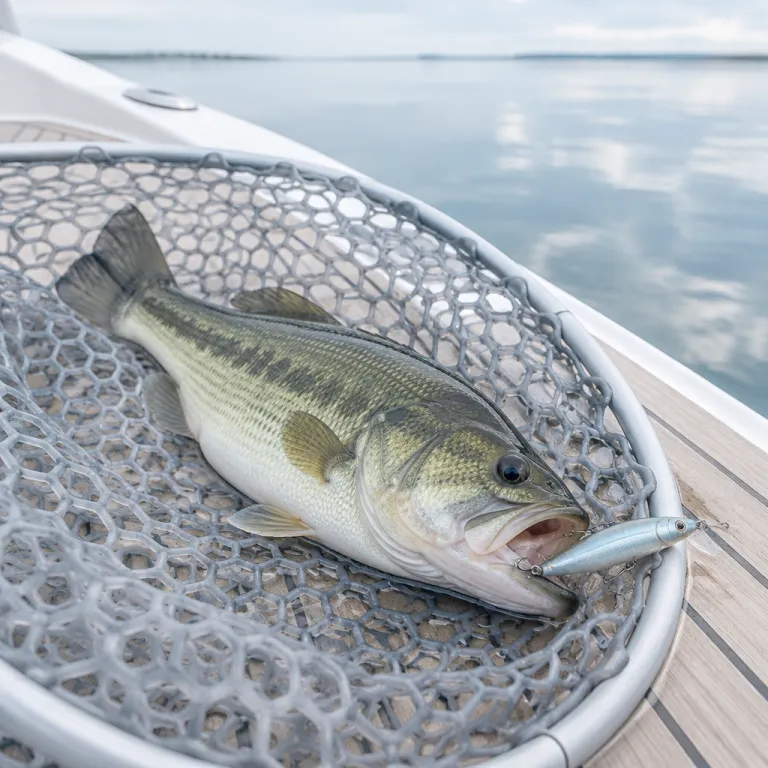
Why fall jerkbait bass fishing suspended in mid depth water works
When the first real cold front slides through, bass stop living on the bank and start roaming the middle of the water column. As surface water cools and the thermocline breaks up, you get bass suspended between 1,5 and 5 meters over deeper water, and a properly tuned suspending jerkbait is one of the few baits that will sit right in their face. That is the core of fall jerkbait bass fishing suspended patterns ; you are not dragging a lure on bottom, you are hanging it at the exact depth where bass suspended and simply waiting for them to lose patience.
Think about what the baitfish are doing in this time year when water temperatures slide through the mid teens Celsius. Shad and other baitfish pull off shallow water cover, drift along breaks and suspend over points, so any jerkbait fishing approach that mimics a wounded baitfish pausing in space will outproduce a crankbait that just grinds and leaves, and that is why jerkbait great days often happen when your spinnerbait and jig never get bit. The bass are not pinned to structure ; instead each fish is cruising slowly in cold water, tracking your suspending jerkbait during the jerks and finally committing when the lure stops and hangs motionless.
On my home lakes in Missouri, the best bass fishing for suspended bass starts when the night air makes you see your breath at the ramp. I will idle across main lake points, watch the sonar for arcs 3 to 4 meters down over 6 to 10 meters of water, and mark every place I see water bass stacked at one level. Those are the spots where a suspending jerkbait or a set of suspending jerkbaits in slightly different running depths will keep your bait in the strike zone longer than any other lure, and that extra hang time is what turns follows into catching fish.
Reading the water column and finding suspended bass
Most weekend anglers think about bass as shallow or deep, but fall jerkbait bass fishing suspended patterns live in the messy middle. The water column becomes a three dimensional highway once colder water starts sliding under the last warm layer, and bass suspended at mid depth will use that space to pin baitfish against nothing more than a temperature break. Your job is to read that water like a map and put a suspending jerkbait right where those fish are cruising.
Electronics help, but you do not need the latest forward facing sonar to track water bass that are chasing bait. A simple 2D sonar or down imaging unit will show suspended bass as clean arcs or streaks between 2 and 6 meters, often near the ends of points, over creek channels or above timber, and this is the same offshore thinking you might use when you are ledge fishing in midsummer, as explained in many deep structure guides about finding bass on ledges and humps. When you see those arcs at a consistent depth, you know exactly how deep your suspending jerkbait or other baits must run to keep the lure in front of the fish for as long as possible.
Wind direction and light levels also shift where bass suspended groups will set up in any given time year. On cloudy days with a steady breeze, I often find the best bass positioned higher in the water column, sometimes just 1,5 to 2 meters down over 8 meters of water, which makes a shallow water jerkbait great because it can reach them without digging. On bright, calm afternoons the same fish may slide a bit deeper, and that is when a slightly heavier suspending jerkbait or a model with a longer bill will help you keep catching fish that are still suspended but less willing to rise far for a bait.
Once you mark a pod of suspended bass, make several casts that cross above and then through the level where those fish are holding. I like to count the suspending jerkbait down if it is slightly sinking, or use the known running depth printed on the package to estimate where the lure will travel in the water, and then I adjust my retrieve speed and pause length until I get bit. When a big fish follows but does not commit, I note the exact depth and angle, because that one clue often unlocks the entire school of bass suspended in that stretch of water.
Water temperatures, seasonal timing and the power of the pause
The magic window for fall jerkbait bass fishing suspended patterns usually starts when water temperatures drop into the 18 to 15 degrees Celsius range. At that point bass fishing with bottom baits gets inconsistent, because the fish are no longer glued to rocks or wood, yet they are not in true winter mode either, and that is where a suspending jerkbait that hangs in place during the pause will outwork almost any other lure. As the season slides toward early spring and then into real winter, the same jerkbait fishing approach keeps working, but the cadence and pause length must change with the cold water.
In early fall, when the water is still relatively warm and baitfish are active, I use a twitch twitch pause rhythm with only 2 to 3 seconds between jerks. Bass suspended in this time year are still willing to chase, so the bait can move faster, and the short pause simply gives the fish a moment to track and then crush the lure, which is why you often feel the hit right as you start the next jerk. As water temperatures slide toward the low teens and then single digits, I slow the cadence dramatically, sometimes to a single sharp jerk followed by a 10 to 15 second pause, because in colder water the fish will follow a long way but only commit when the suspending jerkbait stops and looks like an easy meal.
That long pause feels painful, especially if you grew up power fishing with crankbaits or spinnerbaits. You cast, jerk the bait down to depth, then simply let the suspending jerkbait sit there, counting slowly in your head while the lure hangs in the water column like a stunned baitfish, and most strikes come when you are almost ready to move it again. Articles on the transition from summer to fall bass patterns often talk about slowing down as the key, and this is the jerkbait version of that advice, where patience with the pause is what turns a slow day into a steady pick of quality fish.
As true winter sets in and the lake stabilizes in cold water, jerkbait fishing does not stop working, but it becomes more of a grind for fewer, bigger bites. Bass suspended in this season often group tightly around subtle structure like channel swings or isolated timber, and a suspending jerkbait that barely moves between long pauses will tempt the best bass in the group. When the first warming trend of early spring arrives and water temperatures creep back upward, you can shorten the pause again, because those same suspended bass are now shifting from survival mode toward feeding up before the spawn.
Choosing suspending jerkbaits, colors and the right rod setup
Not every jerkbait on the peg is built for fall jerkbait bass fishing suspended patterns, so you need to understand how different models behave. A true suspending jerkbait is designed to neither rise nor sink during the pause, holding its depth in the water column so bass suspended at that level can study the bait until they finally commit, while floating jerkbaits slowly rise and sinking versions creep deeper when you stop them. All three styles have a place, but for classic cold water jerkbait fishing you want suspending jerkbaits that stay put when you stop moving the lure.
Two proven hard baits for this style are the Megabass Vision 110 and the Lucky Craft Pointer 100, both of which are true suspending jerkbaits in the 1,5 to 2,5 meter range on 8 to 10 pound fluorocarbon. I fish them on a 2,03 to 2,13 meter medium power rod with a moderate or moderate fast action, because that softer tip lets the bait glide instead of darting too violently, and it also keeps treble hooks pinned when a big fish surges at the boat. A Shimano Curado 70 or 150 casting reel with a smooth drag is a great match, and I avoid braid for this technique, since its lack of stretch can make the jerkbait look too mechanical and pull the lure out of the strike zone.
Line choice and diameter also affect how your suspending jerkbait behaves in colder water. Thinner fluorocarbon, like 8 pound test, lets the bait dive a bit deeper and suspend more neutrally, while heavier 12 pound line can make the same lure rise slowly, which is sometimes useful when bass suspended fish are holding just above brush or rocks. If you want to fine tune a jerkbait great favorite, you can add small suspend dots or change to slightly heavier hooks to make a floating model behave more like a suspending jerkbait, but always test it beside the boat to see exactly how it sits in the water before you start casting.
Color selection does not need to be complicated, even though tackle shops make it feel that way. In clear water I lean on translucent or ghost colors that let light pass through, because they look more like real baitfish and will not spook pressured bass suspended high in the water column, while in stained water I switch to solid white, chartreuse or metallic finishes that stand out better. Most of my fall jerkbait bass fishing suspended boxes hold just two color families for each model, a natural shad style for clear water and a brighter pattern for dirty water, and I spend far more time adjusting depth and cadence than worrying about paint schemes.
Three jerkbait retrieves that trigger suspended bass
Once you have the right suspending jerkbait and a suitable rod, the way you move the lure through the water matters more than the brand name on the package. Fall jerkbait bass fishing suspended patterns really come down to three core retrieves, each tuned to a different mood of the fish and a different range of water temperatures, and learning when to use each one will dramatically increase your odds of catching fish. Think of them as tools rather than rules, and adjust on the fly whenever bass suspended schools tell you they want something different.
The first retrieve is the cadence jerk, which shines when water bass are active and chasing baitfish in mid depth water. Make a long cast, crank the suspending jerkbait down to depth, then work a steady twitch twitch pause rhythm with 2 to 4 second pauses, and this keeps the bait darting and stopping like a wounded shad, which is deadly when bass are feeding but not yet in true winter mode. I use this retrieve in the early part of the time year when water temperatures are still in the high teens Celsius, and I often get bit right as the lure starts moving again after a short pause.
The second retrieve is the long pause deadstick, which is the money move in colder water or after a cold front. Here you give the suspending jerkbait one or two sharp jerks to get it down, then let it sit for 10 to 20 seconds, barely twitching the slack line so the lure just quivers in place, and this is when big suspended bass that are not willing to chase will finally ease up and inhale the bait. Many anglers struggle with the patience this requires, but if you commit to it when water temperatures are low and the fish are sulking, you will be rewarded with some of the best bass of the season.
The third retrieve is the rip and drop, which is more aggressive and works well when bass suspended fish are holding deeper or have seen a lot of standard jerkbait fishing pressure. With a slightly sinking model or a suspending jerkbait that slowly sinks on heavier line, you rip the bait hard to make it dart and then give it slack so it falls a bit, and that sudden change in direction often triggers reaction strikes from fish that are not truly feeding. This approach is especially useful around vertical cover like standing timber or steep bluff walls, where bass can track the lure up and down the water column before deciding to hit.
Compared with a crankbait that simply grinds along bottom and vibrates steadily, a jerkbait great presentation is all about unpredictability and the power of the pause. Crankbaits excel when bass are pinned to structure and want a bait deflecting off rocks, but suspending jerkbaits shine when the fish are roaming and using open water, because the lure can stop and hang right in front of them. If you want to refine how you read those changing seasonal moods, it is worth studying detailed breakdowns of how summer bass become fall bass during the three week transition, because the same environmental cues that move fish off the bank also tell you when to pick up a jerkbait instead of a crankbait.
Gear tuning, line management and advanced tweaks for fall jerkbait fishing
Fine tuning your setup turns fall jerkbait bass fishing suspended patterns from a lucky pattern into a repeatable system. Start with the rod, because a 2,03 to 2,13 meter medium power blank with a moderate action loads properly on the jerk and cushions treble hooks when a big fish surges, while a stiff fast action rod can rip tiny holes in the mouth and cost you bites. I like a shorter 2,03 meter rod when I am working baits from a low deck or bank, and a slightly longer 2,13 meter rod when I need extra casting distance to reach spooky bass suspended in clear water.
Reel choice matters less than drag smoothness and line management, but a compact Shimano Curado with a 6,3 to 7,1 gear ratio is a reliable workhorse for jerkbait fishing. The slightly slower gear ratio helps you avoid overworking the suspending jerkbait, because you are picking up slack more than you are winding the lure forward, and that keeps the bait from racing out of the strike zone. Spool it with quality 8 to 10 pound fluorocarbon, which sinks slightly to help keep the lure at depth and offers enough stretch to make the bait glide naturally in the water column.
Boat control and casting angles are the next layer of refinement when you are targeting bass suspended fish. Position the boat so you can cast past the school and work the suspending jerkbait back through them at their level, rather than bombing straight down on top of the arcs you see on sonar, and use the wind to drift slowly across points and channel swings instead of fighting it. If you fish from shore, look for steep banks, bridge corners and ends of long points where deep water swings close, then fan cast with different angles until you connect with suspended bass that are using that structure as a travel route.
Finally, do not overlook small hardware tweaks that can change how your suspending jerkbait behaves in colder water. Upsizing the front treble hook by one size or switching to slightly heavier split rings can turn a slow floating bait into a true suspending model, while downsizing hardware can help a lure rise slowly over brush where you do not want to snag. When you start thinking about jerkbaits as tunable tools instead of fixed baits, you will be able to match your lure to the exact depth, mood and position of the fish, and that is when fall jerkbait bass fishing suspended patterns start to feel almost unfair.
If you enjoy dialing in electronics and presentation details, you may also appreciate learning how to choose the right fishing flasher for smarter trolling success, because the same mindset of reading signals and adjusting depth applies whether you are pulling baits behind the boat or working a suspending jerkbait over a point. In both cases, the angler who understands how fish use the water column will outfish the one who simply casts and hopes, and that is the quiet edge that separates consistent weekend results from the occasional lucky big fish.
Key statistics for jerkbait fishing and suspended bass
- Biologists from several state agencies report that in many temperate reservoirs, more than 50 percent of adult bass may hold offshore and suspended during the cooling period of autumn, which explains why bank oriented baits often struggle during this seasonal window.
- Telemetry studies on largemouth bass in southern reservoirs have shown average daily depth changes of 2 to 4 meters during fall turnover, highlighting how frequently bass move vertically in the water column as water temperatures shift.
- Controlled tank tests by lure manufacturers indicate that small changes in line diameter can alter the running depth of a suspending jerkbait by 0,3 to 0,6 meters, which is enough to move a lure out of the strike zone when bass suspended fish are holding tightly to a specific band of water.
- Angler creel surveys from several Midwestern lakes have documented higher catch rates on jerkbaits than on spinnerbaits or crankbaits once surface temperatures drop below about 16 degrees Celsius, supporting the idea that the pause and suspend action becomes more effective in colder water.
- Studies of shad and other common baitfish species show that these prey fish often concentrate over 6 to 10 meter depths in autumn, with schools frequently suspending midway between surface and bottom, which aligns closely with the typical running depths of many popular suspending jerkbaits.
FAQ about fall jerkbait fishing for suspended bass
What water temperatures are best for fall jerkbait bass fishing suspended patterns ?
The most consistent window for fall jerkbait bass fishing suspended patterns is usually when water temperatures fall between about 18 and 10 degrees Celsius. Above that range bass often stay shallower and respond better to faster moving baits, while below it they slide toward true wintering areas and require longer pauses. A suspending jerkbait can still work outside this band, but the peak mix of active fish and suspended positioning tends to sit in that mid range.
How long should I pause a suspending jerkbait in cold water ?
Pause length should follow the water temperature, with shorter pauses in warmer conditions and longer ones as the lake cools. In early fall a 2 to 4 second pause often works well, but as temperatures drop into the low teens Celsius many anglers extend pauses to 10 to 15 seconds or even longer. The key is to experiment until you start getting bit, then stick with that cadence for the rest of the day.
Do I need expensive electronics to find suspended bass for jerkbait fishing ?
High end electronics help, but they are not mandatory for effective jerkbait fishing around suspended bass. A basic 2D sonar unit that clearly shows depth and fish arches is enough to identify the level where bass are holding in the water column. Once you know that depth, you can choose a suspending jerkbait that runs in the same band and focus on good casting angles and boat positioning.
Is fluorocarbon line always better than braid for jerkbait fishing ?
For classic suspending jerkbait fishing in clear water and cold conditions, fluorocarbon is usually the better choice. It sinks slightly, which helps keep the lure at depth, and its bit of stretch softens your jerks so the bait glides more naturally, while braid can make the action too harsh and pull the lure out of the strike zone. Some anglers use a braided main line with a long fluorocarbon leader, but straight fluorocarbon remains the most forgiving option for most weekend bass fishing situations.
Can I use the same jerkbaits in winter and early spring that I use in fall ?
Yes, the same suspending jerkbaits that shine in fall often remain effective through winter and into early spring, as long as you adjust your cadence and pause length. In true winter conditions you will usually need longer pauses and more subtle rod movements, while early spring fish often respond to slightly faster retrieves as they become more active. Keeping a small rotation of proven models in a few reliable colors lets you cover all three seasons without constantly buying new baits.