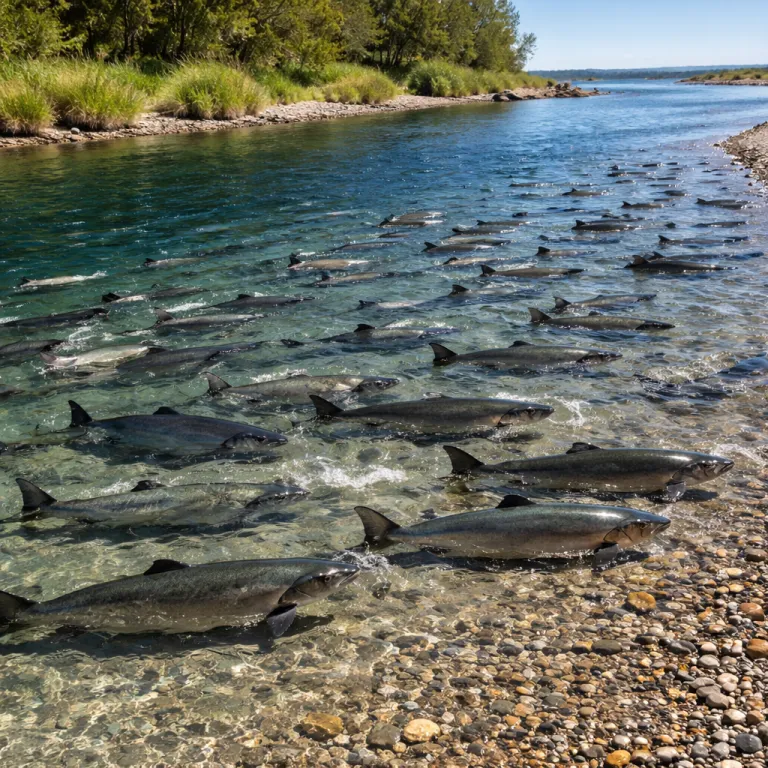
What pacific salmon recovery under ESA protection really means for anglers
Pacific salmon recovery under ESA protection is no longer an abstract policy debate for people who fish. When you look at the data behind the phrase “pacific salmon recovery ESA 2026,” you see real salmon and steelhead numbers bending upward on the graphs that matter to West Coast anglers. Those curves are still far from historic abundance, yet they finally point in the same direction as the stories you hear on the river.
Across the Pacific Coast, NOAA Fisheries reports that most listed salmon and steelhead populations have increased over roughly twenty five years of Endangered Species Act protection. In its 2016 and 2021 five year status reviews for Pacific salmon and steelhead, NOAA concluded that none of the 28 protected distinct population segments (DPS) went extinct during that period, which is a quiet but enormous win for every state that still calls itself a salmon state. Protected runs of Pacific salmon and coastal salmon generally increased faster than unprotected fish of the same species, which is why the phrase salmon recovery now carries more weight in fisheries meetings from Alaska to Washington and Oregon.
In those reviews, “increased” typically means a sustained positive trend in spawner abundance or adult returns compared with pre listing baselines from the late 1980s and early 1990s, often on the order of 20 to 40 percent over two to three decades rather than a single strong year. That methods note matters for anglers, because it explains why managers talk about long term trajectories instead of celebrating one good season and throwing the doors wide open.
The strongest stories come from specific rivers, not press releases. Snake River fall Chinook salmon, once written off by many salmon fisheries veterans, now support carefully managed harvest that would have been unthinkable when the ESA listings first hit the West Coast. Hood Canal chum and Oregon Coast coho salmon show similar recovery patterns, reminding anglers that a mix of habitat restoration, smarter hatchery program design, and tighter coastal salmon regulations can move the needle when the work is backed by stable funding.
On Washington’s Elwha River, for example, NOAA and state biologists documented rapid recolonization by Chinook salmon and steelhead within five years of the Elwha and Glines Canyon dam removals, with adult Chinook counts in some reaches increasing several fold compared with pre removal surveys. That case study, summarized in NOAA technical memoranda published between 2016 and 2022, illustrates how opening blocked habitat can quickly translate into more fish on the gravel and, eventually, more opportunity for anglers when recovery goals are met.
That funding has not appeared by magic. The Pacific Coastal Salmon Recovery Fund (PCSRF), created by Congress in 2000, has directed several billion dollars in recovery fund investments into projects that reopen fish passage, cool streams, and rebuild spawning habitat from Alaska down the entire West Coast. According to PCSRF annual reports through fiscal year 2022, those projects include more than 1.2 million acres of habitat work and over 12,000 miles of river and stream access reopened to fish—numbers that matter every time a Chinook salmon noses into a side channel or a coho salmon slides past a culvert that used to be a dead end.
For anglers, the question is always what this recovery will mean for future seasons. On the Columbia River and in Puget Sound, managers now have more flexibility to shape salmon fisheries that allow some harvest on healthier Pacific salmon stocks while still protecting the most fragile endangered species segments. That does not mean wide open limits, but it does mean that a carefully tuned program of selective gear, time area closures, and real time monitoring can keep more of us on the water without pushing recovery backward.
Gear choices start to matter more as regulations tighten around conservation goals. Circle hooks, for example, reduce deep hooking on released fish and are already required in many coastal salmon and steelhead seasons along the Pacific Coast. If you want a deeper dive into why that matters for every released fish you handle, a detailed guide on the benefits of using circle hooks in recreational fishing explains how small rigging decisions ripple through salmon recovery efforts.
Data snapshot: key ESA salmon recovery metrics anglers should know
- 28 distinct population segments of Pacific salmon and steelhead listed under the ESA, with none lost to extinction over roughly 25 years, based on NOAA Fisheries five year status reviews completed between 2011 and 2021.
- Most ESA listed runs show improved abundance trends compared with pre listing baselines from the late 1980s and early 1990s, as summarized in NOAA technical recovery documents and status assessments.
- More than 1.2 million acres of habitat restored or protected through PCSRF supported projects along the Pacific Coast, according to PCSRF annual reports through 2022.
- Over 12,000 miles of river and stream access reopened to migrating salmon and steelhead via barrier removal and passage improvements documented in PCSRF and state partner reporting.
How habitat projects and changing oceans shape your future seasons
Most of the quiet success behind pacific salmon recovery ESA 2026 comes from habitat work that never makes a glossy brochure. When you walk a west side river and see a new side channel, a log jam, or a cold spring reconnected, you are looking at the bones of long term salmon recovery rather than a quick fix. Those structures turn high winter flows into rearing water for juvenile fish, which is why habitat restoration has become the backbone of every serious salmon and steelhead program on the Pacific Coast.
Across Alaska, Washington, Oregon, and down to California, PCSRF backed projects have removed barriers, rebuilt estuaries, and reconnected floodplains that were cut off for decades. Each project may look small from the bank, but together they reopen fish passage for Chinook salmon, coho salmon, and steelhead trout that once had to fight through straightened channels and warm, shallow runs. When NOAA Fisheries tallies more than 12,000 miles of reopened access, that number translates directly into more parr and smolts leaving the river each spring, which is the only currency that matters for long term salmon fisheries.
Ocean conditions still sit in the driver’s seat for many Pacific salmon stocks. Warmer surface layers, shifting prey, and more frequent marine heatwaves have all hammered coastal salmon and coast salmon runs that used to be buffered by colder water and more stable food webs. Those same conditions complicate management on the West Coast, because a strong river cohort can still vanish in a bad ocean year, leaving fish and wildlife agencies scrambling to explain why preseason forecasts missed the mark.
Predation adds another layer of pressure that anglers see every day. Harbor seals, sea lions, and expanding bird colonies take a measurable bite out of juvenile salmon and steelhead in estuaries and lower river reaches, especially where fish passage funnels migrants through narrow bottlenecks. Managers now factor those losses into recovery models, which is one reason they remain cautious about expanding harvest even when escapement numbers look better on paper.
For recreational fishermen, the practical takeaway is simple but not easy. Expect more years where your favorite river opens with tighter daily limits, mandatory release of wild fish, and barbless hook rules that feel restrictive but are grounded in survival data for ESA listed endangered species. Those rules are not about punishing anglers; they are about turning incremental recovery into durable abundance that can support your grandchildren’s seasons as well as your own.
Ethical choices on the water will keep mattering as much as any regulation. Handling time, water temperature, and where you choose to fish in a watershed all influence post release mortality for salmon and steelhead, especially when rivers run low and warm. If you are interested in the broader ecological web that intersects with our sport, including how past practices inform modern conservation ethics, a detailed article on modern conservation ethics in recreational fishing offers useful context for how historical decisions still echo through today’s management debates.
Does ESA protection work for fish, and what comes next for gear and ethics ?
The core question behind pacific salmon recovery ESA 2026 is whether the Endangered Species Act actually works for fish. After a quarter century of data on Pacific salmon and steelhead, the answer from NOAA and independent scientists is a qualified yes, with a long road still ahead. ESA protection stopped the free fall for many West Coast runs, but it did not magically restore the coast to the days when every small river held thick schools of returning fish.
From an angler’s perspective, the ESA did three things that now shape every season. First, it forced states and federal agencies to treat salmon recovery as a basin wide project rather than a patchwork of local fixes, which is why you now see coordinated work from Alaska down through Washington, Oregon, and into California. Second, it unlocked stable funding through tools like the Pacific Coastal Salmon Recovery Fund, turning one off projects into long term program commitments that keep habitat crews, biologists, and engineers in the field year after year.
Third, ESA listings changed how we think about harvest and gear. Selective fisheries that target hatchery Chinook salmon or coho salmon while releasing wild fish now rely on barbless hooks, soft mesh nets, and careful handling that would have seemed fussy to many anglers a generation ago. If you want to understand why those details matter biologically, a clear explainer on how salmon spawning success depends on the number and condition of adults that actually reach the gravel, not just the counts at a dam window, helps connect gear choices to real fish on the redds.
Looking ahead, the next phase of salmon recovery will lean even harder on anglers as partners rather than just regulated users. Expect more citizen science projects where volunteers help monitor river temperatures, snorkel juvenile rearing habitat, or report tagged fish recaptures that refine survival estimates for specific stocks. Those efforts give fish and wildlife managers better data to fine tune seasons on the Columbia River, in Puget Sound, and along smaller coastal salmon streams that often slip under the radar.
Gear makers are already responding to this shift. Modern salmon and steelhead rods, reels, and line systems are increasingly designed to protect lighter leaders and smaller hooks, which is exactly what you want when regulations push you toward more selective techniques. The same goes for braid to fluorocarbon setups that let you feel every head shake without horsing a fish, reducing breakoffs and keeping released fish in better shape.
In the end, the quiet rebound of Pacific salmon under ESA protection is not a green light to fish harder without thinking. It is a reminder that every choice you make on the bank or in the boat either reinforces or erodes the gains that habitat restoration, PCSRF funding, and disciplined management have carved out along the Pacific Coast. The real test of this recovery will not be the next stock assessment, but how your tenth cast in the rain feels when a wild fish rolls and you know you did everything right.