
Summary
Editor's rating
Value for money: is this combo worth the price?
Design and feel: more practical than flashy
Materials and build: where they saved money and where they didn’t
Durability and long-term confidence
On-the-water performance: casting, fighting fish, and real use
What you actually get in the Redington Salmon Field Kit
Pros
- Complete, ready-to-fish salmon setup with rod, reel, premium RIO line, leader, and case
- Medium-fast 8-weight rod and carbon drag reel handle salmon confidently
- Good overall value with components you don’t immediately feel forced to upgrade
Cons
- Diecast reel is less robust than a fully machined alternative, not ideal if you’re rough on gear
- Not as crisp or light as higher-end rods; advanced anglers may outgrow it over time

Specifications
View full product page →| Brand | REDINGTON |
A ready-to-fish salmon kit that actually feels thought through
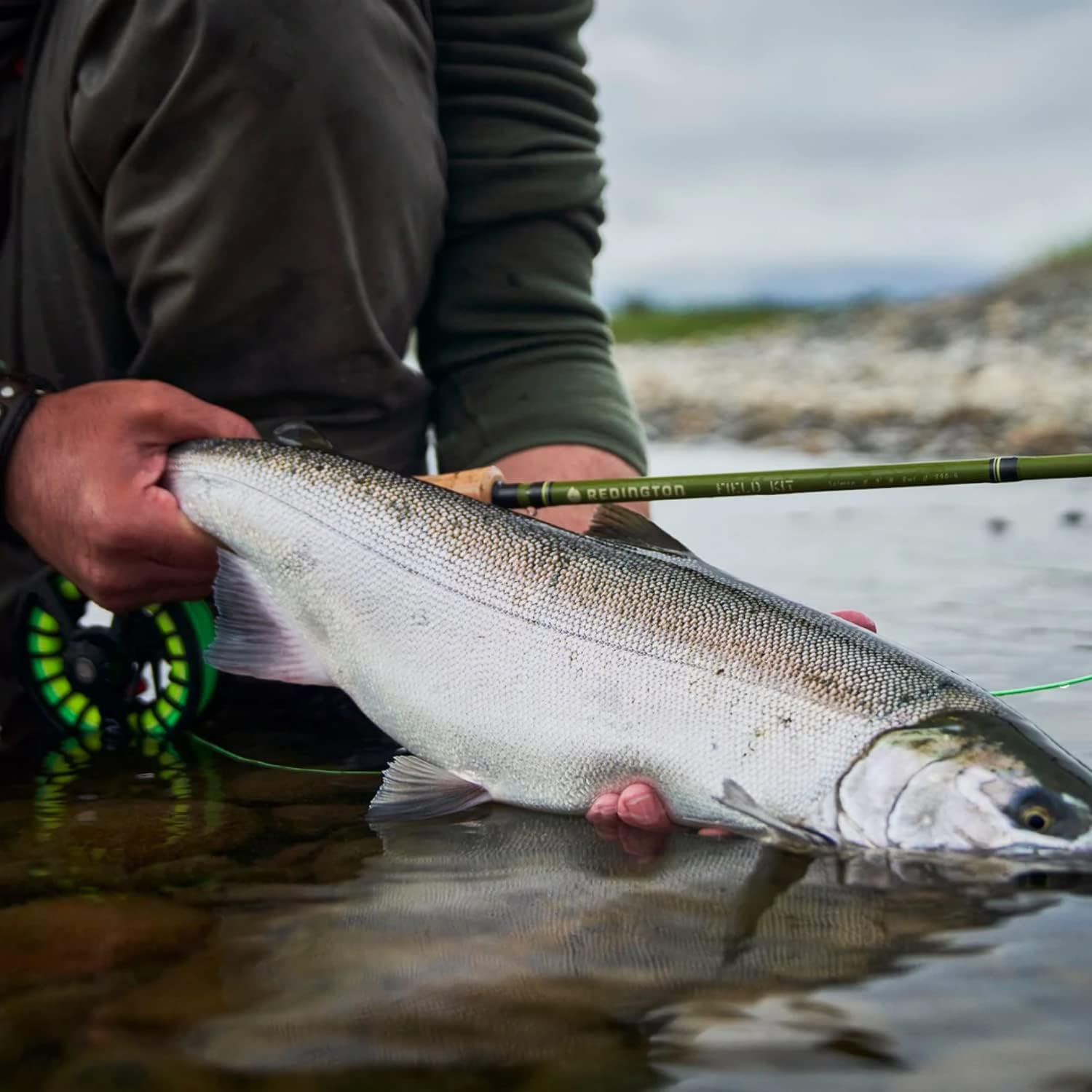
I took the Redington Salmon Field Kit out because I was tired of piecing gear together every time a buddy texted, “Hey, salmon are in, you coming?” I wanted a setup I could just grab, toss in the car, and know I wasn’t stuck with a limp rod or junk fly line. This kit is sold as a complete package: rod, reel, line, leader, and a travel case. On paper, it covers everything you need to get a fly in front of salmon without diving into a gear rabbit hole.
First thing I noticed: this isn’t one of those super cheap starter combos you outgrow in a month. It’s still a mid-range kit, but you can feel they didn’t cut every corner. The rod has a proper 8‑weight backbone, the reel isn’t a toy, and the line is a real RIO line, not some nameless floating rope. That already puts it ahead of a lot of bundles I’ve tried or seen friends buy and regret.
I’ve used it a handful of times now, both from the bank and wading, with weighted flies and bigger salmon patterns. My feeling is pretty clear: it’s not perfect, but it’s fishable out of the box, which is more than I can say for many combos in this price range. You don’t instantly feel like you have to swap half the components to make it usable.
If you’re expecting a pro‑level setup that rivals a high-end custom rod and machined reel, that’s not what this is. But if you want a solid, forgiving salmon kit that you can learn on, travel with, and not baby too much, it honestly gets the job done. The rest of this review is just breaking down where it shines, where it falls short, and whether it’s worth your money versus building your own outfit piece by piece.
Value for money: is this combo worth the price?
Looking at the price versus what you get, I’d rate the value as good, but not dirt cheap. You’re paying more than for the absolute entry-level kits, but you’re getting better components, especially the line and the rod. If you tried to buy an 8‑weight rod, a decent reel, a premium RIO line, a leader, and a proper case separately, you’d almost certainly end up spending more than this combo, unless you went full bargain-bin on everything.
Where the value really shows is in how little you feel the need to upgrade right away. With a lot of cheaper combos I’ve seen, people end up swapping the line almost immediately, then complaining about the reel, then eventually replacing the rod. So that “cheap” kit ends up costing more in the long run. Here, you can actually fish the stock setup for a good while. If you ever upgrade, it’ll be by choice, not because the gear is unusable.
Compared to building your own outfit from mid-range components, this kit saves you the headache of matching everything and often saves some money too. You don’t have to worry about line weight compatibility, leader strength, or whether the reel balances the rod. For someone who doesn’t enjoy gear research and just wants to be on the water, that simplicity has real value. You’re paying partly for convenience and for a package that’s already tuned for salmon fishing.
That said, if you’re on a very tight budget and willing to accept compromises, you can definitely find cheaper combos. They’ll fish, but you’ll feel the limits sooner, especially in line quality and drag performance. On the other end, if you already know you’re deeply into fly fishing and want top-tier gear, you might be better off spending more and picking each component. This Redington kit sits nicely in the middle: solid value for someone who wants a serious, ready-to-go salmon setup without going overboard on cost or complexity.
Design and feel: more practical than flashy
Design-wise, Redington clearly aimed for functional and durable rather than flashy wall-hanger. The 9-foot length is kind of the standard sweet spot for salmon and heavier freshwater work: long enough for decent line control and mending, short enough to not feel like a broomstick all day. The medium‑fast action is forgiving, especially if you’re not a casting nerd. It loads fairly easily, and you don’t need a perfect stroke to get the line out there.
The reel is their RUN model, made from diecast aluminum with a large arbor. It’s not a fully machined, super fancy reel, but it looks decent and feels light on the rod. The large arbor helps with quick line pickup, which actually matters when a fish turns and runs at you. The drag knob is easy to grab with wet fingers, and the drag itself feels smooth enough. It’s not silky like a top-tier reel, but it’s far from junk. I’d call it perfectly serviceable for the price bracket.
The whole combo is balanced pretty well. With the line loaded, it doesn’t feel tip-heavy or awkward in hand. I fished it for a few hours straight and didn’t get that annoying wrist fatigue you sometimes get with badly matched combos. The handle is a standard full wells cork grip, which is what you want on an 8‑weight. It gives you enough leverage to lean on the fish without destroying your hand. The reel seat is anodized aluminum, which is standard but important if you’re near saltwater or brackish areas.
Visually, it’s nothing crazy. No fancy wraps, no show-off insert, just a clean, modern look. Personally, I’m fine with that. I care more about whether it casts and holds up than whether strangers on the bank think it looks cool. If you’re into super pretty rods, this won’t scratch that itch, but if you want something that doesn’t scream “cheap combo,” it’s in a good spot. It looks like proper gear, not a toy.
Materials and build: where they saved money and where they didn’t
The rod is built from carbon fibre, and the reel is diecast aluminum with a carbon drag system. So overall, you’re getting modern, standard materials for this kind of kit, not weird off-brand stuff. The blank doesn’t feel overly heavy or clunky, which is usually where cheaper combos fall apart. The guides and wraps look clean, with no glue blobs or misaligned eyes on my unit. It’s not boutique-level craftsmanship, but it doesn’t scream rushed factory job either.
The reel being diecast instead of fully machined is one of the obvious cost-saving choices. Machined reels are usually stronger and more precise, but they’re also a lot more expensive. For a combo at this price, diecast is normal. You just have to be aware: it’ll handle fishing fine, but don’t throw it on rocks or slam it in car doors and expect miracles. The carbon drag, though, is a nice touch. It gives you decent stopping power for salmon and feels consistent. I didn’t get any jerky starts when a fish pulled, which is what you want to avoid.
The line is honestly one of the strongest points material-wise. RIO Premier Grand with SlickCast is an actual premium line, not a throw-in. The coating feels slick, shoots well, and doesn’t crack after a couple sessions. This is where a lot of cheaper combos cut corners, and it’s usually the first thing people end up upgrading. Here, you don’t really need to. The included 9' 20 lb tapered leader is also usable straight away; it’s stiff enough for heavier salmon flies but not so stiff that it behaves like cable.
Overall, you can tell Redington chose to put better material into the rod and line, and saved a bit on the reel by going diecast. For most people, that’s actually the right compromise. You feel the rod and line every cast; the reel mostly needs to not fail. If you’re very picky, you might eventually upgrade the reel to a fully machined model, but you won’t feel pressured to replace everything on day one like with the low-end kits.
Durability and long-term confidence
Durability-wise, I’d say the Redington Field Kit sits in the “should hold up if you’re not reckless” category. The carbon fibre blank feels sturdy enough for regular use. I’ve knocked it against rocks and branches a couple of times (as you do when bushwhacking to spots), and it didn’t show any immediate damage beyond minor scuffs. The guides stayed straight, and the ferrules still fit snugly after taking it apart and putting it together several times.
The reel is where you need to be a bit more realistic. Diecast aluminum isn’t as tough as a fully machined reel. If you drop it hard on rocks, there’s more risk of bending or cracking. That said, used normally – stored in the case, not thrown around the boat – it feels up to the task. The drag stayed consistent after being tightened and loosened multiple times, and I didn’t notice any grinding or weird noises. Just don’t treat it like an indestructible tool; it’s not that. It’s a decent reel that will last if you give it basic respect.
The included Cordura case is actually a nice part of the durability story. It protects the rod and reel together, which is great for travel or just tossing it in the trunk. I’ve driven with it bouncing around the back of the car, and everything came out fine. The zippers and stitching feel okay, not flimsy. For someone who’s not super careful with gear, having a dedicated, padded tube-style case is a big help in avoiding accidental breaks.
Long term, I could see the cork grip darkening and maybe chipping a bit, as with any rod that gets used. The line and leader will eventually need replacing, like any consumable. But nothing in the kit feels like it’s going to fall apart after a couple of weekends. Considering the price and that it’s made in China (like most gear now), the overall durability seems fair. Not bombproof, but definitely not fragile, as long as you treat it like proper fishing gear and not like a shovel.
On-the-water performance: casting, fighting fish, and real use
In practice, the casting performance is solid for the level. The medium‑fast action with the RIO Grand line loads nicely at normal fishing distances. I was comfortably casting 40–60 feet without working hard, and I’m not some competition caster. With a bit of focus, you can push it further, but realistically, for salmon fishing, that range covers most situations. Roll casts and simple spey-ish moves with minimal backcast space felt okay too, thanks to the line weight and taper.
With heavier salmon flies and a bit of wind, the combo still behaved decently. You feel the fly’s weight, sure, but the rod doesn’t fold. The RIO Grand taper is designed to turn over bigger flies, and you can tell: the leader straightens pretty well most of the time if your cast isn’t completely off. I fished some weighted patterns and didn’t feel like I was fighting the setup every cast, which is often the problem with under-gunned or poorly matched lines.
On the fish-fighting side, the 8‑weight backbone is reassuring. You can lean into a fish without feeling like you’re about to snap something. The drag on the RUN reel is strong enough for salmon; it starts smoothly and has enough range to fine-tune tension. It’s not ultra-refined, but it’s reliable. I like that the large arbor helps pick up slack quickly when a fish runs toward you or changes direction. That’s one of those things you don’t think about until you lose a fish because you couldn’t keep up.
One thing to be clear on: this is not a hyper-fast, ultra-light, top-tier rod. If you’re used to fishing $700+ sticks, you’ll feel the difference. It’s a bit more forgiving, a bit heavier, and not as crisp. But for the target audience – people who want a capable, ready-to-fish salmon kit – it performs well. It’s forgiving enough for learners but not so soft that experienced anglers will hate it. I’d call the performance pretty solid and dependable, especially considering you’re getting the whole combo, not just the rod at this price.

What you actually get in the Redington Salmon Field Kit
In the tube, you get a pretty complete package: a 9-foot, 8‑weight, medium‑fast action rod, a RUN reel pre‑spooled with backing, a RIO Premier Grand fly line, a 9' 20 lb tapered steelhead/salmon leader, and a Cordura travel case. So you’re basically one box of flies and some tippet away from fishing. For someone starting out or just wanting a dedicated salmon kit, that’s genuinely practical. No hunting for compatibility, no wondering if the line matches the rod, etc.
The main thing to understand is that this kit is built around salmon: 8‑weight line, 20 lb leader, and a rod with enough muscle to handle a decent fish in current. This isn’t a delicate trout setup. If you mostly fish smaller rivers or light flies, this is overkill. But if you’re targeting salmon in rivers or estuaries, it’s actually a sensible all‑in‑one bundle. They clearly thought through the target use instead of just slapping a random combo together.
Compared to cheaper starter combos I’ve tried, the biggest difference is the line and leader. Most budget kits throw in a generic line that cracks quickly or doesn’t load the rod well, and a leader that feels like stiff wire. Here, the RIO Grand line with SlickCast coating feels like a real line you’d actually buy on its own. It shoots decently, floats well, and doesn’t coil like crazy. The included leader is also usable; I fished it straight out of the box and didn’t feel the need to swap it on day one.
So in practice, when you open the box, you can literally rig up and be casting in 15–20 minutes, even if you’re not super experienced. No extra spooling, no messing with backing. For people who don’t want to geek out on gear and just want to fish, that’s a big plus. It’s not the cheapest way to get on the water, but it’s a cleaner, less annoying path than mixing random pieces that don’t match well.
Pros
- Complete, ready-to-fish salmon setup with rod, reel, premium RIO line, leader, and case
- Medium-fast 8-weight rod and carbon drag reel handle salmon confidently
- Good overall value with components you don’t immediately feel forced to upgrade
Cons
- Diecast reel is less robust than a fully machined alternative, not ideal if you’re rough on gear
- Not as crisp or light as higher-end rods; advanced anglers may outgrow it over time
Conclusion
Editor's rating
Overall, the Redington Salmon Field Kit is a practical, no-drama way to get into or expand into salmon fly fishing. The rod has enough backbone to handle real fish, the reel is light and functional, and the RIO line is genuinely good out of the box. You’re not fighting the gear, which matters a lot if you’re still dialing in your casting or just don’t fish often enough to justify a custom setup.
It’s not perfect. The reel is diecast, not a tank, and the whole combo doesn’t have that super crisp, high-end feel you get from much more expensive gear. But for the price, you get a kit that’s balanced, usable, and doesn’t immediately push you into upgrades. If you want to grab one tube and be ready for river or estuary salmon, this does the job well. I’d recommend it to beginners who want to start on decent gear, and to intermediate anglers who want a dedicated salmon outfit without overthinking it.
If you’re extremely budget-conscious and just want the cheapest way to try fly fishing, this might feel like a bit of a stretch. And if you already own high-end rods and reels, this probably won’t replace them. But for most people in the middle – those who want good, reliable gear that’s ready to fish right away – it’s a solid choice that feels like money reasonably spent rather than a compromise you’ll regret.