
Summary
Editor's rating
Is it worth the money or just a cheap gimmick?
Compact design that favors portability over feel
Budget materials that are okay if you don’t push them
Surprisingly tough for light use, but not bulletproof
How it actually fishes on the water
What you actually get out of the box
Pros
- Very compact and lightweight when collapsed (about 35 cm), easy to keep in a bag or car
- Works fine for light freshwater and inshore saltwater fishing with small lures and rigs
- Cheap enough to use as a backup or travel rod without worrying too much about it
Cons
- Action is soft and a bit sloppy, with limited sensitivity and casting distance
- No reel or accessories included, and no real warranty or useful documentation
- Build quality is basic; not suited for bigger fish or heavy, regular use

Specifications
View full product page →| Brand | Qerutk |
A pocket fishing rod that actually sees real use?
I picked up this Qerutk 1.7m telescopic fishing rod mostly out of curiosity. I’ve seen a ton of these cheap mini rods online, and most of them look like toys. This one was ranked high in ice fishing rods, so I wanted to see if it’s just hype or if it actually works for normal weekend fishing. I’ve used it on a few short sessions at a local lake and once on a quick shore session in saltwater.
For context, I usually fish with a 2.1–2.4m spinning rod, nothing fancy but solid. So I wasn’t expecting this mini telescopic rod to replace my main setup. I treated it more like a backup rod to keep in the car or a travel rod for light use. I paired it with a small 2000-size spinning reel and 8–10 lb mono and braid on different days to see how it behaved.
Over a couple of weeks, I used it for light lure fishing (spoons, small soft plastics) and a simple float rig with worms. No big fish, but a few small perch and trout in freshwater and some small saltwater species. That’s enough to see how the blank bends, how the guides handle the line, and if anything feels like it’s going to snap or fall apart.
Overall, it’s not a magic rod. It’s cheap, compact, and honestly feels like a backup or beginner tool more than anything else. But it does fish. If you keep your expectations realistic and stick to light setups, it gets the job done better than I thought, with a few annoying details you should know before buying.
Is it worth the money or just a cheap gimmick?
Price-wise, this rod sits in the low-budget range. You can usually find it cheaper than most branded travel rods from known fishing companies. For that money, you’re basically paying for portability and basic functionality, not for comfort, brand support, or high performance. If you go in expecting a serious, long-term main rod, you’ll be disappointed. If you want a compact stick that actually lets you fish a bit, the value is not bad.
Compared to slightly more expensive telescopic rods from known brands, you lose out on better guides, better blanks, and usually a more secure reel seat. But you also pay less, and for some people that’s enough. For someone who only fishes a few times a year, or wants a rod to leave in the car “just in case”, it can be a good compromise: cheap enough that you don’t stress if it breaks, decent enough that it doesn’t feel like a total toy.
The catch is that you still need to buy a reel, line, and some basic tackle. So the real cost of getting started is higher than just the rod price. For a beginner, a full combo from a known brand might offer better value overall, because you get a balanced setup right away. This Qerutk rod makes more sense if you already have a small reel lying around and just want a compact rod to pair with it.
Overall, I’d say the value is fair but not outstanding. It’s not a rip-off, but it’s not some crazy bargain either. It fills a specific niche: people who want a very portable, low-commitment rod for light fishing. If that’s you, it’s worth considering. If you’re serious about fishing or want one rod to do everything, I’d save up a bit more and go for a better-known brand and a non-telescopic or higher-quality telescopic model.
Compact design that favors portability over feel
The main thing about this rod is its telescopic design. Collapsed down to about 35 cm, it’s genuinely easy to carry. I kept it in the side pocket of my backpack for a week, and it didn’t stick out or snag on things. For quick after-work sessions or if you’re traveling light, that part is handy. You don’t need a rod tube or a lot of space in the car.
Extended to 1.7 m, it’s more or less the size of a short lure rod. That’s fine for shore fishing in small rivers, lakes, or from piers. But you do feel that the action is not very precise. The blank feels a bit whippy and uneven. The lower part is stiffer, and the top half bends pretty easily. It’s usable for light lures and float fishing, but you don’t get the nice progressive bend you’d get from a normal one-piece or two-piece rod.
The guides are colored and advertised as anti-oxidation. They’re small and basic. Alignment on my unit was mostly straight, but one guide was slightly off-center. Not enough to ruin the session, but you can see the quality control is basic. The handle is short, more like a pen rod style than a full spinning rod grip, so two-handed casting is awkward. It’s more suited to short flick casts than big overhead casts.
Design-wise, it feels like the priority was portability and low cost, not sensitivity or casting comfort. As a backup or kids’ rod, the design makes sense: it’s light, compact, and simple. As a main rod for someone who fishes a lot, the design will feel limited, especially if you’re used to better blanks and more comfortable handles.
Budget materials that are okay if you don’t push them
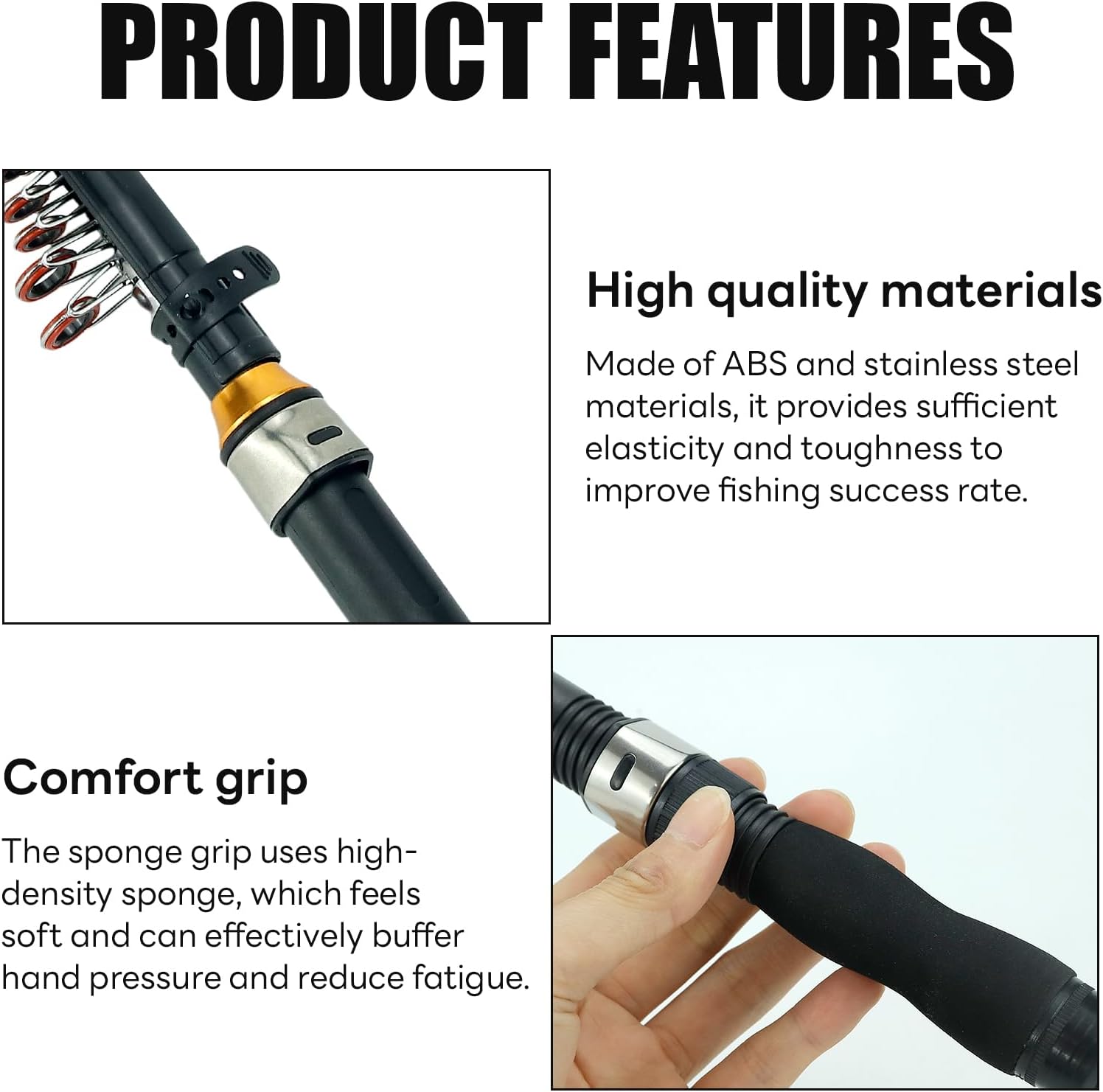
The rod is made from glass steel (fibreglass), ABS plastic, and stainless steel. In hand, it definitely feels like fibreglass: a bit heavier and more forgiving than cheap carbon, but also less sensitive. The upside is that fibreglass usually handles knocks and bends better, which is not a bad thing for a travel rod that might get tossed around in a backpack. I didn’t baby it, and it handled a few bumps in the car without any visible damage.
The reel seat is ABS plastic with metal rings. It clamps down on a small 2000-size spinning reel fine, but it doesn’t feel super tight or premium. If you over-tighten, you can feel a bit of flex in the plastic. For light fishing, it’s okay. I wouldn’t put a heavy reel on it or try to muscle big fish with it. The stainless steel parts (guide frames, some small fittings) look basic but didn’t rust after a couple of light saltwater sessions, though I did rinse the rod with fresh water afterward.
The telescopic segments slide in and out without grinding, but there’s a bit of play between some sections. Not dangerous, but you can feel slight wobble if you shake the rod. This is pretty standard for cheap telescopic rods. Just be careful not to yank the sections too hard when extending or collapsing, or you might crack a thin section over time.
Overall, the materials match the price: nothing fancy, but usable if you stay within light to medium-light fishing. If you expect high sensitivity, super smooth guides, or a rock-solid reel seat, you’ll be disappointed. If you just want something that won’t fall apart immediately when used for small fish and casual trips, it’s acceptable, as long as you don’t push it beyond its limits.
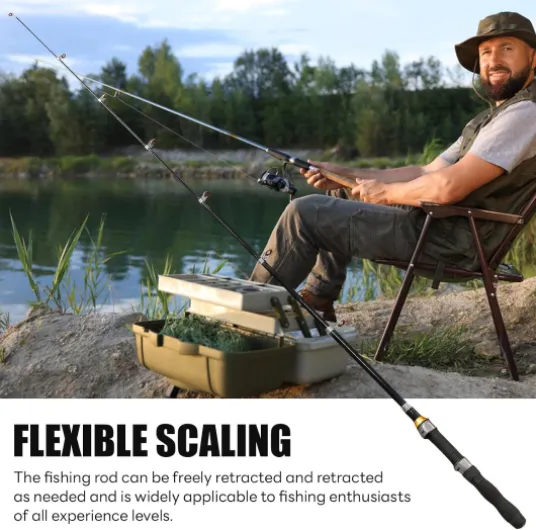
Surprisingly tough for light use, but not bulletproof
Durability was one of my main concerns with this kind of rod. After a couple of weeks of on-and-off use, plus being tossed in a backpack and a car trunk, it’s still in one piece. No cracked segments, no loose guides, and the reel seat still holds fine. The fibreglass construction probably helps here – it’s a bit heavier but more forgiving when it comes to knocks and bends.
The telescopic mechanism is always the weak point on these rods. On this one, the sections still slide out and back in smoothly, but you do need to be a bit careful. If there’s sand or dirt, it will scratch and maybe jam over time. After a short saltwater session on a sandy pier, I wiped it down and extended/collapsed it a couple of times at home to make sure no grit stayed inside. So far, no sticking, but I can see how neglecting this step could shorten its life.
The colored guide rings haven’t chipped or rusted yet, but they don’t scream high quality. I wouldn’t be shocked if the finish starts to wear after a season or two of regular use, especially with braid. For now, no grooves or obvious damage. The lack of any stated warranty is a downside. If a segment cracks early, you basically eat the loss. That’s something to keep in mind compared to slightly pricier travel rods that at least offer some form of support.
In short, durability seems good enough for casual and careful users, but I wouldn’t hand this to kids to abuse or rely on it as my only rod on a long trip. Treat it as a backup or occasional-use rod, rinse it if you go in saltwater, don’t force the segments, and it should last a reasonable amount of time for the price.
How it actually fishes on the water
On the water, performance is decent but clearly limited. I used it mainly with 5–10 g lures and a simple float rig. Casting distance is okay for small lakes and rivers, but don’t expect to bomb casts way out. The short length and soft tip mean your casts are more like controlled flicks than long-distance throws. For tight spots or fishing from a pier, it’s fine. For big open beaches, it’s not the right tool.
In terms of sensitivity, you feel bites, but it’s not sharp. With small perch and trout, I could see the tip move and feel a light tap, but compared to my usual carbon rod, it’s noticeably duller. For beginners, that might not matter too much, but if you’re used to feeling every little bump, you’ll notice the difference. Hook sets on small fish were fine; the rod has enough backbone to set the hook on 8–10 lb line without feeling like a noodle.
Load-wise, I wouldn’t push it too hard. I didn’t hook anything big, but I did a few test pulls on snagged lures, and the blank bent a lot in the middle sections. It didn’t crack or make scary noises, but you can tell it’s not meant for heavy fish or thick line. I’d keep it to small species: perch, small trout, panfish, small saltwater species near shore. It’s not a rod for big pike, carp, or anything that pulls seriously hard.
For quick, casual sessions, it works. You can keep it in the car, stop by a pond, and actually fish without feeling like you’re holding a pure toy. But as soon as you compare it directly to a mid-range two-piece rod, you feel the gap in control, casting, and feedback. So performance is okay for what it is: a light, backup-friendly rod for simple fishing, not a serious main rod for demanding anglers.
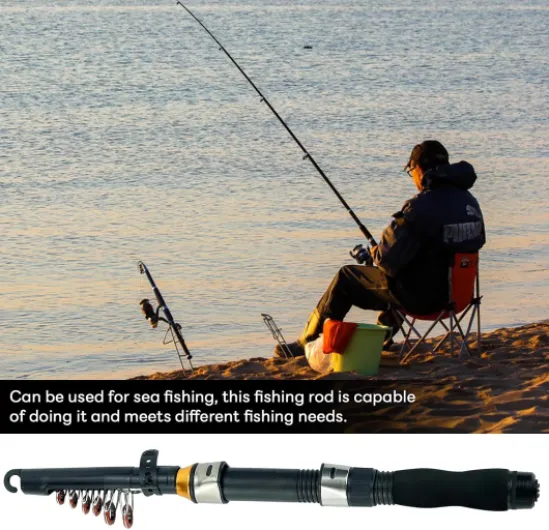
What you actually get out of the box
The first thing: the listing and specs make it sound like some kind of full “set”, but you only get one rod. No reel, no line, no lures, nothing else. It arrived in a basic plastic sleeve inside a cardboard box, no case, no strap, no foam. So if you’re expecting a complete kit for a beginner, that’s not the case. You’ll need to buy at least a small reel and some line separately.
The rod itself is pretty compact when folded. Retracted, it’s about 35 cm, so it fits easily in a backpack or even a larger glove box. Extended, it goes to the advertised 1.7 m. The sections slide out and lock by friction, no fancy locking system. You just pull each segment out until it stops. There’s no instruction manual, but honestly you don’t really need one. Still, for a beginner, a tiny leaflet on how to extend and collapse it safely would be helpful.
The brand (Qerutk) is one of those generic names you see a lot on Amazon. No website in the box, no warranty card, no QR code. The product tag is minimal, just the basic info and “Made in China”. If you like having clear documentation or some kind of warranty, there’s basically nothing here. It feels very no-frills: you pay mostly for the physical rod and that’s it.
In practice, the presentation matches the price. It looks and feels like a budget rod that’s meant to be thrown into a bag and used without too much care. If you’re expecting a nice case or a more polished package, you’ll be disappointed. If you just want a compact rod that shows up in one piece and you don’t care about extras, the bare-bones approach is acceptable.
Pros
- Very compact and lightweight when collapsed (about 35 cm), easy to keep in a bag or car
- Works fine for light freshwater and inshore saltwater fishing with small lures and rigs
- Cheap enough to use as a backup or travel rod without worrying too much about it
Cons
- Action is soft and a bit sloppy, with limited sensitivity and casting distance
- No reel or accessories included, and no real warranty or useful documentation
- Build quality is basic; not suited for bigger fish or heavy, regular use
Conclusion
Editor's rating
After using the Qerutk 1.7m telescopic fishing rod for a couple of weeks, my take is pretty simple: it’s a decent compact backup rod, not a main workhorse. It folds down small, fits easily in a bag or car, and is perfectly capable of catching small fish with light gear. The materials are budget but acceptable, and as long as you don’t push it with heavy lures or big fish, it holds up fine.
Where it falls short is in feel and polish. The action is a bit sloppy, the handle is basic, and sensitivity is clearly below a standard two-piece spinning rod in the same length. There’s no real warranty or support, and the packaging is bare-bones. For beginners who want a complete ready-to-go setup, this isn’t it – you still need to add a reel, line, and tackle. For more experienced anglers, it makes more sense as a rod you keep in the car, in a backpack, or use when you don’t want to risk your better gear.
If you’re a casual angler, someone who fishes occasionally on trips, or you just want a cheap, portable rod you won’t cry over if it breaks, this is a reasonable option. If you fish regularly, chase bigger species, or care a lot about casting feel and sensitivity, I’d skip this and invest in a better rod from a known brand. It’s not terrible, it’s not great – it’s a functional, low-cost tool that does the job within its limits.