
Summary
Editor's rating
Is it worth the money?
Three-piece, 12ft design: handy but with trade-offs
Comfort in the hand and on the bank
Graphite blank and budget components: what they feel like
Build quality and how tough it feels
Casting and fish-playing: how it actually behaves
What you actually get for the money
Pros
- 3-piece 12ft design packs down to 4ft, very easy to store and transport
- 2.75lb test curve is a good all‑rounder for typical carp fishing at normal ranges
- Low price makes it a sensible choice for beginners, kids, or as a spare rod
Cons
- Action is less smooth and responsive than a decent 2-piece carp rod
- Budget guides and fittings may not hold up to heavy, long-term use

Specifications
View full product page →| Brand | Lidsters Fishing Supplies |
A budget carp rod I grabbed as a spare
I picked up the NGT Carp Max 12ft 3pc, 2.75lb test curve because I wanted a cheap backup rod I wouldn’t cry over if it got banged about in the car or lent to a mate. I already fish with more expensive 2‑piece carp rods, so this one was never meant to replace my main setup. It was more, “throw it in the boot and forget about it until I need it.” The 3‑piece design and low price made it interesting enough to try.
Over a few short sessions on a local day‑ticket water, I used it with simple setups: 2.5–3oz leads, basic hair rigs, nothing fancy. I paired it with a mid‑range 6000 size reel and 15lb mono. That’s probably how most beginners or casual anglers will run it, so it felt like a fair test. I wasn’t trying to launch to the horizon, just normal carp fishing at 40–70 yards.
The main thing I wanted to see was: is it actually fishable, or just cheap rubbish? Does it cast straight, does it bend nicely under load, and does it feel like it will hold up for a season or two? I’m not expecting miracles at this price, but I also don’t want something that feels like a kid’s beach toy.
After a few fish and plenty of casting, I’d say it sits in that middle ground: it works, but it’s clearly budget gear. If you go in with realistic expectations, it’s fine. If you expect it to feel like a high‑end carp rod, you’ll be disappointed pretty fast. I’ll break it down by how it actually behaved on the bank.
Is it worth the money?
When you look at the price and the fact it’s sitting around the budget end of carp rods, the NGT Carp Max 12ft 3pc actually makes sense. You’re not paying for branding or fancy tech; you’re paying for a rod that will let you get out and catch carp without draining your wallet. For someone just starting out or grabbing a spare, that’s basically what you want.
Compared to some cheap, no‑name rods I’ve seen in big supermarkets, this feels a step up in usability. The action is more sensible for carp, the 2.75lb test curve is a good all‑rounder, and the 3‑piece design is genuinely handy if you’re short on storage space. On the flip side, if you’re already into carp fishing and own mid‑range rods, this will feel like a downgrade in terms of finish and feel. It’s not junk, but you can tell where the corners were cut.
In pure value terms, I’d say it’s good for beginners, kids, and occasional anglers who fish a few times a year. It lets you fish properly without worrying too much about damaging an expensive blank. As a dedicated main rod for someone who’s on the bank every week, I’d probably say save a bit more and go for something a step up, especially in a 2‑piece design.
So, is it worth the money? For the right person, yes. If you know you’re buying a budget 3‑piece carp rod and not a high‑end tool, it’s decent value. It’s nothing special, but effective, and that’s about what you can reasonably ask at this price.
Three-piece, 12ft design: handy but with trade-offs
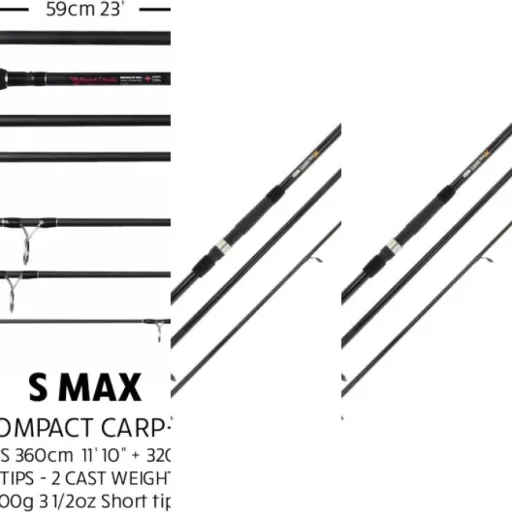
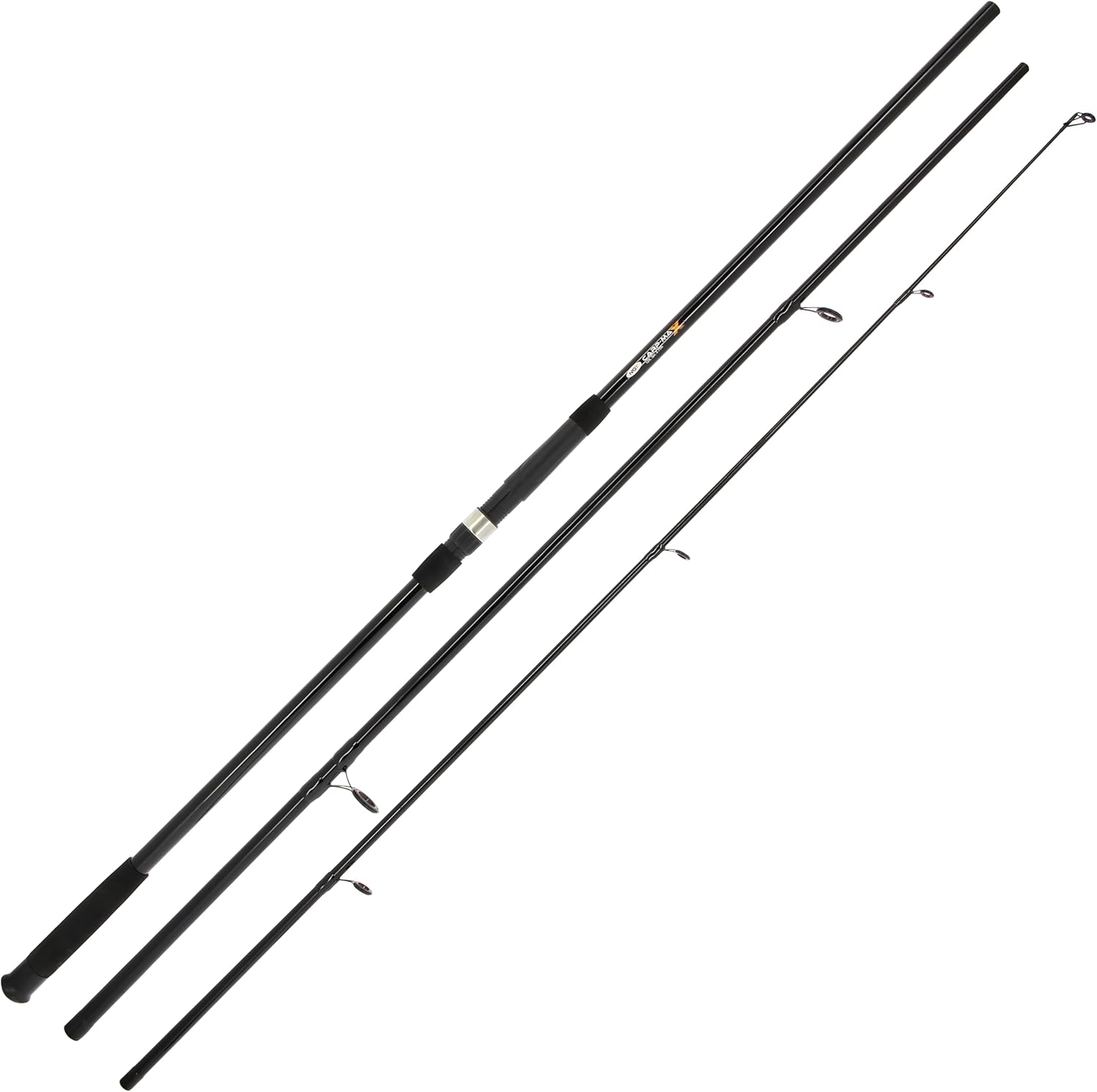
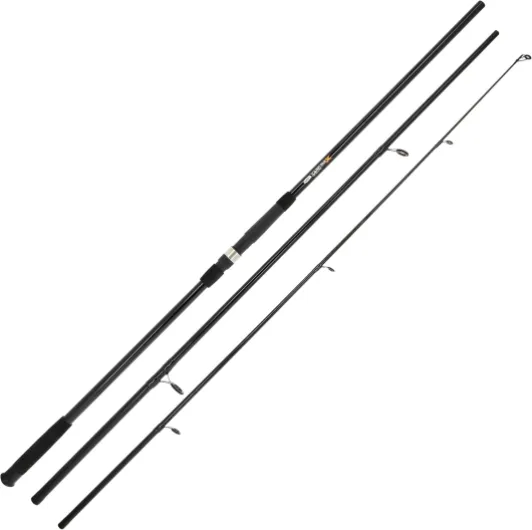
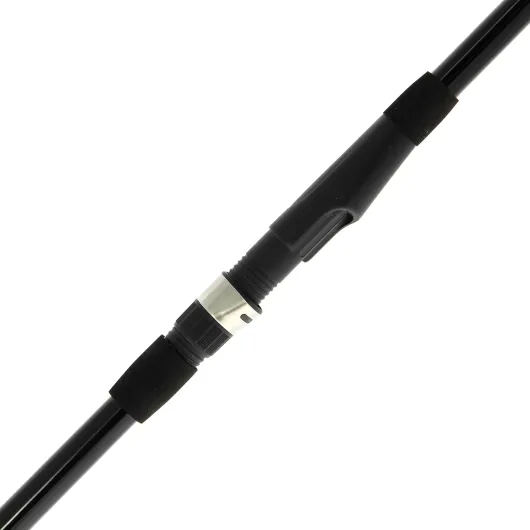
The main design point here is the 3‑piece, 12ft layout that packs down to about 4ft. That’s the big selling point. Compared to my 2‑piece 12ft rods, this one is way easier to chuck in a small car without folding the seats or having rods sticking between passengers. If you travel by train or walk a fair distance, that shorter pack length is genuinely handy. I can see why beginners or casual anglers would like that.
The downside is you can feel the extra joints in the way the blank bends. Under load, the curve isn’t as smooth as a decent 2‑piece. It’s not horrible, but seasoned anglers will notice it. When I had a mid‑double carp on, the rod bent fine and had enough backbone, but the action feels a bit stiffer and slightly clunky through the middle. It does the job, just without that nice progressive bend you get on better rods.
The guides and spacing are clearly designed to be “one rod for everything” rather than tuned for long‑range casting. It handled 2.5–3oz leads without complaint, but I wouldn’t push it with heavy PVA bags over and over. The 2.75lb test curve is a decent compromise though – soft enough to play fish without tearing hooks out, but still with enough power to cast reasonable distances for most day‑ticket waters.
Design wise, I’d say it’s built for practicality, not finesse. If you care more about pack size and storage than perfect casting and fish‑playing action, the design makes sense. If you’re already into carp fishing and like more responsive blanks, this will feel a bit basic and slightly dead in the hand. For a first or backup rod though, the design choices are understandable.
Comfort in the hand and on the bank
In terms of comfort, the 12ft length and 350g weight are pretty manageable. I used it for a few hours at a time, casting every so often, and didn’t feel like my arms were dropping off. It’s not as nicely balanced as my more expensive rods, but for a budget stick it’s okay. The slightly thicker blank actually makes it easy to grip when you’re thumping a cast out, so beginners probably won’t mind that at all.
The cork/EVA handle combo is reasonably comfortable. The EVA sections give good grip when your hands are wet or slimy, and the cork is fine for general handling. The butt section length is decent for bracing against your body during the cast, and I didn’t feel like it was digging into my ribs or anything. When playing fish, the rod sits nicely under the arm. It’s not super ergonomic or anything, just normal and usable.
Where you notice the budget side is in the overall “feel” of the blank. It doesn’t have that lively, responsive feedback you get on nicer rods. When a fish kicks, you feel it, but it’s a bit muted. That said, for newer anglers, that can actually be a bit reassuring – the rod feels solid and predictable rather than whippy and twitchy. I had no issues controlling fish, even when they lunged near the net.
On the bank, because it breaks into three sections, it’s also more comfortable to carry. It fits easily in a shorter holdall and doesn’t poke out everywhere. If you’re walking a bit to your swim, that does make life easier. Overall, I’d rate comfort as perfectly fine for long sessions. Not luxurious, but nothing that annoyed me either.
Graphite blank and budget components: what they feel like
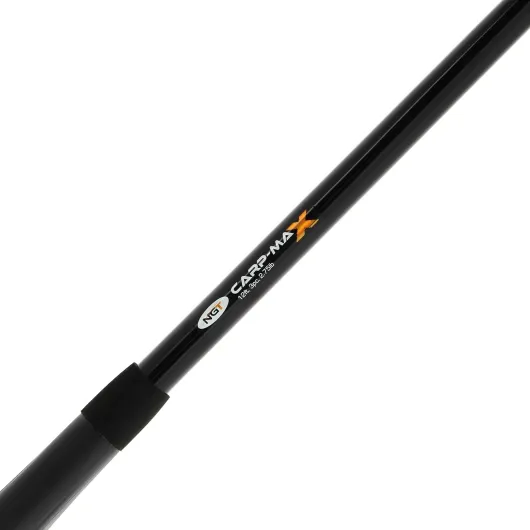
The rod uses a graphite blank, which is pretty standard at this level. It keeps the weight reasonable – around 350g – and gives it enough stiffness to handle medium‑heavy work. In practice, it feels a bit on the “thick and sturdy” side rather than slim and crisp. That’s not necessarily bad for a beginner rod; a slightly heavier, more forgiving blank will usually survive more knocks and clumsy handling.
The handle is a mix of cork and EVA The guides are clearly budget level. They’re not heavy lumps, but they’re not lightweight high‑end rings either. On my rod, all the inserts were intact and the wraps were neat enough. I did run my fingers around the inserts to check for sharp edges and didn’t feel anything worrying. For mono in the 12–15lb range, they’re fine. I wouldn’t pair this with very thin braid and start hitting big distances day in, day out – that’s not what this rod is built for. Overall, the materials scream “functional budget gear”. Nothing about it feels premium, but nothing feels like it’s going to fall apart instantly either. If you’re rough on your kit or just starting out, that’s not a bad combo. Just keep in mind: you’re not getting fancy carbon weaves or high‑end fittings here. It’s basic graphite, basic guides, basic handle – but they all work.
Build quality and how tough it feels
Durability is always a bit of a guess without years of use, but after a few sessions I’ve got a fair idea of how the NGT Carp Max will hold up. I wasn’t gentle with it: it got chucked in the boot, knocked against a seat, and used in the rain. No cracks, no loose guides, no weird creaks from the joints. For a budget rod, that’s a good start.
The three sections fit together snugly, and I didn’t notice any play developing after repeated assembly and disassembly. I checked the ferrules after a few casts and during fish playing, and everything stayed secure. As long as you push the sections together properly and don’t twist them like mad, I don’t see an obvious weak point there. The graphite blank feels thick enough that it should handle normal abuse from beginners or occasional anglers.
The handle and reel seat also feel solid. The cork isn’t high‑end, but it’s not flaking off. The EVA hasn’t started to spin or loosen, and the reel seat still tightens up firmly. The guides are the one area I’d keep an eye on long term. They’re clearly budget components, and if anything is going to give up after a lot of use, it’ll probably be a guide insert cracking or a wrap loosening. That said, mine are still fine after a handful of trips.
Realistically, I’d say this rod is durable enough for beginners, kids, or as a spare. I wouldn’t expect it to survive years of hardcore, several‑times‑a‑week sessions like a high‑end rod, but that’s not what it’s made for. Treat it with basic care – don’t high‑stick, don’t slam it in car doors, rinse off grit – and it should last a good while for the average user.
Casting and fish-playing: how it actually behaves
Performance wise, I used the NGT Carp Max 12ft 3pc on a mixed day‑ticket water with fish up to mid‑doubles. I ran 2.5–3oz leads, simple hair rigs, and 15lb mono. At casting ranges of 40–70 yards, it was absolutely fine. The 2.75lb test curve gives enough power to punch a lead out without feeling like a broom handle. If you’re not trying to hit 120 yards, it gets the job done.
The action feels like a medium‑fast, slightly stiff blank. You can compress it, but it doesn’t load as smoothly as a 2‑piece rod in the same test curve. Distance wise, I’d say you lose a bit compared to a better 2‑piece, but for normal fishing, it’s okay. I was consistently landing where I wanted within normal carp ranges. If you mainly fish small to medium waters, this rod will be enough.
Playing fish, it handled carp in the low to mid‑double range without drama. The tip has enough give to cushion head shakes, and the middle has enough power to steer fish away from snags. I didn’t feel under‑gunned at any point, and I never felt like I was going to rip hooks out if I kept a sensible drag. You do feel the joints slightly when the rod is fully bent, but it’s more of a feel thing than a real problem.
Where it starts to show its limits is if you imagine using it for heavy PVA bags, long‑range work, or regular big‑fish venues. For occasional use, it’ll manage, but it’s not built as a long‑range, high‑pressure tool. For beginners, casual anglers, or as a second rod for short‑to‑medium range fishing, I’d say the performance is decent. Nothing special, but it works and doesn’t feel like a toy.
What you actually get for the money
Out of the box, the NGT Carp Max 12ft 3pc is very straightforward. Three graphite sections, black finish, cork and EVA handle, and that’s basically it. No fancy case, no extra tip section, just the rod wrapped in basic plastic. For the price point, I wasn’t expecting a padded holdall, so I wasn’t bothered, but it’s worth knowing: you’ll probably want at least a cheap rod bag if you don’t want it scratched up in the car.
The sections slot together cleanly enough. The joints aren’t super tight like on some pricier blanks, but they don’t feel sloppy either. I did check them a couple of times during the session to see if they worked loose, and they stayed put. The guides look standard budget fare: nothing fancy, but aligned well on my rod. No obvious glue blobs or damaged inserts on mine, which you sometimes see on very cheap rods.
In the hand, it feels like a medium heavy, 2.75lb test curve rod, just as advertised. It’s not feather‑light, but at 350g it’s not a lump either. You can tell it’s not a premium blank – the balance and finish are more “it works” than “wow” – but again, the price reflects that. The reel seat held my reel firmly; I didn’t get any wobble or twisting when tightening it down.
Overall, in terms of presentation, I’d call it basic but acceptable. If you’re used to budget carp gear, it’s exactly what you’d expect. If this is your first carp rod, you might actually be pleasantly surprised that it looks like a proper rod and not a toy. Just don’t expect fancy detailing or extras – you’re paying for a functional stick, nothing more.
Pros
- 3-piece 12ft design packs down to 4ft, very easy to store and transport
- 2.75lb test curve is a good all‑rounder for typical carp fishing at normal ranges
- Low price makes it a sensible choice for beginners, kids, or as a spare rod
Cons
- Action is less smooth and responsive than a decent 2-piece carp rod
- Budget guides and fittings may not hold up to heavy, long-term use
Conclusion
Editor's rating
Overall, the NGT Carp Max 12ft 3pc, 2.75lb is a straightforward budget carp rod that does what it says. The 3‑piece design that packs down to 4ft is the main selling point, and if you’ve got a small car, limited storage, or you just want something easy to chuck in a bag, that really helps. On the bank, it casts fine at normal ranges, plays fish without drama, and feels solid enough for typical day‑ticket carp up to mid‑doubles.
It’s not perfect. The action isn’t as smooth as a decent 2‑piece, the components are clearly budget level, and experienced carp anglers will feel the difference compared to mid‑range rods. But that’s the trade‑off for the low price. As a first carp rod, a spare for guests, or a rod for kids/occasional trips, it makes sense and offers good value. If you’re fishing every week, pushing long distances, or targeting bigger fish regularly, I’d look at spending more on a better 2‑piece rod.
If you keep your expectations realistic – cheap, compact, and usable rather than fancy – this rod is a pretty solid option. It gets the job done without fuss, which is sometimes all you really need.