
Summary
Editor's rating
Value for money: okay if you see it as a backup travel rod
Telescopic design: convenient but with the usual trade-offs
Carbon blank on paper, budget feel in hand
Durability: fine as a spare rod, not built for hard abuse
On the water: decent casting and line control if you stay within its limits
What you actually get out of the box
Pros
- Very compact telescopic design that’s easy to store and travel with
- Lightweight carbon-based blank with decent sensitivity for the price
- Ceramic guides and aluminum reel seat handle basic mono and braid setups without issues
Cons
- Budget build and telescopic sections don’t inspire confidence for heavy or long-term saltwater use
- Action and overall feel are less precise and smooth than a similar-priced two-piece rod
- No included reel, bag, or accessories despite marketing it as a versatile universal rod

Specifications
View full product page →| Brand | Baxnore |
A cheap compact rod I grabbed for travel and quick sessions
I picked up this Baxnore Mini Portable Carbon Fishing Rod mainly as a throw-in-the-car, don’t-care-if-it-gets-banged-up kind of rod. I already have a couple of more serious shore casting rods, but I wanted something telescopic and compact for quick after-work sessions or when I travel light. The 1.8 m size looked manageable, and the price was low enough that I wasn’t expecting miracles, just something that wouldn’t snap on the first cast.
Over a few weeks, I used it for some light sea fishing from a pier, a bit of river spinning, and even one quick ice fishing outing just to see how it handled. I paired it with a small 2500 spinning reel and 0.20–0.25 mm mono, then later with light braid. I wasn’t gentle with it on purpose: tossed it in the trunk, collapsed it wet a few times, and let it roll around with a tackle box. Basically, how a lot of people actually treat a backup travel rod.
My expectations were simple: if it casts decently, doesn’t twist all over the place, and survives a few modest fish, it’s fine. If it feels like a toy or folds under basic load, it goes straight to the back of the garage. I’m not chasing tuna with this thing, so I judged it as a light/medium rod for casual use, not a serious shore casting setup for big pelagics, no matter what the description tries to imply.
Overall, it’s not a rod that will blow your mind, but it’s also not pure junk. It sits in that middle ground: usable, cheap, with some clear compromises. If you understand those limits and don’t expect high-end performance, it can be a handy spare or travel rod. If you want something for regular heavy saltwater use, you’ll probably be disappointed pretty fast.
Value for money: okay if you see it as a backup travel rod
Price-wise, this Baxnore telescopic rod sits in the cheap to lower mid-range for spinning rods. For that money, you’re basically paying for portability and the convenience of a compact rod you don’t mind knocking around. There’s no fancy packaging, no reel, no extras – but you do get a functional carbon-based blank, ceramic guides, and an aluminum reel seat, which is fair at this price point.
If you compare it to a regular two-piece rod at a similar price, the two-piece will almost always feel better and last longer, but it won’t be as compact. So the value really depends on what you need. If your priority is performance and you don’t care about packing size, I’d skip this and buy a simple two-piece spinning rod instead. But if you want something that fits in a suitcase or under a car seat all the time, then the trade-off starts to make sense.
For me, as a spare/travel rod, the value is decent. It lets me fish when I didn’t plan ahead or when I don’t want to bring my nicer gear. If it eventually dies after a few seasons of light use, I won’t cry over it. It’s good enough to actually fish with, not just a gimmick. At the same time, it’s not a bargain miracle either – there are other budget telescopic rods out there in the same price range that do roughly the same job.
So in terms of value, I’d call it “pretty solid but nothing special”. If you know what you’re buying – a compact, budget rod with clear limits – it’s worth the money. If you expect a tough, long-term main rod for serious saltwater fishing just because the description mentions sea and pelagic species, you’ll be disappointed and your money would be better spent on a sturdier, non-telescopic option.
Telescopic design: convenient but with the usual trade-offs
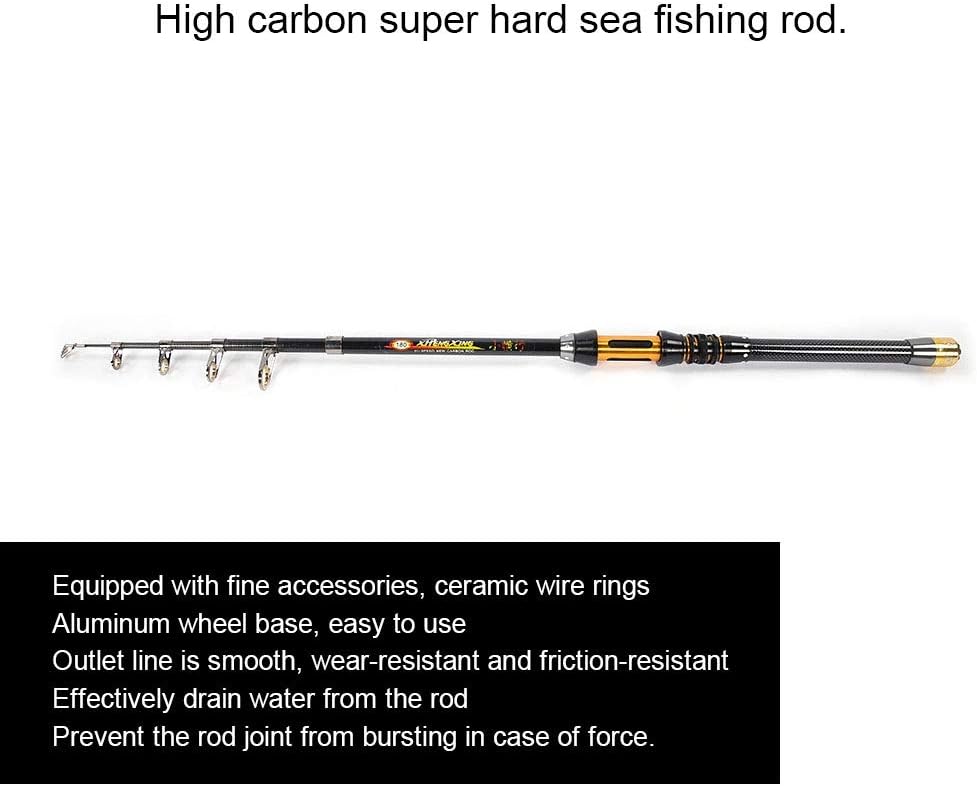
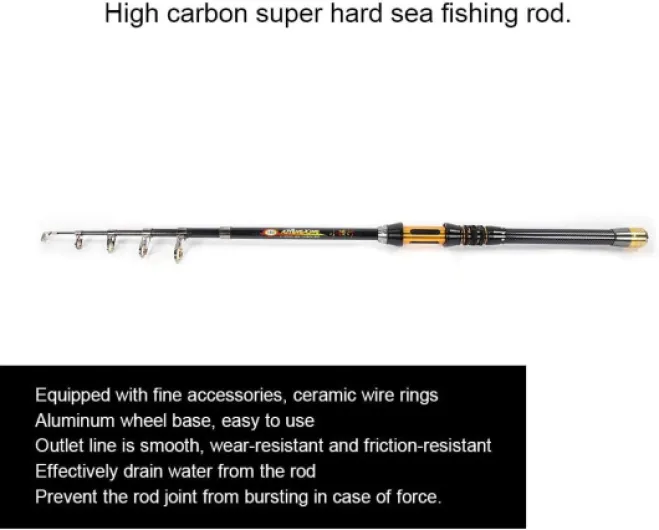
The telescopic design is clearly the main selling point here. Collapsed, the rod is very compact and fits easily in a backpack or under a car seat. Extending it is straightforward: you pull each section out until it stops and give it a small twist to make sure it’s seated. After a couple of uses, you get used to the sequence and it takes under a minute to go from packed to ready to cast. For quick sessions or travel, that’s genuinely handy.
Like most cheap telescopic rods, though, the action is a bit strange. When extended, the rod has a stiffer butt and mid-section with a slightly softer tip. It’s not a smooth, progressive bend like you’d get on a decent two-piece rod. Under load (like when you’re casting a slightly heavier lure or fighting a fish), you feel the sections working against each other a bit. It’s not horrible, but it feels a bit “sectiony” and less precise than a proper one- or two-piece rod.
The guide layout is okay but nothing special. The ceramic guides are spaced reasonably, and the line runs through them without any weird kinks or sharp angles. I didn’t see any major misalignment, which is good considering the price. That said, there’s some slight flex and twist in the tip section when you cast harder, which is typical of budget telescopics. If you keep your casting weight reasonable and don’t try to sling huge sinkers, it behaves acceptably.
One design detail I did like: the reel seat position and handle length are decent for a 1.8 m rod. You don’t feel cramped when casting, and there’s enough handle to tuck under your forearm when fighting a fish. It’s not perfectly balanced, especially with a heavier reel, but for light setups it’s okay. Overall, the design screams “practical and cheap” rather than refined. It’s built to fold small and be “good enough” on the water, and that’s exactly how it feels in use.
Carbon blank on paper, budget feel in hand
The brand pushes the “high-carbon construction” angle, and yes, the blank is clearly some kind of carbon composite, not full glass. In hand, it feels relatively light and a bit crisp, especially in the upper sections. You get more sensitivity than with the old-school fiberglass telescopics, so you can feel light bites and the action of your lure well enough. It’s still a budget rod, though, and the finish reflects that.
The outer coating on the blank is thin and a bit glossy, the type that can scratch easily if you throw it around. After a few sessions in the trunk with other gear, I already had some minor scuffs. Nothing structural, but you can tell it’s not heavily protected. The aluminum reel seat feels okay – not premium, not trash. The threads are a bit gritty out of the box, but once you tighten the reel down it stays put and doesn’t loosen mid-session.
The ceramic guides are probably the most important parts here. I ran both mono and braid through them, did some long casting with light lures and small sinkers, and checked for grooves afterward. No visible damage so far. The guide frames are thin and will probably bend if you step on them, but that’s normal at this price. As long as you don’t crush the rod or slam it in a car door, they should be fine for casual use.
One weird thing in the product info is it mentioning “Material Type: Plastic” in places, which is misleading. The blank is clearly not plastic; some trim and maybe the end cap are, but the working parts are carbon and metal. In practice, the materials are decent for the price but not something I’d trust for heavy, daily saltwater abuse. For light to medium use and occasional saltwater with proper rinsing, they’re acceptable. Just don’t confuse “carbon” in the description with high-end carbon like you see in rods that cost 5–10 times more.

Durability: fine as a spare rod, not built for hard abuse
Durability was one of my main worries, because cheap telescopic rods have a reputation for snapping tips and stuck sections. After a few weeks of use, including some careless handling, the Baxnore is still in one piece, which is already a good sign. I extended and collapsed it a lot on purpose, sometimes with a bit of sand or salt spray around, and the sections still slide reasonably well. I did have to wipe them down a couple of times to keep them moving smoothly.
The ceramic guides are still intact and I haven’t seen any inserts popping out, which often happens with very low-end rods. The wraps and glue points are basic but holding up. I did notice a slight looseness in one of the smaller sections after a bunch of sessions – nothing dramatic, but it reminds you that this is a budget rod, not something built to last ten seasons of hard use. A bit of care (rinsing after saltwater, not yanking it open, not high-sticking fish) will definitely help it last longer.
Saltwater exposure is always the big test. I used it several times near the sea, got some spray on it, and then rinsed it with fresh water afterward. The aluminum reel seat hasn’t corroded yet, and the guides still look fine. But you can tell that if you leave it salty and wet in a garage for months, you’ll start seeing rust spots and maybe stuck sections. The 90-day manufacturer warranty doesn’t scream long-term confidence either; it’s basically there for early failures, not much more.
In short, as a backup rod or occasional travel rod, the durability is acceptable. If you baby it a bit, it should survive a few seasons of light use. But if you’re thinking of using this as your main rod for regular hard saltwater fishing, I’d say no: there are sturdier options, even if they’re not as compact. This one is more like a practical spare than a long-term workhorse.
On the water: decent casting and line control if you stay within its limits
In actual fishing, the rod behaves better than it looks on paper, but only if you respect its range. I mainly used it with lures and rigs in the 10–25 g zone. With that kind of weight, casting distance is respectable for a 1.8 m rod. You’re not going to reach the horizon from the beach, but from a pier or rocks it’s enough to reach the usual inshore spots. The line runs through the guides smoothly, and I didn’t have any weird line slap or tangles caused by the rod itself.
The brand talks about “line management” and smoother casting, which is a bit of an exaggeration, but the ceramic guides plus a decent layout do their job. With braid, the casts felt clean, and the retrieve was quiet. I didn’t notice any hot spots or friction issues. With mono, it’s even more forgiving. Where you feel the budget nature is in the blank’s recovery: after a cast, the tip wobbles a bit longer than I’d like, which slightly affects accuracy if you’re trying to place a lure very precisely.
As for fish, I hooked a few modest sea fish (small pollock and wrasse) and some river fish. The rod has enough backbone to handle small to medium fish without feeling like it will snap. Under load, it bends mainly in the top half with the butt staying relatively firm. You get a fair amount of feedback, so you can enjoy the fight, but it’s not some super sensitive instrument. It’s fine for casual spinning, float fishing, or light bottom rigs.
Where it clearly hits its limit is when you try to push it – heavier sinkers, strong current, or trying to muscle a fish away from structure. The blank starts to feel stressed, and the telescopic sections don’t inspire huge confidence. For light shore, pier, lake, or occasional ice fishing, it gets the job done. For regular heavy saltwater or big pelagic species like the description suggests, I wouldn’t rely on it at all.
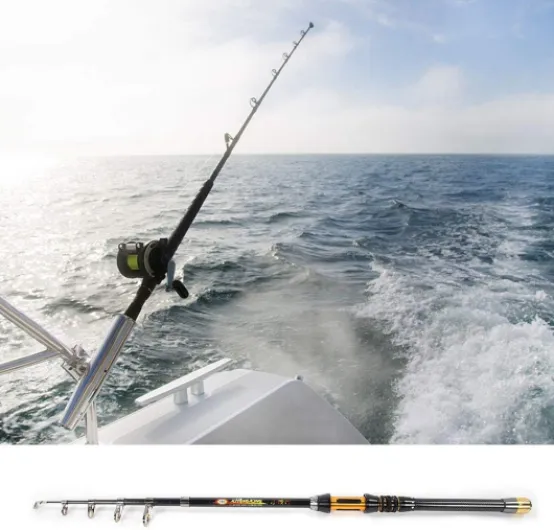
What you actually get out of the box
Out of the box, the Baxnore rod is very basic. You literally get the rod and that’s it. No reel, no rod bag, no spare tip, no accessories. Just the telescopic rod wrapped in plastic and a cardboard box. For the price, I wasn’t shocked, but if you’re a beginner expecting a full kit, you should know you’ll need to buy a reel, line, and maybe a simple rod sleeve separately.
The model I tried is the 1.8 m version, which is a fairly standard length for light spinning or casual shore fishing. Collapsed, it’s short enough to fit in a backpack or suitcase without drama, so from a portability standpoint it’s quite handy. Weight-wise, it’s light enough that you don’t really notice it when carrying it around, even if the listed weight range (139–316 g) is a bit vague. Mine felt closer to the lower end, which is fine for a travel rod.
On the handle, you get an aluminum reel seat with a basic locking ring. Nothing fancy, but it grips a small to medium spinning reel firmly enough. I tried it with two different reels and they both sat straight without wobbling. The guides are ceramic inserts in metal frames – they look generic but reasonably aligned. No obvious cracks or loose rings on arrival, which is already a small win for a cheap telescopic rod.
The product description talks a lot about “high-carbon construction”, “line management”, and “sea, shore, ice fishing”, which sounds a bit ambitious. In reality, it’s a simple, compact spinning rod that can handle light shore fishing and some occasional saltwater use if you rinse it. It’s not some technical shore casting weapon. Presentation-wise, it’s bare-bones but functional: you get a rod that’s ready to fish once you add your own reel and line, and that’s about it.
Pros
- Very compact telescopic design that’s easy to store and travel with
- Lightweight carbon-based blank with decent sensitivity for the price
- Ceramic guides and aluminum reel seat handle basic mono and braid setups without issues
Cons
- Budget build and telescopic sections don’t inspire confidence for heavy or long-term saltwater use
- Action and overall feel are less precise and smooth than a similar-priced two-piece rod
- No included reel, bag, or accessories despite marketing it as a versatile universal rod
Conclusion
Editor's rating
After using the Baxnore Mini Portable Carbon Fishing Rod for a bit, my take is simple: it’s a handy, cheap travel/backup rod that works fine if you don’t push it too hard. The compact telescopic design is genuinely useful if you want something you can throw in the car, keep in a backpack, or pack in a suitcase. It casts reasonably well with light to medium weights, the ceramic guides handle mono and braid without issues, and the aluminum reel seat holds a reel firmly enough. For casual shore, pier, lake, or occasional ice fishing, it gets the job done.
On the flip side, it’s still a budget telescopic rod. The action is a bit clunky compared to a decent two-piece, the blank doesn’t inspire huge confidence under heavy load, and durability is clearly aimed at light, occasional use rather than daily hard saltwater sessions. The marketing talk about big sea species is optimistic; I’d keep it for smaller fish and lighter rigs. If you want a serious main rod and don’t care about compact size, you’ll get better performance and longevity from a simple non-telescopic rod at a similar or slightly higher price.
So who is it for? People who want a spare or travel rod, beginners who want something cheap to start with and are mostly fishing light, or anyone who likes having a rod in the car “just in case”. Who should skip it? More serious anglers looking for a primary saltwater rod, or anyone who regularly targets bigger, stronger fish. As long as you see it as a practical, low-stress backup rather than a high-end tool, you’ll probably be satisfied with what it offers for the money.