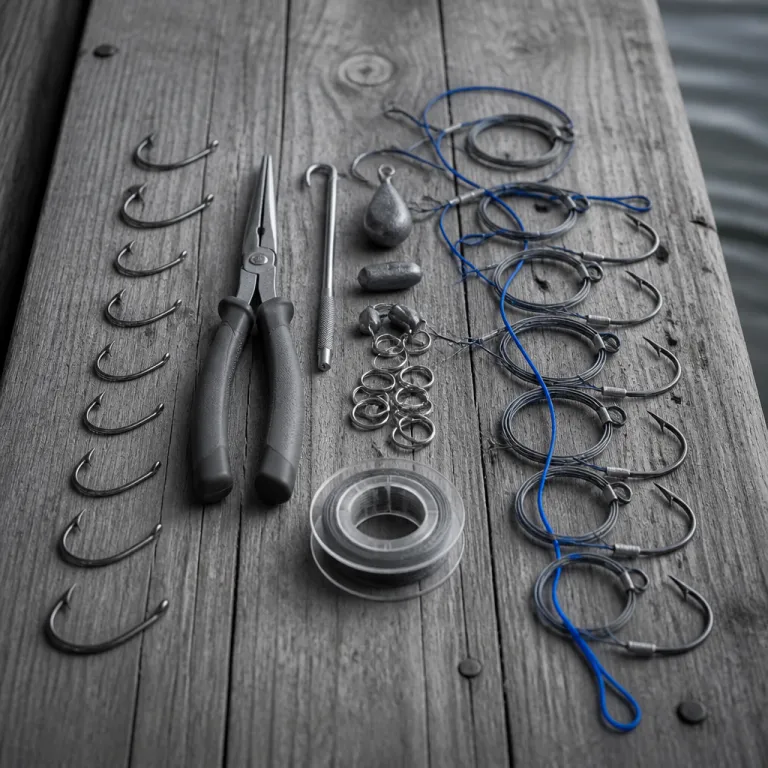
Circle hook fishing conservation mortality is not a theory, it is math
Circle hook fishing conservation mortality is not a niche debate for biologists. When you fish with natural bait on regular hooks, you are making a direct choice about how many fish will die after you leave the ramp. On pressured waters from the Chesapeake to the Columbia, that choice now matters as much as bag limits and closed seasons.
Every experienced angler has watched a fish caught deep on a J shaped hook come up bleeding from the gills. Those hook caught fish may swim away when released, yet studies on hooking mortality show that in warm water more than 30 percent can die within days, especially when gut hooking occurs with bait. Circle hooks were designed so the point rides inward and slides to the jaw hinge, and that simple circle geometry changes survival rates more than any fancy rod or reel ever will.
On striped bass in Atlantic marine fisheries, controlled studies have compared circle hooks and regular hooks with natural bait. When anglers let the fish load the rod and use a steady reel set, circle hooks reduce deep hooking to single digit percentages and hooks injury is usually confined to the jaw. Those hooks result in survival released rates that are dramatically higher, and the survival fish numbers are strong enough that several states now require circle hooks for striped bass when fishing bait.
The real cost of a two dollar hook
Walk into any tackle shop and you will see a wall of hooks. A ten pack of quality non offset, non stainless circle hooks in sizes 4/0 to 7/0 usually costs the same as a pack of J shaped regular hooks, sometimes less if you buy bulk. On a per fish basis, that means circle hook fishing conservation mortality gains are essentially free for the average weekend angler.
Think about how many fish caught you generate on a good tide swing for striped bass or red drum. If you hook twenty fish on bait and your gear choice alone cuts hooking mortality from thirty percent to under ten, hooks reduced deaths by four fish on that single trip. Over a season on a busy fishery, those hooks result in thousands of extra fish released alive, and the project of rebuilding stocks stops being an abstract management goal and becomes something you can feel in the rod.
Anglers often tell me that a fish will probably survive because it swam off strongly. That is wishful thinking when water temperatures push above 22 °C and the fish has hooks injury in the throat or gills. Under those conditions, survival released rates plummet, especially for trout and bass, and circle hooks reduce the damage enough that survival fish outcomes stay acceptable even when the water runs hot.
Gut hooking is the quiet killer in catch and release
Most of the mortality problem does not happen where you can see it. Gut hooking with natural bait drives internal bleeding, infection, and delayed death that never shows up in your grip and grin photos. When you look at the data from marine fisheries and inland trout fisheries, the pattern is brutally consistent across species and waters.
With regular hooks, especially small J hooks fished on the bottom, fish caught tend to swallow the bait deeply before you feel the bite. That is why hook caught mortality rates spike in studies where anglers wait several seconds before setting the hook, and why hooks injury often involves the esophagus or stomach. Circle hooks change the timing and mechanics, because the circle shape rotates out of the throat and lodges in the jaw corner as the fish turns away.
In practical terms, circle hooks reduce gut hooking events by more than half in many studies, and hooks reduced internal injuries translate directly into lower delayed mortality. When a fish released carries a hook in the jaw hinge instead of the gullet, blood loss is lower, handling time is shorter, and survival released odds improve even in marginal water quality. That is the core of circle hook fishing conservation mortality, and it is why serious conservation minded anglers have already switched.
Warm water, high stakes: when catch and release quietly kills
Circle hook fishing conservation mortality becomes most critical when the water warms up. In midsummer on shallow lakes and estuaries, dissolved oxygen drops, stress hormones spike, and every extra second on the line or in the net cuts into survival fish odds. Under those conditions, the difference between circle hooks and regular hooks is not academic, it is life or death for a high percentage of fish released.
Controlled studies on bass and trout have shown that hooking mortality rates climb sharply once water temperatures pass the low twenties in Celsius. A trout caught on bait and gut hooked in 10 °C water might have a reasonable chance if handled gently and released quickly, but the same trout in 23 °C water with hooks injury to the gills is often a dead fish swimming. That is why serious trout fisheries managers now warn anglers about catch and release in warm water and ask them to change tactics or stop fishing during heat waves.
For anglers who want a deeper dive into how warm water catch and release mistakes kill fish after release, a detailed analysis of common errors and their impact on survival is available in this guide on catch and release in warm water. The short version is simple, though. When you combine high temperatures, long fights, and gut hooking from regular hooks, survival released rates can fall below fifty percent for some species, while circle hooks reduce deep hooking enough to keep more than three quarters of fish caught alive.
Species specific stakes: trout, bass, and striped bass
Not all fish respond the same way to hooks and handling. Trout are famously fragile, with thin skin, small scales, and a low tolerance for warm water stress, so trout fisheries often see the worst hooking mortality when bait and regular hooks are used. Bass and striped bass are tougher, yet even they show significant mortality differences between circle hooks and J hooks in tagging studies.
In one coastal striped bass study, fish caught on baited circle hooks had deep hooking rates under ten percent, while those on regular hooks showed gut hooking in more than a quarter of captures. That difference in hooks injury translated into survival fish rates that were roughly double for the circle hook group after several days of monitoring. When you scale that up to a busy marine fishery where thousands of striped bass are caught live and released every weekend, the conservation impact is enormous.
On inland reservoirs where anglers target largemouth bass with live bait, the pattern is similar, though the numbers vary by study and water body. Circle hooks reduce the number of hook caught fish that bleed from the gills, and hooks reduced internal injuries mean more bass survive to be caught again. For trout, the advice is even sharper, because bait plus regular hooks in warm water is a recipe for high hooking mortality, and circle hook fishing conservation mortality gains are one of the few tools anglers control directly.
Handling, gear, and the hidden variables
Hook choice is not the only factor, but it is the easiest one to fix. Landing fish quickly on appropriately strong line, keeping them in the water during unhooking, and avoiding dry hands on trout all push survival released odds in the right direction. Yet none of those steps can fully offset the damage from a deeply embedded J hook in the throat.
When you fish bait on circle hooks, you stack the deck before the fight even starts. The circle shape means most fish caught are pinned in the jaw, so unhooking is faster, photos are quicker, and the fish will spend less time out of the water gasping. Those small time savings matter most when the water is hot, the oxygen is low, and the fishery is already under pressure from harvest and habitat loss.
From a conservation standpoint, the project is straightforward. If every angler who practices catch and release with bait simply switched to circle hooks, the hooks result in a measurable drop in hooking mortality across trout, bass, and striped bass fisheries. That is the essence of circle hook fishing conservation mortality, and it is why some managers argue that voluntary adoption has had its chance and mandates should now be the default.
Mandates, not last resorts: why optional circle hooks are failing the fish
Circle hook fishing conservation mortality data has been on the books for years. Marine fisheries councils, state biologists, and serious angling clubs have all seen the same pattern in repeated studies across regions and species. Yet in most jurisdictions, circle hooks remain optional until a fishery is already in crisis and emergency rules arrive too late.
Look at the patchwork of regulations for striped bass along the Atlantic coast. Some states require circle hooks for any bait fishing targeting striped bass, while neighboring waters allow regular hooks until a specific season or only for certain size classes, and enforcement is often light. That inconsistency means the same fish caught and released three times during a migration might encounter both circle hooks and regular hooks, and its survival fish odds depend more on zip code than on science.
Regulators often argue that education and voluntary adoption will move the needle without new rules, yet the continued high hooking mortality rates in heavily fished stocks suggest otherwise. If voluntary change were enough, we would already see hooks reduced deep hooking across the board and better survival released trends in long running tagging projects. Instead, many marine fisheries managers are still forced into last minute closures and slot changes when studies show that too many fish released are dying after the season ends.
The ethical angler’s dilemma
For a conservation minded angler, the ethics of catch and release become sharper once you understand circle hook fishing conservation mortality. When you know that a simple change in hook pattern can cut delayed deaths in half, continuing to fish bait on regular hooks becomes hard to justify. That is the heart of the ethical debate now playing out in clubs, forums, and management meetings.
If you want to explore that debate in depth, a thoughtful discussion of whether catch and release is truly harmless is available in this analysis of the ethical angler’s dilemma. The short version is that intent is not enough, because fish will die from gut hooking and stress even when you mean well. Ethics in fishing has to include gear choices, handling practices, and a willingness to accept mandates when individual decisions are not delivering hooks reduced mortality at the population level.
Some anglers push back, saying that circle hooks change the feel of the bite or that they lose more fish caught because they cannot swing hard on the strike. That is mostly a technique problem, not a gear flaw, because circle hooks are designed for a steady reel set rather than a snap set, and once you adapt, hookup rates are comparable or better in many studies. When the cost is a two dollar pack of hooks and a few sessions of retraining your muscle memory, the conservation upside is too large to ignore.
Why stainless steel and offsets are being phased out
Regulations that mandate circle hooks often go further and specify non offset, non stainless designs. The offset point on some circle hooks can increase gut hooking by changing how the hook rotates, so true conservation focused rules insist on in line patterns where the point and shank align. That detail matters, because the whole premise of circle hook fishing conservation mortality depends on predictable rotation into the jaw corner.
Stainless steel hooks are a different problem. When a fish breaks off with a stainless hook embedded, that hook can persist for years without corroding, causing chronic hooks injury, infection, and reduced feeding that may never show up in short term survival released studies. By contrast, carbon steel circle hooks will usually corrode and fall out over time, so even when a fish released carries hardware, the long term damage is limited.
From an angler’s perspective, there is no performance advantage that justifies stainless for most recreational fishing with bait. Modern high carbon circle hooks are sharp, strong, and cheap, and they meet every practical need while supporting circle hook fishing conservation mortality goals. When regulations ban stainless and offset patterns, they are not being fussy, they are aligning the details of hook design with the biology of how fish will actually survive after release.
From tackle choice to policy: building a conservation first culture
Circle hook fishing conservation mortality is ultimately about culture as much as it is about gear. When the default conversation at the ramp shifts from bragging about numbers to talking about survival released rates, regulations become easier to pass and easier to enforce. Anglers start to see circle hooks not as a mandate, but as standard equipment for anyone who cares about the future of their fishery.
On rivers like the Delaware and the Kennebec, I have watched that culture change happen over a decade. Guides quietly switched every bait rig for striped bass to circle hooks, clients learned the reel set, and within a few seasons most regulars had followed suit without waiting for a law, because they saw more big fish caught and released in good shape. Those local projects in conservation minded communities show how hooks reduce mortality when peer pressure and pride line up with the science.
At the same time, we cannot pretend that culture alone will fix every stressed fishery. Pacific salmon recovery under the Endangered Species Act, for example, has required habitat work, harvest controls, and gear changes over decades, as detailed in this report on salmon rebuilding under long term protection. Circle hook fishing conservation mortality is one tool in a larger box, yet it is one of the few tools that costs almost nothing and can be implemented by every individual angler tomorrow.
Product choices that actually matter
In a market flooded with premium rods, reels, and electronics, it is easy to forget that a simple hook can have more conservation impact than a thousand dollar sonar. When you choose circle hooks over regular hooks for bait, you are making a direct investment in survival fish outcomes for every species you target. That is true whether you are soaking cut bait for striped bass, drifting worms for trout, or fishing live bait for bass on your home lake.
For practical purposes, look for non offset, non stainless circle hooks sized correctly for your bait and target species. A 4/0 to 6/0 circle hook is a solid starting point for most striped bass and inshore saltwater fishing, while smaller patterns work for trout and panfish when regulations allow bait. Match your line and rod so you can land fish quickly, keep them in the water during unhooking, and you will see hooks reduced injuries and better survival released rates in your own logbook.
Across multiple studies and fisheries, the pattern is consistent. Circle hooks reduce gut hooking, hooks result in fewer internal injuries, and the project of rebuilding depleted stocks gains a quiet but powerful ally in every tackle box that makes the switch. In the end, the most important spec on your gear list is not the drag rating or the graphite modulus, it is the shape of the hook at the end of your line on the tenth cast in the rain.
Key figures every conservation minded angler should know
- In several Atlantic striped bass studies summarized by the Atlantic States Marine Fisheries Commission, baited J shaped hooks produced post release mortality rates often exceeding 20 percent, while circle hooks cut those rates roughly in half under similar conditions.
- Warm water catch and release research on trout has shown that when water temperatures exceed about 22 °C, hooking mortality with bait and regular hooks can surpass 30 percent, compared with under 10 percent for barbless artificial lures handled quickly.
- Experimental work on circle hooks in marine fisheries has documented deep hooking rates in the single digits for properly fished circle hooks, compared with more than 25 percent deep hooking for regular hooks with natural bait in some studies.
- Tagging projects on coastal gamefish have found that reducing post release mortality by even 10 percentage points can translate into millions of additional fish surviving to the next spawning season in heavily fished stocks.
- Economic analyses of recreational fisheries management consistently show that simple gear changes such as mandatory circle hooks cost individual anglers only a few dollars per season, while the conservation benefits extend across entire regions and multiple year classes of fish.