
Summary
Editor's rating
Value: who should actually spend money on this rod
Design: classic look, practical choices
Comfort: can you fish it all day without hating it?
Materials and build: where your money actually goes
Durability and warranty: holds up, but not indestructible
Performance on the water: casting, control, and fish handling
What you actually get with the Hardy Aydon 9' #5
Pros
- Comfortable, well-balanced action that’s easy to cast at real fishing distances
- Good materials and clean build quality, including decent cork and burl wood reel seat
- Warranty service reported as quick and straightforward after a tip break
Cons
- Price is higher than basic starter rods, not ideal for tight budgets or casual anglers
- Not the best choice for very heavy rigs or extreme distance casting compared to stiffer, more specialized rods

Specifications
View full product page →| Brand | Hardy Diagnostics |
A 9' 5wt that actually feels right in the hand
I’ve been fishing 9' 5-weight rods for years, and most of them feel kind of similar after a while: they cast fine, they’re light enough, and you forget about them. The Hardy Aydon 9' #5 stood out to me because it feels like someone actually thought about how a normal trout angler fishes, not just how a pro casts in a parking lot. I took it out for a few full days on a medium-sized river, fishing everything from short upstream dries to longer nymph-and-indicator drifts.
Right away, the first thing I noticed was the overall balance. With a standard 5wt reel and a regular-weight line, it didn’t feel tip-heavy or like a broomstick. You can fish it for hours without your wrist complaining. That sounds basic, but some rods in this price range are either too stiff or too soft, and you start feeling it after half a day. Here, it just felt natural to pick it up and start casting.
Another thing that came through quickly is that this rod is clearly aimed at trout fishing in normal conditions. It’s rated for a 5-weight line, 9 feet long, and the action feels like a medium-fast leaning fast. In practice, that means it has enough backbone to punch a line into a bit of wind, but it still loads at short to medium distance. I didn’t feel like I had to overwork it to get 30–40 foot casts with a dry fly.
If you’re wondering whether this is a hardcore distance competition rod, it’s not. If you’re wondering whether it’s a soggy noodle, it’s not that either. It sits in that middle ground that most people actually need on trout rivers: forgiving enough for average casting, but tight enough that you can place a fly where you want it. That was my first clear impression after a weekend with it: simple to use, no drama, and it just does the job without you thinking too much about the gear.
Value: who should actually spend money on this rod
In terms of value, the Hardy Aydon 9' #5 sits in that mid-to-upper price bracket where you expect more than entry-level performance but you’re not paying full premium boutique prices. You’re getting good materials, a proper cork grip, a decent reel seat, and a blank that actually fishes well in normal trout conditions. Compared to cheaper rods, you’re mainly paying for better feel, nicer components, and a warranty that seems to be handled properly.
Is it the cheapest way to get on the water? No. If you’re a total beginner on a tight budget, there are combo kits that will cost less and still catch fish. But if you already know you like fly fishing and you want a reliable 9' 5wt that you can keep for years as your main trout rod, this starts to make more sense. It feels like a rod you can grow with rather than something you’ll outgrow in one season.
Compared to some high-end rods that cost a lot more, you’re maybe giving up a bit of ultra-light weight and some of the very fine-tuned performance at extreme distances, but honestly, most average anglers don’t use that edge. Here, you’re getting a rod that is easier to live with, less picky about casting technique, and still nice enough that you don’t feel short-changed when you pick it up next to more expensive setups.
So in my view, value is pretty solid if you’re in that intermediate to committed angler zone: someone who fishes regularly, wants something nicer than a starter stick, but doesn’t want to blow a huge budget. If you fish once a year, this is probably overkill. If you fish a lot and want a dependable, comfortable 9' 5wt that looks and feels like a proper tool, the price starts to feel justified.
Design: classic look, practical choices
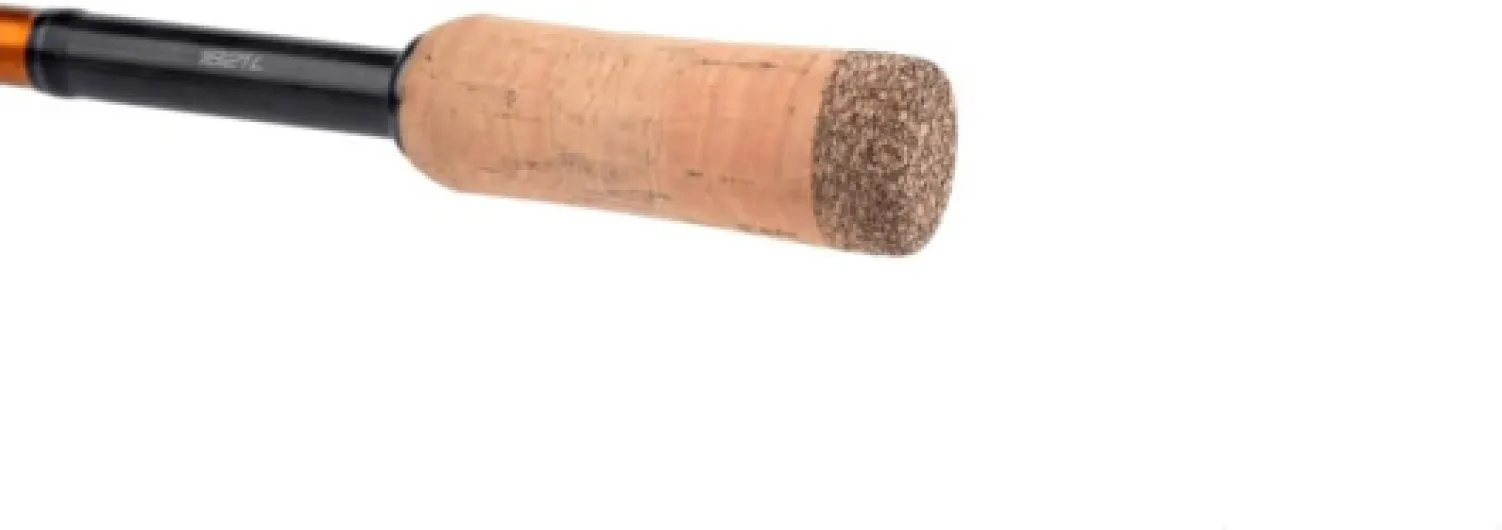
Design-wise, the Hardy Aydon 9' #5 goes for a classic trout rod look. The finish is sober, not flashy, which I personally like. The blank has a clean, modern look without bright colors or big, loud logos everywhere. On the river, it just looks like a normal, serious fly rod, not a toy or a collector’s piece. The cork handle is a standard western shape that fits the hand well for most grips, whether you hold it with your thumb on top or slightly to the side.
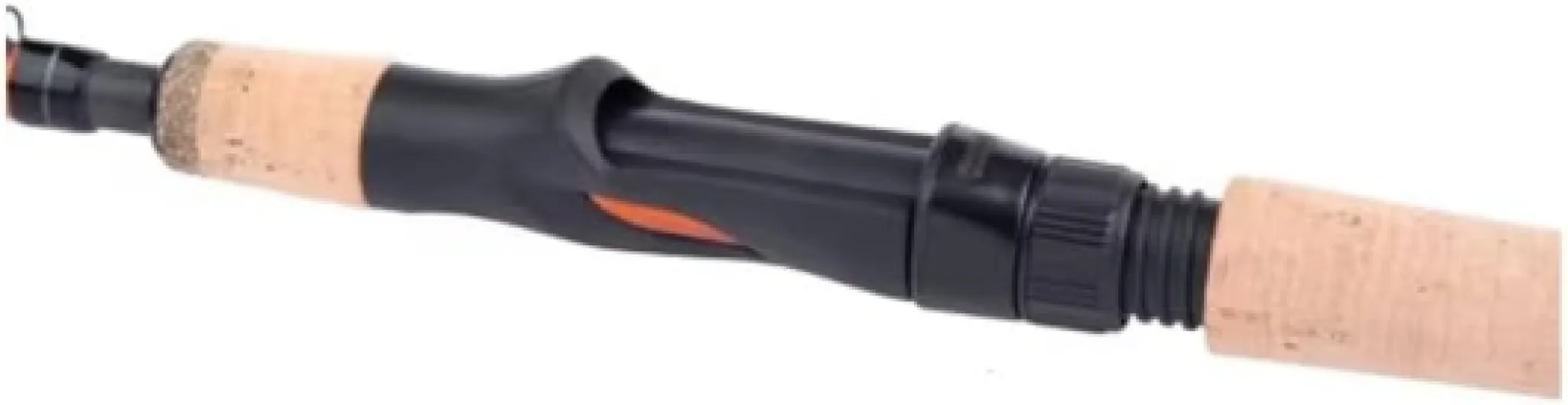
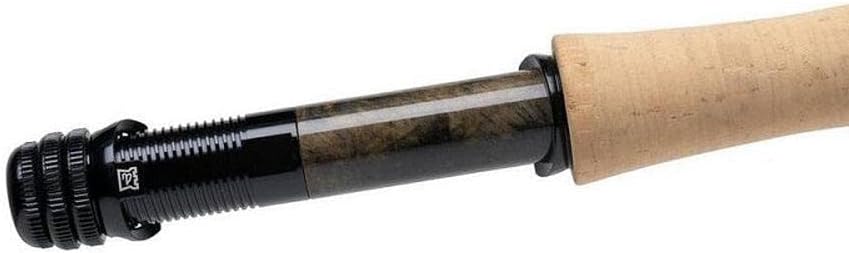
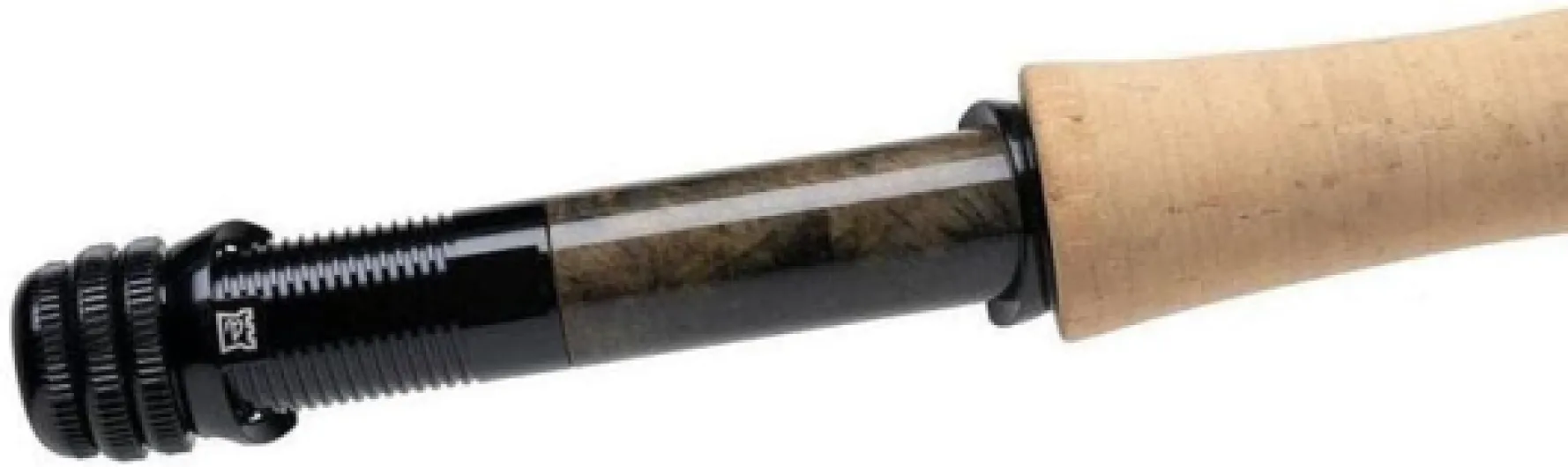
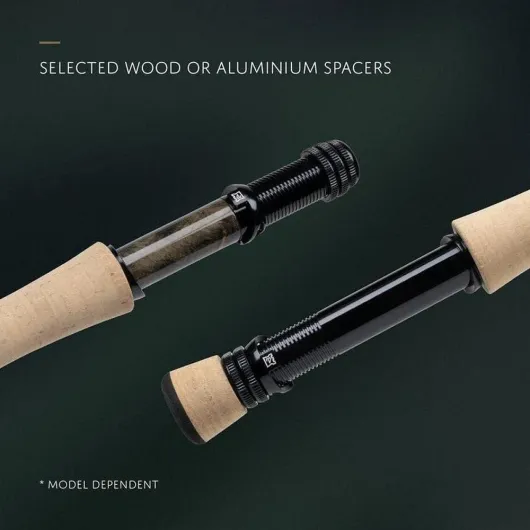
The reel seat is one of the nicest parts of the design. It has a burl wood insert that actually looks like wood, not plastic pretending to be wood. The hardware tightens down on the reel securely, and I didn’t have any slipping even after casting and stripping line all day. That might sound basic, but cheap reel seats can loosen up at the worst times. Here, once you lock it, it stays put. The seat and cork transition is smooth, with no sharp edges or weird gaps.
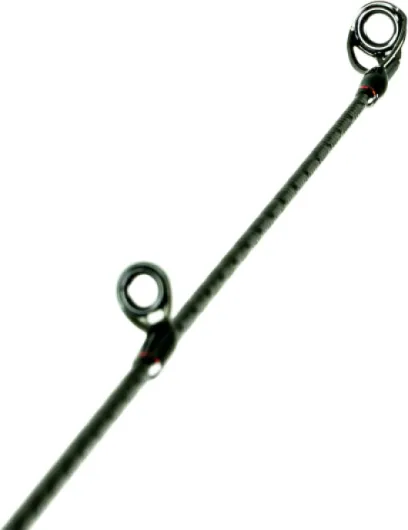
The guides are aligned properly and don’t rattle. I didn’t see any messy epoxy work or ugly glue blobs. The rod flex feels consistent along the blank, which tells me the design and build are under control. It’s not some ultra-fast broomstick; the action is more medium-fast, so it bends enough to show you what the line is doing, but it still recovers quickly. That matters when you’re trying to land a dry fly under branches or mend line across currents without drowning the fly.
One thing to flag: the data says it’s a single-piece rod, which is weird for a 9-foot fly rod meant for normal use. The one I used was a multi-piece setup (like most modern trout rods), so either the spec sheet is off or there are different versions. If it really were a one-piece 9-footer, that would be a pain to transport for most people. So double-check that before buying. Apart from that, the design is practical and no-nonsense: it looks good without trying too hard, and everything on it has a clear purpose.
Comfort: can you fish it all day without hating it?
Comfort is where this rod did pretty well for me. With a normal-sized trout reel and a standard 5wt line, the balance point sits right around the front of the cork grip, which feels natural. You’re not fighting a heavy tip, and you don’t feel like the rod is pulling your wrist down on longer casts. I fished it for several hours in a row, including a lot of repetitive roll casts and overhead casts, and I didn’t end up with a sore forearm, which does happen with some heavier or poorly balanced rods.
The cork grip shape is quite friendly. It’s not oversized, not too skinny. I have medium-sized hands, and I never felt cramped or like I had to squeeze to control the rod. When you’re mending line or doing subtle little flicks for short drifts, the rod responds cleanly without you needing a death grip. Even with wet hands, the cork stayed grippy enough. No weird hotspots or sharp transitions between cork and reel seat, which sometimes rub your fingers raw on cheaper rods.
In terms of casting feel, it loads easily at short distances. That’s important for real fishing, because most of the time you’re not bombing 80-foot casts; you’re working in that 20–40 foot range. The rod bends enough so you can feel the line, which makes timing easier and reduces the effort you need to put into each cast. On a breezy afternoon, I didn’t feel like I had to overwork it to punch through the wind, but it’s also not a super fast, tiring broomstick.
Where it’s not perfect is if you’re trying to throw very heavy rigs all day: big indicators, split shot, and double nymphs. It can do it, but you feel that it’s more tuned for standard trout setups than heavy-duty chuck-and-duck. For normal dries, lighter nymphs, and small streamers, comfort is solid. I’d be fine taking this rod on a full-day trip without worrying about fatigue, which is basically what matters out on the water.
Materials and build: where your money actually goes
The materials on the Hardy Aydon 9' #5 feel solid for a mid-to-upper range trout rod. The cork handle is the first thing you touch, and it’s clearly better than what you see on cheap rods. The filler is minimal, and after a few sessions it didn’t start crumbling or pitting badly. It’s not flawless high-end cork like on some rods that cost a small fortune, but it’s definitely a step up from entry-level gear. It stays grippy when wet, and it doesn’t feel plasticky.
The reel seat with the burl wood insert is another plus. It looks and feels like real wood, and the metal hardware has a decent finish. I didn’t see any flaking or rough machining marks. It’s the kind of seat where you feel comfortable putting a nicer reel on without thinking the rod is going to cheapen the setup. The blank itself feels like a modern graphite build: light, reasonably thin, and with a predictable flex. It doesn’t feel like glass, and it doesn’t have that dead, lifeless feel of some very stiff carbon rods either.
The guides and wraps are neat. No crooked wraps, no loose threads. The epoxy coating is even, which matters more than people think: uneven epoxy adds weight and can affect how the rod recovers. Here, everything looks controlled. After fishing with it, I didn’t notice any grooving or weird noises from the guides when shooting line. That’s a good sign that the components are at least mid-tier quality and not bargain bin stuff.
Overall, I’d say the materials match the price point. You’re not getting luxury boutique components, but you’re also not paying for junk. It feels like a rod you can fish hard for several seasons without babying it. If you’re the type who throws gear in the back of a truck, it will still need some care, but the base materials feel ready for regular use, not just occasional Sunday trips.
Durability and warranty: holds up, but not indestructible
Durability is always tricky to judge from a short test, but there are a few clear points here. The build quality on the Hardy Aydon 9' #5 feels tight and clean: no loose guides, no rattles, and the finish seems tough enough to handle normal river abuse. I knocked it lightly against rocks and branches a couple of times (as you do when wading), and I didn’t see any instant damage or chips in the coating. The cork didn’t start crumbling after a few trips either, which is usually one of the early signs of cheap materials.
There is one real-world data point from another user review: they mentioned they broke the tip in a truck door, which is a classic dumb accident, and said the warranty process was quick and easy. That’s honestly important, because no fly rod is safe from car doors, tailgates, or someone stepping on it in the dark. Knowing that the brand actually handles warranty claims without dragging things out is a big plus in the durability department, even if the break wasn’t the rod’s fault.
The blank itself feels solid for its class. It’s not a super thin, ultra-light competition rod where you’re scared to breathe on it. It has a bit of meat to it, which usually means better long-term survival if you use it a lot. That said, it’s still a graphite fly rod, so if you high-stick hard, whack it against a rock, or slam it in a door, it will break like any other.
Overall, I’d say durability is decent, backed up by a warranty that seems to actually work in practice. You still need to treat it like a proper fly rod, not a steel bar, but for regular use—wading, boat fishing, hiking to spots—it feels like it will hold up fine. The main comfort here is knowing that if you do mess up and snap something, you’re not stuck with an expensive piece of scrap.
Performance on the water: casting, control, and fish handling
On the water, the Hardy Aydon 9' #5 behaves like a practical, all-round trout rod. With a standard WF5F line, it loads nicely from about 15 feet of line out. That means you can actually fish tight little pockets near you without having to strip out a ton of line to make the rod work. Roll casts are easy, which matters on rivers with trees behind you. It picks line up cleanly and sends it back out without a lot of drama or false casting.
At typical fishing distances (20–50 feet), accuracy is good. I’m not a pro caster, but I could put a dry fly under branches and along seams with enough control to catch fish. The blank has enough backbone that when you push it a bit, it responds, but it doesn’t punish small timing mistakes. If your casting is average, this rod won’t hide that, but it won’t punish you either. It’s forgiving enough that you can relax and focus on the drift instead of constantly correcting your casting stroke.
In wind, it does okay. You can tighten the loop and get through a moderate breeze without feeling like you’re fighting the rod. If you’re trying to throw heavy streamers into a serious headwind, you’ll probably want something a bit stiffer or a heavier line, but that’s not really what this rod is meant for. For normal trout fishing conditions, the performance is steady: it does what you ask without feeling twitchy or sloppy.
Fighting fish on it is also decent. It bends enough that you can protect lighter tippets on smaller fish, but it still has enough power down low to steer a better trout out of the current. It’s not a wet noodle, so you can land fish in a reasonable time without overplaying them. Overall, performance-wise, I’d call it a pretty solid all-rounder for trout rivers and larger streams, especially for anglers who want something easy to live with rather than a super technical, finicky rod.
What you actually get with the Hardy Aydon 9' #5
On paper, the Hardy Aydon 9' #5 is pretty straightforward: a 9-foot, 5-weight, fly rod aimed at trout fishing. The specs list it as a single-piece rod with a cork handle, split grip, and fly-fishing specific build. The country of origin is the United Kingdom, which will matter to some people who like the more traditional brands. The item weight is listed around 1.09 kg on the sheet, but in hand it feels nowhere near that heavy; that number is likely including tube/packaging or just not very accurate for the bare rod.
It’s clearly marketed as an adult rod for fly fishing, not a beginner combo or a kids’ toy. You get a proper cork grip, a real reel seat with burl wood insert, and guides that look and feel decent. The rod I handled was a 9' 5wt, which is kind of the standard all-rounder size for trout: big enough for light streamers and nymphs, but still precise enough for dry flies. Target species is listed as trout, and that matches how it behaves on the water.
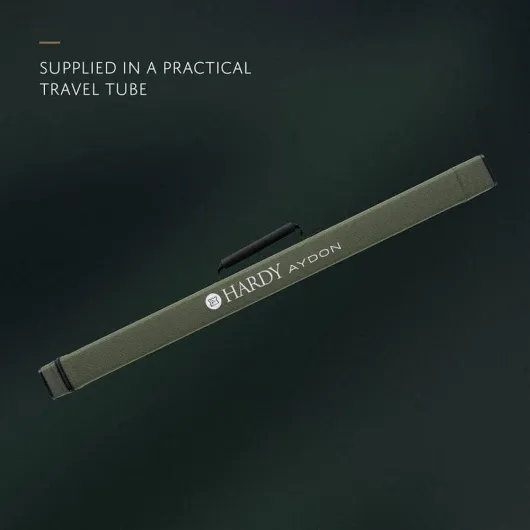
Out of the box, you’re not getting a ton of extras. It’s basically the rod (and tube, depending on where you buy it), no line, no reel, no fancy accessories. So if you’re hoping for a full starter kit, this is not that. It’s clearly meant for someone who already has a reel and line or knows what they want to pair it with. I used a standard weight-forward 5wt line, and it matched well without needing to overline it.
Overall, in terms of presentation, it’s clean and simple. No flashy marketing gimmicks, no weird special features that sound cool but don’t help on the water. You pay for a decent fly rod that’s meant to be fished, not hung on a wall. If you’re looking for a rod that looks tidy in the hand and fills the classic 9' 5wt trout slot in your lineup, that’s exactly how this one presents itself.
Pros
- Comfortable, well-balanced action that’s easy to cast at real fishing distances
- Good materials and clean build quality, including decent cork and burl wood reel seat
- Warranty service reported as quick and straightforward after a tip break
Cons
- Price is higher than basic starter rods, not ideal for tight budgets or casual anglers
- Not the best choice for very heavy rigs or extreme distance casting compared to stiffer, more specialized rods
Conclusion
Editor's rating
The Hardy Aydon 9' #5 is a solid, no-nonsense trout rod that feels good in the hand and performs well in real fishing situations. It’s balanced, comfortable to cast all day, and has a clean, classic look with decent materials: good cork, a nice burl wood reel seat, and a blank that loads easily at normal fishing distances. It’s not trying to be a hyper-technical distance cannon; it’s built for the way most people actually fish—20–50 foot casts, mixed dries and nymphs, and the occasional small streamer.
The main strengths are its easy casting feel, practical action, and the sense that it’s built to be fished, not babied. Add in a warranty that, based on user feedback, actually works when something goes wrong (like a tip in a truck door), and you’ve got a rod that feels like a safe long-term choice. On the downside, it’s not cheap, it’s not the lightest or most high-strung rod on the market, and if you’re just dabbling in fly fishing, it might be more money than you need to spend.
I’d recommend this to intermediate and regular trout anglers who want a dependable 9' 5wt as their main or backup rod, and who care more about comfort and reliability than chasing the latest hype. If you’re a total beginner on a budget, or a specialist who wants a super fast rod for heavy rigs or extreme distance, you might be better off looking elsewhere. For most everyday trout fishing, though, it simply gets the job done and feels good doing it.