
Summary
Editor's rating
Value for money: decent workhorse, not a bargain miracle
Design: practical, but not flawless
Materials: graphite frame pros and cons
Durability after real use (and what worries me)
On the water: drag, retrieve and level wind behavior
What you actually get out of the box
Pros
- Strong HT-100 drag (up to 33 lb) that feels smooth enough under real fishing conditions
- Level wind lays line evenly and makes the reel easier to use for newer multiplier users
- Reasonable weight and price for a reel that can handle bigger fish and heavier rigs
Cons
- Graphite frame is less rigid than metal and feels more stressed under heavy load
- Level wind can get noisy over time and is a potential weak point if not maintained

Specifications
View full product page →| Brand | Penn |
A boat reel that actually feels built for abuse
I’ve been using the Penn Squall II Level Wind 20RH mainly for boat and occasional pier sessions, targeting cod, conger and general wreck fish. I’m not sponsored, I paid for it, and I’ve used a mix of Penn, Daiwa and Shimano multipliers over the years. So this is coming from someone who actually drags this stuff through salt, not from a catalog.
First thing to know: this reel is clearly built with heavier fishing in mind. It’s not some tiny baitcaster; it’s a proper conventional reel with a level wind that’s meant to handle thick mono or braid and real drag pressure. The specs say 33 lb max drag and a 6.2:1 gear ratio, and in practice it does feel like it has the guts to haul fish and lead without moaning too much.
I’ve had it out on a few rough days on the boat, a bit of kayak use in calmer conditions, and one long session from a breakwater. So far it’s been splashed, laid in bait slime, and banged around in a crate with other gear. I’m not babying it. That’s important, because a lot of reels feel fine on the table but start complaining once you add real-world abuse.
To set expectations: it’s not perfect. The graphite frame has pros and cons, the level wind is handy but also one more thing that can go wrong, and there are a few small issues that match some of the negative Amazon reviews. Still, for the price and the use case, it’s a pretty solid workhorse if you know what you’re getting into.
Value for money: decent workhorse, not a bargain miracle
In terms of value, the Penn Squall II Level Wind 20RH sits in that mid-range zone: not cheap junk, not premium gear either. The average rating around 4.2/5 on Amazon with over a hundred reviews fits my experience. Most people seem happy, a few have legit complaints. That usually means the reel is basically sound, but quality control and expectations vary.
What you’re paying for here is a reel that can handle decent-sized fish, has a proper drag, and gives you the convenience of a level wind without costing as much as higher-end metal-bodied models. For a casual or regular angler doing boat, kayak or heavy shore work a few times a month, I’d call the value good but not mind-blowing. You get a lot of function for the price, but you’re also accepting some compromises in materials and long-term ruggedness.
Compared to cheaper no-name multipliers, the Squall II feels more trustworthy. The drag is smoother, the spool is better made, and the general finish is cleaner. Compared to more expensive reels from Penn or other big brands, you do feel the difference in refinement and rigidity. So it really depends where you’re coming from. If you’re upgrading from budget gear, this will feel like a nice step up. If you’re used to high-end reels, this will feel like a basic workhorse you don’t mind scratching.
For me, the reel earns its keep because it does what I need: it hauls fish and lead without drama, it’s reasonably light for what it is, and it doesn’t cost a fortune to replace if I kill it after a few seasons. There’s better out there if you’re willing to spend more, and there’s cheaper if you only fish once a year. In that middle ground, it’s a sensible option with fair value, as long as you’re aware of the level wind and graphite trade-offs.
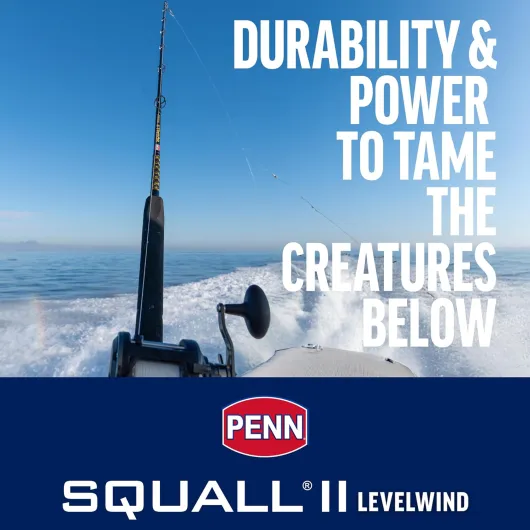
Design: practical, but not flawless
Design-wise, the Squall II Level Wind sits somewhere between old-school tank and modern lightweight reel. The right-hand orientation is standard for this style, so if you normally crank with your left, this specific 20RH model isn’t for you. The frame is fairly compact front to back, which makes it easier to palm on a boat rod, and the handle arm length is decent for gaining torque without feeling like a winch.
The 6.2:1 gear ratio is on the faster side for a conventional reel aimed at heavier work. In practice, that means you can pick up line quickly when repositioning or when a fish runs toward you, which I like. On the flip side, under heavy load you do feel it – you’re trading a little cranking power for speed. It’s not unusable by any means; just don’t expect it to crank like a super-low-ratio winch when you have a lot of weight and tide hanging off the end.
The level wind design is convenient. It keeps line lay neat with mono, braid or fluorocarbon, and you don’t have to think about guiding the line back and forth. For newer multiplier users, that’s helpful. But it’s also one more moving part to get noisy or jammed, which matches some of the complaints online. If you’re the type who fishes in heavy debris or never rinses your gear, this is something to keep in mind. After a few salty trips, I could hear a slight increase in mechanical noise from the level wind, nothing tragic yet but noticeable compared to day one.
Controls are well placed: the star drag is easy to reach, the clutch lever is positive, and the spool tension knob is straightforward to adjust. No weird ergonomic choices. Overall, the design is practical and focused on usability, but you can tell it’s built to a price. It’s not a precision jewel; it’s a solid, functional layout that favors ease of use over fancy aesthetics.
Materials: graphite frame pros and cons
The Squall II uses a mix of aluminium, graphite and stainless steel. The spool is forged and machined aluminium, which is good – it keeps weight down and resists corrosion reasonably well if you rinse it. The handle and bearings are stainless steel, and the drag uses HT-100 carbon fiber washers, which Penn has been using for years. Those drags are usually reliable and don’t glaze over too quickly if you don’t abuse them.
The frame and sideplates being graphite is where opinions split. On the plus side, graphite keeps the weight down and doesn’t corrode like metal. I fish in saltwater, and I’ve seen old metal-framed reels rot at the screw holes and foot if they weren’t looked after. With graphite, you avoid that kind of rust. Also, carrying this reel in a bag or crate with other gear, the lighter frame is nicer than a full metal brick.
On the downside, graphite isn’t as rigid as aluminium or metal frames. Under heavy drag, you can sometimes feel a bit of flex or hear the reel sound slightly more strained, especially if you’re cranking hard against a lot of pressure. I wouldn’t say the Squall II feels flimsy, but compared to a full metal-framed reel in the same size, you can tell it’s not as solid. If you’re regularly targeting very big conger or skating big leads through strong tide, this is something to keep in mind.
Overall, the material choice screams “sensible compromise”. Penn clearly tried to keep the price, weight and corrosion resistance reasonable, but you don’t get the bulletproof feel of their heavier metal-bodied models. If you’re realistic about that and don’t expect a tank at this price, the materials get the job done. Just don’t treat it like a winch on a commercial boat and expect it to last forever without care.
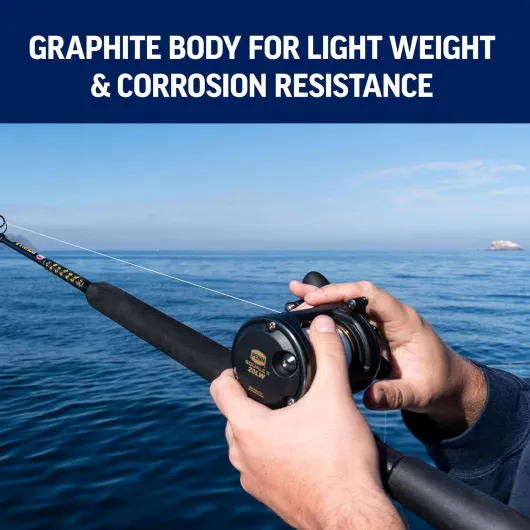
Durability after real use (and what worries me)
I’ve had the Squall II Level Wind 20RH out for several salty sessions now – boat, kayak, and a long shore session where it spent a lot of time in damp rod rests and got hit by spray. I always give my reels a quick rinse in fresh water afterwards, nothing fancy. So far, there’s no obvious corrosion on the metal parts, and the handle and drag still feel good. The aluminium spool hasn’t picked up any weird marks from braid pressure, which is a good sign.
Where I see potential issues long term is mostly around the graphite frame and level wind. The frame itself hasn’t cracked or anything, but under heavy drag you can hear the reel sound a bit more strained than a metal-bodied reel. It’s not falling apart, but you can tell it’s built to a mid-range spec. If you’re using it a few times a month for normal wreck or bottom fishing, I think it will hold up fine. If you’re hammering it every day on a charter boat, I’d look at something heavier.
The level wind is the bit that really needs attention. After a handful of trips, mine started to get slightly noisier, especially when retrieving under load. It still tracks correctly and lays line properly, but the smooth new-reel feel is gone. The 1-star Amazon review complaining about noisy reels and level wind issues doesn’t sound completely crazy to me. I haven’t had a failure, but I can see how a bad batch or poor maintenance could cause problems there.
On the positive side, Penn offers a 2-year manufacturer warranty, which at least gives some backing if you get a dud. But realistically, like most fishing gear, how long it lasts will depend a lot on how hard you push it and whether you rinse and occasionally lube it. I’d rate the durability as decent but not bombproof: good enough for regular anglers, less ideal if you’re brutal with your gear or expect it to survive serious abuse year after year.
On the water: drag, retrieve and level wind behavior
Performance is where this reel actually feels pretty decent for the money. The 33 lb max drag is more than I’ll realistically use on a normal boat session. With the drag set to a sensible level, I had no problem lifting decent fish and heavy leads. The HT-100 drag feels smooth enough on the take, no big jerks or sticking, and it’s easy to fine-tune with the star. I hooked into a couple of stronger fish over rough ground, and the reel held its own without any scary noises from the drag stack.
The 6.2:1 retrieve ratio is handy when you’re constantly dropping and retrieving in 40–60 m of water. You don’t feel like you’re winding forever to get back to the boat. When pulling up a heavy rig plus fish, you’ll notice the effort, but that’s normal. It’s not a jigging reel designed purely for cranking under load; it’s more of a general-purpose conventional reel that gives you a balance of speed and power. I’d call it pretty solid for normal mixed fishing, less ideal if you’re only doing heavy-duty winching all day.
Now, the level wind. When new and clean, it lays line very evenly and makes life simpler, especially in the dark or when you’re distracted on a rocking boat. After a few trips, I started to get a bit more noise out of the level wind mechanism – a slight mechanical buzz, especially under tension. It still works, but this lines up with some of the Amazon reviews mentioning noise and level wind issues. I haven’t had a failure yet, but I can see how, if someone gets a rough unit or never cleans it, problems might show up.
Cast-wise, this isn’t a distance casting machine, and that’s not what it’s made for. From the boat, dropping straight down or making short lob casts from a pier, it behaves fine. With mono or braid, once the spool tension is dialed in, overruns are manageable. Overall, in actual fishing, the reel gets the job done: strong enough drag, decent retrieve, and a level wind that is helpful but also the main potential weak point.
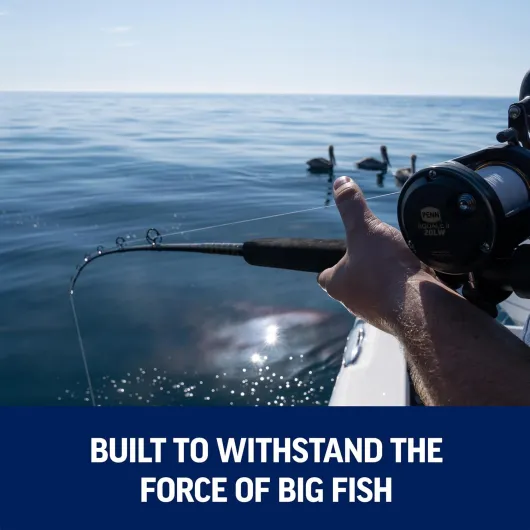
What you actually get out of the box
Out of the box, the Penn Squall II Level Wind 20RH looks like a straightforward boat reel. No fancy extras. You get the reel, basic paperwork, and that’s it. No reel cover, no spare spool, no oil. For the price point, I’m not shocked, but if you’re used to more premium brands throwing in a few bits, you won’t find that here. It’s clearly positioned as a practical tool, not a collector’s piece.
The reel itself is fairly compact for what it can handle. It weighs about 0.77 kg, which you do feel in the hand, but for a conventional reel built for heavier lines, that’s not crazy. The color is black with gold accents, the usual Penn look. It doesn’t scream luxury, but it looks decent and feels like something you can knock around without crying over a scratch.
Out of the box, the handle turns smoothly enough. The 3+1 stainless steel bearings feel okay, not buttery like high-end jigging reels, but there’s no grinding or play on a new unit. The drag knob clicks positively, and the star drag feels solid. The fast gear access side plate is there if you want to get into the guts, but I didn’t start unscrewing things on day one; I wanted to see how it behaves under normal use first.
What stood out to me right away is that the level wind runs nicely from side to side, and line lay looks even without having to guide it by hand. If you’re moving over from a non–level wind conventional, that’s a bit of a relief. Overall, the first impression is: functional, no nonsense, and clearly built to fish rather than impress on a shelf. Nothing fancy, but it feels ready to go straight onto a rod and out on the water.
Pros
- Strong HT-100 drag (up to 33 lb) that feels smooth enough under real fishing conditions
- Level wind lays line evenly and makes the reel easier to use for newer multiplier users
- Reasonable weight and price for a reel that can handle bigger fish and heavier rigs
Cons
- Graphite frame is less rigid than metal and feels more stressed under heavy load
- Level wind can get noisy over time and is a potential weak point if not maintained
Conclusion
Editor's rating
Overall, the Penn Squall II Level Wind 20RH is a solid, no-nonsense reel for boat, kayak and heavy shore fishing if you want a level wind and don’t want to blow your budget. The drag is strong and reasonably smooth, the 6.2:1 ratio makes it quick enough for normal wreck and bottom work, and the aluminium spool plus HT-100 drag washers give it enough muscle for bigger fish. It’s not the smoothest or quietest reel I’ve used, but it gets the job done without feeling cheap.
The downsides are mostly tied to the graphite frame and the level wind mechanism. The frame doesn’t feel as rigid as a full metal reel under heavy load, and the level wind can get noisy over time, which matches some of the negative reviews. If you’re rough on gear or fish very frequently in harsh salt conditions, you might want to spend more on a fully metal-bodied reel with fewer moving parts. But if you’re a regular angler who rinses their gear and wants a practical, right-hand conventional reel for bigger fish, this is a decent option that offers fair value.
I’d recommend it to anglers who fish boats or kayaks a few times a month, want the convenience of a level wind, and are okay with a mid-range workhorse rather than a top-tier reel. I’d skip it if you hate mechanical noise, plan to use it commercially, or are obsessed with super-rigid metal frames. For most weekend and holiday anglers targeting cod, conger, rays and similar, it’s a pretty solid, honest piece of kit.