Summary
Editor's rating
Value: good deal if you actually use the extra tip and case
Design: looks like a fly rod, fishes like a solid spinning rod
Comfort: fishable all day, but not ultra-light
Materials: solid components with a slight weight penalty
Durability: built for trunk life and clumsy anglers
Performance: strong, versatile, but not a finesse wand
What you actually get out of the tube
Pros
- Comes with a hard canvas case and an extra tip section for added security
- Solid medium-heavy, fast-action performance with good backbone for bass and similar fish
- Better components than typical budget rods (Fuji reel seat, decent cork, quality guides) plus lifetime warranty with repair fee
Cons
- A bit heavier than some competitors in the same size and price range
- Sensitivity and crispness are good but not on par with higher-end, more expensive graphite rods

Specifications
View full product page →| Brand | Moonshine Rod Company |
| Material | Wood |
| Color | Vintage Brown |
| Number of Pieces | 2 |
| Fishing Technique | Spinning |
| Item Weight | 1.8 Pounds |
| Model Name | Rambler |
| Rod Length | 7 Feet |
A spinning rod built by fly guys – does it actually work?
I took the Moonshine Rod Co. Rambler 7' MHF out as a “do‑everything” spinning rod for freshwater. I mainly fish small to medium rivers and a couple of local lakes, usually from the bank and sometimes from a kayak. I’ve used plenty of budget combo rods and a few mid‑range St. Croix and Shimano sticks, so I’m not new to this, but I’m also not babying my gear. This thing went straight into the trunk with the rest of the mess.
Over a few weeks I used it for bass, trout, and some accidental panfish, throwing mostly 1/4–1/2 oz lures with 10 lb mono and then 15 lb braid. The brand talks a lot about their fly rod heritage and the extra tip section, so I wanted to see if that was just marketing or if it actually made a difference on the water. I also paid attention to how it packs, because I like rods I can just leave in the car.
Right away, the Rambler feels different from cheap big‑box rods. The handle, the reel seat, even the case look like something you usually see on more expensive fly rods. But I tried to ignore the “pretty” stuff and see how it actually fishes: casting distance, sensitivity on the bottom, backbone for hooksets, and how it handles being tossed around in a trunk and dragged through brush.
Overall, it’s a pretty solid medium‑heavy travel‑friendly spinning rod with a bit of personality, but it’s not perfect. There are a couple of things that bugged me – mostly around weight and how fast the action feels compared to what the listing suggests. If you’re expecting a super light, super crisp high‑end rod, this isn’t it. If you want a tough, good‑looking rod with an extra tip that you’re not scared to beat up, it makes a lot more sense.
Value: good deal if you actually use the extra tip and case
For the price range this sits in, I’d call the Rambler good value, but not a steal. You’re paying partly for the look and brand story, but you do get real, practical stuff for that money: a hard canvas case, an extra tip section, Fuji seat, and decent cork. If you compare it to a plain rod with no case and no spare tip, the package starts to make more sense, especially if you’re rough on gear.
Compared to cheaper rods I’ve owned (the usual big‑box combos), the Rambler is clearly a step up in build quality and feel. Those cheaper rods usually come with junky reel seats, low‑grade cork or foam, and guides that bend if you look at them wrong. They work, but they feel like throwaways. The Rambler feels like something you’ll keep for several seasons, especially backed by the lifetime warranty with a reasonable repair fee.
On the other hand, if you don’t care about the case, don’t care about looks, and never break rods, you could get a perfectly serviceable medium‑heavy spinning rod for less. Some brands in the same price range might be a bit lighter or a hair more sensitive but won’t include the extra tip or as nice of a case. So it depends what you value. For me, the peace of mind of the spare tip and the toughness of the setup justify the price.
Overall, I’d say value is pretty solid if you’re the kind of angler who: fishes often, tosses rods in the car, occasionally breaks stuff, and wants something nicer than entry‑level without going full premium. If you’re super budget‑focused and baby your rods, you might feel like you’re paying for features you won’t really use.
Design: looks like a fly rod, fishes like a solid spinning rod
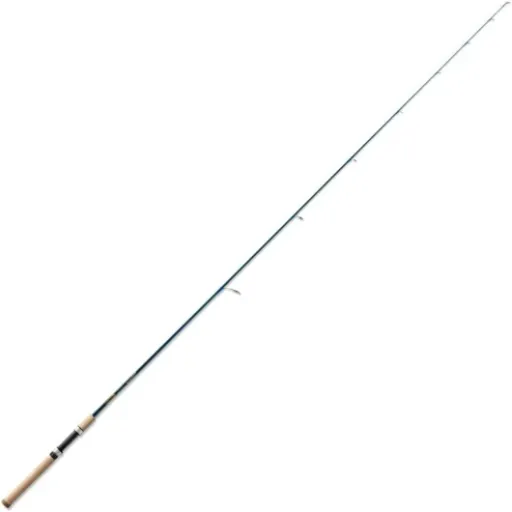
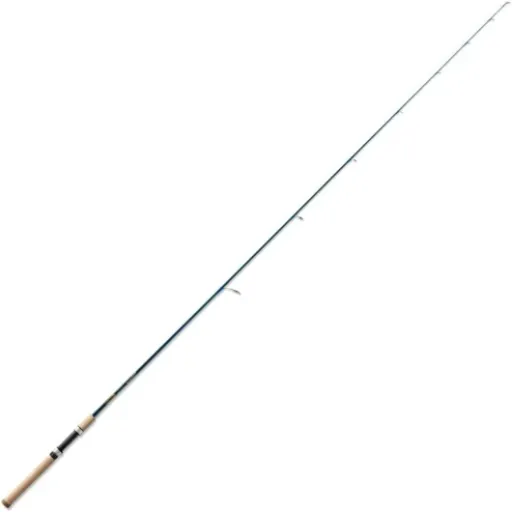
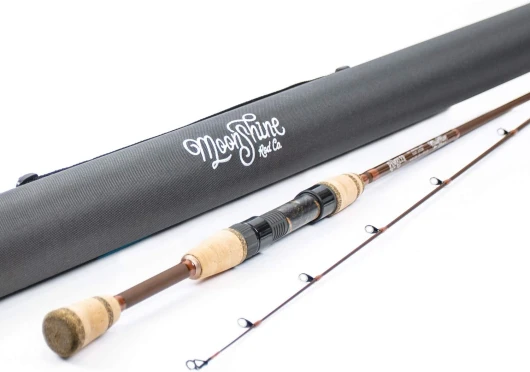
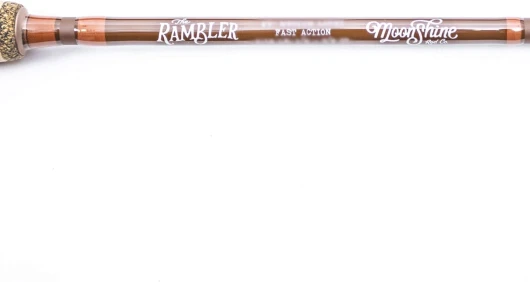
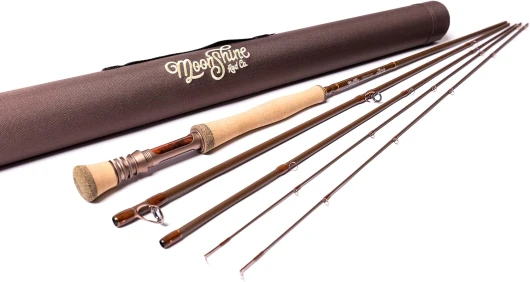
The design is clearly influenced by Moonshine’s fly rods. The Vintage Brown blank, copper anodized winding checks, and burled wood reel seat insert give it a more “custom” vibe than most rods at this price. It’s the kind of rod that people notice when you rig it up at the ramp, but it’s not loud or neon. Personally, I liked that it looks a bit different without screaming for attention.
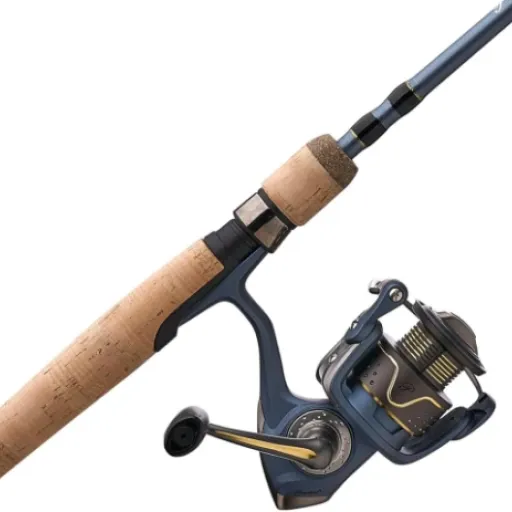
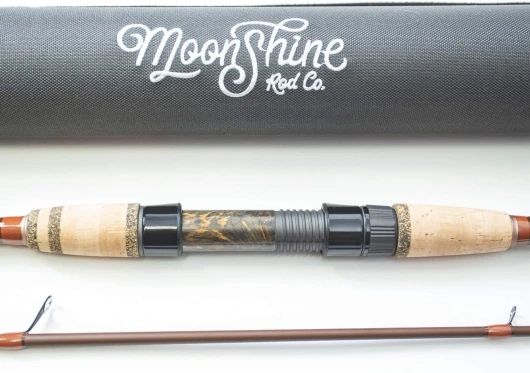
The split AAA cork handle is shaped more like what you see on nicer rods. The grip is full enough for bigger hands but not a fat club. I could fish it for a few hours without my hand cramping. The Fuji reel seat is a plus – it locks down cleanly and doesn’t loosen mid‑session. I paired it with a 2500‑size reel (about the same size as that Tica Cetus SB 500 someone mentioned in reviews, just a bit bigger), and the balance point ended up a little forward of the reel seat, which is fine for a medium‑heavy rod.
The micro guides are a bit of a double‑edged sword. On the positive side, line control is good and they keep the rod looking sleek. On the downside, if you like running chunky knots (like big braid‑to‑leader knots) or use heavier leaders, you may feel them ticking through the guides. With 15 lb braid to 10 lb fluoro and a small knot, I was fine, but if you’re sloppy with knots you’ll notice it.
One design choice I really like is the 2‑piece layout with the extra tip. Breakdowns are quick, and the sections fit snugly without wobble. I broke it down, tossed it back in the tube, and assembled it several times in one day; the ferrules never felt loose. The only real downside in design is that, for a 7' rod, it’s not the lightest thing around. It’s not a brick, but compared to some higher‑end graphite rods, you feel a bit more weight out front. For casual and moderate use, it’s fine; if you’re super picky and used to very light, crisp rods, you’ll notice the difference.
Comfort: fishable all day, but not ultra-light
In terms of comfort, the Rambler is good but not mind‑blowing. The full wells / split cork grip feels natural in the hand, and the contour works for different grip styles. I fished it for three‑ to four‑hour sessions throwing crankbaits and soft plastics, and my hand never felt sore from the grip itself. If anything, the slightly thicker cork section near the reel seat makes it easier to hold during long retrieves.
Where you notice a bit of compromise is overall weight and balance. With a 2500‑size spinning reel, the combo balances slightly forward of the reel seat. That’s normal for a medium‑heavy stick, but if you’re used to super light spinning rods, you’ll feel that extra tip weight after a full day. It’s not terrible – I’d call it “perfectly usable” – but it’s not the kind of rod you forget is in your hand. For me, it was fine for a long morning or evening, but if I spent 8+ hours straight casting, I’d probably want something lighter.
The fast action tip helps with comfort in a way: you don’t have to muscle your casts. A smooth snap easily sends 3/8 oz lures where you want them, so you’re not overworking your shoulder. I’ve had shoulder issues in the past, and this didn’t aggravate anything. Compared to a stiff, cheap rod I used before, the Rambler felt easier on my joints because it loads more predictably.
One nice comfort bonus is the smooth cork and clean reel seat – no sharp edges, no weird gaps. I fished it with and without a glove, and there were no hotspots or pressure points. Overall, comfort is pretty solid: good grip shape, decent balance, only slightly on the heavy side for a 7' rod. If you’re not ultra picky about weight, you’ll be fine. If you’re super sensitive to front‑heavy rods, just know this isn’t the lightest stick in the rack.
Materials: solid components with a slight weight penalty
On the materials side, Moonshine did a decent job for the price. The blank is graphite, and while they don’t plaster the exact modulus all over the place, it feels more like a mid‑modulus build. That explains why it’s a hair heavier than some premium sticks but also why it feels tough enough for trunk duty. I bounced lures off rocks, yanked a couple of snagged jigs free, and the blank never felt sketchy or overly brittle.
The AAA cork handle is better than what you usually get on rods in this range. Mine had a few small filler spots, but nothing crazy or crumbly. It didn’t start flaking or pitting in the first few trips, even with wet hands and some mud. The burled and dyed wood insert in the reel seat looks nice and hasn’t shown any swelling or weirdness after getting wet. Paired with the Fuji reel seat, it gives a secure, no‑nonsense connection to the reel, which is honestly more important than how it looks.
The American Tackle micro guides and guide wraps seem well done. No misaligned guides or sloppy epoxy on my rod. I ran both mono and braid through them and didn’t notice any obvious grooving or noise that would make me nervous. The guide frames are not huge and beefy, but they held up fine to some light knocks against the kayak and a few tangles that I had to pull out aggressively.
The canvas‑covered hard tube is another material win. It’s not a cheap plastic tube; it’s stiff with a fabric shell and a zipper that actually feels like it will last. I tossed it in a dirty trunk, dragged it over gravel, and it only picked up a few scuffs. Overall, materials are solid for the money: not boutique‑level, but clearly a step above bargain rods. The trade‑off is that all this sturdiness and fancy wood/cork adds a little weight, so if you’re obsessed with ultra‑light setups, this may feel a bit chunky for a 7' rod.
Durability: built for trunk life and clumsy anglers
Durability is probably the Rambler’s biggest selling point, and that lines up with how it feels in use. I didn’t baby this rod at all: it lived in the canvas hard tube in my trunk, got tossed on gravel, and bounced around with a tackle bag and a cooler. The tube itself took the abuse, and the rod came out fine every time. No loose guides, no cracked cork, no weird flex sounds from the blank.
I also did a few things that usually stress cheaper rods: high‑sticking a bit while pulling free from snags (not recommended, but it happens), dragging fish up a steep bank, and knocking the blank against the side of a kayak. The Rambler handled all of that without any visible damage. The guide wraps stayed tight, and the ferrule connection between the two pieces never loosened up or developed a wiggle.
The extra tip section is a big peace‑of‑mind factor. I didn’t break a tip during my testing, but knowing that a spare is in the tube changes how you treat the rod. You don’t have to fish like you’re handling glass. For anyone who’s snapped a tip and then had to wait weeks for a repair, this is a real advantage. And if you somehow manage to break more than that, Moonshine’s lifetime warranty with a repair fee is there as a backup. It’s not a free replacement, but at least you’re not stuck buying a whole new rod at full price.
After several trips, the only wear I noticed was minor smudging on the cork and some light scuffs on the blank’s finish, which is totally normal. Nothing that affects how it fishes. So in practice, durability feels solid: it’s not indestructible, but it’s clearly built to handle real‑world abuse better than the cheaper rods I’ve used that start loosening up or cracking after a season.
Performance: strong, versatile, but not a finesse wand
On the water, the Rambler 7' MHF behaves like a true medium‑heavy, fast‑action workhorse. I threw 1/4–1/2 oz lures most of the time: small crankbaits, Texas‑rigged soft plastics, and some inline spinners. The sweet spot felt around 3/8 oz, where the rod really loads and launches without much effort. It will throw 1/4 oz, but you need a slightly more deliberate cast; it’s not a finesse noodle.
Sensitivity is decent but not crazy. I could feel bottom contact with 3/8 oz jigs and detect light taps from smaller bass and trout, especially on braid. Compared to a cheap big‑box combo, this is a clear step up. Compared to a higher‑end graphite rod that costs twice as much, you do notice a bit less crispness. You’ll still feel bites and structure just fine; you just won’t get that ultra‑sharp feedback you get from premium sticks. For most weekend anglers, it’s more than enough.
Where it shines is hooksetting and backbone. The fast tip and medium‑heavy power give you plenty of punch to drive hooks home, even with a bit of line out. I landed several decent bass and a couple of surprise carp on 10 lb mono, and the rod had plenty of reserve power. It bends nicely into the mid‑section under load, so it doesn’t feel like a broomstick, but it never felt under‑gunned.
Cast accuracy is good once you get used to the action. Short to medium casts along banks and under overhanging trees were easy to place. Long casts across a small lake were no problem either. Wind handling was acceptable – the blank recovers fairly fast, so you’re not getting wild wobble at the end of the cast. Overall, performance is strong and versatile, especially for general freshwater spinning: bass, walleye, bigger trout, maybe light inshore if you’re careful. It’s not a finesse rod for tiny jigs, but as a trunk rod that covers most situations, it gets the job done very well.
What you actually get out of the tube
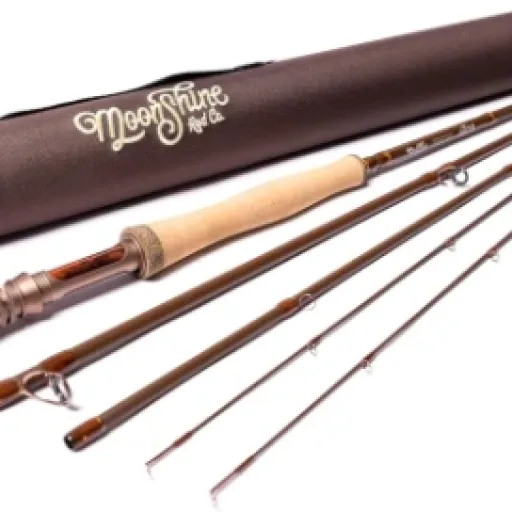
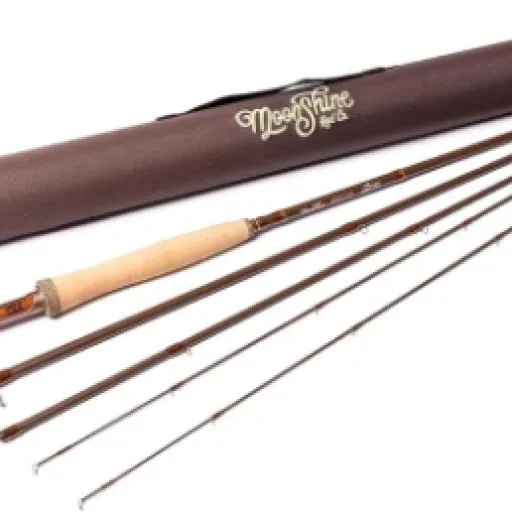
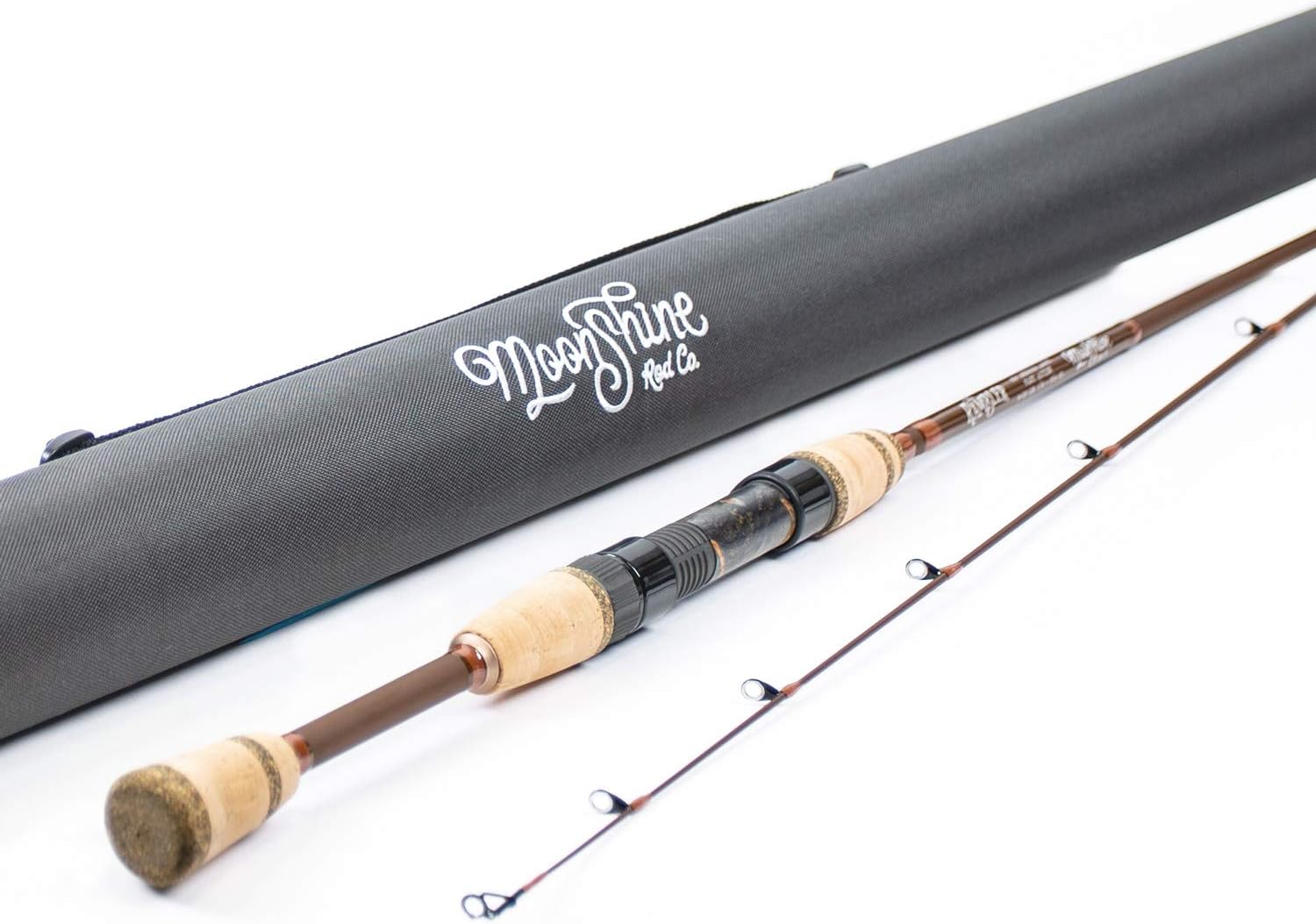
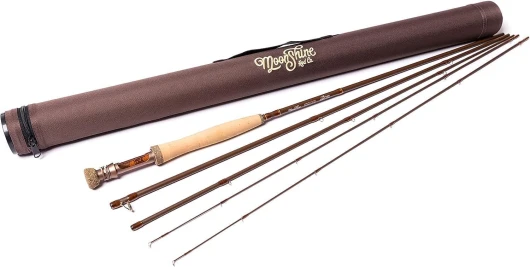
Out of the box, the Rambler 7' MHF comes as a 2‑piece spinning rod with a hard canvas tube and an extra tip section. That extra tip is a big deal if you’ve ever slammed a rod tip in a car door or snapped it in the ceiling fan – which, yeah, I’ve done. The tube is about 46 inches long, so it fits easily across a back seat or in a trunk without needing to fold down seats. The tube is stiff enough that I wasn’t worried tossing it in with camping gear.
The rod itself is listed as 7 feet, medium heavy power, fast action, rated for 8–14 lb line. In practice, it feels like a true medium‑heavy with a fairly quick tip. I’d say it’s happiest with 3/8 oz or so, but it still throws 1/4 oz fine. The color is called “Vintage Brown,” which basically looks like a dark brown/bronze blank with some copper details. It’s not flashy, but it does look nicer than standard matte black sticks.
The hardware is where you see the fly‑rod influence: Fuji reel seat, American Tackle micro guides, burled and dyed wood insert, and split AAA cork handle. If you’ve used ugly, chunky reel seats on cheaper rods, this one feels noticeably better in the hand. Guides are small and tidy, and the wraps looked clean on my unit – no weird glue blobs or crooked wraps on mine.
On paper, the Rambler is sold as a rod that “combines the best of fly and conventional rods” and is meant to live in your trunk for “killer setups.” In real life, I’d describe it more simply: a mid‑priced, good‑looking, 2‑piece spinning rod with decent components and a backup tip, aimed at people who fish a lot and are tired of babying fragile rods. It doesn’t feel like a bargain‑bin rod, but it also doesn’t pretend to be some high‑end $400 stick.
Pros
- Comes with a hard canvas case and an extra tip section for added security
- Solid medium-heavy, fast-action performance with good backbone for bass and similar fish
- Better components than typical budget rods (Fuji reel seat, decent cork, quality guides) plus lifetime warranty with repair fee
Cons
- A bit heavier than some competitors in the same size and price range
- Sensitivity and crispness are good but not on par with higher-end, more expensive graphite rods
Conclusion
Editor's rating
The Moonshine Rambler 7' MHF is a tough, good‑looking, medium‑heavy spinning rod that’s built with real‑world use in mind. It casts well in the 1/4–1/2 oz range, has enough backbone for bass and similar fish, and comes with a proper hard case and an extra tip that actually add value, not just fluff. The materials and components (Fuji seat, decent cork, solid guides) are a clear step up from budget rods, and the lifetime warranty with a repair fee is a nice safety net.
It’s not perfect. It’s a bit heavier than some similarly priced rods, and while sensitivity is good, it’s not on the same level as high‑end graphite sticks. If you’re super picky about weight and feel, or you mainly fish light finesse rigs, you might want something more specialized. But if you’re after a reliable, trunk‑friendly rod that can handle most freshwater spinning duties and survive some abuse, this one makes sense.
I’d recommend it for anglers who fish regularly, like to keep a rod in the car or boat, and want something they don’t have to baby. Newer anglers who are upgrading from cheap combos will probably notice a nice bump in feel and control. Hardcore gear nerds hunting for ultra‑light, ultra‑sensitive rods might want to look higher up the price ladder. For most weekend fishers, though, the Rambler hits a pretty good balance between performance, durability, and price.


-large-teaser.webp)