
Summary
Editor's rating
Is Seaguar InvizX worth the price?
100% fluorocarbon… but does it feel like it?
Abrasion, knots, and how it holds up after a few trips
On-the-water performance: casting, sensitivity, and visibility
What you actually get on the spool
Does it actually help you catch more fish?
Pros
- Soft and relatively low memory for a fluorocarbon main line, so it’s easier to cast and manage
- Good sensitivity and sinking behavior, helpful for crankbaits, jigs, and bottom-contact techniques
- Clear and discreet in the water, especially useful in clear or pressured lakes
Cons
- More expensive than basic mono or budget fluoro options
- Still shows some memory over time, especially on spinning reels
- Requires careful knot tying (wet and cinched properly) to avoid weakening at the knot

Specifications
View full product page →| Brand | Seaguar |
A fluorocarbon main line that doesn’t fight you (for once)
I’ve been running the Seaguar InvizX 25 lb on a couple of baitcasters and one big spinning setup for a few weeks now, mostly for freshwater bass, pike, and the odd catfish. I usually stick to mono or braid with a fluoro leader because most full-fluoro main lines I’ve tried felt like coiled spring wire and were a pain to manage. With this one I wanted to see if a full fluorocarbon main line could actually be usable all day without driving me nuts.
First thing: this line is clearly softer than a lot of other fluoros I’ve tried. Spooled it up on a 200-size baitcaster and it didn’t jump off the spool or birdnest by just looking at it, which is already a good sign for fluoro. I fished it on crankbaits, Texas rigs, and some live bait under a float, just to see how it behaved in different situations. The reel I used already had a clean, even spool of 20 lb mono before, so I could feel the difference in handling pretty quickly.
On the water, the main impression is that it’s easy to live with for a fluorocarbon. Casting felt pretty similar to a decent mono of the same diameter, maybe slightly heavier but nothing crazy. It sinks faster than mono and obviously way slower than a jig head, but enough that my crankbaits and weightless plastics got down a bit quicker than on mono. For live bait, the line pulled the float down a little more than mono, but it wasn’t a big issue once I adjusted the float size.
It’s not perfect, and it’s not magic line. It still has some memory, it’s not cheap, and if you’re rough with your knots you’ll pay for it. But overall, for someone wanting a full fluorocarbon main line that’s actually manageable and not just a stiff mess, this one is pretty solid. I’d say it’s a good compromise between performance and sanity on the water.
Is Seaguar InvizX worth the price?
Price-wise, Seaguar InvizX sits in the mid-to-high range for fluorocarbon. It’s not the cheapest option on the shelf, but it’s also not the most expensive premium stuff out there. The 1000-yard spool looks pricey at first glance, but when you break it down per yard and realize you can spool several reels plus refills, it becomes more reasonable, especially if you fish a lot.
Compared to cheaper generic fluoro I’ve tried, the main difference is usability. The budget stuff was stiffer, had more memory, and gave me more headaches on baitcasters. InvizX is noticeably softer and easier to manage, which means less wasted time dealing with tangles and more time actually fishing. If you only fish occasionally or don’t care much about handling, you could probably get away with cheaper line. But if you’re on the water often, the extra few bucks start to make sense.
Against braid + leader, the value question is more about style of fishing than pure price. Braid lasts a long time and you just replace leaders, so in the long run that can be cheaper. But braid can be noisy in the guides, more visible, and not everyone likes messing with knots between braid and fluoro. With InvizX as a main line, you pay more upfront per refill, but you simplify your setup and still get some of the stealth and sensitivity benefits.
Overall, I’d say the value is good but not mind-blowing. You’re paying for a fluorocarbon that’s actually manageable as a main line, with solid durability and performance. If line is something you don’t mind investing a bit in, this makes sense. If you want rock-bottom price above all else, this probably isn’t for you, and a basic mono or cheaper fluoro will do the job, just with more trade-offs.
100% fluorocarbon… but does it feel like it?
This line is 100% fluorocarbon, made from Seaguar’s own resin (they like to highlight that they make their own). In the hand, it feels like fluoro: a bit stiffer and denser than mono, but not that wire-like feel you get with some cheaper fluoros or leader-only materials. Compared to a generic 25 lb fluoro I had lying around, the InvizX is definitely softer and more flexible, which matches their “low memory” claim, at least relative to other fluoros.
Diameter-wise, Seaguar doesn’t print it big on the box, but in use it feels similar to a typical 20–25 lb mono. It’s not super thin like braid, obviously, but for a 25 lb line it’s reasonable. The density is noticeable: when you drop a loose piece in water, it sinks steadily instead of hanging on the surface. That sinking behavior is what you want from fluorocarbon, and it does help lures get a bit deeper and keeps the line under the surface when you’re retrieving.
In terms of stretch, it has less stretch than mono but more than braid. When I set the hook on a jig in 15–20 feet of water, I could feel a firm connection without that mushy rubber-band feel you get from some monofilaments, but it still had a bit of give, which is nice when a fish surges near the boat. So if you’re used to braid, you’ll feel it’s a bit more forgiving; if you’re coming from mono, you’ll probably notice better feedback from your lure and bites.
Overall, the materials seem reliable and consistent. No random weak spots or weird rough sections showed up while spooling or tying knots. It’s still fluorocarbon, so it can nick if you drag it over rocks or metal, but that’s normal. As long as you check the last few feet regularly, the material holds up well for day-to-day freshwater use.
Abrasion, knots, and how it holds up after a few trips
Durability is where fluorocarbon is supposed to shine, and this InvizX holds up well but not magically. I ran it through some fairly nasty stuff: laydowns, dock pilings, and a rocky point where I usually shred mono pretty fast. After a half day of casting crankbaits and dragging jigs around, the last couple of feet did show some light scuffing, but no full-on frays or weak spots that broke under light pressure.
I tested knot strength mostly with a Palomar and an improved clinch knot. With a properly wet and cinched Palomar, the line held strong, and when I pulled to failure by hand, the hook usually bent before the knot slipped. If I rushed the knot or didn’t wet it enough, I could feel a bit of heat and saw some slight clouding in the line near the knot, which is a sign fluoro might weaken there. So yeah, knots are fine, but you do need to take your time. This isn’t the kind of line you can tie sloppy knots with and expect no consequences.
After several trips, memory did show up a bit more, especially on the spinning reel. When I opened the bail and let the line hang, I could see some coiling. Not insane, but enough that I occasionally had to stretch a bit of line out or strip and re-spool tighter. On baitcasters, it was less noticeable, probably because the spool diameter is bigger and the line stays under more tension.
Overall, durability is good for freshwater: it handles normal abuse from wood and rocks, resists random breakoffs if you check and trim the last few feet, and the knots are strong if you tie them right. If you’re constantly grinding through heavy rocks or metal, you’ll still want to inspect often, but that’s true for pretty much any line. For regular bass and pike fishing, it holds up just fine across multiple outings.
On-the-water performance: casting, sensitivity, and visibility
Performance-wise, I used this InvizX mainly on baitcasting gear for crankbaits, spinnerbaits, Texas rigs, and some live bait rigs, plus one spinning reel for heavier pike stuff. The big claim from Seaguar is low memory and good castability for a fluorocarbon main line. In practice, I’d say it’s pretty solid for fluoro, but don’t expect it to feel as carefree as braid or a soft mono.
On the baitcaster, once I spooled it tightly and evenly, it cast smoothly. No crazy line coils flying off, no constant backlashes. I did get a couple of overruns early on, but that was more me switching from braid to fluoro and not adjusting brakes enough. After a bit of tuning, I could cast crankbaits and 3/8–1/2 oz jigs to basically the same distances I get with 20 lb mono. Lighter lures (under 1/4 oz) are less fun, but that’s more about the rod and reel than the line itself at this strength.
In terms of sensitivity, this is where I felt a real benefit over mono. Dragging a Texas rig over rocks and wood, I could clearly feel changes in bottom composition and small pecks from smaller fish. It’s not as brutally direct as braid, but it’s a nice middle ground: you feel what’s going on, but you still have a bit of cushion when a fish hits close to the boat. Hooksets were solid and clean; I didn’t feel like the line was stretching to the moon.
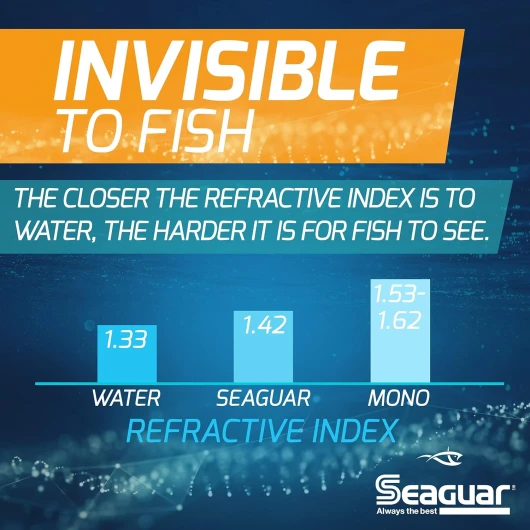
As for visibility, in clear water the line is hard to spot once it’s a bit below the surface. I checked by hanging a jig a few feet down and looking from different angles; the line is still visible if you really look for it, but it blends way better than mono. For pressured clear-water bass, that’s a plus. In stained or muddy water, the invisibility doesn’t matter as much, but it doesn’t hurt. Overall, performance is reliable and consistent, especially if you want a full-fluoro setup that still casts and handles decently.
What you actually get on the spool
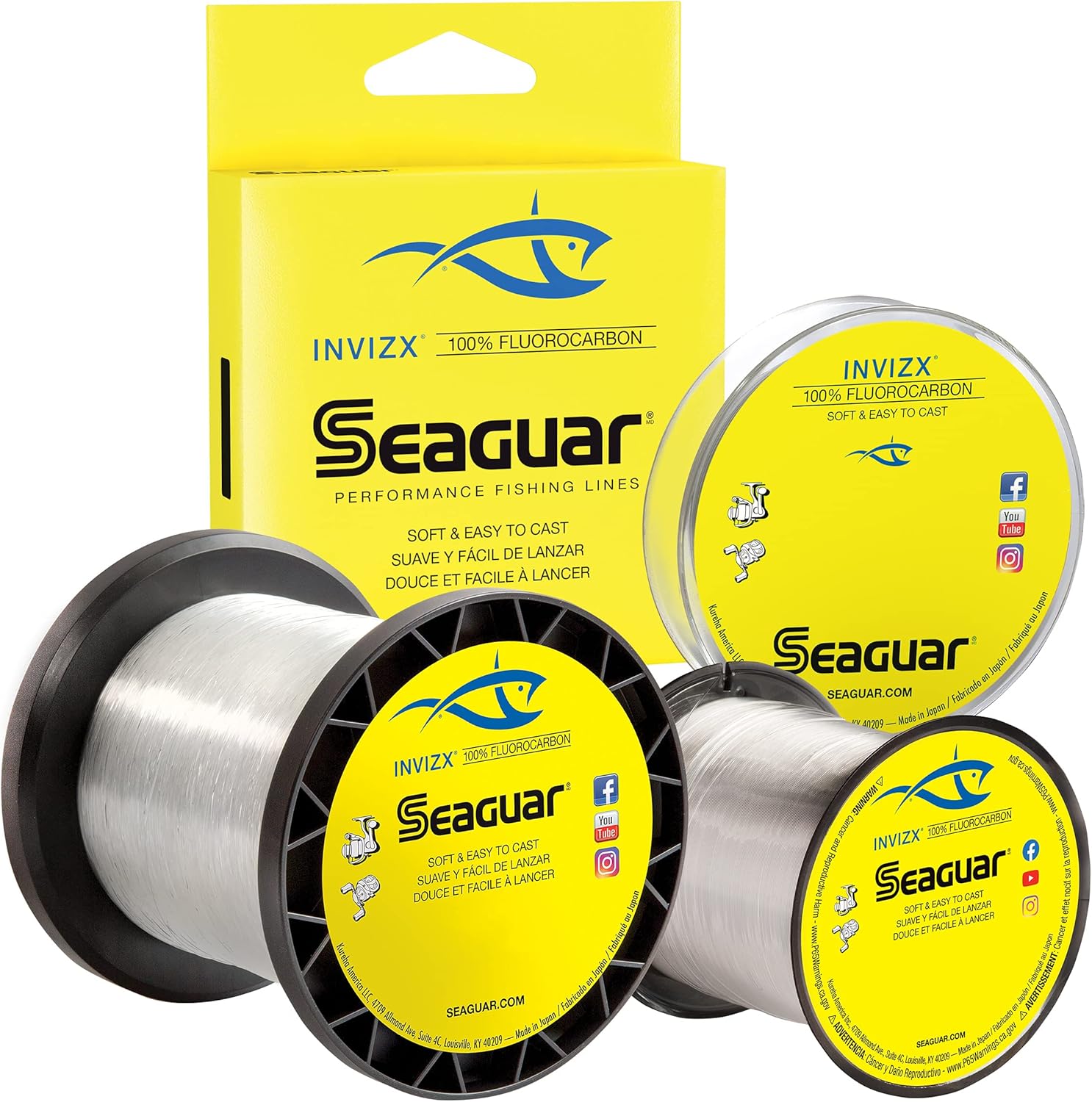
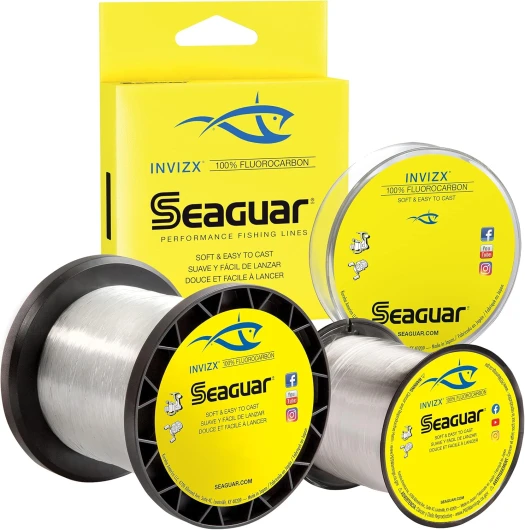
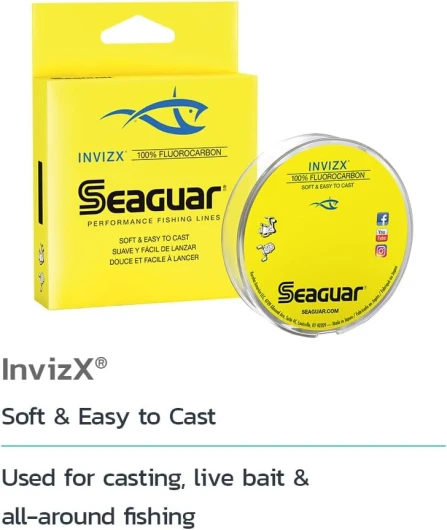
This specific version is the 25 lb / 1000 yd clear InvizX spool, so it’s meant for people who fish a lot or want to spool multiple reels. The box is simple: cardboard outer box, plastic spool inside, nothing fancy, just the line and a basic label with specs. You get the usual info: 25 lb breaking strength, clear color, fluorocarbon, and the model number (25VZ1000). No extras, no gimmicks, which is fine for fishing line.
I weighed the spool in hand and it matches the listed general weight (box says around 0.6 lb package). You definitely get a lot of line for the size of the spool. For reference, I fully spooled two baitcasters (around 120–140 yards each) and a larger spinning reel for pike, and I still had a good chunk left on the spool for refills or leaders. If you only fish occasionally, this 1000-yard spool may be overkill, but for regular anglers it’s nice not to run out after one or two reels.
The labeling is clear enough: you can’t confuse it with Seaguar’s other lines as long as you actually read the name. InvizX is printed big, and it does say it’s meant for mainline use, not just leader material. That’s important, because some fluoros are super stiff leader-only stuff. Here they really push the “soft and castable” angle, and in practice, it lines up fairly well with how it behaves.
Overall, the presentation is basic but practical. You’re not paying for fancy packaging, and honestly, I’d rather they put the money into the resin and manufacturing than into a shiny box. For storage, the spool size is compact enough to throw in a tackle bag or a boat compartment without taking too much space, and the edges of the spool hold the line in place decently so it doesn’t unravel everywhere.
Does it actually help you catch more fish?
Effectiveness is always a bit tricky to judge with line, because it’s not like swapping lures where you see an instant difference. But after a few sessions using InvizX as full main line instead of my usual braid + fluoro leader setup, I did notice a few practical things that matter on the water.
First, bite detection on bottom-contact baits was better than with straight mono. Fishing a Texas rig in 10–20 feet, I could feel small taps and changes in bottom texture more clearly, which helped me react quicker. Compared to braid with a leader, it’s slightly less crisp, but also less noisy and less prone to spooking fish in super clear water. So if you fish clear lakes or pressured reservoirs, this is a decent compromise: stealth plus enough feedback to feel what’s going on.
Second, the sinking nature of the line really helps with some techniques. Crankbaits dug a bit deeper than with mono of similar strength, and weightless soft plastics got down into the strike zone faster instead of hovering so high. For live bait under a float, I had to adjust the float size and stop a bit, but once dialed in, the bait stayed down nicely and the line cut through surface chop better than mono.
Did it magically boost my catch rate? No, but it made presentations cleaner and gave me more confidence, especially in clear water. I had a couple of situations where fish followed a bait close to the boat, and I liked knowing the line wasn’t shining like a rope. For someone who cares about stealth and feel but doesn’t want to mess with leaders all the time, running InvizX as a main line is a practical solution that gets the job done.
Pros
- Soft and relatively low memory for a fluorocarbon main line, so it’s easier to cast and manage
- Good sensitivity and sinking behavior, helpful for crankbaits, jigs, and bottom-contact techniques
- Clear and discreet in the water, especially useful in clear or pressured lakes
Cons
- More expensive than basic mono or budget fluoro options
- Still shows some memory over time, especially on spinning reels
- Requires careful knot tying (wet and cinched properly) to avoid weakening at the knot
Conclusion
Editor's rating
Seaguar InvizX 25 lb is a solid choice if you’re looking for a fluorocarbon main line that you can actually fish all day without constant frustration. It’s softer and more manageable than a lot of other fluoros, casts well enough on both baitcasters and heavier spinning setups, and gives you that mix of lower visibility, decent sensitivity, and good abrasion resistance that people want from fluoro. It’s not magic line, but it does what it’s supposed to do, and it does it reliably.
This line is best for anglers who fish freshwater multi-species—bass, pike, walleye, maybe some catfish—and want a clear, sinking line that handles better than the usual stiff fluorocarbon. If you fish clear lakes, crankbaits, jigs, or Texas rigs, or you just don’t want to bother with braid + leader knots, InvizX is a practical option. On the other hand, if you’re super price-sensitive, mostly fish dirty water, or are totally happy with braid and a short fluoro leader, you may not see enough benefit to justify switching your whole setup to this.
Bottom line: good performance, good handling for fluoro, fair value. Not perfect, but if you want a true fluorocarbon main line that doesn’t behave like a spring, this one is worth considering.