Summary
Editor's rating
Value for money: mid-priced and mostly worth it if you know what you’re buying
Design and feel: light, fast, and not very forgiving if you abuse it
Comfort and handling: easy to fish all day, as long as you pair it right
Materials and build: good blank, decent hardware, a few things to watch
Durability: fine if you respect it, fragile if you don’t
On-the-water performance: sensitive and versatile, but not for brute force
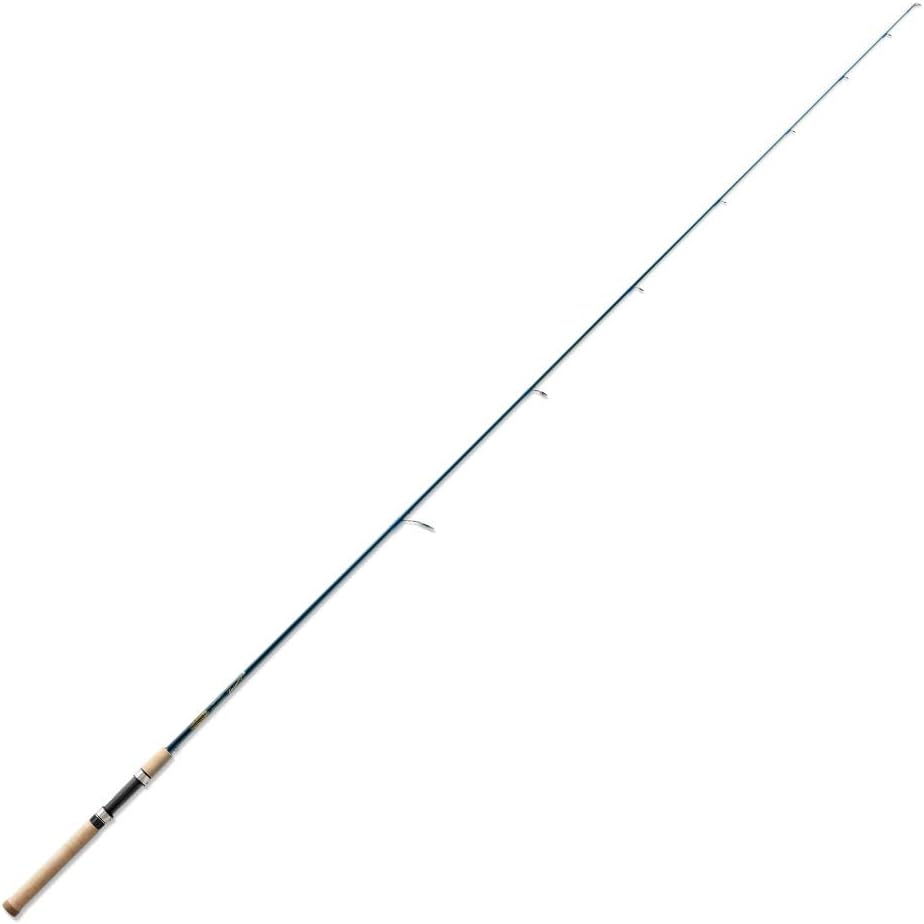
What you actually get with the Triumph 7'0" Medium/Fast
Pros
- Light and sensitive SCII carbon blank that clearly outperforms cheap entry-level rods
- Comfortable cork handle and good overall balance with a 2500-size spinning reel
- Versatile medium/fast action that works well for a wide range of freshwater techniques
Cons
- Less forgiving durability if you use heavy braid, high-stick, or abuse the rod
- Warranty help often involves a processing fee, which adds to the real cost over time

Specifications
View full product page →| Brand | St. Croix Rods |
| Material | Carbon Fiber |
| Color | Deep Run Blue |
| Number of Pieces | 1 |
| Fishing Technique | Spinning |
| Item Weight | 4.3 ounces |
| Model Name | St. Croix Rods Triumph Spinning Rod |
| Rod Length | 84 Inches |
A mid-range rod that feels "premium" but still has quirks
I’ve been fishing with the St. Croix Triumph 7'0" Medium/Fast spinning rod for a while now, mostly for bass, walleye, and general lake fishing. I’m not sponsored by anyone, I paid for it myself, and I’ve broken enough rods over the years to know when a blank is tough and when it’s a bit touchy. This one sits somewhere in the middle: it feels like a nicer rod than the typical cheap combos, but it’s not bulletproof, and you do need to treat it like a real graphite stick, not a broom handle.
The first thing that stood out to me was how light it felt in hand. At around 4.3 ounces for a 7' rod, it’s easy to fish with all day without your wrist getting sore. Compared to entry-level rods I used before, the Triumph feels more responsive, especially when you’re working lighter lures in the 1/4–1/2 oz range. You can feel bottom contact and small taps better, which is nice if you’re jigging or fishing finesse plastics.
On the flip side, that extra sensitivity comes with a tradeoff: you can’t horse fish or high-stick it and expect it to forgive you. I’ve seen people complain online about these snapping 6–10 inches from the tip, and honestly, I can see how that happens if you ignore the line/drag ratings or try to drag a snag out like you’re using a broom handle. It’s not a tank; it’s a medium-power graphite rod that expects you to set your drag correctly and use some common sense.
Overall, my first impression was: pretty solid for the money, feels nicer than budget rods, but definitely not something I’d hand to a kid who likes to yank fish straight into the boat. If you’re used to babying graphite gear and matching your line and drag to the rod, you’ll probably like it. If you want something you can abuse, this is not that rod.
Value for money: mid-priced and mostly worth it if you know what you’re buying
In terms of value, the Triumph 7'0" Medium/Fast sits in that middle price range where you’re clearly paying more than for a big-box special, but you’re not in high-end territory either. For that price, you get a lighter, more sensitive blank, better cork, and an actual brand that stands behind the product with a 5-year warranty. If you care about feel and you’re past the “any rod will do” stage, that extra cost makes some sense.
Compared to cheaper rods I’ve used, the main things you’re paying for here are sensitivity, weight reduction, and overall feel. You can actually tell what your lure is doing, you’re less tired at the end of the day, and the rod just feels more precise. If that matters to you, the price is pretty fair. If you’re mainly tossing bobbers for panfish a few times a year, honestly, you could save money and not miss much.
The downside on value is tied to the durability complaints and the warranty fee. If you’re unlucky, or if your habits are rough, breaking one and paying a processing fee to replace it makes the whole package feel less attractive. At that point, you start thinking about either going cheaper and accepting lower sensitivity, or going more expensive for something maybe a bit tougher or with a better replacement policy. So the value really depends on how you fish and how careful you are.
Overall, I’d call the value good but not mind-blowing. It’s a solid step up from entry-level rods and feels nicer in real use, but it also expects you to have your act together with line choice, drag settings, and handling. If that sounds like you, the money is well spent. If you’re hard on gear or handing this to beginners, you might want something cheaper and tougher instead.
Design and feel: light, fast, and not very forgiving if you abuse it
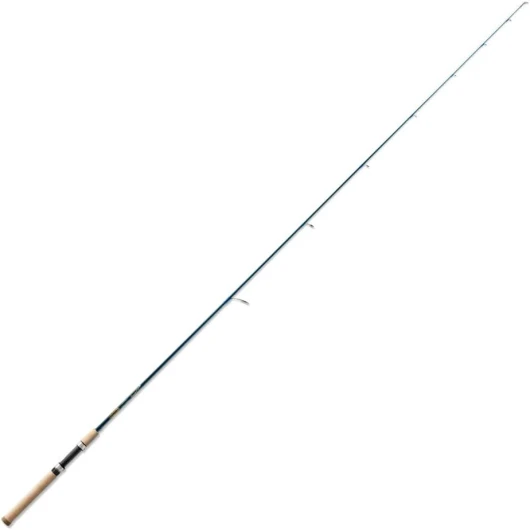
Design-wise, the Triumph 7'0" Medium/Fast leans toward being a responsive, slightly crisp rod rather than a soft noodle. The fast action is real: most of the bend is in the top third, which gives you quick hooksets and decent control over lures. When I’m working a 1/4–3/8 oz jig or a Texas rig, the tip loads just enough to cast comfortably, but the backbone kicks in fast when you lean into a fish. That’s exactly what I want in a general-purpose spinning rod for bass and walleye.
The blank itself is fairly slim, and that’s where some of the online breakage complaints make sense. If you’re used to older glass or cheap thick blanks, this one feels more “fine-tuned.” It’s strong enough within its ratings, but if you high-stick (rod straight up at 12 o’clock with a fish or a snag) or use way too heavy line and drag, you’re asking for trouble. I’ve seen people slap 20 lb braid on these and crank the drag down, then act surprised when the rod fails near the tip. That’s not really a design flaw; it’s just not built for that kind of abuse.
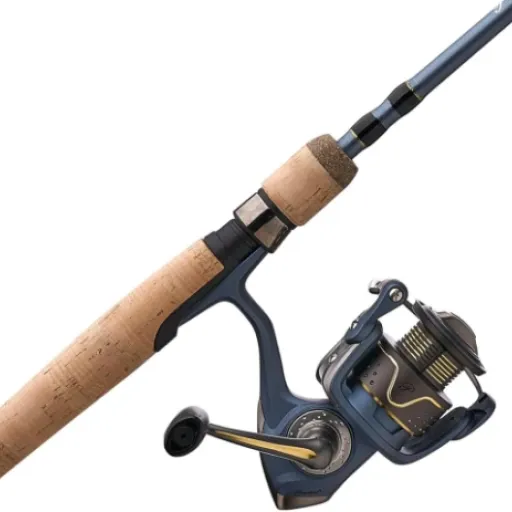
Balance is pretty good with a 2500-size spinning reel. With my Daiwa and 8 lb mono, the setup feels neutral in hand, not tip-heavy. That matters if you’re casting all day. The guides are nothing fancy, but they’re spaced well enough that the line flows smoothly. I haven’t had any weird line slap or casting issues, even with lighter lures in the 1/4 oz range. The deep blue color is simple and clean; it doesn’t scream for attention, which I actually like.
In practice, the design works if you understand what this rod is: a light, sensitive medium-power stick for normal freshwater use, not a winch. It’s great for casting distance and feel, but if your fishing style is to drag fish over boat rails or rip snags free with brute force, the design will feel fragile to you. Used correctly, it feels responsive and pretty fun to fish. Used like a crowbar, it’s going to fail sooner than a thicker, cheaper blank.
Comfort and handling: easy to fish all day, as long as you pair it right
Comfort is one of the areas where this rod actually stands out in a practical way. At about 4.3 ounces for a 7' stick, it’s light enough that you can cast and work lures for hours without your wrist or forearm getting tired. With a 2500-size reel, the setup balances somewhere around the front of the reel seat, which feels natural. You’re not fighting a tip-heavy rod or constantly adjusting your grip. For long days throwing plastics or small cranks, that makes a difference.
The cork handle is another plus. It’s shaped in a way that lets you choke up on the rod if you want more control, or slide your hand back a bit for longer casts. The split grip keeps the weight down and gives you a good anchor point under your forearm when you’re setting the hook. I’ve used it in hot weather, light rain, and cool mornings; it never felt slippery or awkward. Compared to cheaper foam handles, this just feels better and more secure in the hand, especially when you’re constantly casting.
In terms of casting comfort, the fast action and light blank make it pretty effortless to launch 1/4–1/2 oz lures. You don’t have to muscle it; a smooth swing loads the blank and sends the bait out cleanly. That also means less strain on your shoulder over time. Working finesse baits is also comfortable because you’re not fighting a heavy, dead-feeling rod. Every twitch and hop feels direct, which is nice when you’re trying to make a plastic bait look alive.
The only catch is that this comfort comes with that same tradeoff: if you treat it gently, it’s a pleasure to fish. If you’re the type who leans hard on rods, smacks them in doors, or lets them roll around in the boat, that light, comfortable feel becomes a liability. So from a comfort standpoint, no real complaints—it’s easy to fish all day. Just remember it’s a light, fast graphite rod, not a club.
Materials and build: good blank, decent hardware, a few things to watch
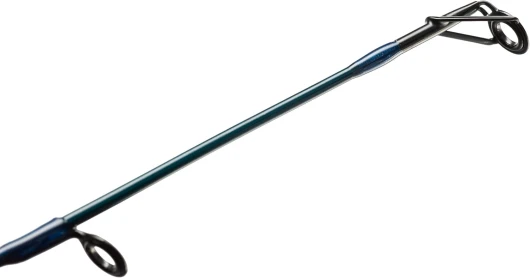
The big selling point here is the SCII carbon fiber blank. Compared to entry-level rods, you can tell it’s lighter and more responsive. When you tap the blank or lightly shake it, it recovers quickly without a lot of wobble. On the water, that translates into better bite detection, especially when you’re fishing bottom contact baits. I can feel rocks, weeds, and light taps that my cheaper backup rod tends to mush out. So on the blank side, I’d say St. Croix did a decent job for this price range.
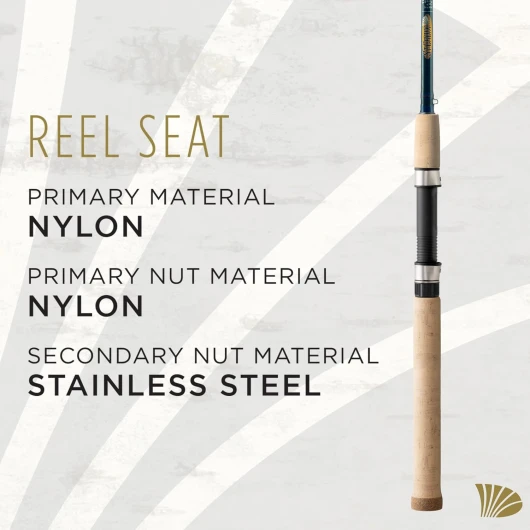
The guides are hard aluminum-oxide with stainless steel black frames. They’re not top-of-the-line, but they’re fine for mono and fluoro, and light braid if you’re smart about it. I haven’t seen any grooves or rough spots yet. Wraps and epoxy are clean on mine: no bubbles, no big drips. The reel seat is a Sea Guide XDPS with sandblasted hoods, which basically means it holds the reel tight and doesn’t look cheap. It’s not fancy, but it hasn’t loosened up or creaked, even after a bunch of trips and being bounced around in the truck.
The handle is premium cork, which is nicer than the EVA foam you get on a lot of budget rods. It feels good in hand and doesn’t get as slick when wet. After some use, you’ll see the usual darkening from hands and fish slime, but that’s normal. The cork composite butt cap is handy because it doesn’t chew up as fast as pure cork when you rest it on the ground or in a rod holder. Overall, the handle materials match the price level: better than cheap, not luxury.
My only real concern with the materials is that the blank feels tuned more toward sensitivity than raw toughness. That’s fine if you use it correctly, but if you’re rough or if you toss it loose in the bed of a truck with heavy gear, you’re asking for micro damage that shows up later as a “mysterious” break. So, materials are solid for a mid-range rod, but this is not a tank. Think good components that reward proper use, not something you can treat like a beater without consequences.
Durability: fine if you respect it, fragile if you don’t
Durability is where opinions are really split on this rod, and honestly, I see both sides. Personally, I haven’t broken mine, but I also baby my graphite rods and stick close to the line and lure ratings. I run 6–10 lb mono or fluoro, set my drag around 2–4 lbs, and I don’t high-stick fish or rip snags like a maniac. Used that way, the Triumph has held up fine: no cracks, no loose guides, no weird noises. It’s been bounced around in the truck (in a rod sleeve, not bare), fished in weeds and around docks, and it’s still straight.
That said, there are enough reports of these breaking near the tip that you can’t just ignore them. A lot of it comes down to user error: heavy braid, locked drag, trying to pull free from snags with the rod instead of the line, or high-sticking fish right at the boat. With a fast, fairly thin graphite blank like this, those moves will eventually snap something. People are used to cheap, thicker rods that just bend more, and then they use the same habits on a more sensitive blank and blame the rod when it fails. It’s not always the rod’s fault, but it’s also true that this is not a super forgiving design.
The 5-year warranty is nice to have, but it’s not a golden ticket. St. Croix will usually help you out, but there’s often a processing fee (around $60 mentioned by one user) for replacements. So if you’re constantly rough on rods, those fees stack up quickly and you start questioning if this is the right product for you. For careful anglers, the blank should last several seasons without drama. For casual or careless users, it’s going to feel fragile and expensive to keep replacing.
Bottom line: durability is decent if you treat it like a proper graphite rod and respect the ratings. If you want something you can throw around, slam in doors, or loan to kids without thinking, this is not it. This rod rewards good habits and punishes bad ones—simple as that.
On-the-water performance: sensitive and versatile, but not for brute force
On the water, the Triumph 7'0" Medium/Fast does exactly what the specs say, as long as you stay within its lane. With 6–10 lb mono or fluoro and lures in the 1/4–1/2 oz range, casting distance is solid and accuracy is good. I’ve used it for weightless Senkos, 1/4 oz jigs, small swimbaits, and light crankbaits. It loads well on the cast and recovers quickly, so you don’t get a lot of tip wobble or sloppy feeling when the lure hits the water. It’s easy to hit specific targets like dock edges, weedlines, or laydowns.
Sensitivity is where it beats cheaper rods. When I’m dragging a jig or a Texas rig across rocks, I can tell the difference between rock, mud, and weeds pretty easily. Light bites from smaller bass or walleye show up as little ticks that you can actually feel, not just see on the line. That makes it more fun to fish, because you’re more connected to what’s going on down there. Hooksets with the fast action are quick and crisp, especially with mono or fluoro. With braid and a leader (used reasonably—no 50 lb nonsense), it feels even more direct.
Where it falls down is when people try to use it outside its intended range. If you tie on 20 lb braid, lock down your drag, and start yanking fish over the side of the boat, you’re putting way more stress on the top third of the blank than it was meant to handle. That’s when you see breaks 6–10 inches from the tip, just like some of the angry reviews mention. The rod is not weak if you respect the ratings, but it also doesn’t forgive stupidity. You need to set your drag properly (roughly half your line rating) and let the rod and drag do their job.
So in terms of pure performance: very good within its specs, especially for someone who cares about feel and casting. If your style is more finesse and controlled fighting, you’ll get a lot out of it. If your style is winch-and-pray with heavy braid, you’re going to hate it sooner or later.
What you actually get with the Triumph 7'0" Medium/Fast
On paper, the St. Croix Triumph 7'0" Medium/Fast is a pretty standard all-purpose spinning rod: 7 feet long, medium power, fast action, rated for 6–12 lb line and 1/4–5/8 oz lures, one-piece blank. That’s basically the classic “do-a-bit-of-everything” setup for freshwater. I’ve used it for wacky rigs, Texas rigs, light jig heads, small crankbaits, and even slip bobbers, and the ratings feel honest. It’s not a heavy jig rod and it’s not a true finesse ultralight; it sits right in the middle.
The rod uses St. Croix’s SCII carbon, which is their mid-level material. In practice, it feels a step above the cheaper house-brand rods you find in big box stores, but it’s not as crisp or fast as some of their higher-end series. You also get hard aluminum-oxide guides with stainless steel black frames, a Sea Guide reel seat with sandblasted hoods, and a premium cork handle. Nothing flashy, no gimmicks, just straightforward components that look decent and do the job.
The warranty is 5 years, which sounds nice, but you do need to read the fine print. If you break it, they’ll usually offer you a replacement with a processing fee, which is not free. So yes, there’s support, but it’s not like you can just send them two pieces and get a brand-new rod for nothing. If you’re rough on gear, that fee adds up and you start wondering if a cheaper rod that you don’t mind breaking might have been a better idea.
Out of the tube, mine came straight, guides lined up, no weird epoxy globs, and the cork was clean. So from a presentation standpoint, it feels like a proper mid-range rod: you’re clearly not holding a $30 stick, but it also doesn’t pretend to be a $300 flagship model. It sits right in that “I want better than entry-level, but I don’t want to cry if I step on it” zone.
Pros
- Light and sensitive SCII carbon blank that clearly outperforms cheap entry-level rods
- Comfortable cork handle and good overall balance with a 2500-size spinning reel
- Versatile medium/fast action that works well for a wide range of freshwater techniques
Cons
- Less forgiving durability if you use heavy braid, high-stick, or abuse the rod
- Warranty help often involves a processing fee, which adds to the real cost over time
Conclusion
Editor's rating
For the St. Croix Triumph 7'0" Medium/Fast spinning rod, my take is pretty straightforward: it’s a solid mid-range rod for anglers who know how to treat graphite gear properly. It’s light, sensitive, and genuinely more pleasant to fish than the usual bargain rods. Casting is easy, bite detection is better, and the cork handle and overall balance make long sessions on the water less tiring. Within its rated range—6–12 lb line and 1/4–5/8 oz lures—it performs the way you’d hope: good hooksets, decent backbone, and enough versatility for bass, walleye, and general freshwater fishing.
But it’s not perfect, and it’s not for everyone. The blank leans more toward sensitivity than brute strength, which means it doesn’t tolerate abuse. If you crank down 20 lb braid, high-stick fish, or rip on snags using the rod instead of the line, you’re asking for a break and probably a warranty fee on top. The 5-year warranty is nice, but not free, and that affects the overall value if you’re rough on gear. So who should buy it? Someone who fishes regularly, cares about feel, and is willing to respect line ratings and drag settings. Who should skip it? Casual anglers who want a “throw it anywhere” beater rod, or folks who know they’re hard on gear and don’t want to think about it.


-large-teaser.webp)