
Summary
Editor's rating
Is it worth the money?
Fly patterns and box layout: practical but not perfect
Build quality: hooks, feathers, and how they hold up
Boxes and organization: simple but practical
On-water behavior: casting, floating, sinking, and holding up
What you actually get in the box
Do they actually catch fish?
Pros
- Large variety of proven patterns that cover most beginner and casual fishing situations
- Flies are generally well tied with decent hooks that hold up to normal trout and bass fishing
- Includes two practical fly boxes and reference cards, making it easy for beginners to get started
Cons
- Limited depth in key confidence patterns; not many duplicates in the most useful sizes
- Quality and consistency slightly below premium fly shop flies, with occasional sloppy ties

Specifications
View full product page →| Brand | VENTURES FLY CO. |
Big fly box, small headache
I picked up the Ventures Fly Co 122 fly assortment because I was tired of showing up at new rivers with a couple of random flies and guessing. I’ve tied my own flies before, but honestly, with work and family, I just don’t have the patience to sit at the vise every night. I wanted something I could toss in my bag and know I had at least a reasonable option for most situations. This set looked like a decent middle ground: not super cheap junk, but not boutique-priced either.
Over a few weekends, I used this kit on a small freestone trout stream, a stocked tailwater, and a warmwater pond with bass and bluegill. I didn’t baby it. The boxes went in and out of a sling pack, dropped on rocks, and sat in the sun on the bank. I mixed these flies with a few of my own favorites just to see how they compared in terms of hook quality and how fast they fell apart.
Right away, the main thing I noticed is the sheer variety. You open the boxes and it’s basically: dries on one side, nymphs and wets on the other, plus a handful of streamers, eggs, and worms. For someone who doesn’t know where to start, it’s kind of reassuring. You’re not getting ten patterns in three sizes; you’re getting a ton of different looks, which is good for exploring new water but can be a bit confusing at first if you’re totally new.
Overall, my first impression after actually fishing them is that this is a pretty solid, practical kit. It’s not perfect: a few patterns are a bit sloppy, and you don’t get a lot of multiples of the same fly in key sizes. But in terms of just catching fish without overthinking it, it gets the job done. If you’re trying to decide whether to spend your money on this instead of a small handful of premium individually bought flies, this review should give you a realistic idea of what you’re getting into.
Is it worth the money?
When you break down the price of this kit per fly plus two boxes, the value is pretty strong. If you bought 122 flies individually at a fly shop, even at a modest $2 a fly, you’d be spending a lot more, and that’s before adding the cost of two boxes. Obviously, these aren’t on the same level as the best hand-tied shop flies, but they’re also nowhere near the bottom-of-the-barrel random Amazon assortments where half the hooks are dull and the patterns fall apart after one fish.
For a beginner or someone who only gets out a handful of times a year, this kind of kit makes sense. You get enough variety to cover most situations without having to research specific hatches or patterns for hours. You also get a decent starting point for learning what works for you. After a season, you’ll probably realize you mostly use, say, Pheasant Tails, Adams, and Woolly Buggers, and you can then restock those specific patterns in better quality or more quantity if you want.
On the downside, if you’re already a fairly serious angler with strong preferences, you’ll probably see some waste here. There will be patterns and sizes you rarely touch, and you might feel like you’re paying for flies that will just sit in the box. In that case, it might be smarter to spend the same budget on a smaller number of high-confidence flies from a local shop or tie them yourself. Also, if you mainly fish one very specific type of water (like technical tailwaters with tiny midges), this broad assortment is less efficient for you.
But for what it’s clearly aimed at—beginners, casual anglers, or someone looking for a solid all-round gift—the price-to-utility ratio is good. You’re not getting luxury, you’re getting a big, usable pile of flies that actually catch fish, plus boxes you’ll keep using. To me, that’s good value for money, even if a few patterns end up being duds for your local water.
Fly patterns and box layout: practical but not perfect
On the design side, I’d split it into two things: the fly boxes and the actual patterns/layout. The boxes are double-sided plastic with clear lids and simple latches. Each side has slotted foam that grips the hooks. They’re not waterproof like some higher-end boxes, but they close firmly and didn’t pop open in my pack. I dropped one on rocks twice; it got scratched but didn’t crack, and the latch didn’t fail. For an included box, that’s totally fine.
The layout of the flies inside is pretty logical: dries grouped together, nymphs and wets grouped, streamers mostly along one edge. It’s not labeled inside the box, so you rely on the reference cards or your own knowledge to remember what’s what. For someone new, this could be a bit of a guessing game at first, but after a couple of trips you start to recognize the common patterns. Personally, I ended up rearranging a few rows to put my go-to nymphs in one section and the less likely stuff in another.
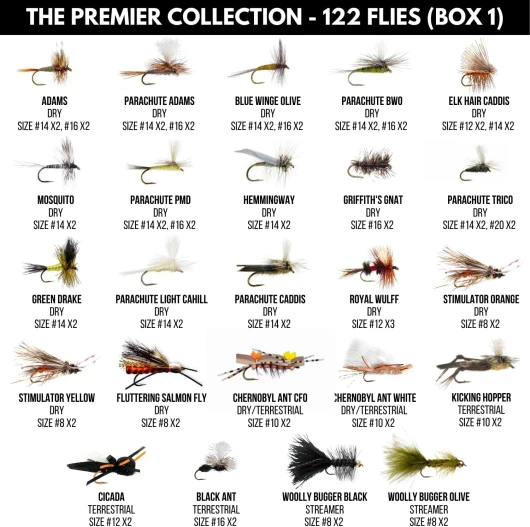
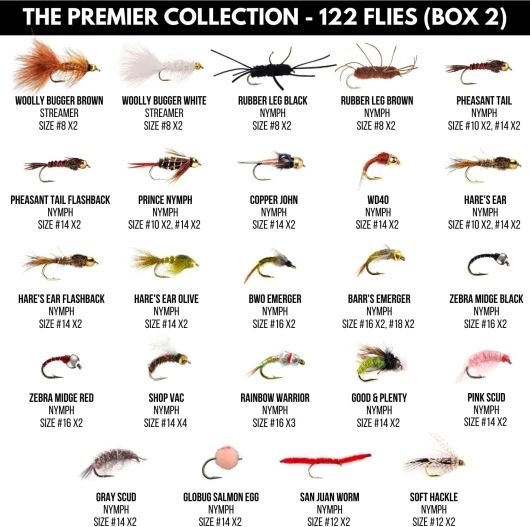
Pattern-wise, they went for the classic, proven stuff rather than weird experimental designs, which I think is the right call for this type of kit. You’ll see standard Adams, Parachute Adams, Elk Hair Caddis, Griffith’s Gnats, and some attractor dries like Stimulators. On the nymph side you’ve got Pheasant Tails, Hares Ears, Prince Nymphs, Copper Johns, some midge nymphs, and a couple of flashy variations. For streamers, mostly Woolly Buggers in black, olive, and maybe a lighter color depending on the batch.
My only real complaint about the design is the lack of depth in key confidence patterns. For example, I’d rather have more of the classic Pheasant Tail and fewer oddballs that I’ll rarely touch. If you lose a couple of your best-producing flies in one day (which happens), you don’t always have many backups in the same size and color. So the design is broad rather than deep: great for learning and experimenting, but not ideal if you already know exactly what you like and want multiples of that.
Build quality: hooks, feathers, and how they hold up
The materials are honestly better than I expected for a big pre-tied assortment. The hooks are the first thing I checked. They’re not ultra-premium Japanese hooks, but they’re reasonably sharp out of the box and have a good shape. I tested a bunch by lightly scraping them on my thumbnail: most bit in right away, a few felt slightly less sharp but still serviceable. On the water, I didn’t have any hooks bend out on trout or average pond bass, which is usually the weak point of cheap fly kits.
As for the tying materials, the feathers and dubbing are pretty standard. Dry flies have enough hackle to float without looking like a mess, though a few had slightly uneven hackle wraps. Nymphs like Hare’s Ear and Pheasant Tail use the usual stuff and look close enough to the versions I tie myself. The foam terrestrials (hoppers, beetles) use foam that’s thick enough to float well but not so thick that they land like a rock. Some of the smaller foam flies looked a bit rough around the edges, but fish don’t care about neatness nearly as much as we do.
In terms of durability, I tracked a few flies specifically. One black Woolly Bugger caught around a dozen stocked rainbows and a couple of small bass. After that, the marabou tail was a bit chewed but still usable, and the chenille body hadn’t unraveled. A size 16 Pheasant Tail nymph lasted me several fish and a few snags before the ribbing started to come loose. Nothing fell apart after just one or two fish, which is what I’ve seen with some bargain-bin assortments.
There are some minor flaws: a few heads had a bit too much head cement, and I found one fly with a slightly crooked eye. But overall, for a mass-produced set at this price, the material quality is pretty solid. If you’re used to hand-selecting $2.50 flies from a fly shop, you’ll notice the difference in neatness. If you’re upgrading from super cheap Amazon fly kits, this feels like a step up in both materials and consistency.
Boxes and organization: simple but practical
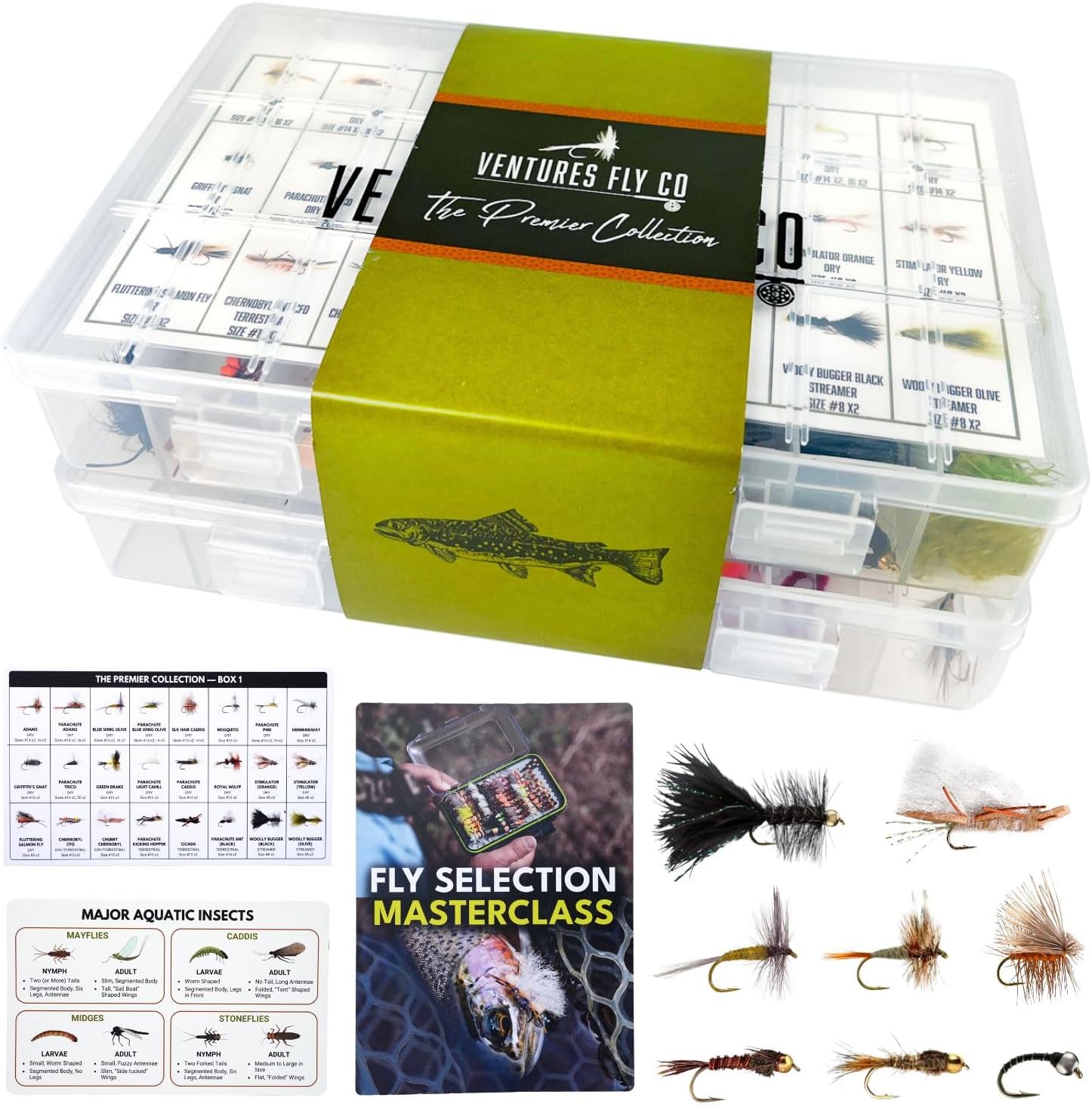
The packaging is basic but functional, which fits the product. You get a cardboard outer box, two plastic fly boxes, and the reference cards. No fancy branding or over-the-top presentation, just stuff you’ll actually use. The fly boxes are the main thing here. Each one is double-sided with clear lids, foam slots on both sides, and a plastic latch. They’re not airtight or advertised as waterproof, so don’t expect them to float if you drop them in the river, but they do keep flies in place and protect them from getting crushed in your bag.
The foam inserts are cut evenly and grip the hooks well enough. I shook a loaded box upside down a few times, and only a couple of larger streamers shifted slightly; the smaller flies stayed put. Over a few trips, opening and closing the boxes a lot, the hinges and latches held up fine. They feel a bit cheaper than high-end boxes, but not flimsy. For something included in a kit at this price, they’re honestly pretty decent.
In terms of organization, the flies come pre-arranged in rows. At first, it can be a bit overwhelming because there are so many different patterns and no labels inside the box. That’s where the reference cards help. I ended up sticking a small piece of masking tape on one side of a box and writing "DRIES" and on the other side "NYMPHS/WETS" just to keep my brain sorted. After a couple of trips, you start to remember where things are, but your first session might involve some squinting and comparing to the card.
One small downside: there isn’t much extra space left in the boxes once you add your own favorites. If you already have a collection, you might find yourself rearranging or even moving some of these flies into another box. But if you’re starting from almost nothing, the included boxes and layout give you a quick, ready-to-go setup that you can toss straight into your pack without extra work.
On-water behavior: casting, floating, sinking, and holding up
Performance-wise, I looked at how these flies cast, float/sink, and survive normal abuse. Casting is mostly about size and materials. The dries in this kit are light and fairly slim, so they turn over nicely on a 4–5 wt rod with a standard tapered leader. The foam terrestrials are a bit bulkier but still manageable. I didn’t have any flies that felt absurdly overweighted or weirdly unbalanced in the air, which sometimes happens with cheaper kits where the proportions are off.
On the water, the dry flies floated well enough. With some floatant at the start and a quick dry-off after a couple of fish, they stayed on top. The parachute and caddis patterns ride correctly, not spinning or landing sideways most of the time. In faster pocket water, I did notice some of the hackle on a few dries was just a touch sparse, so they started to ride lower after a while. Still, they weren’t sinking like rocks; they just needed a bit more attention and drying between drifts.
For nymphs and wets, sink rate felt pretty normal for unweighted or lightly weighted patterns. If you’re used to heavily weighted euro nymphs, these will feel light, so you’ll rely more on split shot and longer drifts. But for standard indicator nymphing or swinging wets, they behaved as expected. They didn’t spin out, and the tails and legs moved enough to look alive. The eggs and worms are straightforward: they sink reasonably fast with a bit of weight added and catch fish, especially stockers.
In terms of durability during actual fishing, they held up. I lost more flies to snags than to failure. A couple of flies started to unravel after multiple fish, especially where the ribbing was a bit loose, but nothing catastrophic. No hooks straightened on normal trout or average bass. If you’re targeting big, heavy fish in strong current, I’d probably upgrade to premium hooks, but for everyday trout and warmwater fishing, the performance is more than acceptable.
What you actually get in the box
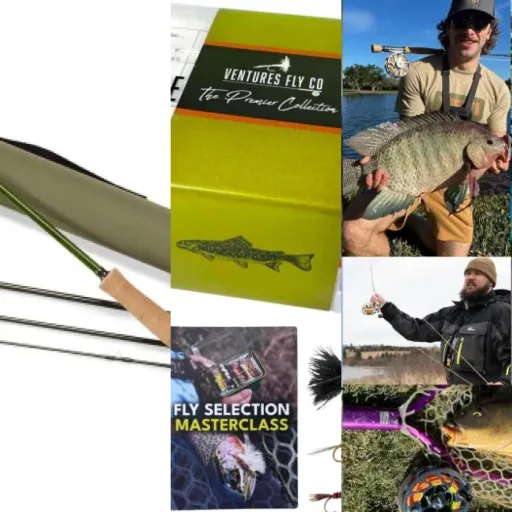
When the package showed up, it was a simple cardboard box with two clear plastic fly boxes inside and some reference cards. Nothing fancy, but everything was organized. The set is supposed to be 122 flies, and counting rows and columns, it lines up. You’re looking at 48 different patterns spread across dries, wets, nymphs, terrestrials, streamers, eggs, and worms. Sizes run roughly from #8 up to #20, with most trout stuff in that #12–18 zone.
The reference cards are actually more useful than I expected. They show the main patterns, what bug they’re imitating, and when to use them. For example, you’ll see something like: "Adams – mayfly – use during general mayfly hatches" or "Woolly Bugger – baitfish/leeches – good search pattern." It’s basic, but for a beginner or someone who doesn’t know names yet, it helps a lot. I watched a buddy who’s new to fly fishing pick a fly purely off those cards and start catching bluegill within 15 minutes.
In terms of mix, you get the usual suspects: Adams, Elk Hair Caddis, Stimulators, various nymphs like Pheasant Tails and Hare’s Ears, a handful of midges, some San Juan-style worms, eggs, a few streamers (Woolly Buggers in different colors), and some foam terrestrials like hoppers and beetles. Nothing exotic, but that’s fine. It’s the kind of spread that covers 90% of beginner scenarios: small streams, stocked rivers, and ponds.
So in practice, the presentation is pretty straightforward: you open it, you immediately see you have something for topwater, something for under the surface, and something to strip for bass or aggressive trout. If you’re looking for rare patterns or super specific local imitations, this isn’t it. But if you just want to stop overthinking and have a broad, functional selection, what you see is what you get, and that’s exactly how it feels on the water.
Do they actually catch fish?
Short answer: yes, they catch fish, and not just one or two by accident. I fished these flies over three weekends in different spots: a small mountain stream with wild-ish trout, a stocked tailwater, and a local pond with bass and bluegill. I forced myself to use only flies from this kit for large chunks of time to see how they performed compared to my usual hand-tied stuff.
On the trout stream, a size 14 Elk Hair Caddis from the box and a size 16 Parachute Adams both produced consistently. I caught around 10–12 small browns and rainbows over half a day, all on these dries. They floated fine with a bit of floatant, and the hackle didn’t collapse after a couple of fish. When the fish got picky, I switched to a size 18 Griffith’s Gnat from the kit and still managed a few takes. So for basic trout dry fly fishing, they definitely work.
On the tailwater, nymphs from the kit did the heavy lifting. A size 16 Pheasant Tail and a small Copper John under an indicator caught several stockers and a couple of nicer fish. The weighting felt about right: not crazy heavy, but enough to get down in moderate currents with a bit of split shot. I did swap some of the bigger, flashier nymphs out because they just weren’t getting eaten in clear water, but that’s more about pattern selection than quality. Bluegill in the pond ate basically anything small and buggy from the box: little nymphs, small dries, and even the tiny foam terrestrials.
For bass, the Woolly Buggers and larger streamers did the job. I caught a handful of 1–2 lb largemouth on the black and olive buggers just stripping them along weed edges. No issues with hooks bending or flies falling apart mid-fight. Are these flies as dialed-in as a carefully curated local fly shop selection? No. But in practice, if you pick the right size and a reasonable pattern for the conditions, the fish don’t seem to care that these came from a bulk kit.
Pros
- Large variety of proven patterns that cover most beginner and casual fishing situations
- Flies are generally well tied with decent hooks that hold up to normal trout and bass fishing
- Includes two practical fly boxes and reference cards, making it easy for beginners to get started
Cons
- Limited depth in key confidence patterns; not many duplicates in the most useful sizes
- Quality and consistency slightly below premium fly shop flies, with occasional sloppy ties
Conclusion
Editor's rating
Overall, the Ventures Fly Co 122 fly assortment is a practical, no-nonsense kit that does what it’s supposed to: give you a wide range of usable flies that actually catch fish, without forcing you into fly tying or spending a fortune at the shop. The flies are decent quality, the hooks are sharp enough, and the patterns are the classic workhorses that catch trout, panfish, and smaller bass in most everyday situations. The included boxes aren’t fancy, but they’re totally serviceable and make this a grab-and-go setup.
It’s not perfect. Some flies are tied a bit rough, you don’t get many duplicates of the best patterns, and experienced anglers will probably ignore a chunk of the assortment. If you already have a dialed-in fly selection or mainly fish very specific conditions, you’ll get more value by picking individual patterns. But if you’re a beginner, a casual angler, or buying a gift for someone getting into fly fishing, this is a pretty solid all-round choice. You get variety, reasonable quality, and enough performance to have real success on the water without overthinking it.