
Summary
Editor's rating
Is the Rambler 7' MHF worth the money?
Hybrid feel: part fly rod vibe, part normal spinning stick
Graphite blank, wood handle details, and what that means on the water
Durability and that extra tip safety net
On-the-water performance: casting, sensitivity, and fish handling
What you actually get out of the tube
Pros
- Good overall build quality with graphite blank, micro guides, and comfortable full wells grip
- Includes an extra tip section and a sturdy canvas‑covered hard tube for transport
- Lifetime warranty with a fee adds long‑term security and makes it safer to use as a true grab‑and‑go rod
Cons
- Medium heavy fast action is not great for very light lures or finesse techniques
- Priced higher than basic big‑box rods, while performance is more “solid” than mind‑blowing

Specifications
View full product page →| Brand | Moonshine Rod Company |
A “throw‑in-the-truck” rod that actually feels good
I picked up the Moonshine Rod Co Rambler 7' Medium Heavy Fast mainly as a grab‑and‑go spinning rod. I already have a couple of cheaper two‑piece rods that live in the car, but they always feel a bit dead in the hand. When I saw this one came with an extra tip and a decent canvas tube, I figured I’d try something a bit nicer without jumping into full boutique pricing.
Over a few weeks I used it for bank fishing on a local lake, some light river fishing for smallmouth, and one quick trip where it got tossed in the trunk with way too much other gear. So this isn’t a lab test; it’s just how it held up during normal, slightly careless use. I paired it mostly with a 2500 size spinning reel and 10 lb braid with a 10–12 lb fluoro leader, which is right in its rated 8–14 lb line range.
The short version: it’s a pretty solid rod that feels nicer than most big‑box options at this price. It’s not magic, it won’t suddenly make you a better angler, but it does have a cleaner, crisper feel than the usual $60–$80 sticks. The extra tip and the lifetime warranty are the two things that really stand out once you stop looking at the pretty wood and actually fish it.
It’s not perfect though. The medium heavy rating with fast action means it’s not the most versatile if you throw a lot of truly light lures, and it’s definitely more of a freshwater “do‑most‑things” rod than a specialist. If you know that going in, it’s a good tool. If you expect it to cover ultralight or heavy jig work, you’ll probably be a bit disappointed.
Is the Rambler 7' MHF worth the money?
Price‑wise, the Rambler sits above the cheap Amazon specials and big‑box house brands, but below a lot of high‑end rods. For what you pay, you’re getting: a two‑piece graphite rod with a nice case, an extra tip, decent components, and a lifetime warranty with a fee. When you compare that to a random $60 rod that comes in a plastic bag and has no support, the difference is pretty clear.
Where I think it earns its keep is for people who want one reliable, nicer‑than‑average rod they can throw in the car and use for most freshwater situations. It’s not a specialist tool, but it feels good enough that you don’t have that “I cheaped out” feeling every time you cast. The fact that it ranks high in fly rods on Amazon even though this specific model is a spinning rod tells you the brand has built some trust with anglers.
On the downside, if you already own a solid medium heavy from a big brand (Shimano, Daiwa, St. Croix entry‑level, etc.), this isn’t going to blow those out of the water. The performance is comparable, and what you’re mostly paying for here is the mix of style, extra tip, and warranty. If you don’t care about those and just want raw performance per dollar, you might find similar feel a bit cheaper.
Overall, I’d call the value pretty solid. You’re not getting a miracle rod, but you are getting a well‑built, nice‑looking stick that handles real fishing, backed by decent support. For someone moving up from very cheap rods or wanting a reliable travel/backup setup, the price makes sense. For hardcore gear heads with a pile of rods already, it’s more of a “nice to have” than a must‑buy.
Hybrid feel: part fly rod vibe, part normal spinning stick
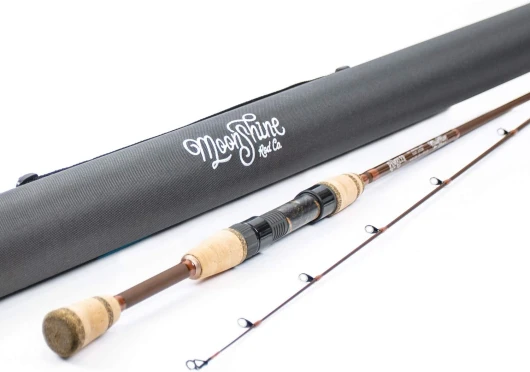
The whole pitch of the Rambler series is that it borrows some design cues from fly rods but stays a regular spinning setup. You see that in the grip shape and the slightly slimmer blank profile. The handle is a full wells style, which you usually see on fly rods, not spinning rods. In practice, it gives you a chunky, rounded grip that fills the hand more than a straight cork handle. If you palm the reel and like to adjust your hand position a lot, this shape is actually pretty comfortable.
The guide layout uses American Tackle micro guides, which are smaller than what you’ll see on cheap spinning rods. That helps with line control when casting braid with a leader – I didn’t get any weird line slap, and knots passed through fine as long as they weren’t huge. If you’re used to big old school guides, this might look a bit odd at first, but on the water it just feels tidy and controlled.
Action‑wise, it’s listed as fast, and that matches how it loads. The top third of the rod does most of the work, but there’s a bit of flex creeping into the mid section when you lean on a fish or throw something around the top of its weight range. It’s not a broomstick, but it’s also not a soft noodle. For me, it felt right for 3/8 to 1/2 oz lures. Below 1/4 oz, you can cast them, but it doesn’t load as nicely.
The two‑piece design is straightforward: one joint, no weird multi‑section travel rod stuff. That’s good for strength and simplicity, but obviously it’s not as compact as a 4‑piece travel rod. Design‑wise, it’s clearly aimed at “keep it in the truck or boat” people rather than backpackers. Overall, the design leans more toward practical with a bit of style, not pure showpiece, which I appreciated once I started beating it up a bit.
Graphite blank, wood handle details, and what that means on the water
The blank is graphite, which is pretty standard, but the overall build feels a bit tighter than entry‑level rods. The graphite gives it a crisp feel and decent sensitivity, especially in the tip. I could feel rocks and light taps through 10 lb braid without straining, which is what I expect in this price range. It’s not ultra high‑end sensitive, but it’s not dull either – it sits in that “good enough for most people” zone.
The handle uses split AAA‑grade material (Moonshine says AAA, and it feels like decent quality) with a burled and dyed wood insert in the reel seat. The wood looks nice and hasn’t chipped or scratched yet, even after getting banged against a dock and tossed in the car. The copper anodized winding checks and trim are purely cosmetic, but they do make the rod look a step above the usual black‑and‑silver sticks you see everywhere.
The guides are American Tackle micro guides, which is a plus in my book. They’re not cheap mystery guides, and the insert rings stayed smooth with braid. After several sessions and a couple of ungraceful snags where I pulled pretty hard, none of the guides bent or loosened. Epoxy work around the wraps is clean enough – not perfect if you go hunting for tiny flaws, but for actual use it’s totally fine.
What matters day to day is that these materials seem to hold up to normal abuse: bank fishing, tossing it in a tube, knocking it around a bit. I didn’t baby it and I didn’t see any cracks, chips, or loose hardware. For the price, I’d say the materials are solid. Not premium boutique level, but clearly a step above bargain rods that start squeaking or loosening up after a month.
Durability and that extra tip safety net
Durability is where I was most curious, especially since Moonshine leans on the lifetime warranty and includes an extra tip. In my use, I didn’t break anything, but I also didn’t baby it. The rod got knocked over on concrete once, and it bounced off the guides and blank without any visible damage. I know that’s not a long‑term test, but at least it didn’t chip or crack from a basic accident.
The ferrule fit stayed snug over several sessions. I made a point of taking it apart and putting it back together each trip, and it never started to loosen or twist mid‑cast. Guides stayed straight, no rattles, no weird creaks. The finish on the blank didn’t show any peeling or flaking, even after leaning it against rough surfaces like a dock and a rocky bank.
The big plus is the extra tip section. Even though I didn’t need it, just knowing there’s a spare in the tube takes some stress out of handling the rod, especially around car doors and kids. I’ve snapped tips before doing dumb things, and paying to replace a tip on some brands can be a pain. Here, you literally have another one sitting in the case. Combined with the lifetime warranty (with a fee), it feels like they actually expect the rod to see real use and occasional accidents.
Is it indestructible? No. If you high‑stick a big fish or slam it in a door, you can still break it. But for normal fishing, occasional bumps, and a bit of rough storage, it feels tough enough. I’d rate durability as good for the price, with the extra tip and warranty being real advantages, not just marketing lines.
On-the-water performance: casting, sensitivity, and fish handling
I mainly ran this rod with 3/8 oz swim jigs, 1/4–3/8 oz Texas rigs, and some 1/2 oz spinnerbaits. With lures in that middle range, the rod loads well and casts cleanly. You get a quick, snappy cast rather than a slow lob. With a 2500 reel and 10 lb braid, I had no trouble hitting the distances I usually get with my other 7' medium heavy rods. If anything, the slightly lighter feel of the Rambler made it easier to cast all day without thinking about it.
On the sensitivity side, it’s pretty solid. Bites on a slow‑dragged Texas rig showed up clearly as taps or weight changes. I fished a rocky river stretch for smallmouth and could feel when the weight was ticking rocks versus dragging through softer bottom. It’s not as sharp as a high‑end JDM rod I own, but that one cost a lot more. Compared to mid‑priced rods from big brands, this hangs in fine.
Fish‑fighting wise, the fast action with a bit of mid‑section bend feels predictable. I landed several 1–2 lb bass and one carp that was probably pushing 8 lb on 10 lb braid. The rod bent deep enough to keep hooks pinned but never felt like it was about to fold. The medium heavy rating feels accurate: plenty of backbone to steer fish out of light cover, but not so stiff that it rips hooks out instantly.
Where it’s less ideal is with truly light stuff. I tried some 1/8 oz jigheads and small plastics, and while you can cast them, it doesn’t feel great. The tip just doesn’t load as nicely as a medium or medium‑light rod. So if your main thing is finesse, this is not the perfect tool. But for general freshwater spinning – bass, walleye, pike under, say, 10–12 lb – it gets the job done without drama.
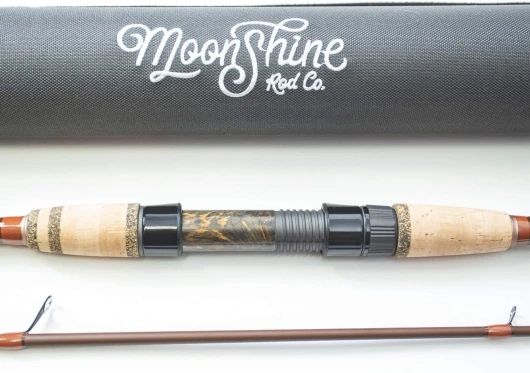
What you actually get out of the tube
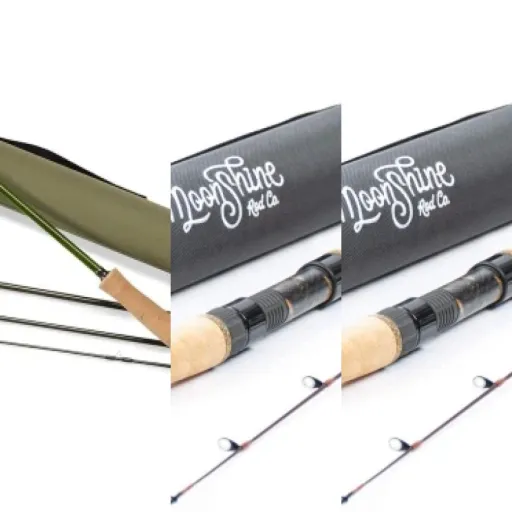
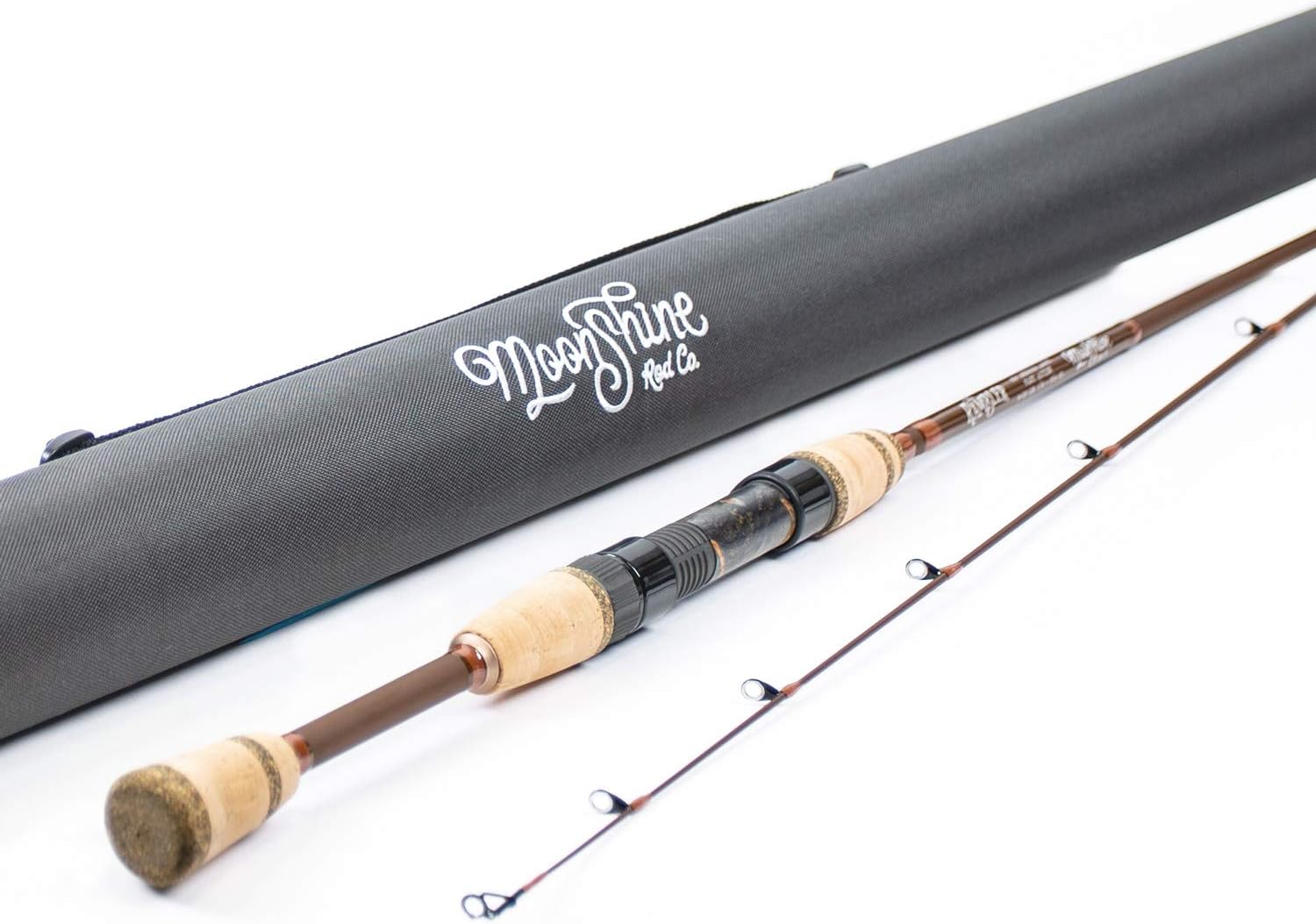
Out of the box, the Rambler 7' MHF comes in a canvas‑covered hard tube, the two rod sections in their own dividers, plus that extra tip section. No extras, no gimmicky freebies, just the rod and the case. The tube is about 46 inches long, so it fits fine in a trunk or across the back seat. I’ve tossed it in with camping gear and it didn’t pick up scuffs or tears, so for normal use the tube does its job.
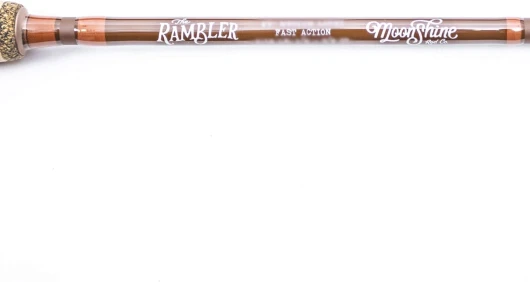
The rod itself is a two‑piece spinning rod, rated medium heavy power, fast action, 8–14 lb line. Color is what they call “Vintage Brown” – basically a dark brown blank with some subtle shine. The hardware stands out more than the blank: burled and dyed wood insert in the reel seat, copper‑colored trim, and American Tackle micro guides. It looks closer to a mid‑range custom rod than a generic factory stick, at least at first glance.
In the hand, it’s fairly light for a medium heavy – the package weight is listed at 0.86 kg, but the actual rod feels nowhere near that since that’s including the tube and packing. With a 2500 reel, the balance point for me was right around the front of the reel seat, which is comfortable for working baits all day. It doesn’t feel tip‑heavy like a lot of cheaper medium heavy rods in this length.
What I liked is that nothing felt sloppy or rushed: the ferrule fit is snug, the guides lined up properly, and there weren’t random glue blobs or ugly epoxy drips. It’s not luxury‑level perfect, but in the “grab it and go fish” category, it looks and feels like someone cared a bit more than usual during assembly.
Pros
- Good overall build quality with graphite blank, micro guides, and comfortable full wells grip
- Includes an extra tip section and a sturdy canvas‑covered hard tube for transport
- Lifetime warranty with a fee adds long‑term security and makes it safer to use as a true grab‑and‑go rod
Cons
- Medium heavy fast action is not great for very light lures or finesse techniques
- Priced higher than basic big‑box rods, while performance is more “solid” than mind‑blowing
Conclusion
Editor's rating
After actually fishing the Moonshine Rambler 7' MHF, my take is that it’s a solid, no‑nonsense spinning rod with a bit more character and support than the usual mid‑priced options. It casts well in its sweet spot (around 1/4–1/2 oz), has decent sensitivity, and feels comfortable to fish all day thanks to the full wells‑style grip and reasonable weight. The extra tip and lifetime warranty are not just nice bullet points – they really do change how relaxed you feel throwing it in the trunk or handing it to a buddy.
It’s not perfect. The medium heavy fast setup isn’t ideal for very light finesse baits, and if you’re already deep into high‑end rods, this won’t replace your favorites. But for someone stepping up from cheap, generic rods or looking for a reliable “always in the car” setup, it hits a good balance between price, performance, and durability. I’d recommend it mainly to casual to intermediate anglers who want one dependable rod for most freshwater spinning work – bass, walleye, trout in bigger rivers, light pike. If you’re ultra‑finesse focused or only fish tiny lures, you’ll be happier with a lighter power rod instead.