Summary
Editor's rating
Value: where this rod really makes sense
Design: closer to a fast 4wt than a soft 5wt
Comfort and feel after a full day on the water
Materials: good on the blank, more average on the hardware
Durability: built like a working rod, with some quirks
Performance: how it actually casts and fights fish
What you actually get for the price
Pros
- Very good casting performance for the price, especially in the 30–50 ft range
- Light and comfortable enough for full‑day fishing with a decent AA cork grip
- Strong, durable blank that can handle hard bends and real‑world abuse
Cons
- Reel seat feels cheap and rough, with basic hardware quality
- Less refined feel at short distances and more line noise through the guides
- Not ideal for anglers who are very picky about premium fit and finish

Specifications
View full product page →| Brand | M MAXIMUMCATCH |
A cheap 5wt I actually keep in the truck
I picked up the Maxcatch Premier 9' 5wt mostly as a beater rod and backup. I’ve got more expensive sticks (Orvis and Redington), and I wanted something I wouldn’t cry over if it snapped in the car door or got stepped on in the drift boat. The price on this one is low enough that I went in with pretty modest expectations: I just wanted it to cast straight, not feel like a broomstick, and not fall apart after a couple of outings.
After a few weekends on small rivers and a couple of sessions on a local pond, I’ll be honest: it’s better than I thought. It’s not magic, it won’t fix bad casting, and it’s not on the same level as high‑end rods, but it absolutely gets the job done. It throws a 5wt weight‑forward line just fine, handles basic dries and small nymph rigs, and doesn’t feel like a toy. For a rod in this price range, that’s already a win.
I used it mainly as a general‑purpose trout rod: indicator nymphing, small streamers, and a handful of dry‑fly sessions in the evening. No trophy stories here, but it handled 10–16 inch trout without any drama and still had enough backbone for a slightly larger fish that decided to run under a log. The rod bent deep but never felt like it was about to explode in my hands.
If you’re expecting a high‑end Sage or Orvis experience, you’ll nitpick it quickly. If you just want a solid 5wt that casts reasonably well and doesn’t feel like a total compromise, this rod is pretty solid for what it costs. That’s how I’ve ended up using it: not my main pride‑and‑joy rod, but a reliable workhorse that lives in the truck and sees more use than I expected.
Value: where this rod really makes sense
For me, the main selling point of this Maxcatch Premier is value. You’re paying budget money and getting a rod that fishes more like a mid‑range stick than a bargain‑bin combo. It’s not perfect, but the core stuff – blank performance, basic build quality, and fishability – is all there. If you’re just getting into fly fishing and don’t want to drop a few hundred bucks on your first rod, this is a very reasonable way to get started without feeling like you’re handicapping yourself.
Compared to brand‑name entry rods from Redington, Fenwick, or lower‑end Sage, this holds up better than you’d expect. One of the user reviews basically says they’d put it up against those rods, and I get why. Those rods usually have nicer hardware and better finishing, but in terms of casting and catching fish, this Maxcatch doesn’t feel totally outclassed. The price difference, especially if you’re on a tight budget, is hard to ignore.
Where the value really stands out is in how you can use it. It’s good as:
- a first “real” rod after a cheap starter combo,
- a backup rod so you don’t lose a fishing trip if your main rod breaks,
- a loaner rod for friends or family you’re teaching,
- a truck rod you leave rigged for quick after‑work sessions.
On the downside, you do feel the compromises in the reel seat, slight noise in the guides, and lack of refined feel at shorter ranges. If you already own a high‑end rod and you’re picky about every detail, you’ll notice those things. But if you look at what you’re paying versus what you can actually do with it on the water, the value is frankly pretty strong. It’s not a showpiece, it’s a tool that earns its keep without draining your wallet.
Design: closer to a fast 4wt than a soft 5wt
The main thing about this rod’s design is the action. It’s listed as medium‑fast, but in hand it leans toward the fast side, especially for a 5wt. With a standard WF5F line, it feels a bit like a quick 4wt – you don’t have to baby it, and it likes a slightly more aggressive stroke. If you’re used to slow, noodly rods, this will feel pretty crisp. If you’ve cast modern fast rods before, this feels like a toned‑down version of that. For me, it worked well for 30–60 foot casts, which covers most of my trout fishing.
The blank has a slim taper, and you can feel it load mostly in the middle to tip. With short casts (under 25 feet), it’s okay but not buttery. You need a bit of line out to really feel it bend properly. Once you’re past that range, it settles in and becomes easier to control. It’s not super forgiving of bad timing, but it’s not punishing either. I’d say it’s decent for someone who’s past their very first day of casting and wants something that can grow a bit as they improve.
The guide layout is standard: ceramic insert stripping guides and hard‑chromed snake guides. They’re spaced reasonably, and line shoots through them fine. One thing I noticed, and others mention too, is the rod is a bit “noisy.” You can hear and feel more line noise through the guides than on pricier rods. It doesn’t stop you from fishing, but it does give the rod a slightly nervous, buzzy feel compared to smoother, more damped blanks.
From a practical perspective, the 4‑piece design with alignment dots is a simple but useful choice. The ferrules fit snugly without feeling like you’re going to snap something pushing them together. Overall, the design is focused more on distance and punch than delicate presentations. It will still lay down a dry fly fine if you do your part, but where it feels most natural is tossing nymph rigs, small streamers, or longer casts on open water. If that’s your use case, the design makes sense. If you mostly fish tiny creeks at 15 feet, it’s a bit overkill and not the nicest tool for that job.
Comfort and feel after a full day on the water
In terms of comfort, the rod is light enough that I didn’t feel worn out after a long session. It’s not as feather‑light as high‑end rods, but for a 9' 5wt it sits in a comfortable middle ground. With a mid‑size trout reel on it, the balance point ends up just ahead of the grip, which feels normal. I fished it for 5–6 hour stretches and never got that annoying tip‑heavy feeling that makes your wrist ache.
The AA cork grip has a standard western shape and fits my medium‑sized hand well. No weird bulges, no slippery finish. After a couple of days the cork smoothed out a bit and actually felt nicer. If you fish without gloves, the grip doesn’t chew up your hand, even when you’re casting a lot of longer lines. The only minor gripe is the filler spots – they’re there, but I didn’t feel them while fishing; they’re more of a visual thing than a comfort issue.
On the water, the rod’s slightly faster action means you don’t have to work as hard to get line out, but it also means you need halfway decent timing. Once I found the rhythm, it felt pretty natural. For roll casting and mending, it’s okay but not fantastic – you feel the stiffness a bit more there. If you fish a lot of tight quarters water where you’re roll casting constantly, you might notice that. For overhead casting and basic fishing, though, it’s easy to live with.
In wind, the extra stiffness is actually a plus. Throwing a slightly more aggressive stroke, I could punch through moderate wind without feeling like I was overworking the rod. That keeps your shoulder and wrist happier over a day. Overall, from a comfort standpoint, it feels like a real tool you can fish all day without regretting it. Not luxury, not painful – just solid, usable comfort for the price.
Materials: good on the blank, more average on the hardware
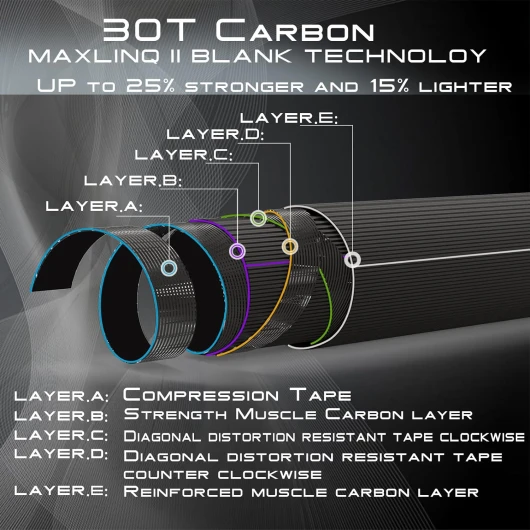
The blank is IM8 (30T) carbon fiber with multiple layers, including a reinforced layer that’s supposed to add strength. Marketing aside, in hand the blank feels light for a budget 5wt and reasonably stiff without being a total broomstick. You can feel takes and head shakes clearly, and there’s enough sensitivity that nymphing doesn’t feel dead. For the price bracket, the blank is probably the strongest part of the package. It doesn’t feel mushy, and it recovers fast enough that your loops don’t collapse all over the place when you push distance.
The cork is advertised as AA+, and for a cheap rod it’s actually not bad. You’ll still see some filler and a few pits, but it’s nowhere near the crumbly, low‑grade cork you usually get on entry‑level rods. After a few full days on the water, the grip on mine hasn’t started flaking or chunking out. It’s not luxury cork, but it’s perfectly usable and feels fine in the hand. I didn’t feel the need to sand or modify anything, which I’ve had to do on cheaper rods before.
The reel seat is where the budget shows more. It’s a machined aluminum seat with two up‑locking rings and a carbon spacer. It works, it holds the reel, but the threads feel a bit rough and the rings don’t glide smoothly. One Amazon reviewer’s comment about it feeling squeaky is pretty accurate. A little grease or lubricant helps, but you can tell they saved money here. Still, once the reel is locked in, it stays put. I didn’t have any issues with it loosening mid‑day.
Guides are stainless with ceramic inserts on the strippers. No rust or weird wear so far, and they seem fine with wet, gritty lines. If you’re fishing in saltwater, they claim it tolerates that environment, but I’d still rinse everything carefully. Overall, the materials are a mixed bag: blank and cork are better than expected, reel seat and hardware feel more basic. For the price, that trade‑off is acceptable. You’re getting your money’s worth mainly in the blank, which is where it actually matters for casting and fighting fish.
Durability: built like a working rod, with some quirks
Durability was one of the main reasons I bought this rod – I wanted something I wouldn’t baby. So far, it has held up well to being tossed in the truck, rigged and unrigged in the parking lot, and fished in brushy banks where branches love to grab rod tips. No cracks, no loose guides, and the ferrules still fit tight. The blank feels tougher than some other cheap rods I’ve used that always made me nervous when they bent deep.
One thing I pay attention to on budget rods is guide wrapping and epoxy. On this Maxcatch, the wraps are mostly clean, and the epoxy isn’t globby or flaking. After several trips, I don’t see any lifting or cracking around the guides. That gives me some confidence that it’ll last more than one season of regular use. I’ve also fished it in light rain and had it sitting wet in the tube for a day; no rust spots on the guides so far, which lines up with the stainless steel and chrome claims.
The weaker point for long‑term durability is probably the reel seat. It works, but the threads feel like cheaper metal, and if something is going to wear or strip first, it’ll be that. A bit of care (not over‑tightening, cleaning grit out of the threads) should keep it going, but this isn’t the kind of hardware you pass down to your grandkids. The cork has held up fine so far, no big chunks missing, just normal wear.
Given the price, I’d say it’s durable enough to be a true workhorse rod. I wouldn’t intentionally abuse it, but I also don’t baby it, and it’s taken everything I’ve thrown at it. Compared to more expensive rods, you might not get the same long‑term polish, but for a backup, truck rod, or starter rod you’re not terrified to break, it’s actually pretty reassuring. And with at least a 1‑year warranty listed, you’ve got a bit of a safety net if something goes wrong early on.
Performance: how it actually casts and fights fish
Performance‑wise, this rod is built more for practical fishing than for showing off perfect loops on a lawn. With a standard WF5F line, I could comfortably cast 30–50 feet without feeling like I had to think too much. Once I got used to its rhythm, I could stretch to 60+ feet when needed. The rod has enough backbone to carry a decent amount of line in the air, and it recovers quickly enough that your loops stay reasonably tight. It’s not buttery smooth, but it’s controlled.
At short range (under 20–25 feet), it’s okay but not especially refined. You don’t get that deep, easy load like on a softer 5wt or a glass rod. You have to be a bit more deliberate with your stroke to avoid just flicking the fly. That being said, I still managed plenty of short‑range drifts with nymphs and small dries; it just doesn’t feel as "automatic" there. Where it feels most at home is that 30–45 foot zone that covers a lot of typical river situations.
For mending and line control, it’s decent. The 9' length helps, and the tip is responsive enough to pick up and reposition line without slapping the water constantly. Roll casting is serviceable, not special. If your fishing is 80% roll casts, this won’t be your favorite tool, but it will still get the job done. With a small indicator rig (single nymph plus a bit of split shot), it handled just fine. With heavier two‑fly rigs and more weight, you need to smooth out your stroke or it will start to feel clunky.
Fighting fish, the rod bends nicely into the mid‑section. I had it bent pretty hard on a strong rainbow around 18" and never felt like I was pushing it too far. Another user mentioned having the rod bent in half for several minutes, and that lines up with my experience: it can take a solid bend without complaining. You feel runs and head shakes clearly, which keeps it fun. Overall, the performance is solid for real‑world fishing: good distance for a budget rod, enough accuracy, and plenty of power for typical trout. Not refined, but very usable.
What you actually get for the price
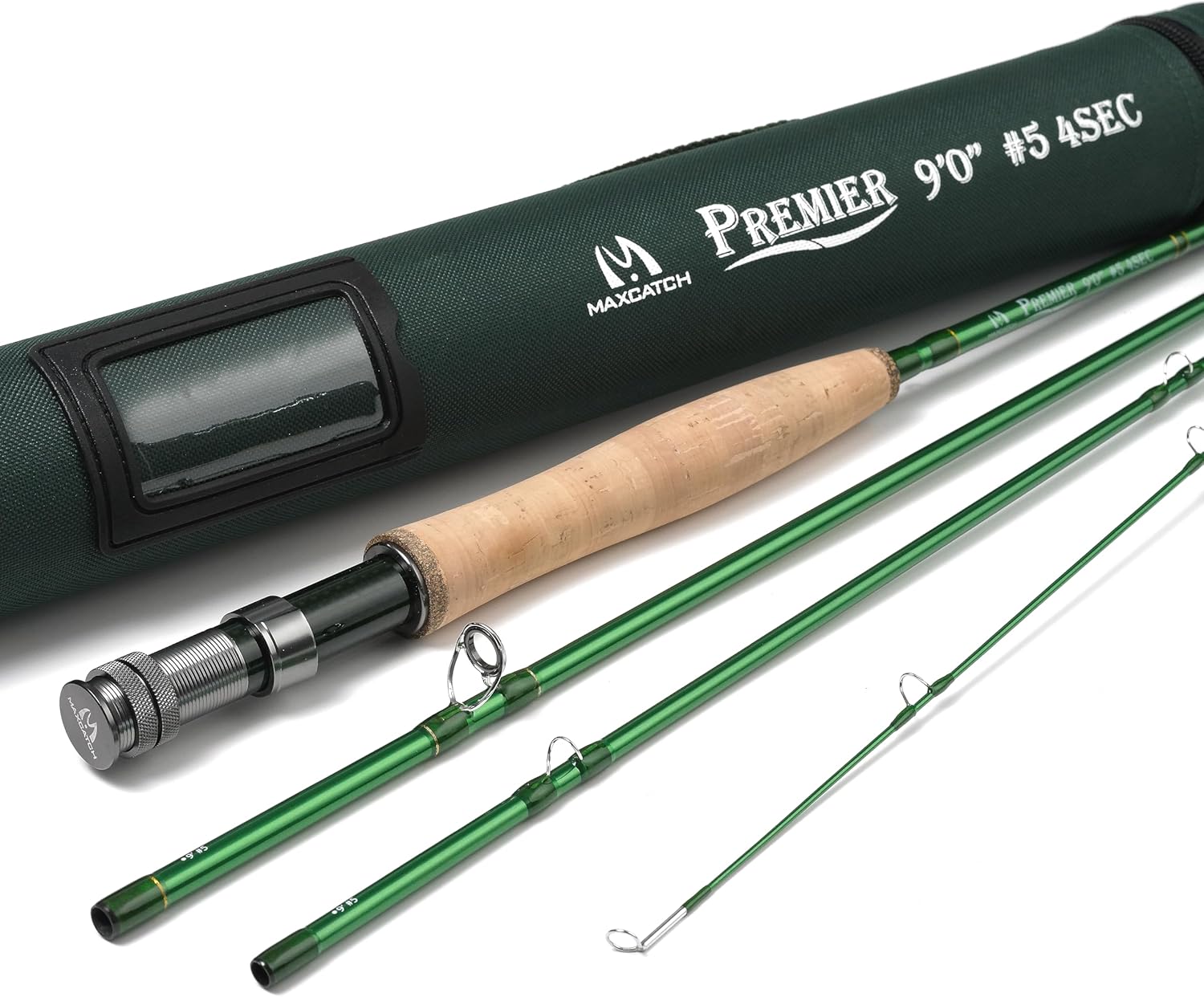
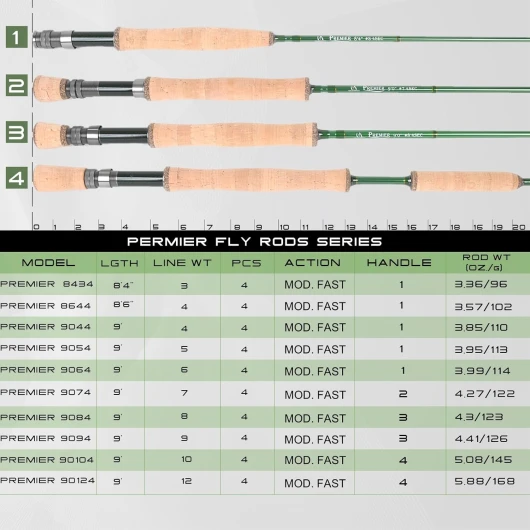
On paper, the Maxcatch Premier 9' 5wt 4‑piece looks loaded: IM8 carbon blank, medium‑fast to fast action, AA cork, chrome guides, and a machined aluminum reel seat. The marketing sounds fancy, but in practice it’s a straightforward budget fly rod that tries to hit that beginner‑to‑intermediate sweet spot. You’re not getting boutique craftsmanship here; you’re getting a functional tool with a few nice touches that usually don’t show up at this price.
The rod comes as a 4‑piece, which is handy for travel and just tossing it behind a truck seat. Mine came in a basic rod sock and tube (nothing fancy, but it protects it). The sections have alignment dots, which sounds minor, but when you’re rigging up in the dark or in cold wind, those dots really do save a bit of hassle. The overall look is pretty standard: dark blank, chrome guides, and a cork grip that looks decent out of the tube.
In terms of how it’s positioned, I’d say it sits as a good first “real” rod after a cheap combo, or a backup/loaner rod if you already have something nicer. It’s not as polished as rods two or three times the price, but you also don’t feel like you’re using a toy. The action is on the faster side of medium‑fast for a 5wt, closer to a quick 4wt feel, which lines up with what a lot of users report. With a normal WF5F line, it feels light in hand and pretty responsive.
Overall, the presentation is simple: you get a functional 9' 5wt that covers most trout situations, with some small quality touches like alignment dots and a half‑decent reel seat. Nothing here screams premium, but for a budget rod they packed in enough features that you don’t feel short‑changed. It looks like a proper fly rod, not a toy store special, and that’s exactly what I expected and wanted for the money.
Pros
- Very good casting performance for the price, especially in the 30–50 ft range
- Light and comfortable enough for full‑day fishing with a decent AA cork grip
- Strong, durable blank that can handle hard bends and real‑world abuse
Cons
- Reel seat feels cheap and rough, with basic hardware quality
- Less refined feel at short distances and more line noise through the guides
- Not ideal for anglers who are very picky about premium fit and finish
Conclusion
Editor's rating
The Maxcatch Premier 9' 5wt is a straightforward, budget‑friendly fly rod that actually fishes well. It’s light enough, casts a decent distance, and has enough backbone to handle normal trout fishing without feeling like a toy. The blank and cork are better than you’d expect for the price, while the reel seat and general refinement are clearly where they saved money. It’s a bit noisy through the guides and not super refined at short distances, but once you’re in that 30–50 foot zone it settles into a comfortable groove.
Who is it for? It fits beginners who want a first rod that doesn’t hold them back, anglers who need a backup or truck rod they won’t stress over, and anyone on a tight budget who still wants something that can genuinely fish. If you’re just learning, it has enough forgiveness but also enough performance to grow with you. If you already own nicer rods, it’s a solid spare that you can hand to a buddy or use in rougher situations.
Who should skip it? If you’re a casting nerd chasing super smooth dampening, ultra‑precise short‑range presentations, or premium hardware, you’ll probably be annoyed by the rougher reel seat and the slightly nervous feel. In that case, spending more on a mid‑range brand rod makes sense. But if your main goal is a rod that gets the job done, throws a fly where it needs to go, and doesn’t kill your budget, this Maxcatch Premier is a pretty solid pick.