Summary
Editor's rating
Value: good performance for the money, but not the cheapest safety net
Design: light, crisp, but not built like a tank
Materials and build: good blank, decent hardware, nothing fancy
Durability and warranty: solid if treated right, but breakage stories are real
On-the-water performance: sensitive and accurate, but needs proper setup
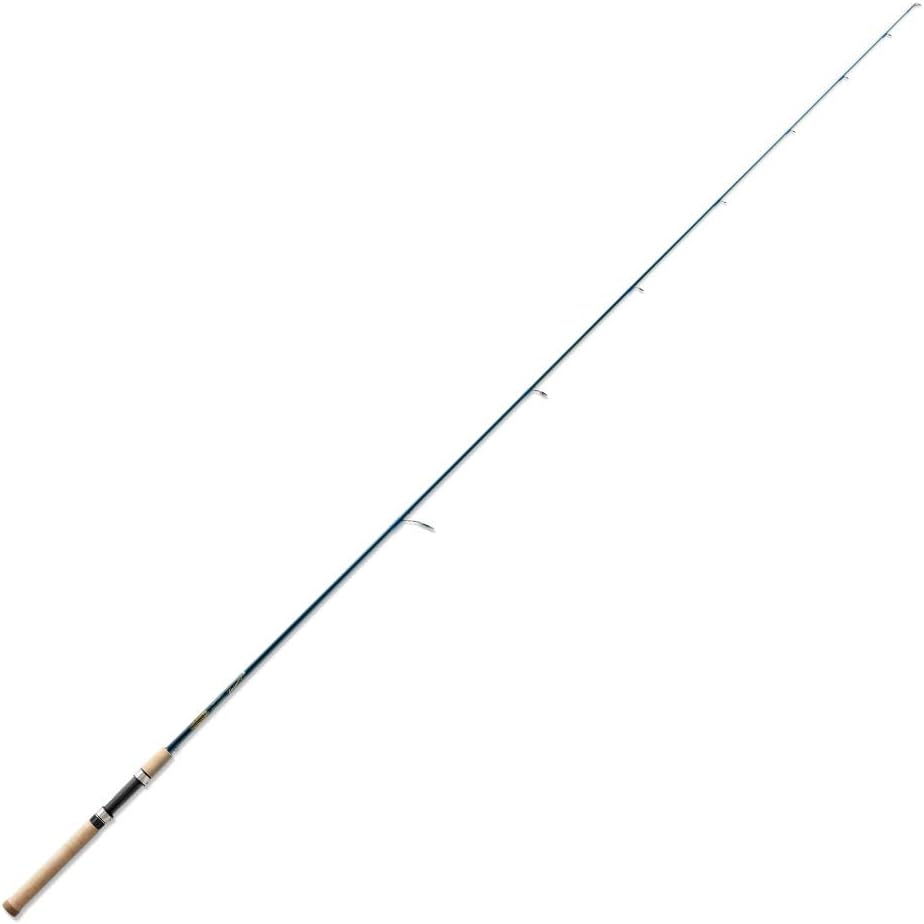
What you actually get with this Triumph 7'0" Medium/Fast
Pros
- Light and sensitive SCII carbon blank that clearly outperforms cheap rods
- Comfortable cork handle and good balance with a 2500–3000 size reel
- Versatile 7’ Medium/Fast action for common bass and walleye techniques
Cons
- Less forgiving than tougher rods; easier to break if you ignore ratings or high-stick
- Warranty often involves a paid processing fee, which stings after a break
- Not ideal for heavy braid, locked drags, or rough handling

Specifications
View full product page →| Brand | St. Croix Rods |
| Material | Carbon Fiber |
| Color | Deep Run Blue |
| Number of Pieces | 1 |
| Fishing Technique | Spinning |
| Item Weight | 4.3 ounces |
| Model Name | St. Croix Rods Triumph Spinning Rod |
| Rod Length | 84 Inches |
A mid-range rod that feels higher-end… until it doesn’t
I’ve been fishing with St. Croix rods on and off for a while, and the Triumph line has always sat in that “do I really need to spend that much?” zone for me. This 7'0" Medium/Fast 1‑piece spinning rod is exactly in that spot: not entry level, not crazy high-end, but still a decent hit to the wallet compared to cheap combos. I took it out for several trips on a small lake and a medium river, mostly throwing 1/4–1/2 oz lures for bass, walleye and the odd pike.
Right away, the rod feels light in hand and pretty sensitive. You can tell it’s not a bargain bin blank. Bites on lighter jigs come through the blank into the handle better than on the cheaper rods I’ve used (Ugly Stik, some Shimano entry-level stuff). At the same time, I didn’t get that super premium “high-end JDM” feel either – it’s more like a solid mid-tier tool that does its job without feeling cheap.
Where things get interesting is durability and warranty. Reading Amazon reviews and talking to a buddy who also owns a Triumph, there’s a pattern: if you baby it and match line/drag properly, it holds up. If you fish it like a tank with heavy braid and locked drag, you’re rolling the dice. The Amazon 4.2/5 rating kind of reflects that split: people either really like it or are pissed it snapped and then had to pay a processing fee for warranty.
So my take is simple: this rod is for someone who cares about feel and fishes reasonably within specs. If you’re rough on gear, throw heavy braid, or hand rods to kids and casual friends, you might be better off with something more forgiving. It’s not junk, but it’s also not bulletproof, and you need to go in knowing that.
Value: good performance for the money, but not the cheapest safety net
In terms of value, the Triumph 7’ Medium/Fast sits in that mid-range zone where you start to feel the hit on your wallet compared to big-box store combos, but you also clearly get better performance. Sensitivity, weight, and overall feel are a noticeable step up from rods in the $40–$60 range. If you fish regularly and care about feeling bites and working lures properly, that alone can justify the price.
However, value isn’t just about performance; it’s also about how forgiving the product is. Here, the rod loses some points. The combination of a relatively sensitive blank and a not-so-cheap warranty fee means that if you’re unlucky or careless and snap it, your total cost of ownership goes up fast. Compare that to something like an Ugly Stik or other tougher composites: you get less feel, but you’re also less likely to be dealing with a broken tip and extra fees.
For someone who understands rod ratings, sets drag properly, and doesn’t treat gear like disposable junk, the Triumph is good value for money. You get a rod that feels higher-end than its price would suggest, with a decent brand behind it. For occasional anglers, kids, or people who lend rods to friends who yank on snags like they’re pulling a tree, this is probably not the smartest buy – you’re paying for sensitivity they won’t notice and risking breakage they’ll cause.
So from a pure value perspective: if you’re at least semi-serious about fishing and want a rod that performs well without jumping to high-end prices, the Triumph makes sense. If you mainly want something tough and worry-free, you can save money and stress by going for a more rugged, less sensitive option.
Design: light, crisp, but not built like a tank
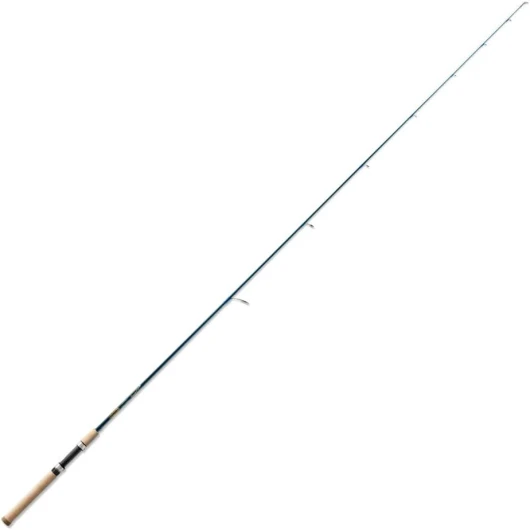
Design-wise, the Triumph 7’ Medium/Fast is clearly aimed at all-around spinning use: bass, walleye, light inshore, that sort of thing. The Fast action means most of the bend is in the top third, so you get quick hooksets and a bit of extra casting accuracy with lighter lures. When I was throwing 1/4 oz jigheads and small crankbaits, the rod loaded nicely without feeling whippy. Once you get past 5/8 oz, you can feel you’re pushing it, especially on the cast – the tip starts to feel overworked.
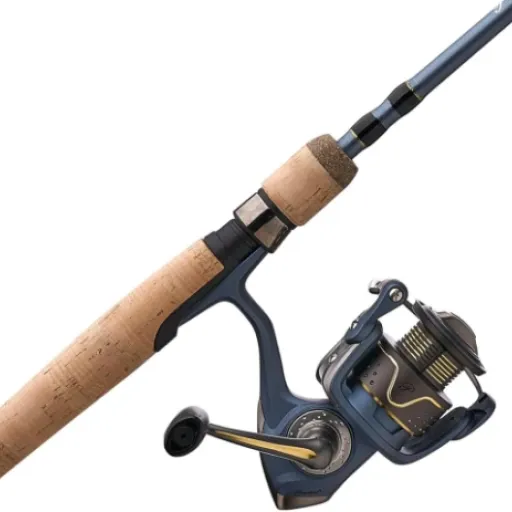
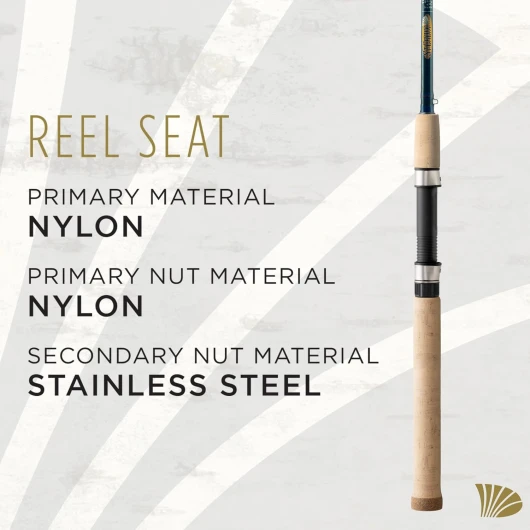
The handle layout is pretty standard: split cork grip, reel seat in the middle, and a cork composite butt that’s easy to tuck under your forearm when fighting a fish. The grip length is decent for two-handed casts without being too long to work jerkbaits or soft plastics. Balance was good with my 2500-size reel – the combo sat just a bit ahead of the reel foot, which made working lures for a few hours straight less tiring.
One thing I noticed is the blank diameter: it’s fairly slim for a Medium power rod. That’s nice for sensitivity and weight, but it’s also why you can’t just slap 30 lb braid and crank the drag down. Some of the 1‑star reviews complaining about breakage sound like people ignoring the line rating and drag recommendations. This isn’t a broomstick; it’s built more on the performance/sensitivity side than on indestructibility.
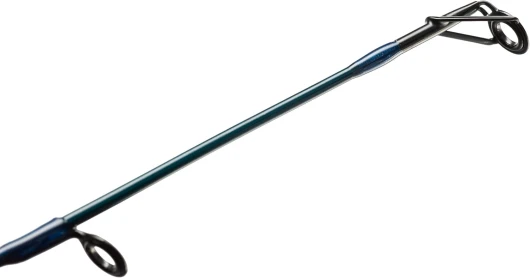
Visually, the Deep Run Blue is low-key. It doesn’t scream for attention, and the wraps and guides are aligned properly on my unit. No sloppy epoxy, no crooked guides. So from a design standpoint: light, clean, and functional, but absolutely not designed to be abused like a fiberglass beater rod. If you like rods that feel crisp and responsive, you’ll probably like this layout. If you want something you can throw in the truck bed loose, look elsewhere.
Materials and build: good blank, decent hardware, nothing fancy
The heart of this rod is the SCII carbon blank. In use, it feels genuinely more sensitive than cheap graphite sticks. Working a jig on a rocky bottom, I could tell the difference between rock, weed, and light bites much more clearly than on a basic $50 rod I usually keep as a backup. So in terms of blank material, you’re actually getting something for your money. It’s not just marketing fluff – you feel more feedback through the handle.
The guides are hard aluminum-oxide in stainless frames. That’s pretty standard mid-range stuff. They’re not the lightest or strongest on the market, but they do fine with mono and fluoro. With braid, I’d stay in the 10–15 lb range and keep drag reasonable. I didn’t see any grooving or weird noises through a few trips, but they’re not bulletproof either. If you’re used to rods with fancy guides, you’ll see the difference, but most regular anglers will be fine.
The cork handle is actually one of the nicer points. It’s not that cheap, crumbly cork you sometimes get. It feels fairly dense, with only a few small filler spots. After several trips, it still looked decent and didn’t feel like it was flaking apart. The cork composite butt cap is practical – you can rest it on the ground or boat deck without worrying too much about tearing up the cork.
Overall, the materials are what I’d call pretty solid for the price: good blank, decent cork, okay guides, and a basic but sturdy reel seat. There’s no high-end bling, but also no obvious weak point other than the fact that it’s a lighter graphite blank. If you understand that graphite can snap if overloaded or high-sticked, the materials are fine. If you want a rod you can abuse without thinking, this level of carbon is not forgiving.
Durability and warranty: solid if treated right, but breakage stories are real
This is the part where you need to be honest with yourself as an angler. Durability on the Triumph is very usage-dependent. With line and drag set correctly, and no high-sticking, it holds up fine. I didn’t have any breakage during my time with it, and I’m not exactly ultra-gentle, but I do pay attention to line rating and drag. I used 8 lb mono, kept drag around 3 lbs or so, and avoided lifting fish straight into the boat by the rod tip.
That said, the Amazon reviews complaining about the rod snapping 6–10" from the tip are not made up. High-strain graphite will fail if you overload it, smack it in a car door, or nick it and then bend it hard. One reviewer even mentions St. Croix’s own chart and explains that using heavy braid or too much drag will break it, not the fish. I agree with that. If you’re the set-it-and-forget-it type who leaves rods rolling around in the truck, this kind of blank is not forgiving.
As for the warranty, it’s a 5‑year coverage backed by St. Croix’s “Superstar Service.” In reality, that often means you’re paying a processing fee (around $60, according to one unhappy reviewer) to get a replacement or credit. So yes, they stand behind the product, but it’s not a free ride. If the rod breaks and you feel it wasn’t your fault, that fee will sting, especially if you already paid decent money for the rod.
So my verdict on durability: structurally fine if you use it correctly, but not forgiving of mistakes. There are tougher, more “idiot-proof” rods out there (fiberglass or composite) if you want something you can abuse. This one trades some toughness for sensitivity. If you’re okay with that trade-off and you’re careful, it’s okay. If not, you’ll probably end up one of those 1‑star reviews.
On-the-water performance: sensitive and accurate, but needs proper setup
On the water, this 7’ Medium/Fast Triumph feels right in its comfort zone with 6–10 lb mono or fluoro and 1/4–1/2 oz lures. Casting distance is good – not crazy long, but consistent and accurate. I was able to hit edges of weedlines and docks without much effort. The Fast action helps with quick, precise casts, especially with lighter baits. It’s a nice stick for wacky rigs, weightless plastics, small swimbaits, and light crankbaits.
Sensitivity is where it earns its keep. Dragging a jig across rocks, I could feel small taps and changes in bottom composition much better than with cheaper rods I’ve used. Hooksets are crisp – the blank recovers quickly and doesn’t feel sluggish. When I hooked into a couple 2–3 lb bass and one slightly bigger fish, the rod had enough backbone to control them without feeling overloaded. The Medium power is legit; it’s not a noodle.
Where things can go wrong is when people ignore the ratings. One of the Amazon reviewers nailed it: if you run heavy braid and crank your drag up, the blank is the weak link. This is a light, higher-strain carbon: great for feel, not great for abuse. I stuck to 8 lb mono and a reasonably loose drag and had zero issues. No weird noises, no flat spots, no signs of stress. But if you’re the type to horse fish out of cover with locked drag, you’re asking for a break.
So performance-wise, I’d say: very good within its intended use, unforgiving if you push it. It’s not a broomstick you can abuse; it’s more like a nice tool that works well if you respect the specs. If you like feeling what your lure is doing and you set your drag properly, you’ll probably be happy with how it fishes.
What you actually get with this Triumph 7'0" Medium/Fast
On paper, this rod is pretty straightforward: 7’0” length, Medium power, Fast action, rated for 6–12 lb line and 1/4–5/8 oz lures. It’s a 1‑piece, so transport is a bit more of a pain, but you do get a smoother bend and better sensitivity than most 2‑piece rods in the same price range. Weight is around 4.3 oz, which is light enough that you don’t feel like you’re swinging a broomstick all day.
The blank is made from St. Croix’s SCII carbon fiber, which they pitch as stronger and more sensitive than older SCII versions. In practice, it feels crisp and responsive. The guides are hard aluminum-oxide with stainless steel black frames, so nothing fancy like titanium, but they’re fine for mono and fluoro and light braid if you’re not abusing them. The rod has a split grip with a premium cork handle and cork composite butt cap, which gives it a decent balance point with a 2500–3000 size spinning reel.
The reel seat on this model is a Sea Guide XDPS with sandblasted hoods. Translation: it’s a basic but functional seat that holds the reel tight and doesn’t feel flimsy. No gimmicks, just a normal spinning seat that gets the job done. The finish is a Deep Run Blue color with two coats of Flex-Coat slow cure finish. It looks clean enough, more like a tool than a showpiece, which I actually prefer on a rod that’s going to get banged around in a boat.
Overall, the presentation is that of a mid-tier rod with a few nicer touches: decent cork, clean wraps, light weight, and a blank that feels more sensitive than cheap rods. You’re not getting high-end components, but for the price, the package is pretty solid. Just don’t expect miracles – it’s a work rod, not a collector’s item.
Pros
- Light and sensitive SCII carbon blank that clearly outperforms cheap rods
- Comfortable cork handle and good balance with a 2500–3000 size reel
- Versatile 7’ Medium/Fast action for common bass and walleye techniques
Cons
- Less forgiving than tougher rods; easier to break if you ignore ratings or high-stick
- Warranty often involves a paid processing fee, which stings after a break
- Not ideal for heavy braid, locked drags, or rough handling
Conclusion
Editor's rating
The St. Croix Triumph 7'0" Medium/Fast spinning rod is a solid choice for anglers who care about feel and fish within the stated specs. It’s light, reasonably sensitive, and handles common bass and walleye techniques well: jigs, plastics, small cranks, and light spinnerbaits. The SCII carbon blank and cork handle give it a more “serious” feel than cheaper rods, and on the water you can tell the difference in sensitivity and casting accuracy.
But it’s not perfect. The rod is not built to be abused, and the breakage complaints online aren’t just noise – this is a higher-strain graphite blank that will punish you if you ignore line ratings, crank down the drag, or high-stick fish out of the water. Add in a warranty that often requires a paid processing fee, and the total cost if you break it can climb quickly. So it’s a good tool, but not a carefree one.
Who is it for? Anglers who fish regularly, understand how to set drag and choose line, and want a rod that feels better than budget gear without paying premium prices. Who should skip it? People rough on equipment, those who love heavy braid and locked drags, or anyone buying a “community rod” for kids and casual friends. For the right user, it’s a pretty solid value. For the wrong user, it’ll feel like an overpriced, fragile stick.


-large-teaser.webp)